Friday, February 27, 2009

Touch of Africa; Spring Class on African Food and Culture

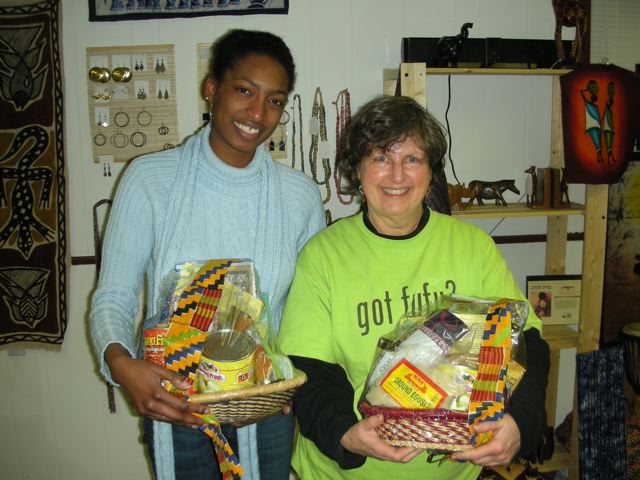
It's been hectic for me lately. Last Saturday night was Penn State's annual Touch of Africa celebration sponsored by the African Students' Association. As usual, it was a sold-out event (500 tickets) and a cultural extravaganza that gave the students and the community an opportunity to taste unfamiliar foods and experience the music, fashion, story-telling and energy of Africa, largely normally unavailable to central Pennsylvanians. I was brought in late in the game to oversee the preparation of the food with the The Penn Stater's professional cooking staff and some student volunteers. I don't generally do quantity cooking, so it was a challenge, but the team managed to pull it off with help from The Penn Stater's chef Ken Stout and his staff. A few (very few--I was too busy to take pictures) photos from the event are up on my BETUMI account on flickr. The menu included several West African dishes, representing the heavily West African ASA membership (efo stew with greens and beef and smoked fish and smoked ground shrimp and palm oil), egusi (a.k.a agushi, a fabulous melon seed and one of the so-called "lost crops of Africa") soup, puff puff (a Nigerian doughnut), chicken jollof rice, fried ripe plantains, hot and mild versions of Ghanaian-style tomato gravy, and bissap (hibiscus chilled tea with lemon grass and pineapple juice), as well as North African-style couscous, East African coconut basmati rice and Somali sombosas, roasted chicken, tilapia with sauce, and all-Africa tropical fruit salad with flaked coconut.

Sore Shields of The African Market and I coordinated a silent auction to raise money for 2 charities in Africa, and Kunmi Oluleye of Flavors of Africa generously donated copies of her cooking dvd of Nigerian, Kenyan, and South African cooking (first in a series of 17 planned). Thank you to everyone who helped and bid on the items.

Now, I need to get ready to teach a five-week African cooking (and culture) course beginning March 18. . . Never a dull moment.

Wednesday, February 11, 2009

Food Science of African Tastes: comminution and the asanka

Anyone familiar with African cuisines knows that grinding and pounding are important cooking techniques, and texture matters. She or he also knows that while an electric blender is a lot faster and easier than a mortar and pestle or a grinding stone or bowl, it comes at a cost: a deterioration of flavor.

Prof. Sefa-Dedeh, Professor of Food Science and Technology, and Dean of the Faculty of Engineering Sciences at the University of Ghana, talked to me about why these taste differences occur.

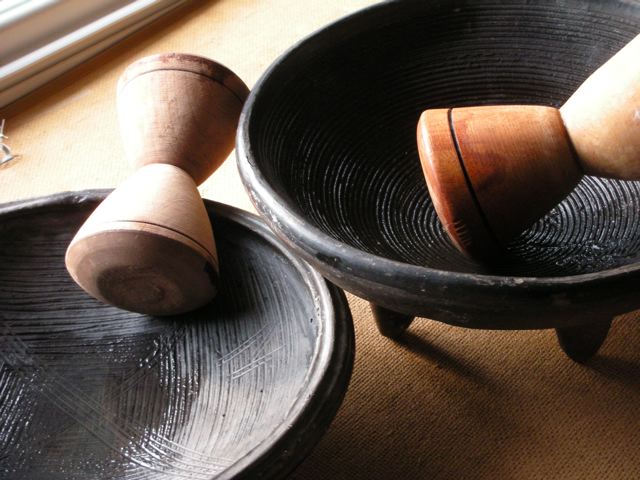
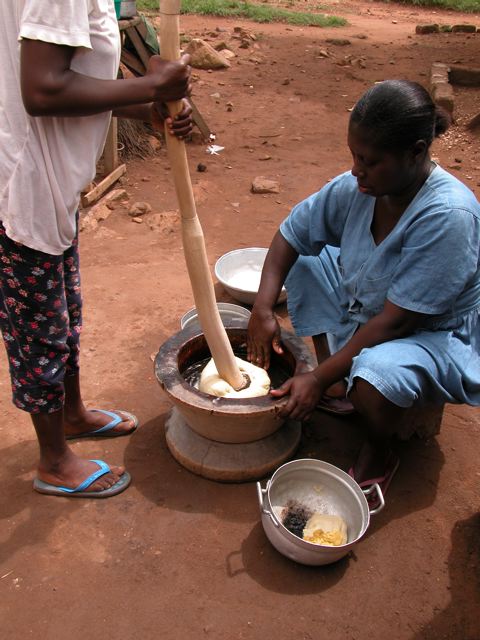
I asked why a blender gives such different results, than say, the Ghanaian asanka pictured above. Asankas are ubiquitous in Ghanaian kitchens: they are clay grinding/mashing bowls with ridged surfaces and are used with a wooden masher. I keep several in my Pennsylvania kitchen, especially for making fresh pepper sauces.

He explained to me that there are several reasons for the differences and began by mentioning there are "attrition" and "impact" forces. First, you begin with a solid material like ginger or tomato or chili peppers or garden eggs (similar to a small eggplant), cooked or uncooked, which you want to shred. Each ingredient has cells in it with a structure, and in the cells are all the taste and flavors. For example, when you break a piece of ginger you begin to smell it because you have broken down the cells and some of the compounds begin to interact.

When you use an asanka as your "size reduction equipment," the amount of force you apply to the ingredients is much less than you get from a blender. With something like a pepper, you generally don't want a lot of impact, you're more interested in shearing and tearing the structure, but not completely. In the blender you are "comminuting" (pulverizing) all the ingredients together so you may actually lose some of the flavor. Ghana's traditional mashing bowl conserves the flavor because of the way it separates the particles.

Finally, when you eat a product, different particle sizes will likely give different tastes even though the ingredients may be the same. For example, some people may cook a soup with a whole pepper in it. If you're eating the soup and you bite into certain peppers, a single bite of the pepper releases the compounds that interact with your tongue and palate and gives you a certain sensation in your mouth (the flavor chemistry).

So, the differences are partly due to the equipment used for the size reduction to give you a certain product. When you put that product in your mouth a certain reaction takes place. To summarize, when you put food into a blender to blend it you have virtually broken all the tissues into one mass, and the effect in your mouth is not the same as when you pound or mash the ingredients.

I guess I intuitively knew this, but still it was nice to have Prof. Sefa-Dedeh explain it. Soon I'll share his insight about fermentation and answer to my question about why I have not yet succeeded in souring dried corn to make an authentic corn dough for Ghanaian-style kenkey.

Footnote: Last week I mentioned that BETUMIBlog had been selected as one of the "100 Best Blogs for Learning About Africa." This week I was informed that it is on another list: this time as one of the "Top 50 Blogs for Studying Africa." I'm not sure who "University Reviews Online" actually is, but thought I'd mention it for what it's worth.

Friday, January 30, 2009

BETUMIblog in top 100; May Panel on African Cuisine/Foodways/Food History


I received word today that BETUMIblog has been listed as one of the 100 Best Blogs for Learning About Africa. It's thrilling to be included in this impressive list.

Also, I just realized I never mentioned here a special panel being organized on African cuisine/foodways/food history at this year's annual joint meeting of the Association for the Study of Food and Society (ASFS) and the Agriculture, Food and Human Values Society (AFHVS) to be held at Penn State University (Pennsylvania, United States) May 28-31. While abstracts for the conference are due February 2, 2009, it is possible to consider those arriving within a few days of the deadline--just let me know to expect it. More information about the conference and submission procedures are available at http://www.afhvs.org/2009mtg.html. Please forward abstracts for consideration to Fran Osseo-Asare . This is a wonderful, all-too-rare opportunity for us to have some face-to-face conversations, and folks from as far away as the U.K. and Cameroon are making plans to attend.

*************************

"Eating African: Interdisciplinary Perspectives on African cuisines"

Africa, especially sub-Saharan Africa, has long been marginalized in world culinary literature. There have been few positive attempts to approach African food culture from a "culinary" perspective. This session will broaden the topic of "food in Africa" beyond questions of food insecurity, failing markets, poverty and health deficits to consider African food in the arts, history, popular culture, and gastronomy.

Possible topics might include, but are not limited to, changes in diet or food processing technologies, food and national or ethnic identities, food as portrayed in popular culture or literature or other media, dining etiquette and utensils, or the history and role of specific ingredients, “classic dishes,” or flavor principles.

Abstracts which can not be included in this special session will be forwarded to the conference program organizer as general conference abstract submissions.

Thursday, January 22, 2009

CUISINE D'AFRIQUE, CUISINE D'AILLEURS, FOOD AND AFRICAN CUISINE


African food historians (historiographers?), I just discovered a great resource. In 2005, the School of Humanities of the University of Western Australia archived an African food-themed issue (Number 15, September 2000) of Mots Pluriels, an online journal published from 1996 to 2003. Joan Wardrop was the guest editor for this issue of the bilingual journal (French and English), and it includes some terrific articles on African food culture, food in literature, and food and identity, as well as the politics of food. I'm now working my way through them, which include, among others:

Eating raw nothing, committing suicide: The politics and semiotics of food culture by Obododimma Oha

Nourriture et identification sociale au Nigéria de Françoise Ugochukwu

Talking food: a conversation about Zimbabwe, cooking, eating, and social living by Gertie Bonzo, Norma Kitson and Joan Wardrop

We eat out of the same pot: Poison, Food and Power in colonial Libreville c.1865-1921 by Jeremy Rich

"La vie est belle": Everyday life under Article 15 by Janice Spleth

Tropismes alimentaires dans "Enfance" de Nathalie Sarraute d'Hélène Jaccomard

Survie et création: la nourriture dans les contes louisianais et martiniquais de Valérie Loichot

La femme et la nourriture dans l'oeuvre de Gérard Etienne d'Isabelle Gros

Les gargotes de la liberté de Germain Sylaï Gotto, David Ndachi Tagne, Pierre Barrot et Jacques Douti Soutou

L'amour entre par la cuisine Une nouvelle de Kesney Mikolo (Congo)

L'estude de Gargantua, selon la discipline de ses precepteurs sorbonagres de François Rabelais

L'Afrique côté cuisines. Regards africains sur l'alimentation. Compte rendu de Jean-Marie Volet

I only wish I could read French better! Be sure to check this archive out now, in case it disappears in the near future. The archived issue also links to Safundi, the online journal that in 2000 published and now sells a classic article that helped me make sense of the historical treatment of African cuisine, Lynne Huston's "Serpent's Teeth in the Kitchen of Meaning: A Theory of South African Culinary Historiography.

Thursday, January 08, 2009

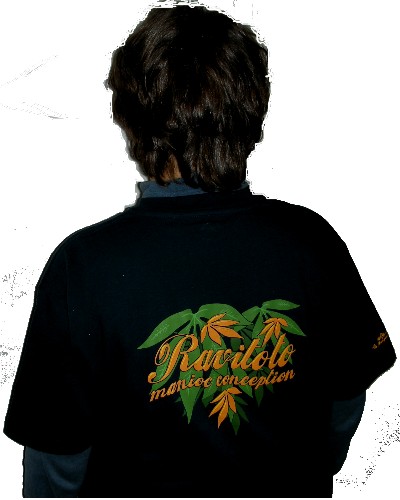
Ravitoto manioc conception


My daughter Abena delighted me in December with multiple Christmas gifts from Madagascar, including this t-shirt emblazoned with "Ravitoto manioc conception," which apparently is a favorite Malagasy dish--a meat stew (especially pork) made with manioc (cassava) greens.

Sorry, I've already eaten my fabulous dark chocolate (Robert Chocolat Noir Spécial) bar so I can't show that. It looks like it was made from chocolate from Madagascar in Antananarivo for "Chocolaterie Robert S. A." (South Africa?)

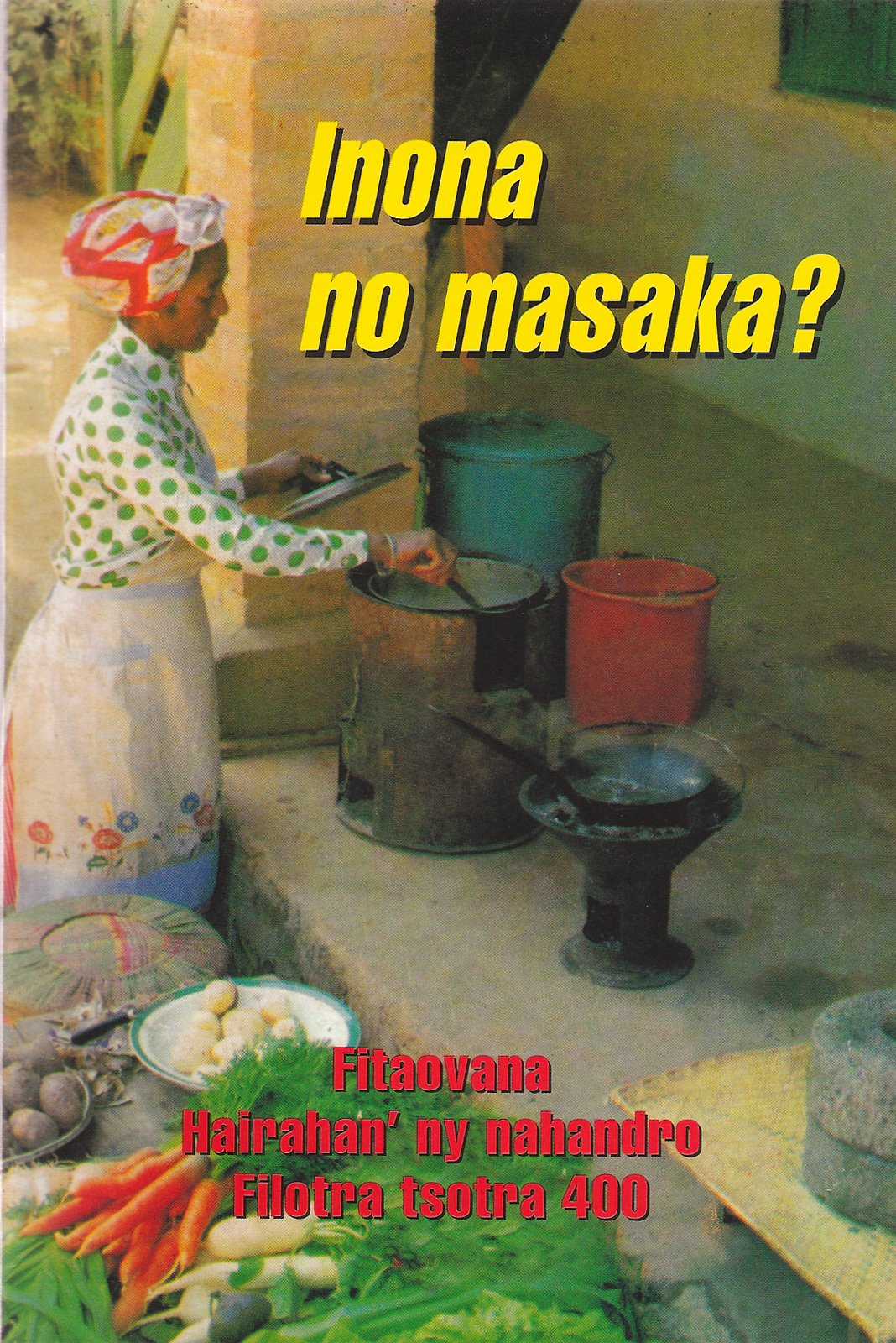
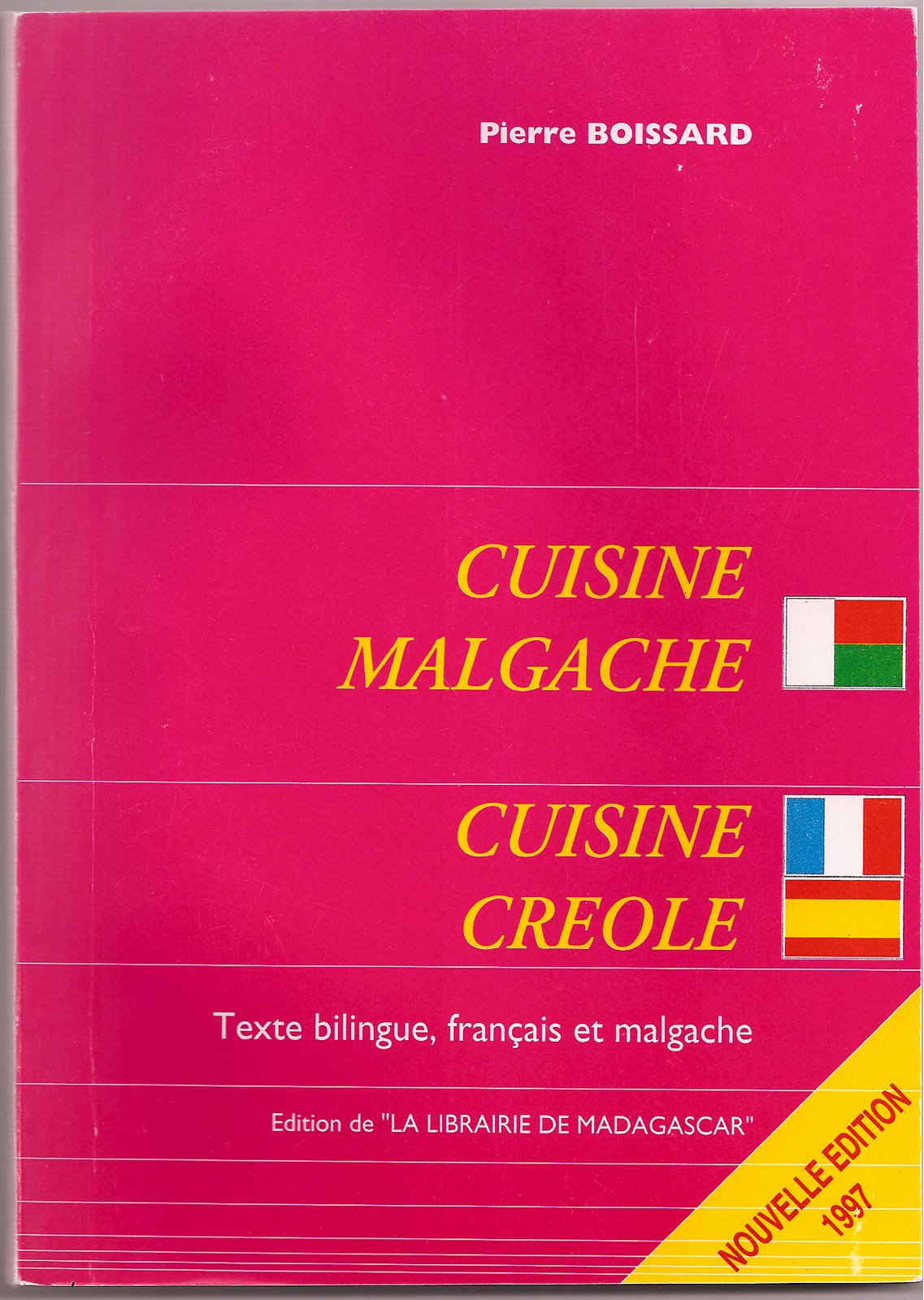
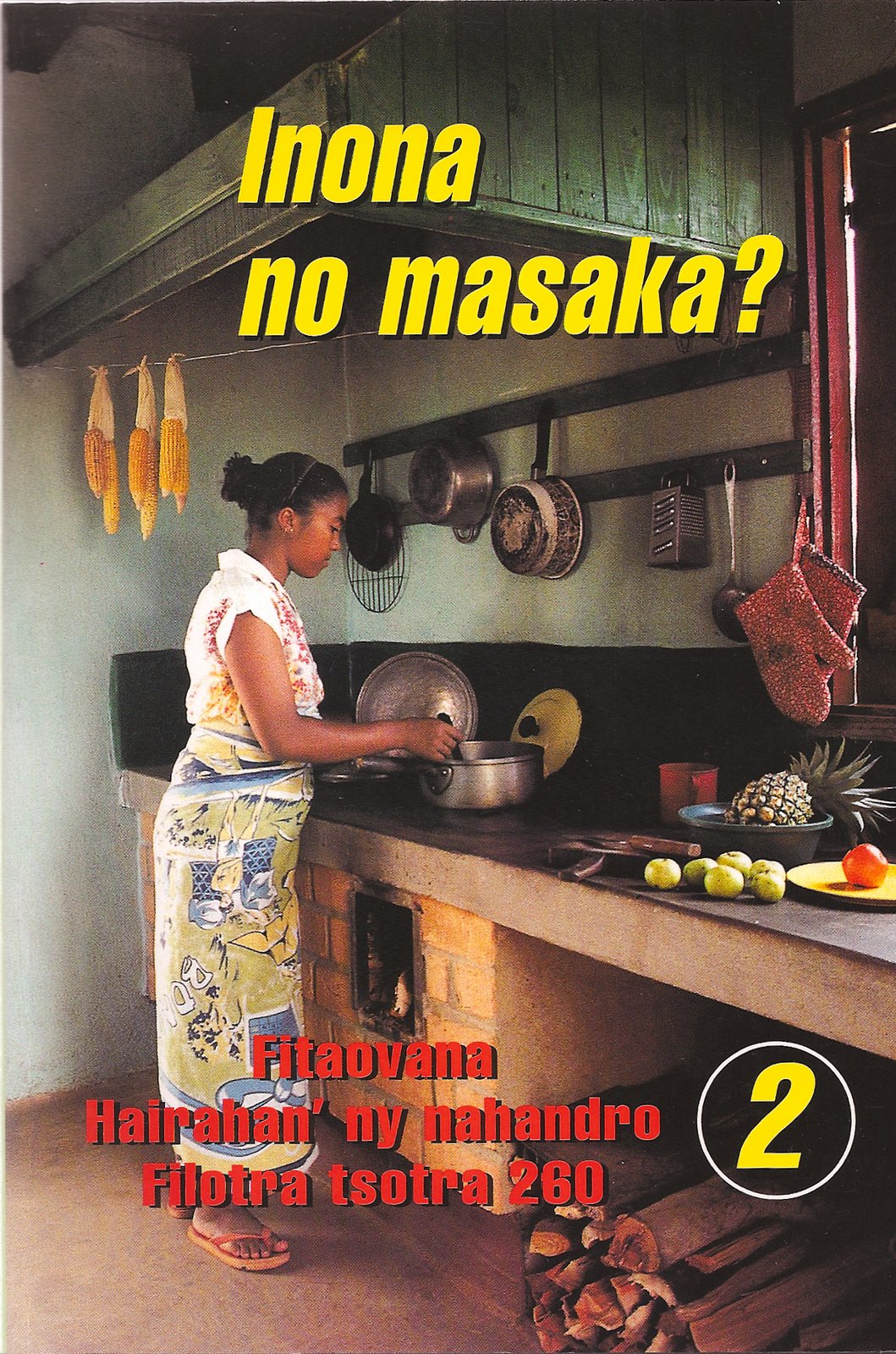
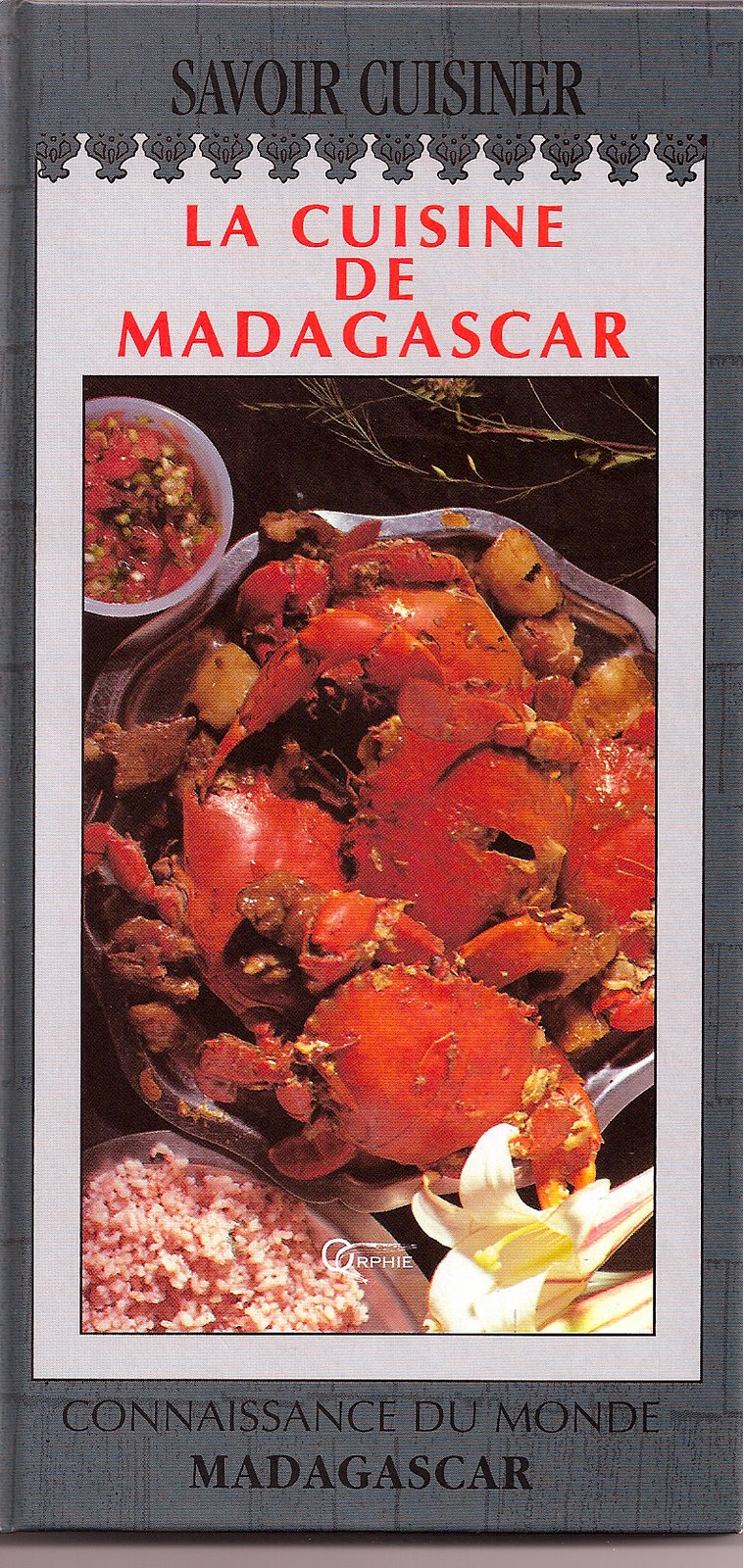
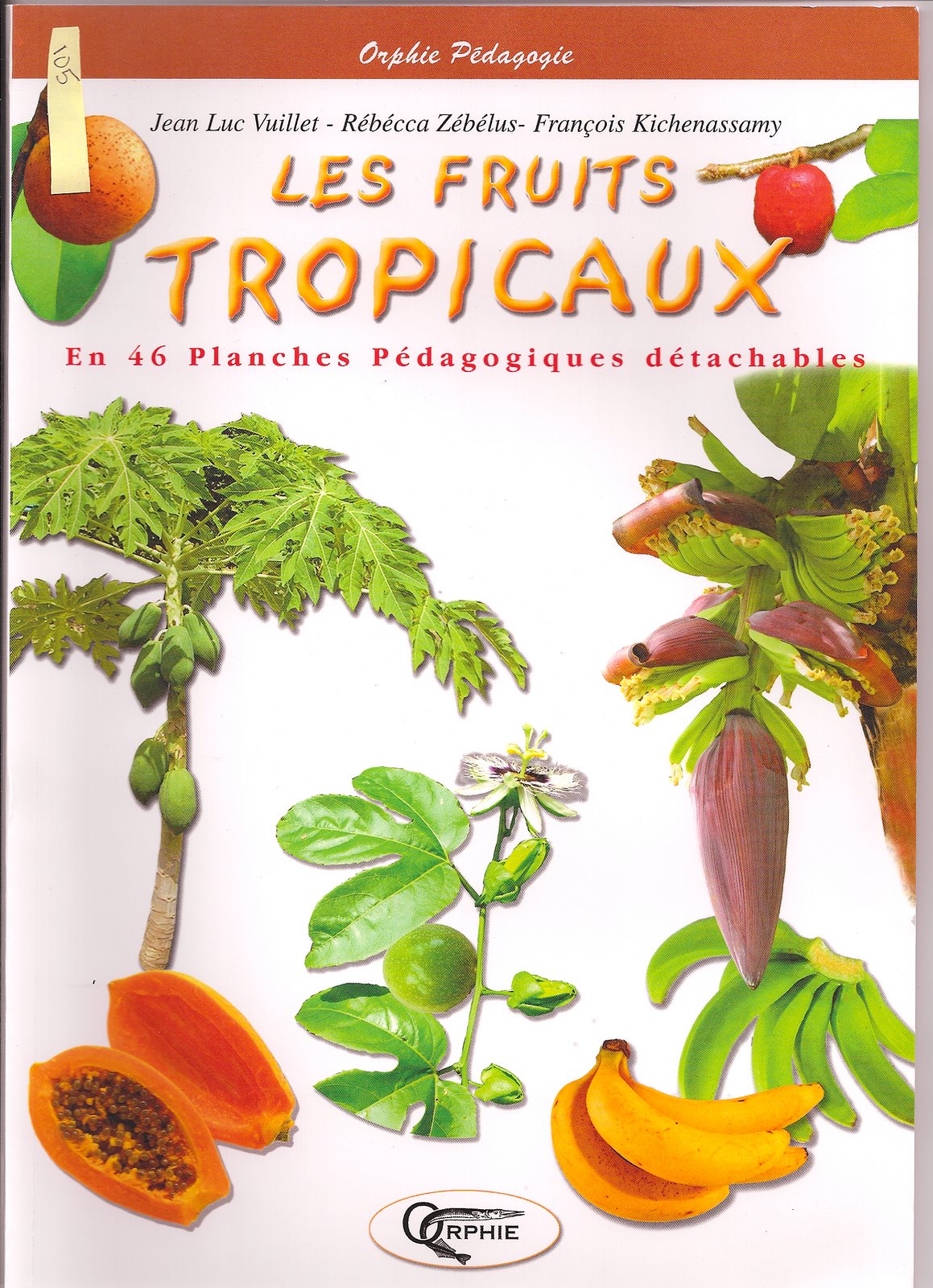
She also collected 5 new cookbooks for the Africa Cookbook Project on her travels. Two of them are totally in Malagasy (Inona no masaka? vols. 1 and 2), one is both in French and "Malgache" (Cuisine Malgache/Cuisine Creole), another is in French (La Cuisine de Madagascar), and the final one, a book on tropical fruits published in France (okay, so maybe it doesn't technically qualify for the Africa Cookbook Project), is also in French (Les Fruits Tropicaux). Now I'm struggling with online dictionaries to understand the Malagasy. Can anyone recommend an English-Malagasy dictionary to me?


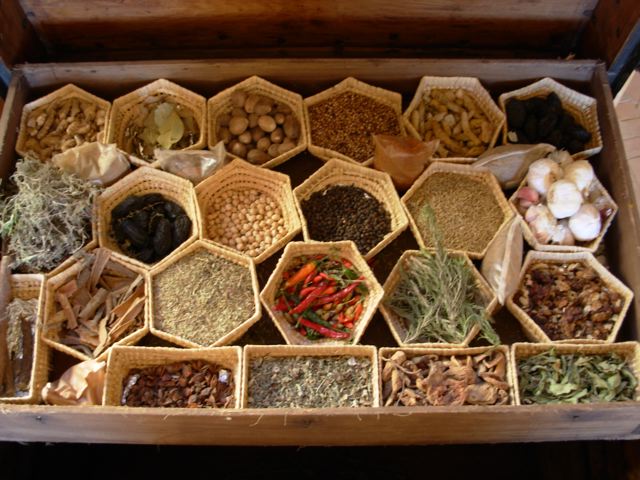
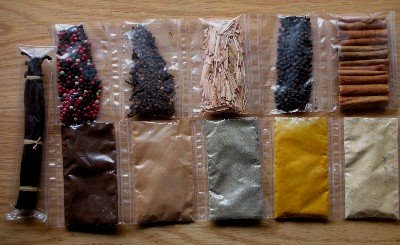
She also brought me samples of spices from there, including vanilla, cloves, pepercorns, cinnamon, ginger, etc. Just looking at them helps me forget the ice and snow outside my window. Abena knew the best way to get me to put Madagascar on my "must see" list was to give me a hint of the food there. It worked.


Wednesday, December 17, 2008

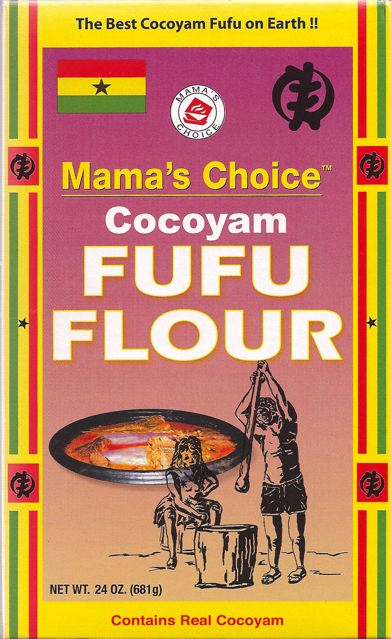
Mama's Choice Fufu Flour


One of the ongoing dilemmas for those outside of Africa is how to reproduce "homestyle" flavor. Last February I mentioned Elisha P. Renne's article in American Anthropologist: "Mass Producing Food Traditions for West Africans Abroad (Dec. 2007, Vol 109, Issue 4, pp 616-625).

For many Ghanaians, soup and fufu is a classic meal in their culinary repertoire. In April, 2006 I posted a blog about and interview with a Ghanaian chemical engineer living in New Jersey, Dr. George (Yaw) Adusei. Dr. Adusei set out to develop a high quality fufu flour in the U.S., using plantain, cassava (manioc), and cocoyam (taro) imported from Ghana. I recently received several boxes of his improved fufu powder requesting me to taste test them and give him feedback.

He has, among other things, changed the design of his boxes and added vitamins and minerals to the plantain fufu flour. One of the things I like about Mama's Choice flour is that in Ghana there is often the issue of quality control. I trust that Dr. Adusei has had his nutritional facts tested by a reputable independent lab, and the portion sizes, calories, etc. make sense, which is not always true with the numbers on boxes from Ghana. Also, I know that he is working to limit and/or eliminate the use of preservatives in his flour.

I like the taste and texture of his product (second only to freshly pounded fufu), though it does seem that the plantain fufu may take a little more water and a few minutes longer in the microwave to cook than the previous brand I was using.

Mama's Choice is the new kid on the block. As a relatively new, small, independent company, it faces a huge challenge in developing its market share in a field currently dominated by a couple of well-known brands and distributors. I encourage you to check out Mama's Choice fufu if you see it in stores, or request that your suppliers order some and give it a chance.

More information is available from George Adusei of Adusei Corporation via e-mail at mamaschoice@aduseicorp.com, by phone at 908-757-7530, or on the web at www.aduseicorp.com or www.mamaschoicedistributors.com. Mama's Choice is also available in Ghana. Call 024 444 9440/ 0234 468 3147 or 024 440 1098.

Friday, December 05, 2008

"Lost" Crops of Africa

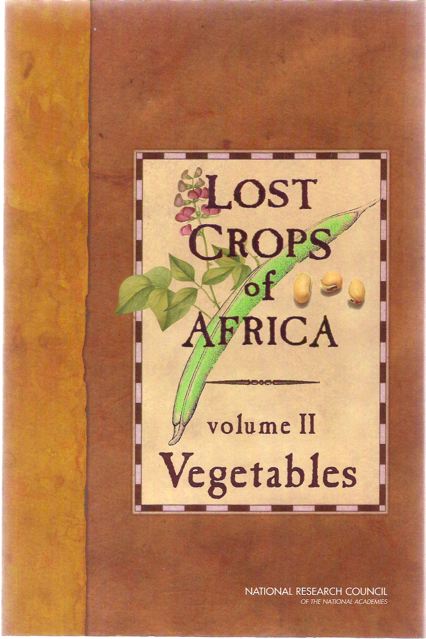
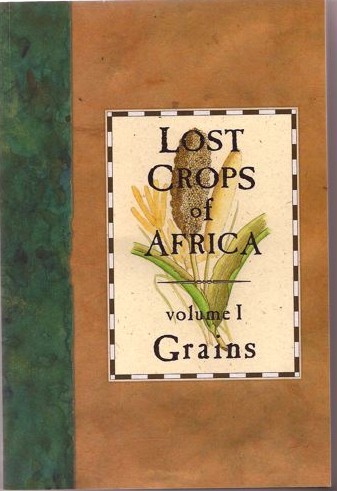
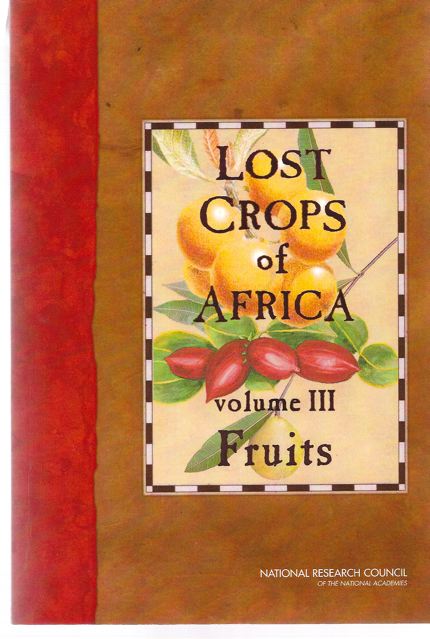
A comment posted recently by Gnu Guru reminded me that some of you may not be aware of the series currently being compiled by NAP, the National Academies Press, on what they somewhat misleadingly call the "Lost Crops of Africa." [To be fair, in the first volume--and others-- the authors clearly explain that " . . .most of the plants described are not truly lost. . .It is to the mainstream of international science and to people outside the rural regions that they are 'lost.' "] (p. xiii). While the books are quite expensive, they are very useful, and some of the information can be viewed online .

The "lost crops" series is a planned set of several volumes on traditional, often underutilized and appreciated Sub-Saharan African crops. The first volume, Grains, was published in 1996 and covered a dozen grains from African rice (Oryza glabberima), finger and pearl millets, to fonio, teff, and wild grains. The second, Vegetables, in 2006, featured 18 vegetables, like amaranth, egusi, enset, moringa, okra, and shea. The third volume, Fruits, came out in 2008, and covers a couple dozen fruit resources from baobab and kei apple, tamarind, horned melon and watermelon, to custard apples, sugarplums, ebony, and chocolate berries.

These books include a wealth of information, and are a cross between scholarly and popular reading. I find them invaluable, and appreciate both the detailed information, illustrations, and the names of experts from around the world. It appears that the series is evolving and changing over time. It was originally anticipated to include 6 volumes: the first on grains, the second on cultivated fruits and the third on wild fruits (they were combined in vol. III), a fourth on vegetables (currently volume II), and a fifth on legumes (these were included in the volume on vegetables), and a final volume on roots and tubers, featuring various yams, tiger nuts (chufa), Hausa and Sudan potatoes, and others.

I'm eager to see the final volume. I've no idea if it's almost completed, but in the first volume readers were encouraged to contact Noel D. Vietmeyer (nvietmey@nas.edu, FAX: 202-334-2660) if they wished to contribute to future volumes (in this case, the volume on roots and tubers), with information about the crop they wished to write about, and the editors especially appealed for photographs.

Friday, November 28, 2008

History of Entertaining in Sub-Saharan Africa

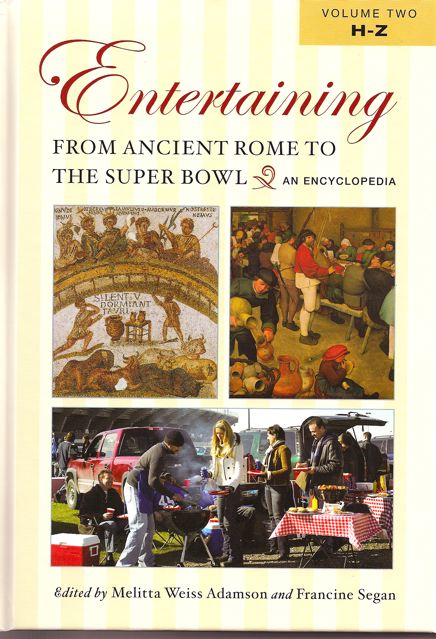
Greenwood Press has just published (2008) an eclectic 2-volume encyclopedia on the history of dining and entertaining called Entertaining: From Ancient Rome to the Super Bowl. I'm happy to announce that I was invited to write a lengthy entry for Sub-Saharan Africa in it.

That section runs 10 pages (vol. 2, pp. 468-478), and begins with a quote from Chinua Achebe's classic novel Things Fall Apart, where one of the oldest members of an Ibo extended family proclaims:

"A man who calls his kinsmen to a feast does not do so to save them from starving. They all have food in their own homes. When we gather together in the moonlit village ground it is not because of the moon. Every man can see it in his own compound. We come together because it is good for kinsmen to do so."

I'm glad I was able contribute to the project, and am proud that in this encyclopedia Africa is credited alongside others at the global table. Incidentally, I do note that Achebe could have said "kinswomen" as well.


Friday, November 21, 2008

More on Malagasy Cuisine


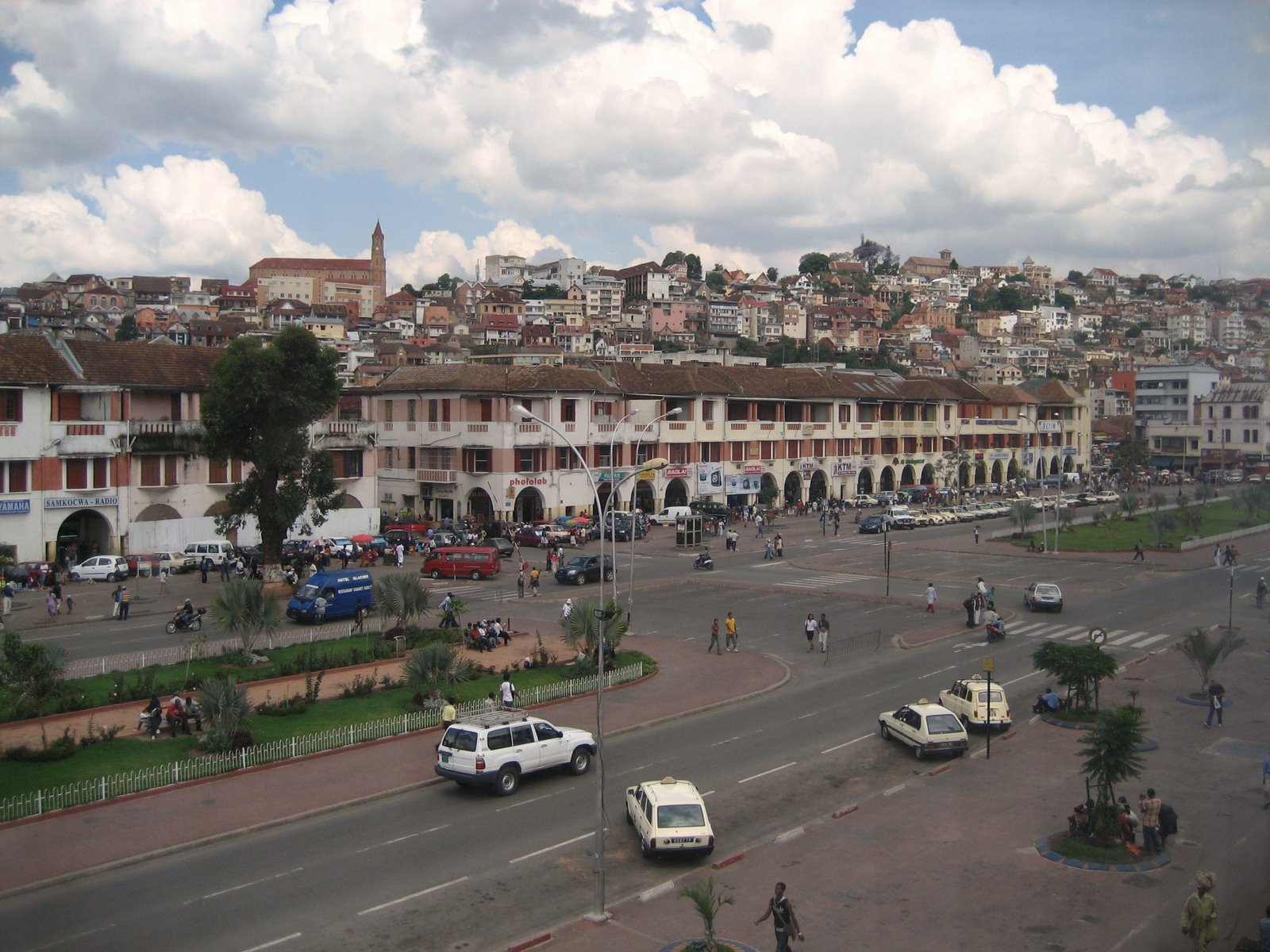
My daughter Abena, a (an) historian of science at the University of California in Berkeley, is currently in Madagascar doing research. She sent me a link to an interesting page (in English) on Virtual Tourist about Malagasy cuisine by Norali, who lives in Antananarivo, where Abena is staying. Check it out!

Abena is having trouble finding good food (as usual the hotels seem to favor pizza and other Western food). I'm hoping she'll connect with Friedrich Randriamiakatra, who also stays in that city. I look forward to the day I make it to Madagascar myself . . .


Friday, November 14, 2008

Diet, Diabetes and Health in Africa

November is "Diabetes Month" and in recognition of "World Diabetes Day" (today, Nov. 14)," BBC Africa has been discussing the topic "Is diet the key to good health?" (in Africa) at their website and also on their program "Have your say." Diabetes is, as is true throughout the world, rapidly on the rise in Africa. Yesterday (Nov. 13), I joined the BBC's hour-long discussion program, where I mentioned the role of aggressive multinational advertising in influencing the tastes and choices of Africans (especially of imported foods), the role of convenience and time constraints on eating habits, and traditional-"modern" and rural-urban differences in what people eat. Also, you can hear interviews with people ordering rice and a beef stir-fry and fried chicken and French fries ("chips" from potatoes) in a restaurant in Accra, or a rural family from Malawi eating nshima (made from corn flour) and a fish relish, as well as practical advice on diet and health from Dr. Ndawula in Kampala, Uganda, and the experiences of diabetes patient Joseph Kibuuka.

Just as a couple of minor comments: the husband in Malawi, describing their meal said "but, unfortunately we don't have any vegetables" with the nshima. He knew the meal contained protein (the fish) and carbohydrates (corn). However, later he mentioned the sauce "to make it more appetizing" included onions and tomatoes. Onions and tomatoes qualify as vegetables. Also, as a minor point of clarification: one of the commentators mentioned that ugali, sadza, and nisma or nshima are all basically the same, and banku is the version in Ghana. It is my understanding that banku is the only one of those that is made from fermented corn dough, which is a notable distinction between them.

The BBC program touches on many important points: the role of exercise and physical activity, controlling portion sizes, advantages and disadvantages of processed and unprocessed foods, different effects of different types of cooking techniques (frying, boiling, steaming, etc.), role of convenience and cost in choosing foods, importance of fruits, vegetables, and drinking water, different types of protein resources. . .This is a very timely and urgent topic throughout Africa. I recommend checking these BBC resources out.

I wish I'd had time to talk about the positive traditional cultural image in Western Africa of the literally "big man" or "big woman," a nurturing, generous, successful, healthy, wealthy person, vs. the image of a "skinny" person as stingy, poor, and likely unhealthy. To be "fat" has historically been a good thing. That image is changing, but it still had a role in the fight against diabetes.

Thursday, November 06, 2008

Africa Cookbook Project Update: Malagasy Ro mazava

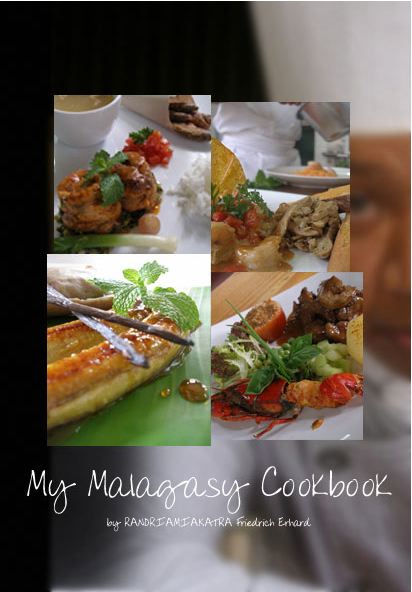
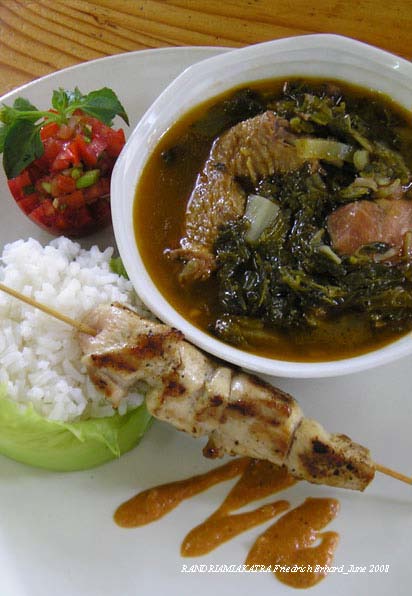
In August, 2007, Co-TED Fellow, Friedrich Erhard Randriamiakatra, a cooking teacher at the National Institute of Tourism and Hotel Business (NITH) in Madagascar (the 4th largest island in the world!) donated a book to the Africa Cookbook Project, Ma Cuisine malgache (see the October 12, 2007 posting). Since he's been unable to find an English cookbook on Malagasy cuisine with photos, he's written a brief, illustrated introduction to Malagasy cooking that I'm adding to the data base. At its heart his booklet is a description, recipes, and photos for romazava (or ro mazava), generally considered the "national dish" of Madagascar. Friedrich explains that romazava means "clear broth" (in Ma Cuisine malgache it's also translated in French to pot au feu or bouillon clair. It may be made from a base of beef, chicken, shellfish or fish (another source says it may be a vegetarian base, too). The other essential ingredient is some kind of chopped leafy green. As Mr. Randriamiakatra explains, in Madagascar there are 3 kinds of leaves commonly used, known in Malagasy as anamalao (brèdes mafana),
anantsonga, and anandrano, and he says their scientific names are cresson du para, drede mafane spilanthes sp.; brassica chinensis; and cresson (watercress).

Actually, it appears that ro literally means "juice." He explains that ro matsatso (literally "tasteless soup") refers to green leaves boiled in water without any seasonings, even salt, though people sometimes add "bitter tomatoes" and tomatoes, and is used to moisten rice. Along with his recipe for chicken romazava, he includes accompaniments of chicken skewer with ginger and peanut butter sauce, rice, and tomato salad with dressing (rougail). He has illustrations of zebu, fish, and shrimp romazava--or is it romazavas?

I'm thrilled about Friedrich's passion for his native cuisine, and his willingness to share, and hope to learn more from him in the future.

Incidentally, there's a nice 5-page article called "Malagasy Cooking" by Bakoly Domenichine Ramiaramana in Jessica Kuper's 1977 classic The Anthropologists' Cookbook, (revised in 1997). Ramiaramana goes beyond recipes to discuss culture, ingredients, meal formats, and cooking techniques, including the soup ro mazava and the sauce ro mahery.

Monday, September 29, 2008

Africa in Rio (at Yorùbá again)

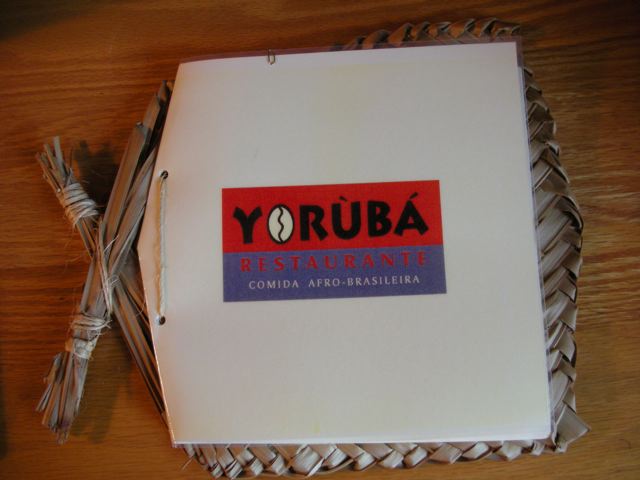
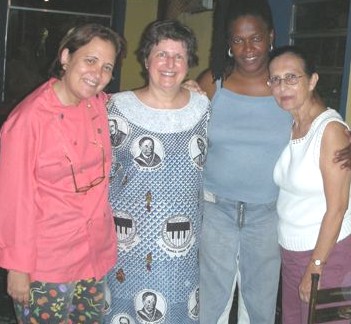
Not only did I discover Brazil in Ghana (see my previous blog posting), I once again discovered Africa in Brazil, and not only in Bahia. In October, 2006, my husband and I made a trip to Rio, and ate at a delightful restaurant called Yorùbá, with a charming atmosphere. I was happy to find not only the ubiquitous Afro-Brazilian dishes (like acarajé the descendant of West Africa's akla [a.k.a. akara, accara, kosai, koose, and kose], or carne de sol and various moquecas, but actual African specialties as well (like ewa, fried fish with yam, okra and dried shrimp, and shrimp piri piri. The staff kindly let me carry home one of their menus. When I returned to Rio during our 5-month stay in Brazil last winter, guess where my intrepid colleagues Theresa and Margarida (see my December 10, 2007 posting for more info about them) insisted on taking me? To a great little African restaurant. Right: Yorùbá again, but with new menus. This time I was accompanied by part of the culinary elite of Rio, we got royal treatment, and I had a chance to chat with chef/owner Neide Santor. I highly recommend stopping in there if you're in that part of Brazil.

Wednesday, September 17, 2008

Pamonha: Brazil in Ghana

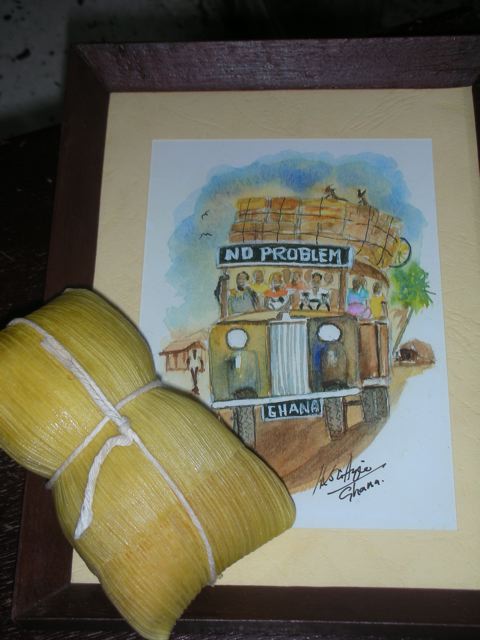
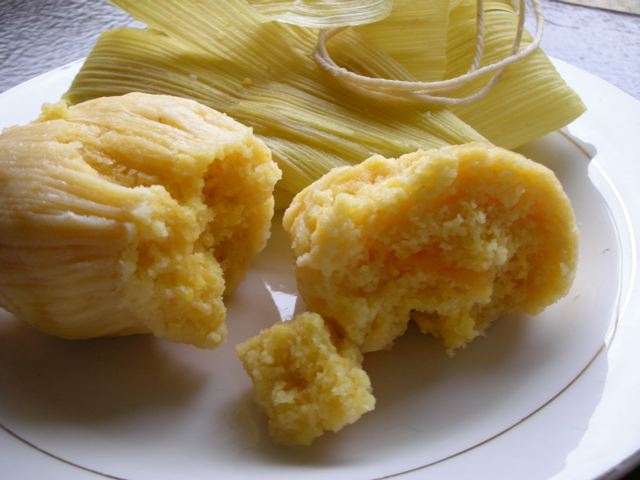
Just before we left Ghana in July, one day we dropped in at the Brazilian Embassy to chat with the wonderfully friendly and helpful staff there. When one of them learned I like Brazilian food, he insisted that I accept a packet of a steamed cornmeal delicacy.

I'm embarrassed to say that I misplaced the scrap of paper on which I scribbled both his name and that of the wonderful snack he gave me. I had to email my pictures to someone in Brazil to help me out, and learned that the name of the dish I enjoyed is pamonha. The one I had was a sweetened ground corn paste that had been boiled, but my friend in Brazil said he especially likes it made with cheese. Apparently they can be either sweet or salty/savory. Though wrapped in corn husks and boiled, it's very unlike Ghana's kenkey, which is heavier and fermented. Still, in the 1970s my sister-in-law Afua in Ghana used to love iced kenkey, a sweetened drink from crumbled or mashed kenkey mixed with evaporated milk and sugar (though we had no refrigerator to chill it and thus the word "iced" always seemed kind of silly).

I understand for pamonhas milk is added to the ground corn, or sometimes coconut milk. It is said that the word pamonha comes from the word for "sticky" (pa'muña) in the Tupi language. As soon as I relocate that slip of paper, I'll be sure to thank the embassy staff for their generosity.

It excites me to continue to learn about Ghana and Brazil's history of friendship and cooperation. I have already said that I would love to see more explicit culinary sharing between the two countries, from Ghana's palmnut soup to the Brazil's tapiocas.

Monday, September 08, 2008

Giving Credit for African Cookbooks


I remember a conversation with Barbara Baeta one day when she was talking about how Laurens van der Post came to Ghana and met with her in the 1960s when he was writing his pioneering Foods of the World volume on African Cooking. She was young and flattered, and generously provided him with numerous recipes used in the book--even allowing herself to be photographed serving at a dinner party in Accra (p. 83). However, she has always regretted that she took the small lump sum the publishers offered her, while a more savvy colleague from Ethiopia negotiated a portion of the royalties and made many, many times over what Barbara earned. I wonder how often Africans provide hospitality and recipes and end up with someone else receiving the credit and money. . .

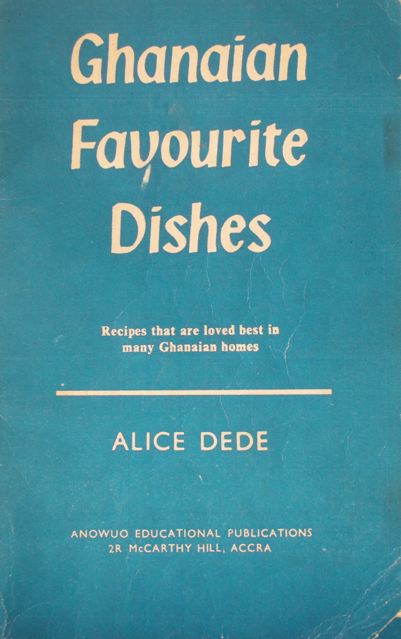
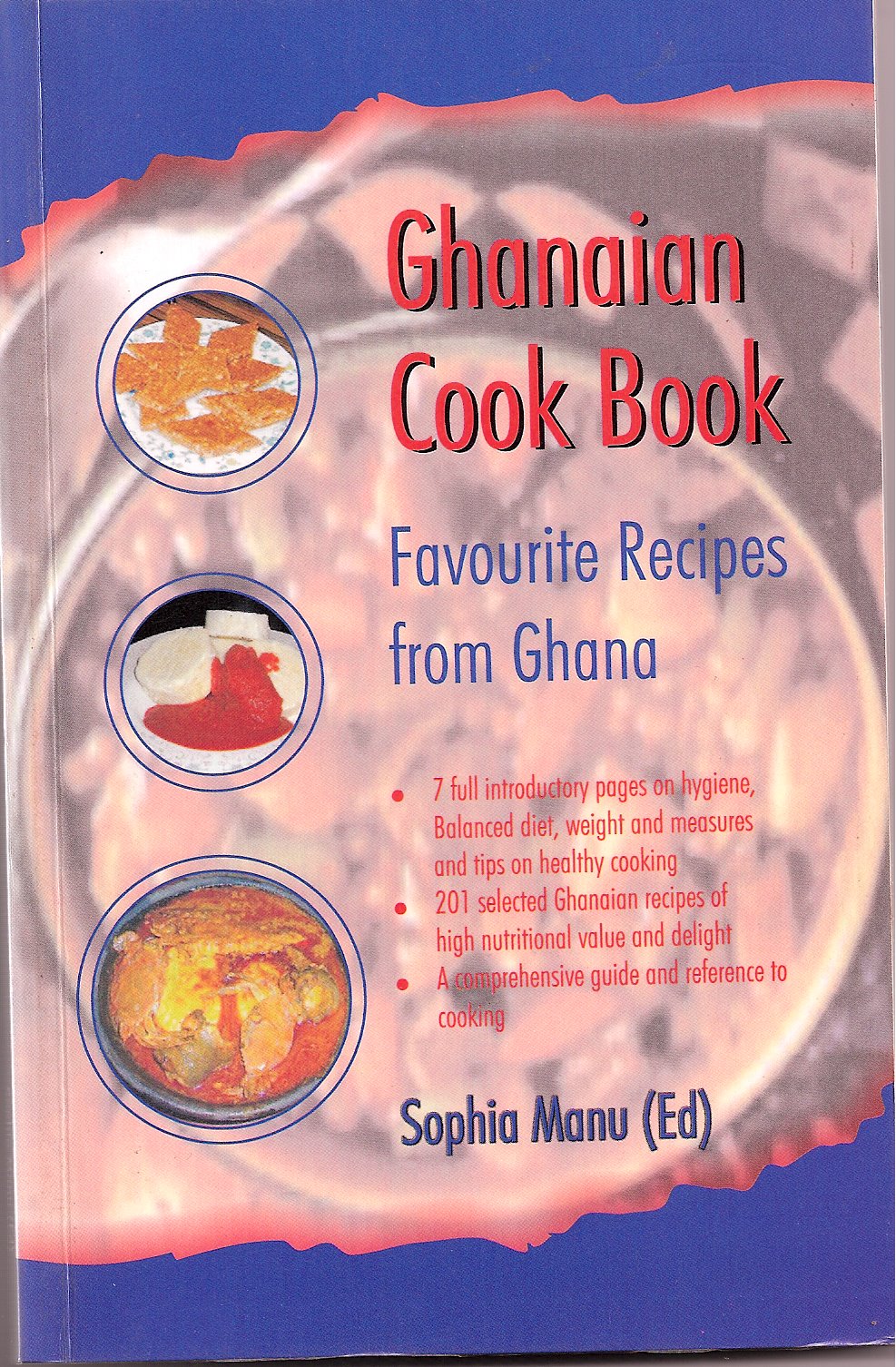
In a related vein, there's something I've been needing to get off my chest for a long time. In the early 1970s when I first came to Ghana, my future sister-in-law gave me a copy of Ghanaian Favourite Recipes (Recipes that are loved best in Many Ghanaian homes) by Alice Dede. It was first published, as near as I can tell, in June, 1969 by Anowuo Educational Publications in Accra. The cover bears Dede's name, and the inside title page declares that the book was compiled by Alice Dede. In the facing page it states "The Author acknowledges with thanks the help received from officials of various educational Institutions in Ghana."

Now it is possible that Alice Dede did this as a work for hire, all the recipes were contributed by others, and once it was compiled all the rights reverted to the publisher. I really don't know. But having written cookbooks myself, I know that even a "compiler" has to make many, many decisions to create such a book, and engage in recipe testing, etc., and deserves credit for that. I've often wondered who Alice Dede was, and what her background was, and what happened to her. I'd love it if any of you can tell me.

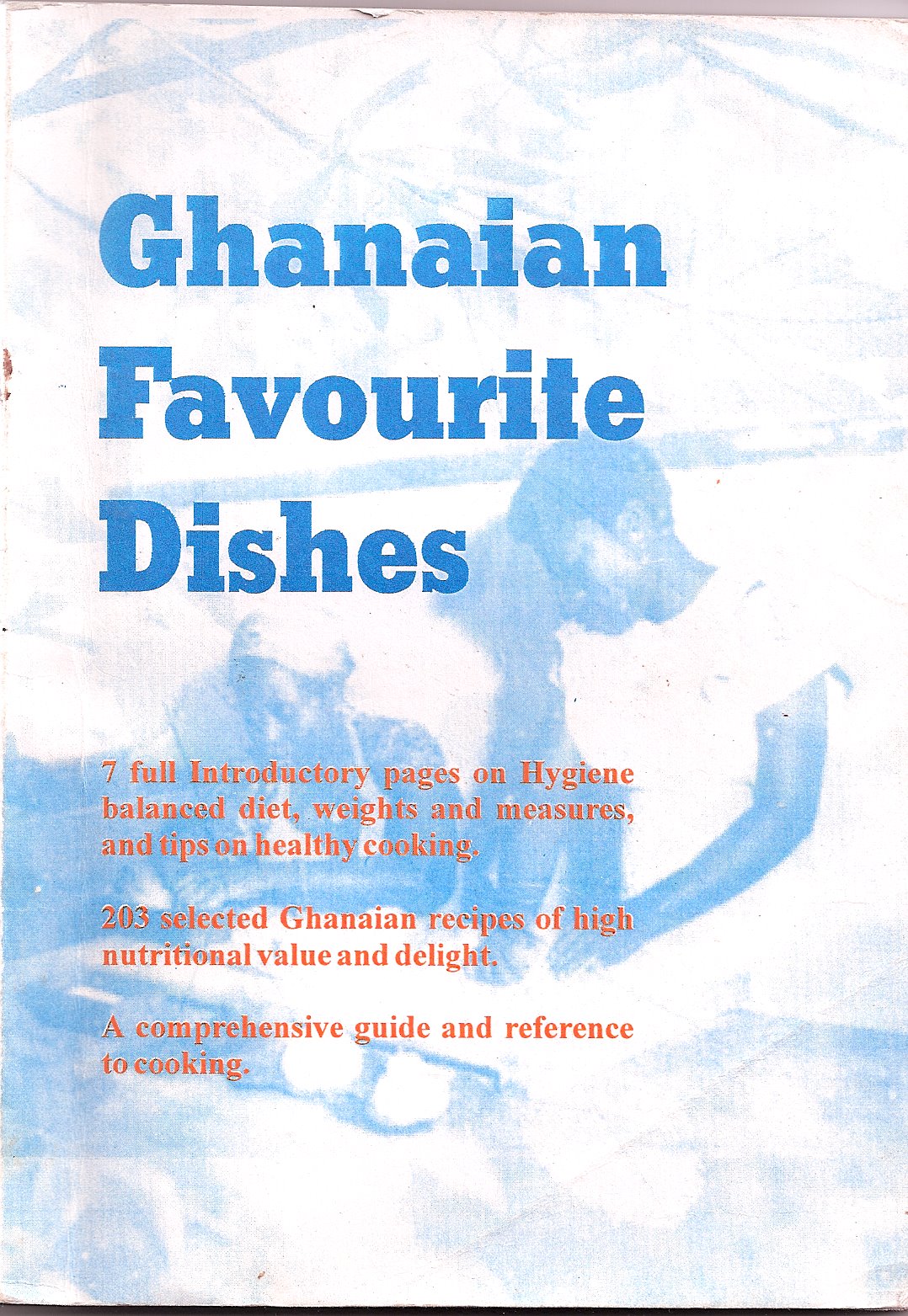
Dede's book became a classic and was reprinted numerous times during the difficult 70s and 80s. Gradually, the book was given cosmetic face lifts (new covers, slight reorganization of recipes, removal of 5 pages of a final chapter called "recipes from other countries" replaced by 4 new pages of introductory material). By 1985, the "Recipes that are loved best in many Ghanaian homes" was gone from the cover (though still on the reprinted front page of the book, where only Alice Dede's name was gone), and the book was said to include "203 selected Ghanaian recipes of high nutritional value and delight," and to be "A comprehensive guide and reference to cooking." Somehow Dede's name and authorship disappeared. In the latest edition I have, from 2006, the title has changed to Ghanaian Cook Book: Favourite Recipes from Ghana, and the book now has a new "editor," Sophia Manu. Apparently, along with editorial advisor S. Asare Konadu, she supervised the latest face lift: a new cover with photographs and more color, including 11 color photographs throughout the chapters and a san serif type face that is larger and easier to read, as well as a better layout design. But as far as the substantive content of the book, the recipes, there are few changes. Ms. Manu moved chapter 6 (baked goods) to chapter 1. It includes two recipes for garri biscuits (#3 and also #16). In copying the menu table from the early edition, there were several errors from the original (omitting words, placing words in the wrong column), and there were also several errors in copying pages and recipes from the original index into the new index, or omitting recipes.
While the latest edition is admittedly more attractive, what bothers me, apart from the fact that I believe Alice Dede should still receive recognition for her work, is that the book is basically a word-for-word duplication of the original recipes, including measurements in cigarette tins and beer bottles, and no indication of any changes in the diet or cooking equipment or techniques in the last 40 years. This is patently not true, and yet the book purports and appears to be a "new" book. Many things have changed, and Ghana deserves a genuinely updated, comprehensive cook book.
Friday, September 05, 2008

Africa Cookbook Project Update

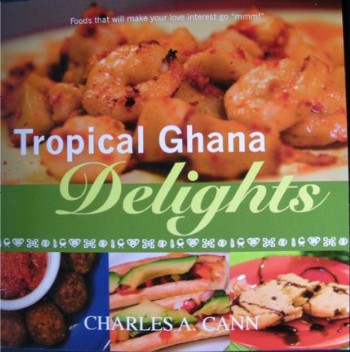
The Africa Cookbook Project has 3 new cookbooks. First, thank you to Ghanaian Charles Cann for a copy of his 2007 Tropical Ghana Delights. This brief 39-page paperback with lovely colorful photos and a matching breezy style contains a couple dozen recipes heavily infused with tropical fruits, from snacks and main dishes to sweets. (Charles, I was surprised not to see any tropical fruit smoothies in the book! I hope that's in the pipeline--Ghanaians generally seem to bond with them from the first taste). Charles' is not a book of traditional Ghanaian recipes: even his light soup recipe includes cucumber, cauliflower, fresh basil and carrots. Rather, it's what I like to think of as "second-" or even "third-" generation Ghanaian cooking. Like Marcus Samuelson, he's taken some basic flavor combinations and ingredients, and creatively added and mixed them up to suit himself. I'll soon be trying them out and reporting back. I must caution that while I love fresh fruits, I generally don't care for adding sugar or honey or sweet fruits to savory dishes. Of course, that doesn't always hold: I do love mango salsa, and sweet ripe plantains with savory stews.

Secondly, after having a pleasant meal at a restaurant in Osu (my filing system is still disorganized, but think the name of the restaurant proprietoress, was Amelia Longdon, of Kalibre Catering Services), Amelia (?) showed me a book she'd recently picked up on the streets, called Recipe Book for All (Catering), an unpretentious but recipe-packed book by Vivian Ofori, apparently in its 2nd edition. I kept my eyes open and eventually found a copy for sale myself. It is a soft-cover 64-page book. The first part is devoted to recipes combining both traditional Ghanaian recipes (like jollof rice, ofam, and abolo), and "continental" recipes for things like pizza, spaghetti, and mayonnaise. These are bare-boned recipes with few explanations but designed for experienced cooks or caterers and using measurement mostly by weight. I counted just over 100 recipes. The book is divided into 2 sections, the first part the basic recipes and some general catering information; the second focused on the basics of nutrition, and including a number of recipes using soy beans and a lengthy section on moringa leaves and pods (Ms. Ofori explains moringa is called zogala or zogalagondi in Hausa, yevu-ti in Ewe, baganlua by Dagombas; ewe ile or idagbo monoye by the Yoruba and ikwe oyibo by the Ibos of Nigeria, and ben aile or boenzolive in French.)

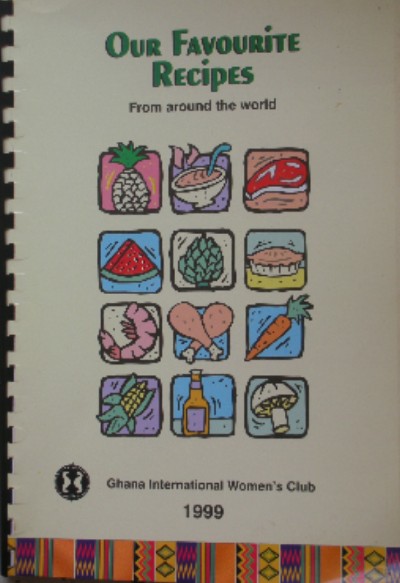
Finally, shortly before I left I discovered the delightful Akwaaba Beach Guest House owned and operated by Swiss innkeeper Helene Jäger. Helene has a lovely collection of African cookbooks, but one that caught my eye, and that I'd not seen before was Our Favourite Recipes: From around the world. This is a wonderful collection of recipes put together creatively and deliciously by the Ghana International Women's Club in 1999. It is truly an international collection, with recipes from The Netherlands, the U.K., Lebanon, Yugoslavia, Sweden, Germany, Brazil, Japan, Belgium, India, Switzerland, Korea, Israel, Malta, Hungary, Trinidad, the U.S.A., France, as well as a good selection from Ghana, and other African countries, including Nigeria, South Africa, Zimbabwe, and Egypt. There was no time to photocopy the book, so I photographed all 95 pages and printed them out when I returned to Pennsylvania. Now I'm going working on completing the data base of the volumes of the project.

Please continue to keep informing me about other resources. Thank you Emeka, about telling me about the June 29 posting on Field to Feast about the Babula Cooking III booklet put together by missionaries in Zaire (as a survival guide using local ingredients). I'd love to get a copy for the collection. That kind of book is also important as social history.

Tuesday, August 05, 2008

Kakum and Fresh Raw Cocoa

For years I've wanted to visit Kakum National Park in Ghana to walk its rope bridges and get a birds'-eye view of the rain forest. It's billed as only one of four "canopy" (above the rainforest) walks in the world, and the only in Africa. The trouble is, I guess, I never go to Ghana as a tourist.


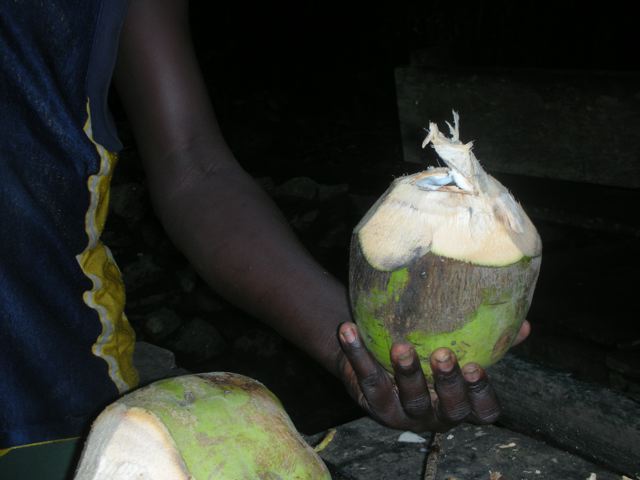
This time, we managed to get to Cape Coast before our 6 1/2 months was up in mid-July, and as usual I enjoyed the wonderful fresh fish, but this time we traveled the 12 or so miles to Kakum. At the end of our tree-top walk, as we descended to the entrance of the park, we stopped to enjoy juice and creamy pulp from some fresh coconuts.


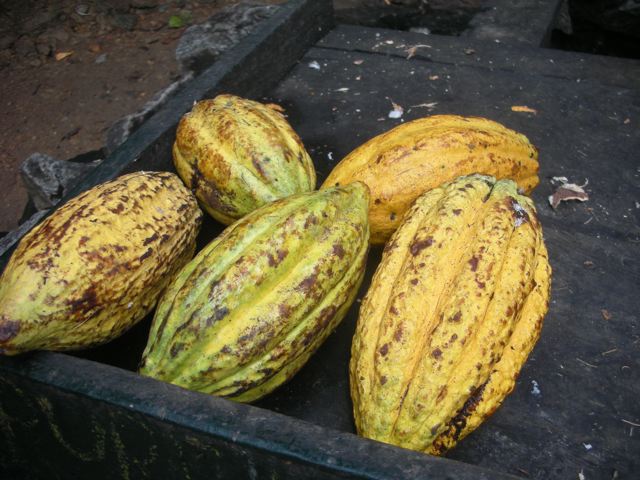
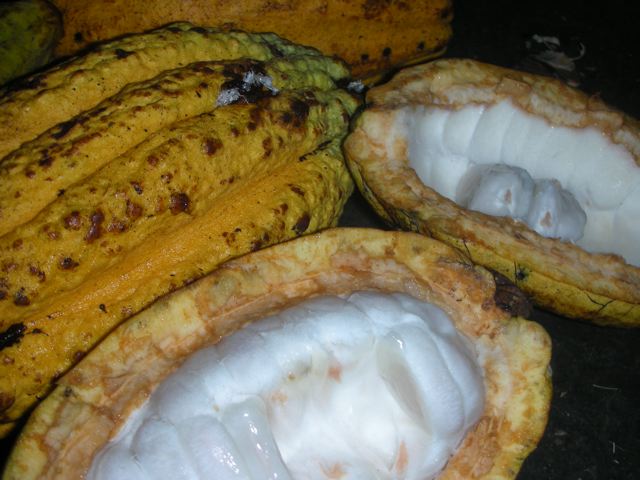
Also, I tasted my first fresh raw cocoa fruit, straight from the pod. We sucked the sweet white pulp from the seeds. The sellers said you can eat the bitter seeds, too (where the chocolate comes from), but others told me to just spit them out, which was my preference. If you're in Ghana, I recommend a trip to Kakum if possible.

I'm now back in central Pennsylvania, but have many stories from our time in Brazil and Ghana this past year to share. I'll soon post about a delightful experience tasting Brazil in Ghana!


Thursday, June 26, 2008

Culinary Entrepreneurship in Ghana


There is a surging sense of hope and creativity regarding things culinary in Ghana. Some of those, like fat-laden fried chicken, potato “chips” (fries), pizza, fried rice and other imported fast food crazes, don’t excite me at all.

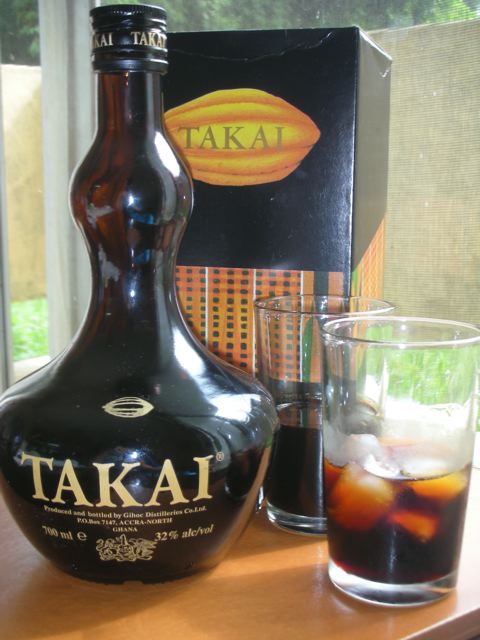
What delights me and my senses is some of the emerging “made in Ghana” foods featuring Ghanaian products. A sampling is included here. There's Takai, a liqueur “made from natural cocoa and coffee blended with other natural aromas” produced and bottled in Ghana by Gihoc Distilleries. The name “Takai” comes from a traditional dance and music of the Dagbamba/Dagomba people of Northern Ghana. The packaging is attractive: a dark box wrapped with a printed strip of kente below a golden cocoa pod (Ghana’s high-quality cocoa has been called its “black gold”). I drank Takai straight the first time, over ice the second. As both a coffee and chocolate lover, I savored the smooth blending of these ingredients with vodka. It was served to me as an aperitif , but would equally well act as an after-dinner liqueur. It also would likely blend well with other things, like cream. And the price in Ghana is under 7 cedis (less than 7 dollars)!

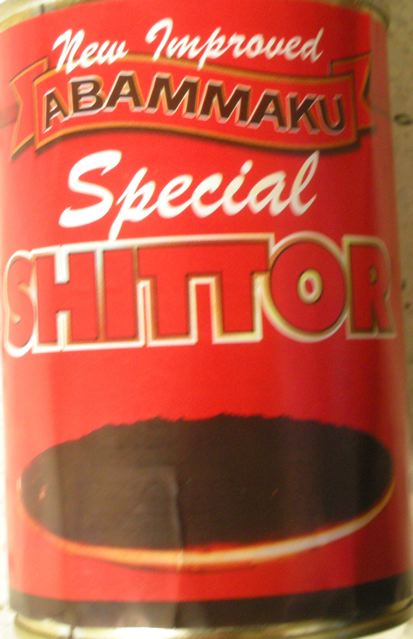
Designer and seamstress Abammaku, of Abammaku's Fashions
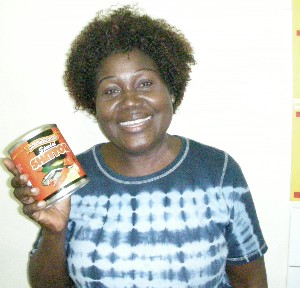
in Accra, has a son serving in the military overseas. He missed eating shito (or shitor), Ghana's lovely distinctive dried pepper-shrimp-herring condiment, and asked his mother to find and send him some. She searched in vain to find canned, not bottled, shito, and finally decided to make it herself. Along the way she discovered a local market for just such a product, and business is thriving.

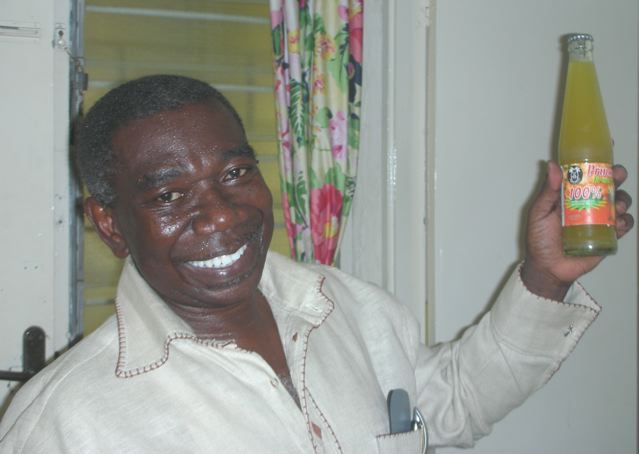
Ghana is also famous for its pineapples, especially its very sweet, low-acid "sugar loaf" pineapples (also known as royal pineapples). Dr. S. K. Dapaah, formerly in the Faculty of Agriculture at the University of Ghana, and once the Chief Director of the Ministry of Food and Agriculture, grows pineapples and bottles his own "Princess" brand pineapple juice, free of preservatives, coloring, or added flavors. We've enjoyed it by the case during our stay the past 6 months.

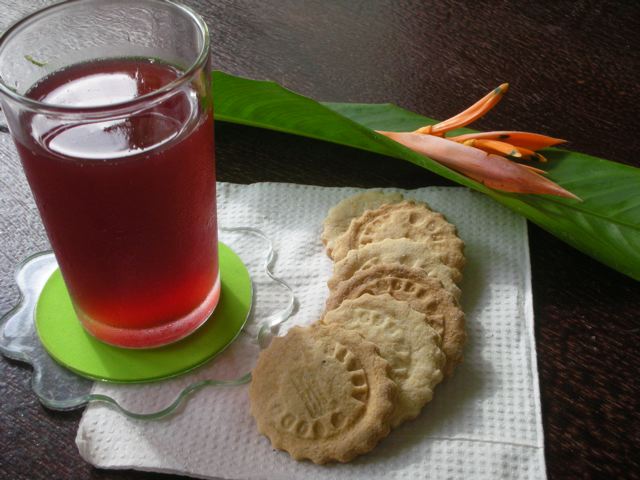
Finally, the humble and faithful cassava has been disrespected and taken for granted for many years. Though eaten daily in many households in the form of fufu or gari, it has rarely been used as a flour. Some entrepreneurs are now experimenting with using it to replace wheat flour in a variety of products, such as the cassava cookies (or "biscuits") made by Godsway Biscuit Factory in Hohoe in the Volta Region of Ghana and shown below with a glass of mango-bissap (bissap is a drink made from dried hibiscus flowers and it blends well with fruit juices such as mango or pineapple, or herbs like lemon grass).