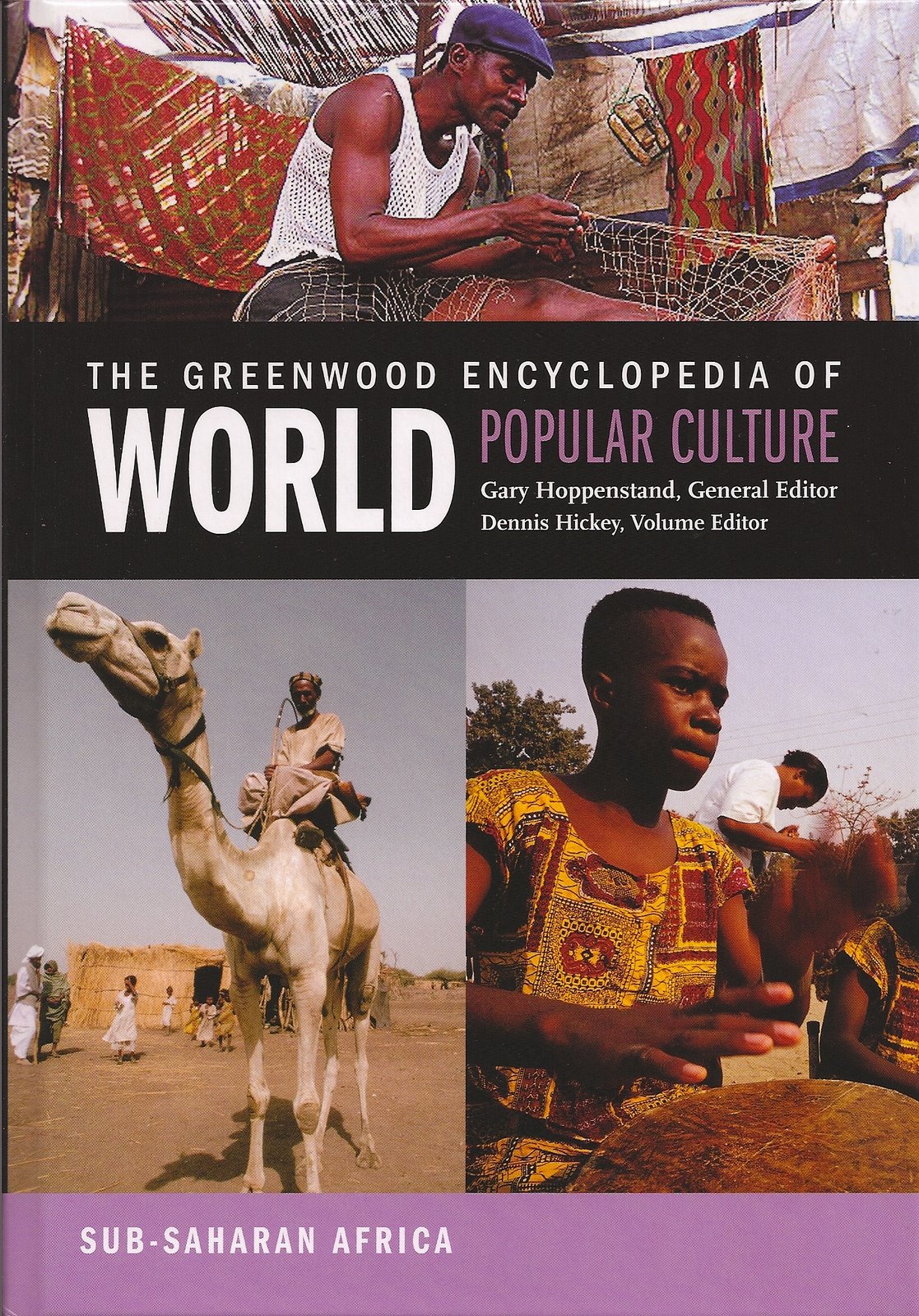
News flash--our forthcoming book is now listed on Amazon! The cover features some of my Ghana photography. Still lots of editing and finalizing, but please stay tuned. It should be out in time for your holiday giving next October. Kudos to Hippocrene for their lovely design.
BETUMI: The African Culinary Network (www.betumi.com) connects anyone who delights in African cuisine, foodways, and food history.
Showing posts with label Osseo-Asare. Show all posts
Tuesday, December 09, 2014
Coming soon: The Ghana Cookbook
News flash--our forthcoming book is now listed on Amazon! The cover features some of my Ghana photography. Still lots of editing and finalizing, but please stay tuned. It should be out in time for your holiday giving next October. Kudos to Hippocrene for their lovely design.
Monday, December 10, 2007
Tapioca Project and Cooking Contest
Their project has been so enthusiastically received by the children and the schools that Teresa and Margarida now have a bigger dream: to expand “Projeto Mandioca” to other cities and states in Brazil, beginning with São Paulo. They plan to develop materials to train and equip teams of qualified volunteers to duplicate and replicate the projects on a wide scale. Already they’ve worked in 6 schools and reached at least a thousand children. These dream-makers deserve our support and encouragement. Read (in Portuguese) more about the foundation they have just established, the Instituto Maniva, to make it possible.
How does this relate to Africa? Teresa and Margarida are acting locally, but they are definitely thinking globally. They want to see the love of and respect for manioc (e.g., cassava) spread everywhere, moving beyond Brazil to Africa. After all, Nigeria is the world’s largest producer of manioc (cassava), and it was Nigerian poet Flora Nwapa who wrote the ode to cassava, Cassava Song and Rice Song. Let’s join them and dream together.
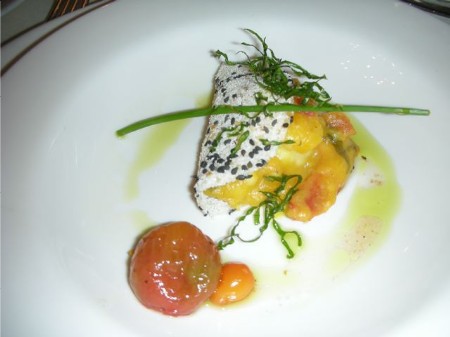
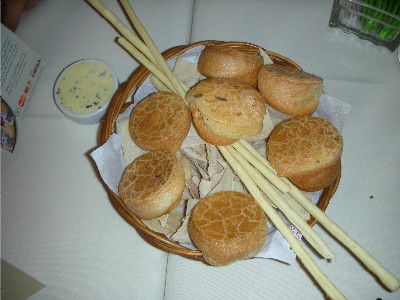
Another joy in Rio was to eat at O Navegador, Teresa’s world class restaurant (with its incredible organic salad bar ,".org") where I enjoyed a highly sophisticated version of a tapioca pancake with black sesame seeds and rock salt (and filled with bobo de camarão, a cassava puree with coconut milk, red palm oil, and shrimp, along with a little cilantro, onions, etc., and garnished with a sauce made of cherry tomato and pimenta biquinho). They also served the best pão de queijo I’ve tasted in Brazil. Now I have all these wonderful cassava recipes I hope to adapt and introduce to Ghana in January!
Labels:
Brasil,
cassava,
manioc,
Margarida Nogueira,
Osseo-Asare,
Rio,
tapioca,
Teresa Corcao
Wednesday, November 28, 2007
Feijoada Cooking Lesson
I'm having a lot of cooking lessons these last few weeks before I leave Brazil. This month I learned the basics for making feijoada, that wonderful bean and meat stew that's practically synonymous with "Brazilian food" (note: I first blogged about it on August 15).
Here is a quick summary:
On Friday, Nov. 9, 2007, Claudia Lima, her co-worker friend Ilda De Sousa Batista and I went to downtown’s sprawling, lively Mercado Central (Central Market) to buy the ingredients for Sunday’s feijoada party.
Our first stop was at what they assured me was THE BEST place in Belo Horizonte to buy the meat: O Rei da Feijoada Ltda. (the King of Feijoada). This was the first step in untangling the mysteries of all the smoked and salted meats that are integral to this dish.
Upon arriving at O Rei da Feijoada, they hand you a paper over the counter with a chart that lists 19 ingredients to choose from (in Portuguese, of course). We took 9 items, including a special sausage for an appetizer (tiragosto)
There we picked, taken from the receipt, as well as I can tell:
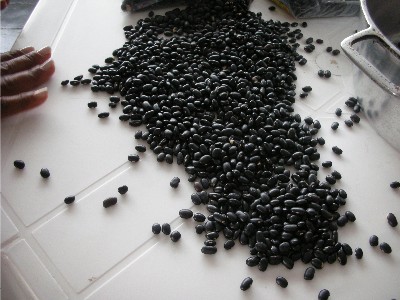
Feijao preto (black beans) 2 pkgs (1 kilo each)
Lingua suina salgada (.815 K)
Pe suina salgada (1 K) [salted pig’s feet]
Lombo defumado (1.1 K) [smoked pork loin]
Costela defumada inteira (1.15 K) [smoked pork ribs]
Linguica defumado ext. gros (.92 K)
Charque trazeiro (1.1 K) [smoked beef]
Rabo Suino salgado (.4 K) [salted pork tail]
Linguica Paio Edtra (.78 K) (special pork sausage)
Bacon Extra (.25 K)
Next Ilda went and bought some special Minas cachaça (Joao Mendes, or JM) for the caipirinhas while Claudia and I went to by the long grain rice (arroz), some vegetable oil (oleo) and salt. Then we went for fresh produce and fruits. Some couve (this is usually referred to as kale or collard greens).
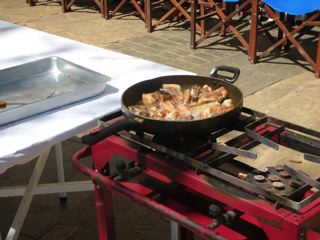
Ilda spent Saturday de-salting and cooking of the salted meats, and pounding the garlic and salt and generally doing the prep for much of Sunday's work, when we actually cooked the beans and meats together (sautéing each of the sausages and smoked meats separately before adding them to the beans and salted meats), prepared the side dishes, etc. On Sunday Ilda and her sister Inesia de Sousa Batista and I arrived early at Claudia's apartment with cooking equipment and ingredients. We set up in the huge but private indoor-outdoor space for parties and people began arriving beginning mid-morning to early afternoon. There was a lot of fellowship, snacks and drinks to get people in the mood. Throughout the afternoon, Sonya Rocha played a few songs on her guitar, and by the end of the fun, relaxing (if busy) day, I felt more connected to Brazil than ever before.
Here are some pictures and a couple of video clips I took:
Tuesday, August 28, 2007
Brazilian Food and Culture Festival
This past weekend was my 35th wedding anniversary, and to celebrate my husband and I took a trip to a small historical colonial town a few hours away from Belo Horizonte called São João del Rei. We then took a short train ride to nearby Tiradentes, where they have a big annual food and culture festival at the end of August. Brazilians know how to celebrate! We had a great time, eating pork, drinking beer while munching cashews and peanuts, sampling food from the many outdoor booths, and generally just immersing ourselves in festive Brazilian culture. The chefs there treated me like a sister, even though I still know only a little Portuguese, and they tended to not speak English.
So now you know why I haven't posted a blog here sooner (I left the computer behind!). I've posted a few photos at my flickr site. How does all this relate to Africa? I'm learning a lot about links among Brazilian, Portuguese, and African cuisine, from manioc (cassava) to cooking techniques. In the next day or two I'll share some of that info, so check back soon.
On the African cookbook project front, I know I've been sent a Ugandan cookbook, and a Mozambican one is on its way to BETUMI. While I'm in Brazil, a colleague is manning the post office box. I'll update you on that front soon, too.
Wednesday, July 18, 2007
Food in Popular Culture in Sub-Saharan Africa
Labels:
African food,
culture,
foodways,
greenwood press,
hickey,
hoppenstand,
mbanga,
Osseo-Asare,
palmnuts,
popular culture,
sukuma wiki
Monday, March 05, 2007
Ghana's Tea Bread Secrets
I've probably had more interest expressed in finding a recipe for Ghana's tea bread than any other recipe.
In 2002 in Ghana I asked the owner of PamFran Co., a bakery in Accra, to teach me to make Ghana-style sugar bread and tea bread. She came to Flair Catering where I was staying, and demonstrated quantities and techniques. After returning to Pennsylvania, my first attempt to recreate her tea bread failed miserably: mine was hard as a rock. I returned to Ghana 2 years later, and went back to Mrs. Spendlove, Pamela Ayele Attipoe, to be shown again. This time I went to her bakery, and realized her commercial mixers and rollers also affect the texture of her bread. I'm still trying to perfect my recipe. I thought I'd share where I am so far.
One difference between Ghana and Pennsylvania tea bread is the gluten content in the flour: Ghana's has more gluten. In Accra we mixed flour from Takoradi and Irani mills to average the hardness (Ghana does not grow its own wheat, but imports it and mills it locally. I've read that around 90% comes from the U.S. I think, but am not sure, that it imports mostly hard red winter wheat). This time I used bread flour, which may still not be as hard.
Anyhow, I've combined the 2 lessons in Accra with another, older recipe from the 1953 edition of Gold Coast Nutrition and Cookery. The 1953 recipe uses palm wine, but I substituted yeast and a little extra water. However, I noticed that Marian Shardow has a recipe for palm wine bread in her A Taste of Hospitality and says you can substitute white wine for palm wine. I'll try that next. I'm still having some trouble getting the sugar and salt in the right proportions, and my dough is rising faster than the 8 hours it takes in Ghana, but I'll keep working on it. In the meantime, any of you who'd like to take a crack at it and let me know your versions/results, here's where I've gotten to so far with my recipe development (I'm using U.S. measurements):
2 lb. 3 oz. of bread flour (about 7 1/2 cups)
2 oz. of sugar (this needs increasing some, I think)
1.5 t yeast (or 1 rounded teaspoon; I may try 1 t next time)
2 t ground nutmeg (reduce to 1 1/2 t?)
2 t salt (down from 1 T)
4 oz margarine
about 2 cups warm water
I weighed, then sifted the flour, added the sugar, yeast, nutmeg and salt, and mixed in the water gradually, first with a spoon, then my hands. Finally, I continued mixing in the margarine (not butter) with my hands.
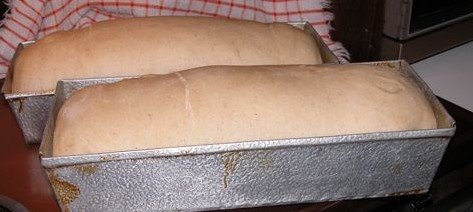
I kneaded the dough on a floured surface for about 10 minutes until it was elastic and smooth (it's a stiffer dough than a normal white or whole wheat dough), and turned it into a greased bowl, covered it with a dishtowel and set it in a warm oven to rest and ferment for about half an hour. Then I punched the dough down, divided it in half and stretched each half out and formed each into one-pound loaves to put inside lightly greased aluminum bread pans I brought from Ghana and let them rise (proof) inside my warm oven with a bowl of water below them to keep them from drying out (I also covered them with the dish towel). Instead of the 8 hours I was hoping for, after 4 hours they were at the top of the pans and needed to be baked. I put them in a hot oven (425 degrees F) for about 15 minutes, then turned the heat down to 375 for another 30 minutes. Next time I'll just cook them at 375 degrees for the full 45 minutes or so (my crust browned too quickly).
Today I halved the recipe and just added everything into my bread machine on the dough setting and mixed it, then turned it into a lightly greased bowl to let it rise. It's still rising. I'll wait 7 or 8 hours before I punch it down and make the loaf, then let it rise for about 30 minutes and bake it at 375 degrees F for about 45 minutes.
Family taste test: For the first version listed above my husband said there was an elusive flavoring he seemed to think his mother's tea bread used to have (someone suggested it might be mace?). Teenager Sam said he thought mine had too much nutmeg and the texture was different, plus the crust was too tough. Sam and I thought there was too much salt, but my husband disagreed. I'll let you know how the recipe testing process goes as we keep working on this. Please do share your insights.
Subscribe to:
Posts (Atom)