Palmnut soup has many names. For example, it is commonly known as abe nkwan in Ghana, mbanga soup in Cameroon, and banga in Nigeria.
We celebrated my nephew's 23rd birthday in October. When I asked this Americanized young Ghanaian what he wanted me to cook for his special dinner (Mexican, Italian, Asian, Ghanaian, "American," etc.), for the second year in a row he answered "palmnut soup and cocoyam (taro) fufu." I scouted around State College, PA rounding up

canned cream of palm fruits, cocoyam fufu flour, smoked mackerel (Duckpond), fresh crabs (and king crab legs) and shrimp, habanero peppers, lamb and beef and soup bones, fresh ginger, mushrooms, eggplant, (frozen) okra, etc. While I was preparing his special meal the thought flitted through my head that I ought to take some photos for my blog, but things were too hectic and I forgot about it.
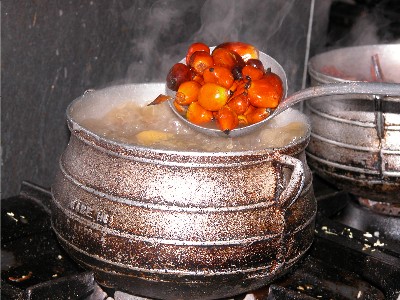
But, while trying to remember if I'd ever posted a recipe for palmnut soup (no) I was poking around on the Internet and was dismayed to see several recipes that described using palm oil ("no substitutes") to make it. As one (obviously Ghanaian) person pointed out on one of the sites "You are so wrong. Ghanaian palm nut (soup) is very different from what you described." Perhaps in some countries they use the oil, but in Ghana, the oil is strictly for stews or frying, and using the pulp or "cream" of the fruit is imperative.
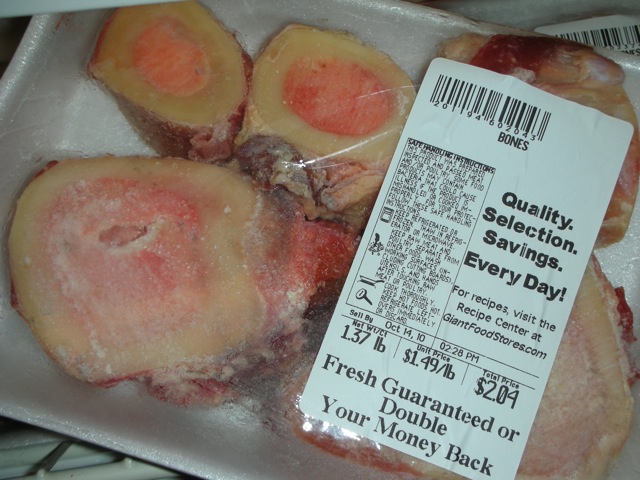
Since I hadn't taken any photos while preparing Sam's soup I scanned one above from my cookbook A Good Soup Attracts Chairs. I also went to the grocery store and photographed the ingredients I used (except our local store was out of the Duckpond Smoked Mackerel, the type I prefer). There are several authentic Ghanaian recipes for palmnut soup available on the internet and if you try one, just be sure it calls for using canned cream of palm fruit (or, if you're lucky enough to be in a place where you can buy fresh palm nuts, and have a mortar and pestle for pounding and straining them, that's even better, but a lot more work).
Palm nut soup is also a family favorite at my house for ringing in the New Year. Here is the extra special rich birthday version I prepared for Sam who came home from college and his brother Ernest, who came up from Philadelphia for the event. It's loaded with seafood, meat, and vegetables, and adapted to our Pennsylvania environment. It's also not cheap to make but you can simplify it if you're making an "every day" version. Just remember to use the freshest ingredients available.
Other Ingredients (besides the canned cream of palm fruit, aka. sauce graine) and the fufu flour:
I hope your appetite is whetted, or your curiosity aroused. I'll post my actual recipe tomorrow.


 canned cream of palm fruits, cocoyam fufu flour, smoked mackerel (Duckpond), fresh crabs (and king crab legs) and shrimp, habanero peppers, lamb and beef and soup bones, fresh ginger, mushrooms, eggplant, (frozen) okra, etc. While I was preparing his special meal the thought flitted through my head that I ought to take some photos for my blog, but things were too hectic and I forgot about it.