Showing posts with label palmnut soup. Show all posts

Tuesday, March 26, 2013

Aprapransa: delicious Ghanaian onepot meal


This dish has a variety of names in Ghana. I first met it in the Eastern Region as aprapransa. When he recalls his grandmother's version, garnished with Ghana's wonderful crabs (like those seen below), my husband's eyes still glaze over. Along with its Twi name aprapransa, it's also called akpledzi (Ga or Ewe), apragyaa (Fante), or bɔbɔe (Ewe), or akplijii. Its other notable ingredient is the toasted corn flour used in  making Tom Brown or the tankora/yagi rub/powder used for chichinga/suya.

It is an interesting texture and unusual flavor, but one that is  quite accessible to Western palates. However, the cream of palm fruit used means that is a rich dish that should be reserved for special occasions. It also requires some time and effort. I decided the visit of my architect son from Ghana qualified.
Here in March in  central Pennsylvania, I had to improvise and use king crab legs. I also used adzuki in place of the small red beans from Ghana. However, I was able to obtain the requisite toasted corn flour (aka Tom Brown flour), and dried crayfish from Washington DC. All the other ingredients, including smoked fish (though I substituted smoked whiting for smoked herrings), salted cod, and cream of palm fruit, were locally available. It can also be made using meat.


Recipe 98: Aprapransa (toasted cornmeal one-pot)

Though this dish is served as a "one pot," it has two parts. The first is a bean and palmfruit soup that is thickened with the toasted corn flour, with a thick gravy (also called "dressing") served on top and/or on the side.


Assemble ingredients and equipment.
I used:

  • 2/3 cup adzuki beans (150 ml)
  • about 1 tablespoon (15 ml) of salted cod
  • 6 shallots (or substitute 1 1/4 cups of chopped onion) (300 ml)
  • about 10 oz of smoked whiting (300 g)
  • about 1/2 Habanero pepper
  • a large can of cream of palm fruit (you'll use about 3/4 of it)
  •  2 cups of Tom Brown flour (toasted corn flour) (500 ml)
  • ~10 small tomatoes or several large tomatoes
  • 2 tablespoons (30 ml) powdered shrimp/crayfish

Before preparing the aprapransa I first cooked the 2/3 cup or adzuki beans. I rinsed them, covered them with water, brought it to a boil for a couple of minutes, then let them sit about an hour and then cooked the beans until they were almost soft. Alternatively, you could let them soak overnight, drain off the water, and then cook them. I also desalted the cod fish just before making the aprapransa by simmering it in a small pot for a few minutes. Alternatively, you could soak it.

When the beans and salted cod were ready I made the actual stew by first making a palmnut soup. I added to a pot:
  •  four  shallots peeled and finely chopped (to get about 3/4 cup) 
  • (after removing the skin and bones of the smoked whiting and flaking it) added a bit over a cup of flaked fish
  • about 7 smallish tomatoes chopped (or you could use 3 or 4 medium ones)
  • 3/4 of a large can of cream of palm fruit
  • a couple of cups of water
  • about 1/4 of a very hot Habanero pepper, seeded
  • 2 tablespoons of dried powdered crayfish
  • the cooked beans (actually, I probably should have only put in half of the beans and added the rest at the end because they got softer than I wanted, and kind of lost their distinctiveness)
As these simmered, I began scooping off the palm oil that rose to the top--I ended up with about 1 1/2 cup to 2 cups of oil.
Also, as the soup was cooking I cooked the crab legs eparately in a pot with salted water and a bit of chopped onion. When they were cooked I removed them and set them aside to garnish the final dish. Just before finishing the aprapransa soup, I made the gravy to go with it.

I ground 2 small shallots (or use about half an onion) and 1/4 of a seeded Habanero in a blender, then heated about 1/2 cup of the palm oil I had removed from the soup (saving the rest of the oil to use some other day),  and fried  the shallots, palm oil and about 1/2 teaspoon salt and a little ground dried red pepper together several minutes on midium. Then I sliced half an onion and another handful of tomatoes and fried them together to make the gravy. I let the gravy sit while I added the corn flour to the soup:
 
Before adding the 2 cups of corn flour, I removed a couple of cups of soup from the bowl, and slowly stirred in the corn flour to the rest of the soup, stirring constantly to prevent lumps forming. Then I stirred in the rest of the soup and kept stirring and cooking it until it pulled away from the sides. (and this is when I would have added part of the beans if I had removed them). 
To serve: I served the aprapransa in an asanka, garnished with some of the gravy ("dressing") and the crab, with a smaller bowl of gravy on the side.
While we agreed the corn flour was ground very fine and maybe the aprapransa was a little soft (I might have added a little more water than necessary), my husband had 3 servings!
And this time  I didn't hear about how much better his grandmother's had been. It made enough to serve 6.


Sunday, February 06, 2011

Palmnut Soup Sunday

I’m leaving Ghana in a few days, so am starting to empty out the refrigerator. Today I defrosted some goat meat and smoked fish, along with some cream of palm fruit.

The stock ingredients included just the basics: a few cups of water, a chopped onion, 3 cloves of minced garlic, ~a tablespoon of fresh grated ginger, 2 habanero peppers, a teaspoonful of salt. After the goat meat simmered for awhile (like an hour), I added some smoked tuna, a couple of small zucchini squash I had handy, and 2 tomatoes to soften before blending them into the soup.

It cooked for hours, and filled the house with a comforting aroma. I was only sad there was no one but me to eat it ;-(

It really was begging for fufu, and I heard the thump-thump of neighbors pounding their afternoon fufu, but if I didn’t use up my yam (and some left-over kenkey-like banku), I knew they would go bad.

It was a pleasant dinner. One of our local roosters thought I might share, but though I gave him a few crumbles of banku, the soup was mine alone.

Thursday, November 04, 2010

Ghanaian Gourmet--Recipe #49, continued: Palmnut Soup

Yesterday I introduced palmnut soup and today I continue to celebrate the much-maligned palm fruit, basic to this most wonderful of soups, abe nkwan.  Incidentally, nkwan means "soup" in the Twi language, and abe is the Twi name of the red fruits of the palm tree (shown below). I was able to  find a couple of photos from last New Year's Day to share with the recipe, along with a Tema market photo Katie took in June.

In an article in Gastronomica several years ago, I wrote: "it is as hard to capture the essence of the palm fruit . . .  as it is to describe the hues of sunset to a blind person. The fruit has a color like paprika or glowing coals, with the softness of red velvet, the silkiness of a fine sari, and the richness of fresh cream."

As is true of many soups, abe nkwan allows the creator some freedom and creativity. Here's my holiday version. Trust me, it's well worth the work.


Assemble all ingredients:


2 large onions, any type (enough to get about 3 cups, chopped)
2 pounds meat (beef, lamb, or goat, or a combination--I use lamb and beef)
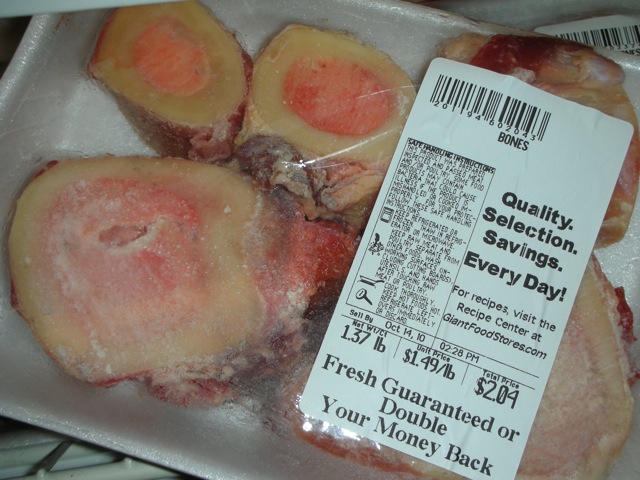
1-2 pounds of soup bones
1 medium eggplant (to get about 3 cups chopped)
1 28 oz can plum tomatoes (I'm such a purist I usually remove and strain out the seeds first)
1 29 oz/800 g can cream of palmnuts (NOTE: to locate an African market near you, check African Chop )
1 pound assorted fresh mushrooms (I like crimini and portabella)
6 oz smoked fish (I like Duck Pond's smoked mackerel, but also white fish, whiting or salmon. I don't recommend smoked herring, however. Even desalted, it has a strong flavor.)
3 crabs (or I generally use a combination of crab and King crab legs)
1 pound fresh shrimp with shells (the larger, the better)
1 10 oz package frozen chopped okra (or fresh if you can get it)
seasonings, to taste:
salt (~ 2 teaspoons)
fresh peeled, grated ginger (~4 teaspoons)
hot pepper, to taste [NOTE: if you are not used to handling habanero peppers, which must be done very carefully,  you might want to skip the fresh peppers, and stick with dried ground red pepper ] How much pepper varies greatly: if you like HOT, throw in one or two habanero peppers whole, but with the stem removed and let them steam with the meat and then cook in the broth. After they're soft you can squeeze them to increase the heat in the soup, or remove them and serve them on the side for people to add heat individually.  OR you can remove them and blend one or two of them with the eggplant or tomatoes. OR you can remove the seeds and membranes before cooking them. OR you can substitute milder peppers like jalapenos. OR to start with you can simply add dried ground red pepper to taste (for a mild soup, about 1/4 - 1/2 teaspoon). I always serve extra dried pepper flakes with the soup for the men in my family, who like their soup very spicy.
2-4  cloves garlic
[if you like, add a tablespoon or 2 of powdered dried shrimp or prawns]
water


Assemble equipment:


I use a can opener, pot holders, paper towels (to wipe the mushrooms), cutting board, ginger grater,  garlic press,  blender or food processor, strainer, knives, large 8-qt soup pot, wooden spoon,  slotted spoon, soup ladle, and 2-qt  sauce pan. Unlike most Africans, I also use measuring spoons and cups.


Directions:


1. Peel and chop the onions (I prefer them medium-to-fine) and put them into a large, heavy soup pot.
2. Remove and discard fat and gristle on the meat, then cut it into chunks (I usually make them about 1/2 inch cubes), and add to the soup pot, along with 1/2 cup water. 
3. Peel and crush the garlic cloves and sprinkle over the meat. Peel and grate the fresh ginger and add to the pot. Rinse and remove the stem end of the hot peppers (de-seed and remove membranes if desired), or sprinkle dried red pepper over the meat, along with about 2 teaspoons salt (NOTE: at this point many West Africans would crumble a few Maggi or Royco cubes over the meat, too, but it's unnecessary.). Stir meat and seasonings with the wooden spoon and place the pot over a medium-high heat to steam, covered, for about 15 minutes.
4. While the meat is steaming, rinse, peel, and cube the eggplant and put it in a saucepan with a few cups of water. Cover the pan and bring to a boil over high heat, then simmer for about 10 minutes. 
5. While the eggplant is simmering, blend the  tomatoes in the blender or food processor and add to the soup pot.
6. Open the canned cream of palm fruits and add to the pot. Use a little water, or a spatula or spoon, to get all of the palm cream out of the can. 
7. When the eggplant is soft, remove the pan from the heat and use a slotted spoon to transfer the eggplant to the blender or food processor in two batches. Add a little of the cooking water to the blender (maybe 1/2 cup). No need to rinse out the dregs from the tomatoes. If you wish, transfer one or more of the chili peppers into the blender container and grind with the eggplant. After grinding, add to the soup pot.
8. Also add 4 to 6 cups of water (or, simply add 1 1/2 to 2 cans of water using the tomato or palm fruit cans), depending on how thick you desire the soup to be. I often use part of the water to rinse out the blender or food processor container.
8. Stir well and allow the soup to simmer for 30 minutes while you prepare the remaining ingredients.
9. Quickly rinse the mushrooms and wipe them dry with paper towels, trimming (but not removing) the stem ends. Leave the mushrooms whole or halved (for small mushrooms), or thickly sliced for larger mushrooms, and add them to the pot.
10. Remove and discard the skin and bones from the smoked fish, then add the fish to the pot.
11. Rinse and devein the shrimp, but do not remove their shells. Add them to the pot.
12. Clean and rinse the crabs/crab legs and add to the pot.
13. Add the frozen okra (and powdered dried shrimp, if using) and stir.
14. Cover the soup pot and allow the soup to simmer on low for about 20 minutes, until the meat and vegetables are soft and flavors have blended together.
15. As the soup cooks, use a spoon to skim off the red palm oil that rises to the surface. This may be set aside and saved to be used for other cooking. Add more salt or red pepper if needed.


Serve this lovely, filling soup with fufu, rice,  or  omo tuo (rice balls) (or, if you prefer, thick slices of French or a hearty bread). Oh my goodness, I don't think I've never posted a recipe for omo tuo, either. Look for that soon.


Enjoy.


Wednesday, November 03, 2010

Recipe #49: Abe Nwkan (Palmnut Soup), Part I


Palmnut soup has many names. For example, it is commonly known as abe nkwan in Ghana,  mbanga soup in Cameroon, and banga in Nigeria.

We celebrated my nephew's 23rd birthday in October. When I asked this Americanized young Ghanaian what he wanted me to cook for his special dinner (Mexican, Italian, Asian, Ghanaian, "American," etc.),  for the second year in a row he answered "palmnut soup and cocoyam (taro) fufu." I scouted around State College, PA rounding up

canned cream of palm fruits, cocoyam fufu flour, smoked mackerel (Duckpond), fresh crabs (and king crab legs) and shrimp, habanero peppers, lamb and beef and soup bones, fresh ginger, mushrooms, eggplant, (frozen) okra, etc. While I was preparing his special meal the thought flitted through my head that I ought to take some photos for my blog, but things were too hectic and I forgot about it.

But, while trying to remember if I'd ever posted a recipe for palmnut soup (no) I was poking around on the Internet and was dismayed to see several recipes that described using palm oil ("no substitutes") to make it. As one (obviously Ghanaian) person pointed out on one of the sites "You are so wrong. Ghanaian palm nut (soup) is very different from what you described." Perhaps in some countries they use the oil, but in Ghana, the oil is strictly for stews or frying, and using the pulp or "cream" of the fruit is imperative.

Since I hadn't taken any photos while preparing Sam's soup I scanned one above from my cookbook A Good Soup Attracts Chairs. I also went to the grocery store and photographed the ingredients I used (except our local store was out of the Duckpond Smoked Mackerel, the type I prefer). There are several authentic Ghanaian recipes for palmnut soup available on the internet and if you try one, just be sure it calls for using canned cream of palm fruit (or, if you're lucky enough to be in a place where you can buy fresh palm nuts, and have a mortar and pestle for pounding and straining them, that's even better, but a lot more work).

Palm nut soup is also a family favorite at my house for ringing in the New Year. Here is the extra special rich birthday version I prepared for Sam who came home from college and his brother Ernest, who came up from Philadelphia for the event. It's loaded with seafood, meat, and vegetables, and adapted to our Pennsylvania environment. It's also not cheap to make but you can simplify it if you're making an "every day" version. Just remember to use the freshest ingredients available.

Other Ingredients (besides the canned cream of palm fruit, aka. sauce graine) and the fufu flour:


I hope your appetite is whetted, or your curiosity aroused. I'll post my actual recipe tomorrow.