Tuesday, November 13, 2012

Field Trip: West and East Africa in Washington DC

Our food culture in sub-Saharan Africa class is in the home stretch. We've completed units on western, eastern, and southern African cuisine, and are now in central Africa. After weeks coordinating schedules, we managed a field trip day in Washington, DC. on Saturday.

At 6:30 a.m. we piled into a Penn State van in State College, PA and drove to Washington DC. It was a good choice, not only because are there many West Africans in the area,  but there are also over 200,000 Ethiopians living there, reportedly the largest concentration in the U.S.

When we arrived at our destination, it was also a "farmers market" day, and extremely congested. Several of us felt like we were back in a crowded West African market. After driving around several times, we finally found a parking space, and entered a West African wholeseller's store. Wendi, from Ghana, felt right at home and took advantage of the trip to stock up, as did I. We stopped at "Divine Unity Foods" first, then went over to nearby Obeng International Wholesale & Retail." Both of these had the same address online, but were actually separate shops near each other.


 Ethel, the cashier at Divine Unity, was cheerful and typically helpful as she rang up our many purchases.

 
A colleague had requested me to pick up some cassava leaves. We tend to eat cocoyam leaves, nkontomire, in Ghana, so I asked a Liberian woman in front of me in the checkout line for advice on the cassava leaves I had in my basket. She immediately said, "no," plucked them out of my hands and returned with a bag of frozen ground cassava leaves. "These are best." Turns out, she was right.


After stopping at another market next door (where we continued looking in vain for any kola nuts), we headed over to Dukem restaurant for some fine Ethiopian food. Prof. Zieglar, who graciously drove us, brought along a visiting Ethiopian colleague, Ashagrie, who had been in the U.S. for only a week, and was ecstatic to finally have a "proper" meal. He ordered the largest combination plate on the menu (with injera, of course), and thoroughly enjoyed himself. He also repeatedly helped us out with information on Ethiopia's food culture.


The students found there was something for everyone, including our vegetarians, and unhesitatingly dived in with their (right) hands. I was proud of them! 

After lunch, we wandered down the street to Habesha market and restaurant) to look at some Ethiopian spices and ingredients, then headed over to Etete for a traditional coffee ceremony. We stopped after the second cup, instead of the traditional three. Everyone was stuffed. Or, as we might say, well "fed up."


[Of course, Eastern African cuisine also includes the foods of Kenya, Tanzania, and Uganda, but there seem to no longer be any easily identifiable restaurants serving ugali and associated recipes like sukuma wiki or irio, or something like Ugandan matoke in the area. Please correct me if I'm wrong.] 

Any of you Penn State (University Park) undergraduat students out there, the course will be offered again in the fall of 2013. Hope you'll join us.

Tuesday, October 23, 2012

Betumiblog Award and update

 I received a pleasant note today that Betumiblog has been selected by a business school as among the "Top 100 Sites for International Business People," (at #23 overall, and 3rd in the Africa list). See the nifty badge they sent me. That spurred me to take a few minutes to stop work and jot off this posting.

It looks like Betumiblog has (in other words, I have) been slacking off. Not so! The problem is that I don't have time right now to write up everything I have on my current list (including new African culinary products via Bim's Kitchen,  another donation to the Africa cookbook collection, and discussion of the linguistic confusion and controversy over alligator/melegueta/malagueta peppers).

Actually, the reason I'm not writing on my blog is a good one: two publishers have expressed interest in the Ghanaian regional cookbook. At last, Africa's time is at hand (for additional support of this statement, see the October video and edition of the World Bank's African Pulse). I am working hard to prepare a convincing proposal to send out. But, as I  recently observed "to do one thing well requires doing many things." The postings will have to wait a few more weeks as I focus on the prospectus. Please keep your fingers crossed. Many of you keep asking when the book will be published. Just remember: "little by little, the chicken drinks water."  I believe it will happen within the next year and a half.


Wednesday, October 03, 2012

African food in literature

Food studies and literature courses rarely consider African food the same way they do other cuisines, apart from the frequent allusions to Igbo food in Achebe's works. In class we're taking a very quick look at food in African literature, including proverbs, poems, short stories, and novels. 

Today we heard two African poets, who graciously included "food poems" in their repertoires
for us: for example, South African Gabeba Baderoon read food poems like "Hunger" and Liberian Patricia Jabbeh-Wesley's poems included images of broken calabashes and scattered palm wine. In class we read Jabbeh-Wesley's poem "Wandering Child." Both of these talented poets' writings often evoke a sharp sense of exile, loss, and/or nostalgia. We've also looked at some writing by Cameroonian author Angèle Kingué. It seems to me that African women write differently--somehow more intimately--about food than African men, but perhaps I have just not read widely enough.

One student is reading Nega Mezlekia's Notes from the Hyena's Belly  and another Chris Abani's Graceland. Earlier we considered Shirin Edwin's "Subverting Social Customs: The Representation of Food in Three West African Francophone Novels." We also talked briefly about Tsitsi Dangarembga's Nervous Conditions. The assignment is to consider the roles food plays in these novels.

I've also been anxiously awaiting the English translation of Cameroonian Calixthe Beyala’s book  How to Cook Your Husband the African Way. It sounds like it might be in the vein of Brazilian Jorge Armado's Dona Flor and her Two Husbands. I'd love to know more about other African works and/or articles that focus on this subject. Please help me grow my understanding. And, if anyone can tell me of African films where food is important thematically, I'd also love to know about them. 


Monday, September 24, 2012

West African cuisine comes to Penn State

Last Friday we finished the Western Africa unit of our class at Penn State, and in a grand finale moved to one of PSU's food labs in the food science building and spent a busy early morning preparing and sampling a variety of West African foods, showcasing different cooking techniques (steaming, baking, deepfrying, stewing, grinding, cutting, steeping) and ingredients (starches like cassava, plantain, and corn; fruits, vegetables, seeds, nuts, herbs, legumes, including coconut, lemon grass, hibiscus, pineapple, groundnuts (peanuts), black-eyed peas, pumpkin, onions, tomatoes, peppers, and a Senegalese tea leaf (Krystal, what's the name of that again?). It made everything we studied seem more real. As I pointed out to the students, there was nary a drop of dairy or wheat in any of the things we ate. As usual, I forgot to take any photos until we were eating, so you cannot see anyone cracking open coconuts or grinding in the asanka. Still, you can see a little bit of the results.


This week we're moving on to Eastern Africa, beginning with the Horn of Africa. Wish you could join us!


Saturday, September 15, 2012

Fall for Garden Eggs (African eggplants) and a question

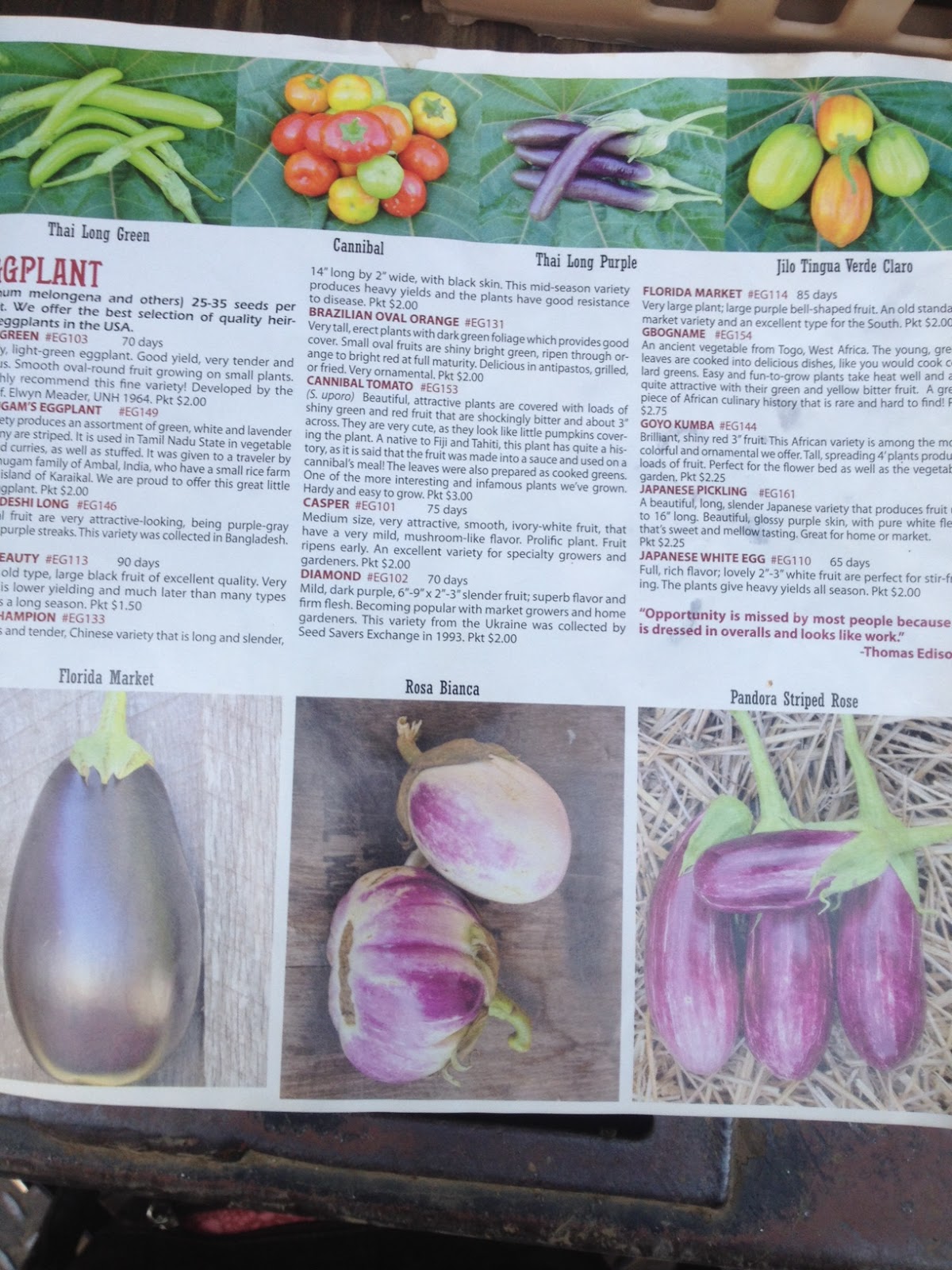
There are numerous farmer's markets in central Pennsylvania this time of year. Last week 2 of my students (one from Ghana) told me one of the markets sells "heirloom" eggplants, that included some that look like the West African versions. The market opens at 11:30 on Fridays, so yesterday I hurried over there and checked stalls until I found the right one, Moser's Garden Produce. As I examined the dozen or so different types of eggplants (Asian, Indian, African, Brazilian, etc.), I struck up a conversation with another shopper beside me loading a large bag. He was from Côte d'Ivoire, and preparing to buy in bulk and freeze the "aubergines" (French for eggplant) for use as needed. Unfortunately, he told me, the best ones were already taken. It turns out a Liberian colleague had beat us to it and called ahead for 4 bushels that she was picking up at 4:00 p.m. Oh, well. I selected several of the ones still available (in the picture above) and brought them home to test out. 

I also had a lovely chat with owner/farmer Barrie Moser, and he let me look through the seed catalog he buys from, Baker Creek Heirloom seeds. It turns out the ones I bought included a new variety (Solanum aethiopicum) from Burkina Faso (the orange ones on the left). Mr. Moser's seed catalog was from 2010, but it also included several "jilo" varieties from Brazil, as well as "gbogname" from Togo (S. macrocarpon), and the African goya kumbo (S. melongena).
 
I'm pretty excited to try them out (one of my American students who bought some said he found them bitter, which was what I had warned them they might think. Can anyone tell me the scientific name of the common variety  of Ghanaian "ntroma" garden eggs?


Thursday, August 30, 2012

Africa Cookbook Project: From Mandela's kitchen


Yesterday I added a welcome volume to the Africa Cookbook Collection: a book by Nelson Mandela's personal chef.

I first heard about Xoliswa Ndoyiya's cookbook (authored with quietly impressive help from Anna Trapido) Ukutya Kwasekhaya ("home food"): Tastes from Nelson Mandela's Kitchen in February, 2012, when it was featured online in the BBCNews. It's not the kind of "celebrity" cookbook that usually makes the news in North America.

I had already heard that Nelson Mandela prefers to eat traditional dishes from South Africa, and was excited to hear that Ndoyiya's cookbook shared over 5 dozen recipes, many of which feature "homestyle" dishes (such as umphokoqo (crumbed maize meal porridge with sour milk), umnqusho (samp and beans), ulusu (tripe), umsila wenkomo (oxtail stew), and isophu (sugar bean and white maize soup). There are also a number of South African dishes with other influences (e.g., paella, lasagne, and strawberry trifle), but the cover, showing two hands holding white maize kernels, captures the flavor of the book. In addition, the 173-page hardcover book is bursting with homespun wisdom ("When I was young I understood that my mother was stirring love into every pot of hot ulusu and, even if I didn't always like it, . . . that my paternal grandmother, MaSitatu, was feeding me her hopes and dreams along with her umkhuphu"), as well as  anecdotes about, and lovely photos with, the famous family she has served since 1992 (2 years beforeNelson Mandela became president). I haven't tried any of the recipes yet, but am thrilled to have Ukutya Kwasekhaya in the collection.


Thursday, August 23, 2012

End-of-summer drink: Recipe #95 Basic Ginger Beer

Ahhhh. The end of summer. Time for a cool drink in a shady spot before classes begin on Monday. In this photo I've paired it with some humble peanuts and the "choco-twemo" I'm working on, a version of atwemo that incorporates chocolate powder and groundnut paste (peanut butter), (or "choc-atriemo" as my son Yaw DK has christened it.)

Last week, along with the bissap, I prepared several liters of ginger beer for my trip to Hershey. It was with a shock that I realized that I've never posted my simple recipe for this soft drink popular throughout sub-Saharan Africa. Ginger beer is often carbonated, and made with yeast, but this version skips that step. I still like the bubbles, so I simply use seltzer (carbonated) water to dilute the concentrate to taste. It's always fun when folks shake their heads and say with awe: "You made this from scratch?"

Recipe #95: Basic Ginger Beer

4-8 ounces of ginger root (1/4 to 1/2 pound, depending on how strong you want it)
2 cups of boiling water
2 cups of cold water
1/2-3/4 cup sugar, or to taste
2 Tbsp lime or lemon juice
6 cloves
a small piece of cinnamon stick (~1/4 of a short stick) [optional]

  • I usually peel the ginger root (unless it's organic). I just learned how easy it is to use the back of a teaspoon (thank you, Ann) rather than a vegetable peeler. The first time you make this, you should probably start with about 4-5 ounces of ginger until you have a sense of how strong you want it. 
  • Grate the ginger into a stainless steel (or glass or other nonreactive) bowl. I've never tried using a blender or food processor for this step, but it might work and would save a lot of grating if you're making a large batch. Use a potato masher, or bottom of a heavy glass or a wooden spoon to mash the grated ginger, then
  • Pour 2 cups of boiling water over the ginger and let it sit for at least 2 hours.
  • Line a strainer or colander with a cheesecloth that has been folder several times, and set it over a large bowl.
  • Slowly pour the ginger-water mixture through the strainer.
  • Pick up the cheesecloth by the 4 corners, then twist and squeeze it to remove as much of the water from the cheesecloth as possible.
  • Discard the ginger in the cloth.
  • Add about 2 cups of cold water to the liquid in the bowl (more or less depending on if you want to dilute it with seltzer water later or not), and up to 3/4 cup of sugar (or more if you like it really sweet), stirring to dissolve it. 
  • Add the lime (or lemon) juice, cloves, and cinnamon (if using) and let the mixture sit for another hour before removing the spices.
  • Carefully pour the ginger beer into a pitcher or covered container. Store, covered in the refrigerator.
  • Variations: increase or decrease the ginger or sugar or replace it with honey, substitute fresh pineapple chunks (including the peel, if organic) for the cloves and cinnamon, and add it with the original grated ginger.
Serve the ginger beer well chilled (over ice cubes if you're North American and like "ice blocks" as in the photo above), and diluted to taste with water, seltzer water, or even ginger ale. I use about 1/2 cup of ginger beer per serving. It's said you can mix in some rum, vodka, or other alcohol, but I've never actually tried it that way.

Come to think of it, this is just as well a spicy, refreshing drink for the fall. Labor Day picnics, anyone?


Sunday, August 19, 2012

African food at Hershey

Last week I spent several days in Hershey, PA, at The Hershey Company. We had fun cooking and immersing ourselves in West African culture, both in larger groups presentation-style, and in smaller groups in test kitchens. To the right are some of the snacks we prepared one day (beef and chicken chichinga [Nigeria's suya]), akara (aka kose), groundnut [peanut] "cakes,"  etc.
On Monday we explored music, fashion and daily life while we tasted a few West African dishes, from groundnut (peanut) stew
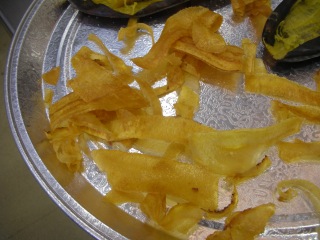
and bissap [aka zobo] to green plantain chips, moinmoin and gari foto. Though my online recipes contain meat and poultry, we  adjusted them and added vegetarian versions as well.

On Tuesday we prepared one of my favorite snacks,  kelewele with peanuts, along with corn and coconut and some atwemo (twisted cakes),  washed down with ginger beer or bissap. The staff were all enthusiastic and helpful, and good sports, and I believe we all had a fun time. I'm still trying to perfect a version of atwemo incorporating cocoa and peanuts, but haven't quite gotten it right yet.


Along the way, I  learned more about Hershey's involvement in Africa and we talked extensively about life in West Africa,  flavor principles, meal formats, cooking techniques, health challenges. It was a hectic time, but quite rewarding.

Betumiblog in Arise Magazine: Just before leaving for Hershey, I received an email from Adhis at Chef Afrik sharing that she was 
". . . featured in the August issue of Arise Magazine which is one of the premier magazines covering African culture. It was a pull-out feature next to an interview article with Marcus Samuelsson about his new book Yes, Chef. I was asked to name the top African food blogs . . ." 
She graciously listed me in her top ten, generously calling me "the godmother of African food blogging." It made my day! Check her August 9 posting out: it lists some of the  best food bloggers writing about African cuisine.

Things continue to heat up here as summer draws to a close. I'm now getting ready for my new class on food culture in sub-Saharan Africa at Penn State, which starts in a week.


Tuesday, July 03, 2012

Sensory Science and Culinology

I'm back from Las Vegas, Nevada, where I joined members of the Institute of  Food Technologists at their annual conference, IFT12, on a panel about African food. The organizers didn't mind that I was not a food scientist--they wanted someone who could celebrate African cuisines and talk about textures and tastes and processing and flavor principles from the culinary angle. My greatest thrill came from the numerous Africans attending the conference and food expo who were delighted to finally have someone talking about their food in a positive way! It was also wonderful to meet colleagues from the University of Ghana at the poster session (like Prof. Esther Sekyi-Dawson and Dr. Agnes Budu), and make numerous new friends, especially Prof. Riette deKock from the University of Pretoria who first suggested the panel.  Since we weren't able to arrange a tasting, I handed out samples of (dry) gari and recipes, and passed around an asanka (a ridged clay grinding bowl) and herbs and seasonings as I bounded through dozens of slides in 25 minutes. ("That was . . . fast," concluded organizer Chris Findlay with a smile.)


With about 18,000 attendees, I believe, there were hundreds (thousands?) of exhibitors at the Food Expo. However, except for many exhibitors whose wares included rooibos tea or hoodia, and those who imported cocoa from West Africa, I sought in vain for an African presence in the exhibit hall. Perhaps I missed someone, but I did finally find one company, Tiger Botanicals, that sells extracts from baobab fruit pulp and also African bush mango (Irvingia gabonesis). They began as a tea company (Herbal Teas International), with products like rooibos tea, but changed their name when they began expanding to other African ingredients. I'd love to experiment with baobab in cooking, and Tiger Botanicals has promised to send me some samples. Also, Prof. Sekyi-Dawson has promised to try and get me some kpakpo shito seeds to grow. Does anyone know how I could obtain some unhulled egusi (agushi) seeds?

I'm still processing the event, but learned a fabulous new word there: "culinology." It refers to "the blending of culinary arts and the science of food" and is the name of the journal of the Research Chefs Association.

Saturday, May 26, 2012

Not your Shirley Temple: Nigeria's Chapman drink

In my recent post on the restaurant Suya, I mentioned that I'd enjoyed a "Chapman" drink there (photo on right). My son-in-law jokingly called it "Red Kool-Aid" because of its distinctive red color, but that was the only similarity. The owner told me it included "cranberry juice for the red color" and "cucumber."

Hmmmm, that piqued my curiosity. I've spent several days tracking down information about the drink. The most thorough description with many interesting comments appears to be at the Kitchen Butterfly site, where someone claims that his father, Mr. Alamatu, in the Nigerian hospitality industry, was the inventor. But others claim it is tied to an expatriate named Chapman. As far as I can tell, the earliest references to it online refer to drinking it in Nigeria in the mid-1960s.

It's interesting to see how it evolved. Given my experience in West Africa, it's hard to imagine that it was originally made with a glass full of ice cubes, much less Fanta or Sprite. I would tend to think lemon squash and ginger beer, with maybe some kind of syrup, like grenadine, or black currant, or lime syrup (I saw recipes using all these, along with lime or lemon squash, and even lemonade),  with the Angostura bitters thrown in.

At any rate, it's clearly a popular drink in Nigeria. It appears that an unsuccessful canned red "Fanta Chapman" once existed. The Chapman is a completely user-friendly drink, and variations on the ingredients used to obtain its signature red color range from black currant syrup to pomegranate juice to cranberry. . . I also found people garnishing it with not just cucumber slices and a lemon or lime slice, but also oranges, strawberries, mint leaves, and banana.

Since this is a holiday weekend in the U.S. (Memorial Day), here's an easy-to-make, refreshing red drink to join the  celebration.

Basic Nigerian Chapman Cocktail

For my first batch I used:

a very tall glass or mug (I tried both, even though I also served the Chapman to my next-door-neighbors in a variety of smaller glasses)
a U.S. cup of chilled Sprite (~240 ml)
3/4 U.S. cup of chilled Orange Fanta (~175 ml)
a few shakes of Angostura bitters (less than 1/8 U.S. teaspoon or .62 ml)
1 (or more) U.S. tablespoons (or 15 ml) grenadine syrup (more or less to taste--I don't like very sweet drinks, so I only used a little)
about half a tray of ice (or enough to almost fill a tall glass--in the picture at the top left  I used the kind of classic beer mug in which the drink was classically served)
a lemon a slice or two for a garnish, and a good squeeze in the glass
a lime also a slice or two to garnish, and a good squeeze (probably about a tablespoon) in the glass
a few slices of unpeeled cucumber

To prepare the drink, I made sure my ingredients were all well chilled. Then I washed and sliced the lemon, lime, and cucumber slices. I poured the grenadine (or Ribena) into the glass, then added over half a glass of ice cubes, then the Sprite and Fanta, then a squeeze of lemon and lime each (or use either alone), and topped it all off with a few good shakes of the Angostura bitters. To serve I garnished the drink with the lemon and lime and cucumber slices. Adjust the proportions of any of the ingredients according to your taste preferences.

NOTE: I also experimented with the ingredients below, which were suggested by some other recipes: black current juice (Ribena), pomegranate juice, banana, orange, and even strawberry garnish. I forgot  to photograph mint leaves as a garnish, but some recipes suggest them, too.

I made a few batches and shared with the next-door-neighbors, from child to adult, and got a big "thumbs up" from everyone, including multiple requests for seconds. "It's so refreshing," "yummmm," and  "I want the recipe" were some of the comments.


I came back inside and whipped up a couple more for my husband and myself, adding a shot of vodka to each  for good measure (but forgot to photograph that batch), and these also rated a vote of approval.

Before some of you say "Isn't that just a jazzed-up version of a 'Shirley Temple'?" let me mention that the only similarity to me seems to be the lemon-lime drink and the grenadine syrup. Also, I cannot imagine many adults ordering a "Shirley Temple" in a bar, whereas in Nigeria, with many Muslims abstaining from alcohol, it appears to be a beloved cocktail among both children and adults. Plus, the bitters and the cucumber add subtle but distinctive flavors to the drink, and the ice prevents it from excessive sweetness.

Somehow, making individual servings of Chapman (Chapmans, Chapmen?) reminds me of the joy of creating and savoring caipirinhas in Brazil (minus the cachaça, though it would be fun to try adding a shot of Brazil's signature sugar cane spirit).

I encourage you to try making your own Chapman, and add it to your repertoire, along with a Ghanaian "Shandy." Enjoy the beginning of the holidays.


Monday, May 21, 2012

Suya comes to Berkeley

Last week before leaving Berkeley, California, we stopped in at a modest but welcome new addition to the culinary scene, called "Suya." (Located at 2130 Oxford St, between Allston Way and the West Entrance to U.C. Berkeley. They're open every day but Sunday, 11 a.m. to 9 p.m.) The Nigerian owner explained that when he came to the U.S. he always longed for a place to get the popular street/party/kebab-style food in Nigeria called "suya." (pronounced "sooya"). He and his wife decided to make it happen. We should all be grateful to them.


The restaurant is tiny (read "intimate"), and focuses its attention on grilling beef, tilapia, or chicken spiced to order with either the distinctive, vibrant rub called  "yagi"  (aka "suya powder") or Caribbean jerk seasoning--they even set out samples for passers by to taste, and though I sampled the jerked version, my heart belongs to suya (Ghana's chichinga).  While there are actually 3 or 4 types of suya (tsire, for which I've posted a recipe, kilishi,  balangu and dambu) most people use "suya" to refer to the most popular type, "tsire suya." The spices are exciting and distinctive (especially the powdered peanuts), the cooking lowfat and healthy, and there's no substitute for that freshly grilled taste of vegetables (corn, plantains, zucchini, peppers, etc.). Our grilled ripe plantains disappeared before I could even photograph them! The eating area is quite compact, the service friendly, and there is the advantage that you can watch the chefs grill your meal.

I'm generally not a big fan of tilapia, and I've never had fish suya before, but I found the spices gave it a delightful flavor. If you're in the Bay Area, do stop by and check Suya out.

In my next posting I'll blog about the refreshing Nigerian nonalcoholic drink I had there--a West African challenge to sangria: the Chapman! Who would have thought of adding cucumbers to a cocktail? Hint: note the bright red color of the drink in one of the photos below.


Wednesday, May 09, 2012

Ghana's Black Gold

Before Ghana became Ghana, the British colonial state called it the "Gold Coast." However, along with its celebrated gold reserves, Ghana has long been known as one of the world's leading producers of "black gold," high-quality cocoa.


This week while visiting in Berkeley, California, I've already twice seen Ghana's influence on the international trade in chocolate. My daughter pointed out the Divine chocolate line of Fair Trade chocolate in a local grocery store. 


Not only is the wrapping gorgeous and covered with Ghana's striking and meaningful traditional adinkra symbols,  each square is also individually stamped. I especially appreciate how the "V" in the name "Divine," is reminiscent of a variation of the "sankofa" (return and fetch) symbol. The story of the Divine company is heartwarming, and I'm pleased to say that the chocolate is delicious, too. 
A day later, I stopped at (the original) Pete's Coffee shop, and noticed a bar of "fine, artisanal chocolate" at the checkout stand. The chocolate bar was wrapped beautifully and stamped with another adinkra symbol, the "ram's horns," symbolizing strength and humility (also found on the Divine chocolate wrapper shown to the right of the Peet's wrapper).

When I mentioned I wanted to blog about the Divine chocolate initiative, daughter Abena kindly stopped by the local Fair Trade store to show me the wide range of the Divine bars.

Ghana's chocolate is found numerous other places worldwide. I've (written about and) savored (Korean) Lotte chocolate bars from Japan, as well as Jameison's. As a confirmed chocolate lover, I wanted to continue to share about this Ghanaian resource.


Tuesday, May 01, 2012

African Cooking on the Move

It's exciting to see the surge of interest and activity regarding African cuisine. In ongoing support of my assertion that African cuisine is gearing up to be the next big thing in the culinary world, I submit:

On April 27, 2012, The Wall Street Journal Online featured an essay "Next Stop for Food Fanatics--Africa" by food futurist Josh Schonwald, who assures us "It will take a while, but African cuisine will arrive. Bring on the fufu.")

2 days later,  Tejal Rao wrote in The Village Voice blog to correct a few stereotypes in Schonwald's article ("The Wall Street Journal Gets Africa Wrong"), and mention  several African food blogs.

From Cameroon: BBC News Africa, 30 April 2012--"Food for thought--When service is on top of the menu."

A number of culinary pioneers have also been quietly working towards promoting African cuisines, such as Kunmi Oluleye, the powerhouse behind Sheba foods--if you haven't gone to Sheba's multifaceted site, do so today. It's in the process of a complete overhaul, and I predict is destined to become a giant in the African culinary movement in North America.

There are so many things happening RE African cuisine these days, it's hard to keep up.

In February, Xoliswa Ndoyiya, Nelson Mandela's long-time personal chef in South Africa launched a cookbook featuring Mandela's favorite recipes. (I'd love to get a copy if anyone can help advise me on how to do that).

Not least of all, let me close out today's posting with a huge "thank you" to colleague Joan Baxter, a Canadian journalist with over 2 decades of experience living in and writing about Africa.

She noticed a Sierra Leonean cookbook in Freetown recently--see the cover above for What's Cooking Today (Sierra Leonean Favourites): Recipes Used Around Sierra Leone, and kindly sent it to add to our Africa Cookbook Collection. Originally published in March 1996 ("Dedicated to my dear husband, Christopher S. Davies on our 50th Wedding Anniversary. . ."), author Muriel Davies was a pioneer in the Sierra Leone Home Economics Association (founded by Dr. Pamela Greene [nee Thompson-Clewry].  Pamela  Thompson-Clewry, at the Home Economics Department at Njala University College/University of Sierra Leone wrote the preface to the 1996 edition. The 107-page (modestly called a "booklet" by the author) black-and-white document was reprinted in May, 2001, and while the paperback suffers from a poor binding, it contains a wealth of information. Part I covers rice dishes; Part II plasas, stews, and vegetable dishes; and, Part III (Knicks Knacks) Snacks. Thank you again, Joan. And we all thank Mrs. Davies for helping to preserve Sierra Leonean classic recipes.