Showing posts with label garden egg. Show all posts

Saturday, September 15, 2012

Fall for Garden Eggs (African eggplants) and a question

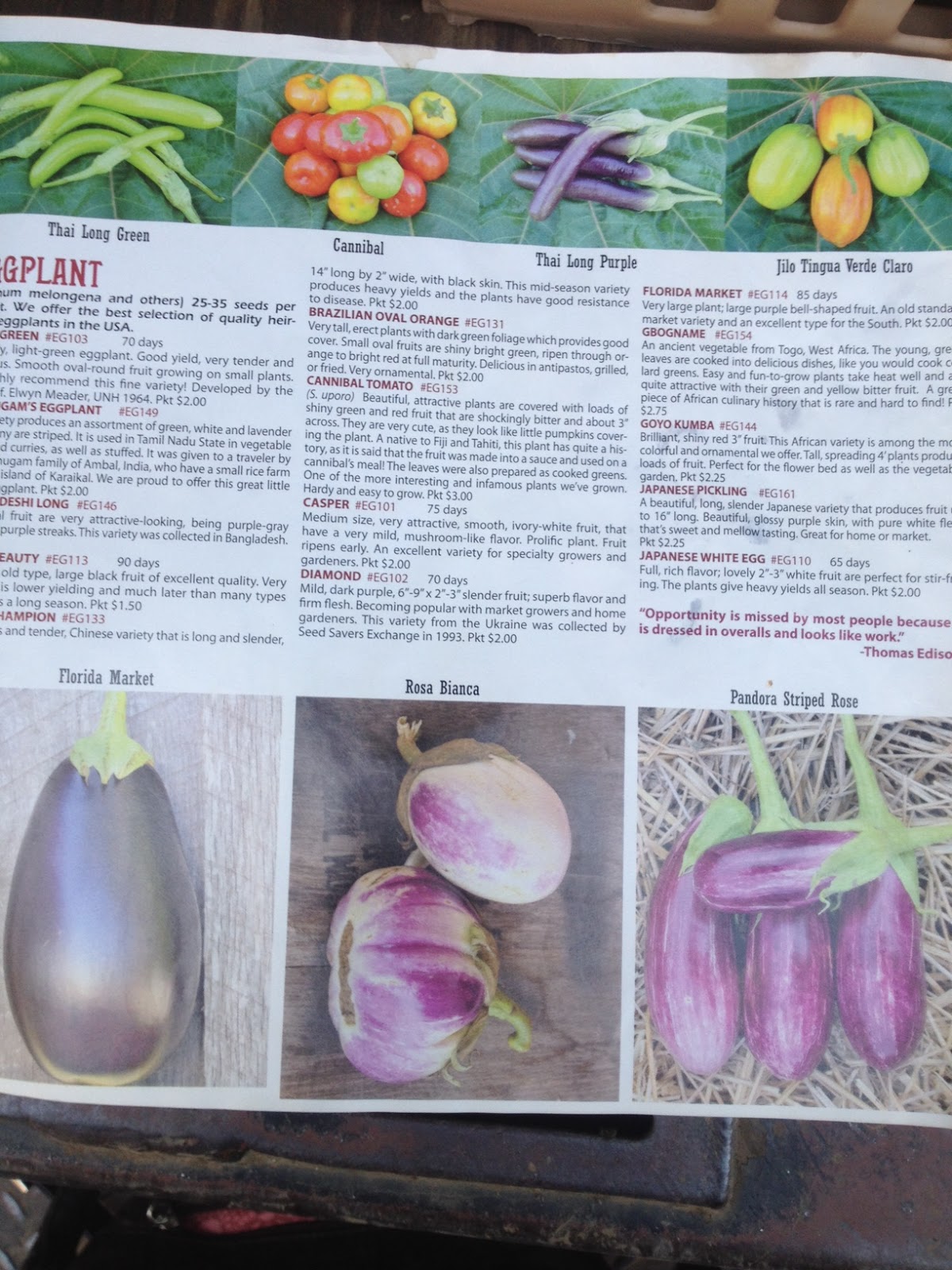
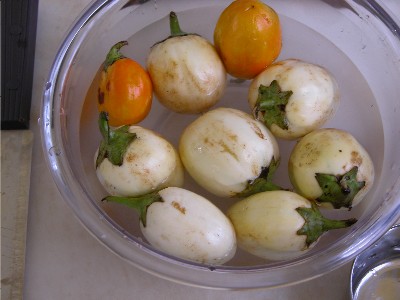
There are numerous farmer's markets in central Pennsylvania this time of year. Last week 2 of my students (one from Ghana) told me one of the markets sells "heirloom" eggplants, that included some that look like the West African versions. The market opens at 11:30 on Fridays, so yesterday I hurried over there and checked stalls until I found the right one, Moser's Garden Produce. As I examined the dozen or so different types of eggplants (Asian, Indian, African, Brazilian, etc.), I struck up a conversation with another shopper beside me loading a large bag. He was from Côte d'Ivoire, and preparing to buy in bulk and freeze the "aubergines" (French for eggplant) for use as needed. Unfortunately, he told me, the best ones were already taken. It turns out a Liberian colleague had beat us to it and called ahead for 4 bushels that she was picking up at 4:00 p.m. Oh, well. I selected several of the ones still available (in the picture above) and brought them home to test out. 

I also had a lovely chat with owner/farmer Barrie Moser, and he let me look through the seed catalog he buys from, Baker Creek Heirloom seeds. It turns out the ones I bought included a new variety (Solanum aethiopicum) from Burkina Faso (the orange ones on the left). Mr. Moser's seed catalog was from 2010, but it also included several "jilo" varieties from Brazil, as well as "gbogname" from Togo (S. macrocarpon), and the African goya kumbo (S. melongena).
 
I'm pretty excited to try them out (one of my American students who bought some said he found them bitter, which was what I had warned them they might think. Can anyone tell me the scientific name of the common variety  of Ghanaian "ntroma" garden eggs?


Wednesday, July 20, 2011

Recipe #92: Eggplant (or Garden Egg) Stew with Meat, Shrimp (or Crab) and Fish

I have written about "garden eggs" (aka jilo, ntroma) before. Today's recipe is adapted from a rich stew we cooked at Flair Catering in Accra. It includes that common blending of meat and fresh and smoked, dried and salted seafood, laced together with exciting spiciness, fresh vegetables, and the distinctive flavor of palm oil (though that, too, is adapted here). This is a slightly more complicated version than a simple eggplant or okra and eggplant stew, but it is perfect for a special occasion. I've reduced both the salt (folks don't sweat as much in the U.S.), and the oil (we eat more and we don't work as hard physically, either).

In Accra we purchased fresh, living crabs from the market, wrapped in brown paper to keep them from running away.  Here in central Pennsylvania, I've had to adapt ingredients: the fresh garden eggs are replaced by purple eggplants, the crabs (alas) by tiger shrimp, the momoni by salted cod, the kpakpo shito by jalapeno and habanero peppers, and I've lightened the palm oil by mixing it with half canola oil. By the way, sometimes people attempt to recreate the distinctive color (but not the flavor) of palm oil by mixing paprika in to color it (NOTE: in the U.S., paprika does not refer to a hot chili pepper).

Recipe #92: Eggplant (or Garden Egg) Stew with Meat, Shrimp (or Crab) and Fish

First, assemble the ingredients, beginning with the ingredients to season the meat (the 8 oz of stewing beef (or other meat, like lamb or goat), cut into 1/2-inch (~1.5 cm) cubes listed below):

To season the meat, use the same procedure to prepare the meat as was explained yesterday in recipe #90 for the Light Okra Soup with Chicken  (but omitting  washing it with lemon and water as you did the chicken): 2 teaspoons of fresh grated ginger, a teaspoon of fresh minced, crushed or ground garlic, a half to a teaspoon of dried ground red pepper, and 1 to 2 teaspoons of seasoning salt/no salt seasoning mixture of your choice. Put the meat into a heavy pot, and sprinkle the seasonings over it, mixing it to coat it well. . Sprinkle 1/4 cup of sliced onion and the coarsely chopped fresh chili peppers over the meat, along with half a cup of water. Heat the water to boiling, cover the pot and redue the heat to allow the meat to simmer until almost tender, probably about 20 minutes. Add a little more water as it cooks if necessary to keep it from scorching. 
After the meat has steamed, take it off the heat until you are ready to proceed. You can either remove the chopped peppers and the onion slices (I did) or leave them in the pot.

The rest of the ingredients you need for the soup (plus the meat), include:
  • 8 oz of stewing beef (or other meat, like lamb or goat), cut into 1/2-inch (~1.5 cm) cubes
  • about a pound of garden eggs, white or yellow (about 7) or eggplant
  • about 8 oz of smoked fish, cleaned
  • 6 large shrimps (with shells) OR 6 small soft-shelled crabs
  • 8 oz of onions or shallots, peeled and sliced or grated on a medium grater (about a cup grated, but will be more if you slice it)
  • a small piece of salted cod (or momoni), soaked slightly in warm water and rinsed to remove some of the salt first, about an inch long (optional)
  • 1 heaping teaspoon of tomato paste
  • about a pound of fresh tomatoes, seeded and grated to make about 2 cups (use a strainer over a bowl as you de-seed them to collect the juice)
  • 1 teaspoon of salt
  • 1 teaspoon of fish seasoning (I use a fish masala)
  • 4 tablespoons of ground shrimp, or to taste
  • more hot fresh pepper to taste
  • additional ground dried chili pepper to taste 
  • 1/4 cup of white oil (peanut, canola, etc.) and 1/4 cup of palm oil, dzomi if available (OR 1/2 cup of palm oil OR 1/2 cup of white oil, plus 2 heaping teaspoons of tomato paste to give it the proper red color)
While the meat is steaming, prepare the other ingredients:
  •  if using salted cod, soak it in a little hot water and rinse it
  • grate or slice the onions
  •  deseed and grate the tomatoes (As you grate the tomatoes into a bowl, keep the peelings on a plate, then add them to the strainer with the seeds in it and slowly pour about 1/3 cup water over it, pressing on the peelings and seeds with your fingers to remove as much juice as possible. You should end up with about 2 cups of tomato pulp and juice.
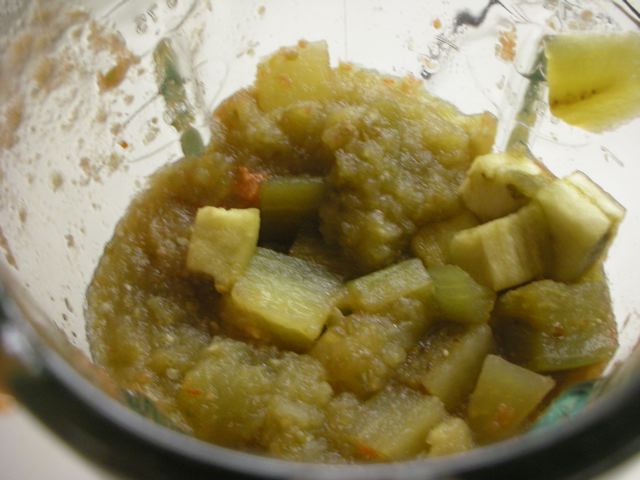
  • If using eggplants: There are  2 basic ways to prepare the eggplant. Option 1 which is what I'm doing, is to peel the eggplant, cut it into a few pieces/slices, cover it with several cups of water in a saucepan and simmer it separately until it is soft, then remove it with a slotted spoon and puree it in a blender and have it ready to add to the stew at the appropriate time. (If you're organized, the cooking water can be saved to use another day for a light soup.) Option 2 is to simply cut the peeled eggplant into small pieces and add it seeds and all to the stew. Your choice. I got into the habit of pureeing mine years ago because it was easier to get the children to eat them that way. (However, if using garden eggs, cut the ends off and cut them in half lengthwise. They should be smooth, unblemished, and an attractive oval-shape. A wrinkled skin means they are old. You can also either cook the garden eggs separately in a few cups of boiling water, then remove the skin and seeds and add to the stew, smashing them as you add them or leaving them in chunks, OR do not precook them and simply cut them up into small pieces and add them to the  meat without removing the seeds).
  • If using shrimp as I did here, devein them but leave the shells on. [If you are using crabs, wash and clean them, whacking off the sharp edges of their shells and removing the underside where the mouth is, and trimming the ends of the claws.
  • Prepare the smoked fish (I'm using smoked mackerel fillets here with no bones, so only rinsed and removed the skin)
You are now ready to finish the stew:
  1. Put 1/4 cup of palm oil and 1/4 cup of canola (or similar) oil into a heavy skillet or pot (I had to switch in the middle because my frying pan was too small) and add and saute the salted cod and a heaping teaspoon of tomato paste for a couple of minutes.
  2. Add the grated onions and saute 2 minutes, then add the meat and the broth from cooking it (will only be about 1/3 cup), the tomatoes, the 1/4 cup of ground shrimp, and the pureed eggplant. Mix well. If you like the heat, slice a habanero partway through once or twice, and add it to the mixture. To increase the heat, push against the pepper as it cooks.
  3. Add the shrimp (or crab) and another 1 1/2 teaspoon ground/grated fresh ginger, 1 teaspoon crushed garlic (about 1 large clove), and an additional teaspoon of fish seasoning/seasoning salt/no salt seasoning but remember that the smoked fish will add additional saltiness so be careful not to oversalt.
  4. Add the smoked fish and allow to simmer for 15 minutes for the flavors to blend, then check and adjust the seasonings, especially the spiciness and salt. To increase the heat, add a little more ground red chili pepper.
Oh, gosh. This smells just like Ghana. Even though my kitchen is sweltering in our Pennsylvania heat wave, it's more than worth it. To serve: This stew goes with just about anything, especially yams, plantain, any kind of ampesi, potatoes, gari with water (what Nigerians call eba), rice, akple, kenkey, etc. I generally offer the habanero in the stew to the one who most wants it, but I usually press it against the side of the pan to spice up the stew before I remove it.

Variations: As with most Ghanaian cooking, this recipe is quite flexible. For example, you can leave out the smoked fish and shrimp, or the meat, or substitute pig's feet. 

How about sharing a meal with others soon.


    Tuesday, August 18, 2009

    Recipe #9: Okra/Eggplant/Fish Stew

    Banku is often eaten with a stew made from okra and/or garden eggs (a kind of eggplant, which is what is often substituted in the U.S.), and smoked and fresh fish. I especially love smoked mackerel, but my husband was recently placed on a low-sodium (salt) diet, so we had to omit that and go with fresh salmon instead. I confess I missed the lovely flavor smoked fish adds. We tried to compensate for that by serving it with a little bottled chili sauce since I did not have any "black pepper" (shito) on hand.

    The ingredients I used included: a medium eggplant (to get several cups, peeled and chopped), a large really fresh tomato (or 2), or substitute canned if you must, a large onion, chopped, a jalapeno pepper (or a hotter variety, more, etc., to taste), about 1 1/2 dozen fresh okra, (or frozen), 4 salmon fillets, 2 large garlic cloves, a couple of tablespoons of red palm oil (or other vegetable oil), a little fresh, peeled ginger (to taste, try starting with an inch or so), and some salt.

    Salmon would not be a traditional fish (whereas tilapia, tuna, or red snapper would), but I've often had salmon served in West African restaurants in the U.S., and it works fine, especially the wild type, which are meatier.


    First wash and prepare the eggplant. Peel it and chop it into cubes, then put it in a saucepan and
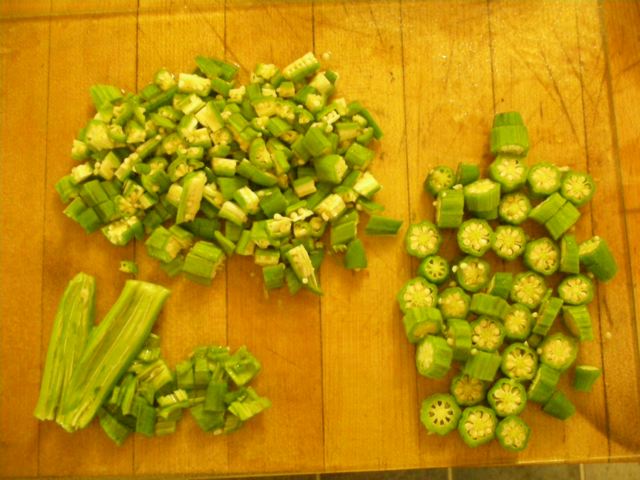
    cover the eggplant with water. Cover the pan, bring it to a boil, then lower the heat and simmer it while you prepare the okra. If using fresh okra, rinse it, then trim both ends. According to your preference, you can 1) simply slice the okra into rounds, 2) chop it finely, 3) remove the seeds and slice it horizontally, 4) leave it whole. I generally chop it finely, unless I'm in a hurry, when I just slice it. When using frozen okra, I often leave it whole so it doesn't completely lose its body.

    The stew can also be made with only one of the vegetables--either the okra, or the eggplant, but we like them combined, as they often are in Ghana.
    When the eggplant is soft, remove it with a slotted spoon and puree it in a blender or food processor. Set it aside.

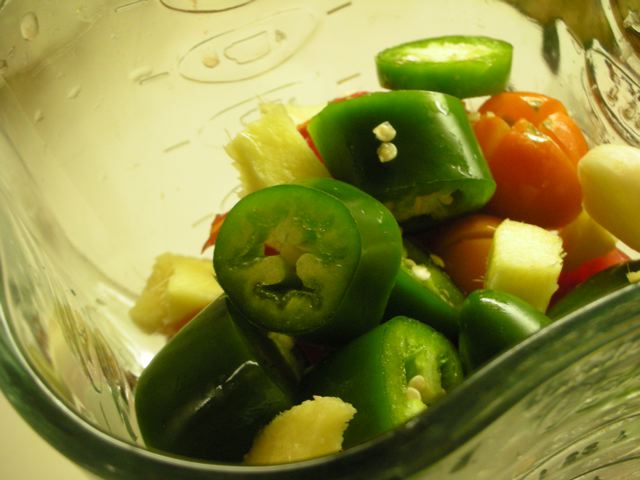
    Similarly, peel and coarsely chop the ginger and garlic and tomato and puree them with a little water in the same blender container. No need to rinse it first.

    Peel and chop or slice the onion. In a large, heavy pot or pan heat a couple of tablespoons of oil (I used a seasoned red palm oil from Ghana called "
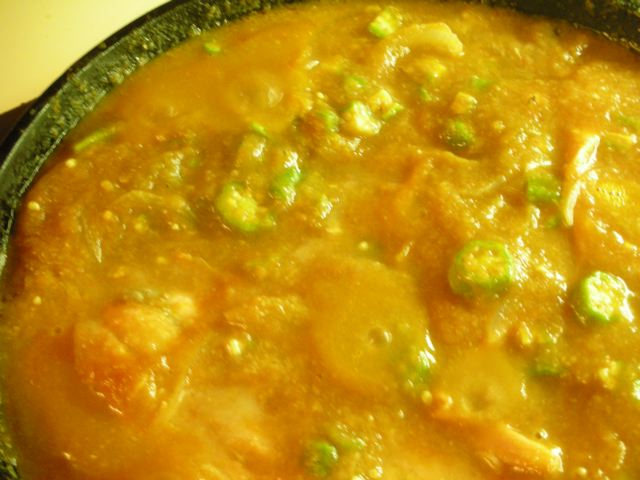
    zomi") and fry the chopped onion on a medium heat for a few minutes, then add the pureed pepper and tomato and garlic and ginger (if you're a perfectionist like me, you can strain out the seeds, or seed the peppers and/or tomatoes before putting them in the blender). Add the eggplant and fish, turning the fillets to coat them with the spices and vegetables, then add the okra and salt (to taste) and stir. If it's not spicy enough, add a little dried red chili pepper. Add a little water if the sauce seems too thick, cover it and lower the heat and simmer until the fish and okra are cooked. This stew also goes well with plain rice, and should serve 4 people. If you want more tomato flavor, add a spoonful of tomato paste.

    Friday, November 16, 2007

    Garden Eggs in Suriname

    More on garden eggs:

    Several types of garden eggs (
    Solanum aethiopicum) are grown in Ghana, with local names like aworoworo, obolo, asurowia, asusuapin, and antropo.

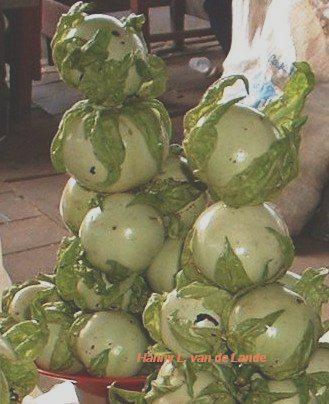
    Suriname is a country in South America, about the size of Georgia in the United States, and one of Brazil's northern neighbors. Prof. H. L. van de Lande (h.vandelande@uvs.edu) biologist and plant pathologist, and department head of biology and chemistry at ADEK University, Leysweg/Paramaribo - shares a photo from the market in Paramaribo, along with information on garden eggs in Suriname, where they are known by the local Sranan Tongo name antruwa, and are also from the Solanaceae family (and thus related to eggplant, or aubergine), but it seems a different type, Solanum macrocarpon.

    Interestingly, Ramon Finkie from the same university tells me that many Surinamese people descended from slaves originally from Ghana.

    According to Prof. van de Lande:

    "Antruwa is used in a variety of ways: as a vegetable, stewed with onions, sometimes pieces of salted beef, or with dry shrimps, or, as it is. it is also used in okra soup, or it can be cooked in water, and then some vinegar, sugar maybe some pieces of hot pepper added. It is then eaten as a side dish, pickled antruwa, mostly with a mixed rice dish, which we call moksi aleisi.

    Moksi aleisi
    (also the Sranan Tongo name)
    or mixed rice, can be very variable depending on who is making it; you can make all kinds . . . depending what ingredients (or, leftovers) you have available and in which cultural environment you were brought up. The mixed rice made by the Chinese is much different from the mixed rice made by the Javanese or by the Creole or by the Hindu people. But when one says: "moksi aleisi", then one generally refers to the mixed rice dish made by the Creole or the Negroes."

    She further explains that "Sranan Tongo is the local Surinamese language, which is spoken by practically everyone; it can be considered the bridging language between all cultures and etnic groups. The official language is Dutch, which is spoken by the majority of people in Suriname. Still, especially older people in the rural area or in the interior speak either their language of their culture/ethnic group of origin (this can be the local Javanese language, different from the one in Java, Indonesia, the local hindi language which is again slightly different from Hindi in India, local Chinese, or the various languahges spoken by the descendants of the Maroon people or the differen languages spoken by the indigenous people, the Amerindians etc. etc. for all other cultural/ethnic groups."

    I love all the Afro-Latin links I'm discovering during my stay in Brazil. Another day I'll share what I've learned about cassava/manioc in Suriname!

    Tuesday, October 16, 2007

    Jiló in Brazil, garden egg (ntroma) in Ghana

    A few weeks ago, a Brazilian friend and I went to lunch at an award-winning cafe in Belo Horizonte, Minas Gerais. One of the featured items on the menu had "jiló" (pronounced zhee-LO) in the name. "What's that?" I wanted to know. "Oh, it's a vegetable especially popular in Minas Gerais. It tastes wonderful" she assured me. She held her thumb and forefinger almost together to make an oval, and said "It's shaped like this, and about this size."

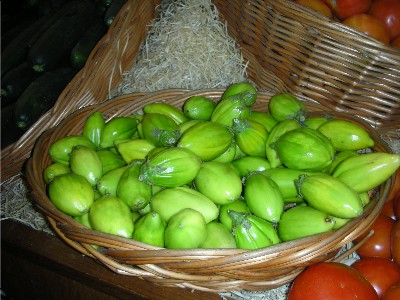
    I decided to order a different dish for lunch, but the next time I went grocery shopping I picked up a "jiló" to try. When I cut it open, I was surprised to realize it was an unripe garden egg, the beloved little egg-shaped eggplant vegetable used in Ghana and other places in West Africa. I added it to whatever stew I was making that night, and found it more bitter than I remembered the garden eggs in Ghana. Interestingly, Brazilians find the ripe fruit bitter and the market will only accept the "young, sweet" green jil
    ó. It's true that's the only kind I've seen here in the 3 months I've been in Brazil. I generally substitute eggplant in the U.S. because I don't have access to fresh garden eggs, though I have seen some Japanese eggplants in the stores that look similar. Jiló, too, can be used interchangeably with eggplant.

    It turns out that there are 2 kinds of jiló
    (Solanum gilo), both from the Solanaceae family: the kind popular in Belo and other parts of this region (comprido verde claro, or "long light green") and a rounder, more bitter type called morro redondo). Jiló is originally from Africa and found its way to Brazil, though not other Portuguese-speaking countries, via the slave trade.

    It never ceases to amaze me how interconnected the world is!