Showing posts with label rooibos. Show all posts

Friday, March 05, 2010

Cooking the West African Way

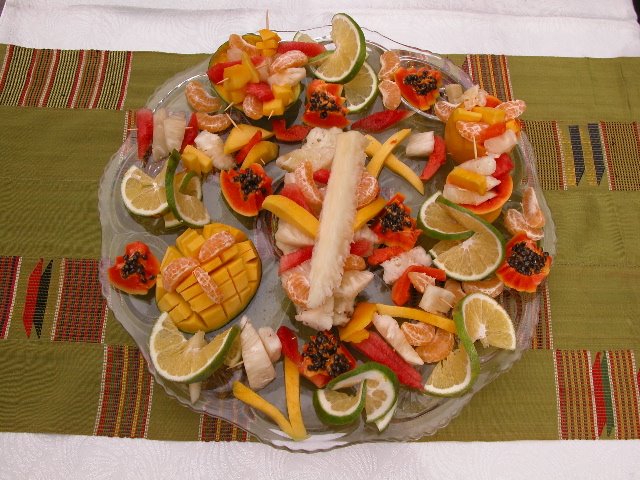
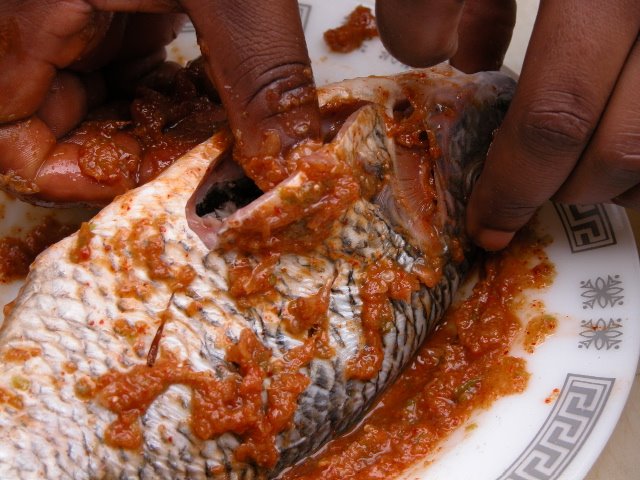
At my March 3rd cooking class we prepared  a West African dinner in my home. We dined on ginger (and regular) beer, bissap, green plantain chips, chichinga (suya), chicken groundnut stew (and a fish-broth-based version for one non-meat/poultry eater), palaver sauce, omo tuo (rice balls), gari (cassava meal), ampesi (we used white sweet potatoes, green and ripe plantain, cocoyam (taro), and, unfortunately but not surprisingly, the Mexican yam we got was rotten). We had atwemo (like chin-chin) and a fresh coconut and  tropical fruit salad for dessert. 

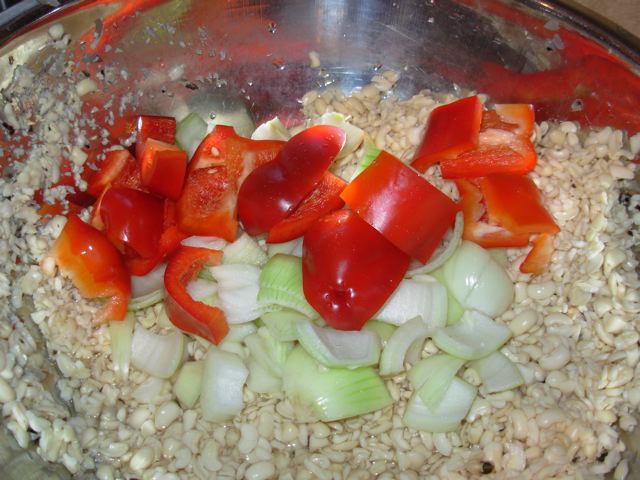
The participants were great and from the feedback so far, a wonderful time was had by all.  Here are a few pictures taken near the end of class. Kudos to all of my students! I'll share some of the other recipes we prepared, but since we were too busy to take pictures, will probably have to re-cook the groundnut stew, omo tuo and palaver sauce to illustrate for you.

In 2 weeks, it'll be time for a trip to southern Africa. I'll let you know how that class goes (or, if you are in the State College area and want to sign up, I still have a few openings). Here's some information on that class:

March 18: Southern Africa--includes South African wines, shrimp peri peri, samp and beans with tomato bredie, chakalaka salad, curry and rice, melktert, and rooibos tea. Each class includes an illustrated introductory lecture (and snack), followed by preparation and enjoyment of classic beverages and dishes.

Sadly, I was at our local Barnes and Noble bookstore today. There were bookcases and bookcases of international cookbooks: France, Italy, Spain, China, India, Brazil, Japan, Thailand, Mexico, Germany, etc., etc. etc., but the only "African" cookbooks were 3 on Moroccan cooking. This is most unfortunate. Africa has so very much to offer and teach us.

"The one who has not traveled widely thinks his/her mother is the only (best) cook"--African proverb among the Baganda, Akamba, Kikuyu, Memba, Haya, Igbo, Yoruba  

Friday, May 15, 2009

Question #7: Isn't the food really unhealthy?

Let's begin with the negative and work to the positive: The stereotypical image of sub-Saharan Africans is either an emaciated starving African, gaunt and haunted, or else a sweating, corrupt, obese politician. If you've never read Binyavange Wainaina's witty and astute 2005 "How to write about Africa," please do.

"Everybody" knows that, unlike the "healthy" Mediterranean diet, Africans suffer from malnutrition, iron and/or calcium deficiency, parasites of all kinds, goiter (especially caused by iodine deficiency), have very short life spans, etc., etc., etc. Sometimes it's also suggested that "Africans" are lazy, childlike, and/or unresourceful (again, see Wainaina's article). It's important to reflect on these images and unexamined assumptions.

Of course, in many ways colonialism and slavery and other disruptions of the past few hundred years played havoc with the food systems that existed previously in more or less harmony with nature. Things like cash cropping pushed out traditional food crops, forced labor removed workers from their farms to work in mines and on plantations, war and violence decimated normal agricultural cycles. Poverty and powerlessness became common.

I recently came across an interesting article in a 2003 issue of the
Journal of Historical Geography ("French beans for the masses: a modern historical geography of food in Burkina Faso") by Susanne Freidberg examining how French green beans entered the diet in Burkina Faso. In addition, Western and Western-trained agricultural "experts" too often made disastrous recommendations to farmers (e.g., eliminating inter-cropping when planting, utilizing crops requiring expensive inputs, neglecting research to improve local varieties of foods, adopting inappropriate technologies, such as irrigated farming or mechanized tractors and straight row planting).

Remember, when sub-African countries first gained their independence in the second half of the 20th century, most were self-sufficient in food production. That situation is completely reversed nowadays. What people can get to eat may not be what they prefer to eat.

Once again, it's necessary to disaggregate the many countries in Africa according to geography and history, economies, religion, natural endowments, etc. Some are arid or semiarid, some are tropical, some are nomadic, some settled, some wetter, some drier, some landlocked, some coastal. The westerners of Victorian England labeled Africa the "Dark Continent" or the "White Man's Grave" because things like anopheles mosquitoes and tsetse flies spread malaria and "sleeping sickness." "Malaria" literally means "bad air," and people thought somehow the wet places and swamps infected the air causing white people to get sick and die there.


Many foods common in African diets, from corn to cassava or peanuts, replaced earlier ingredients like millet, sorghum, fonio or bambara beans, and that is part of the normal change in diets and food migration. However, powerful influences coming from outside of Africa are able to foster and maintain preferences for "elite" foods, such as wheat and rice and seasoning cubes (or, tobacco, coca cola, or baby formula) that may have negative long-term effects on national diets. Multinationals may be able to supply emerging urban markets with their grain surpluses at lower prices than traditional farmers and thus change diets. Ghana, for example, is not able to raise wheat and yet there in high demand for it: in 2002, 90% of Ghana's imported wheat came from the U.S.

Last year I was part of a discussion on health concerns of emerging African diets (which parallel those in many developing and developed countries), such as diabetes.

But let's look at some healthy aspects of many African diets. Here are a few observations:

Many use protein sources like meat or seafood or poultry sparingly to flavor soups, stews or sauces, rather than in excessive amounts. Diets also include nuts, seeds, beans and legumes.
Often there is a use of fresh, less processed ingredients.

Steaming and roasting are common food preparation techniques.


Many sub-Saharan country diets are characterized by
a
much lower sugar consumption than in the U.S., with a preference of fresh fruits over fat- and sugar-laden desserts and snacks.

Often, many African countries' diets are gluten-free or lactose-intolerant friendly.

In many parts of Africa, there is liberal use of
onion, garlic, and chili peppers, each with health-promoting qualities.

The same is true of many cooked greens and tomatoes and ginger.


Notably, the hunter-gatherer San people of southern Africa are believed to have historically had a very healthy diet, about 80% vegetables, eaten fresh, and including dozens of plant species and about 17 edible animal species. Their young were said to show no signs of malnutrition, and it was through the San people that the ingredient P57, an anti-obesity drug from the hoodia cactus, entered Western consciousness.

Similarly, the southern African herbal teas made from
rooibus (Afrikaans for "redbush") are now popular in North America, and the dried hibiscus flower is increasingly becoming common in herbal teas, as are other teas such as North African mint tea or lemongrass tea.

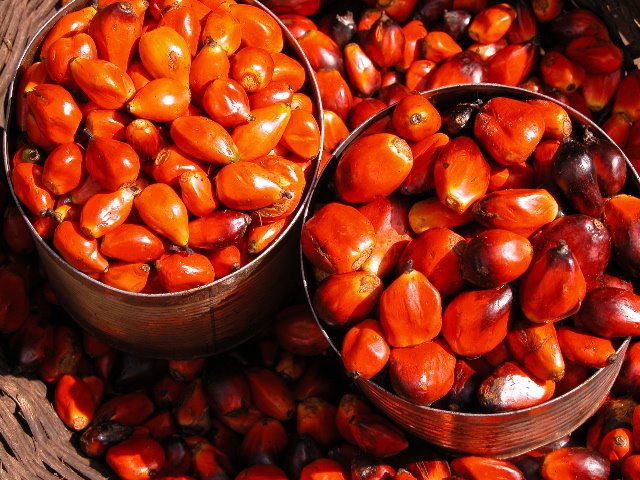
One common complaint I hear is how unhealthy West African palm oil is. As I mention in my article
"We Eat First With Our Eyes: On Ghanaian Cuisine" we often confuse palm kernel oil with palm fruit oil, neglect to consider palm oil may be refined or unrefined, and that there are various grades of quality, just as there are with olive oils. We are unaware of the findings reported in the Cambridge World History of Food that ". . .when palm oil is added to a Western diet, the level of plasma HDL cholesterol typically rises, leading to a better LDL:HDL ratio, and this ratio--rather than the total amount of total plasma cholesterol--appears to be the better indicator of the risk of coronary artery disease." That document concludes that ". . . now that the wider nutritional benefits of palm oil’s natural carotenoids are becoming more generally recognized, perhaps it is time to rediscover the fully flavored red oil and promote its use, not only in Africa and Latin America but also in Asia and the West."

When one observes people in the U.S. stuffing down hamburgers and French fries and chips and drinking super-sized soft drinks, or the pastries and mega-size sugared drinks being consumed in coffee shops, one has to wonder about the claims of superiority of the Western diet.