Friday, August 21, 2009

Tubaane (steamed bean pudding), continued

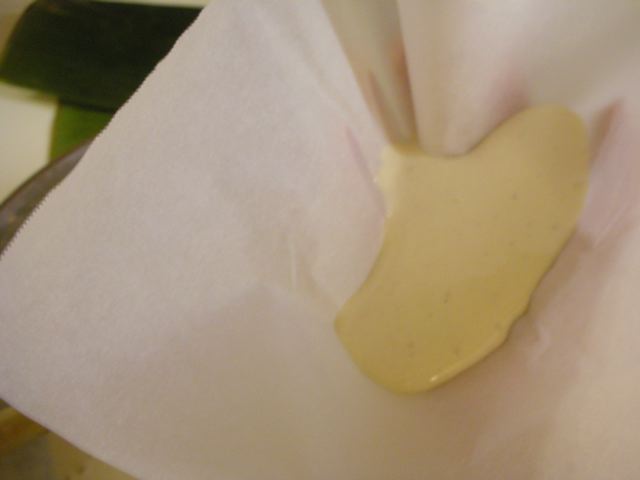
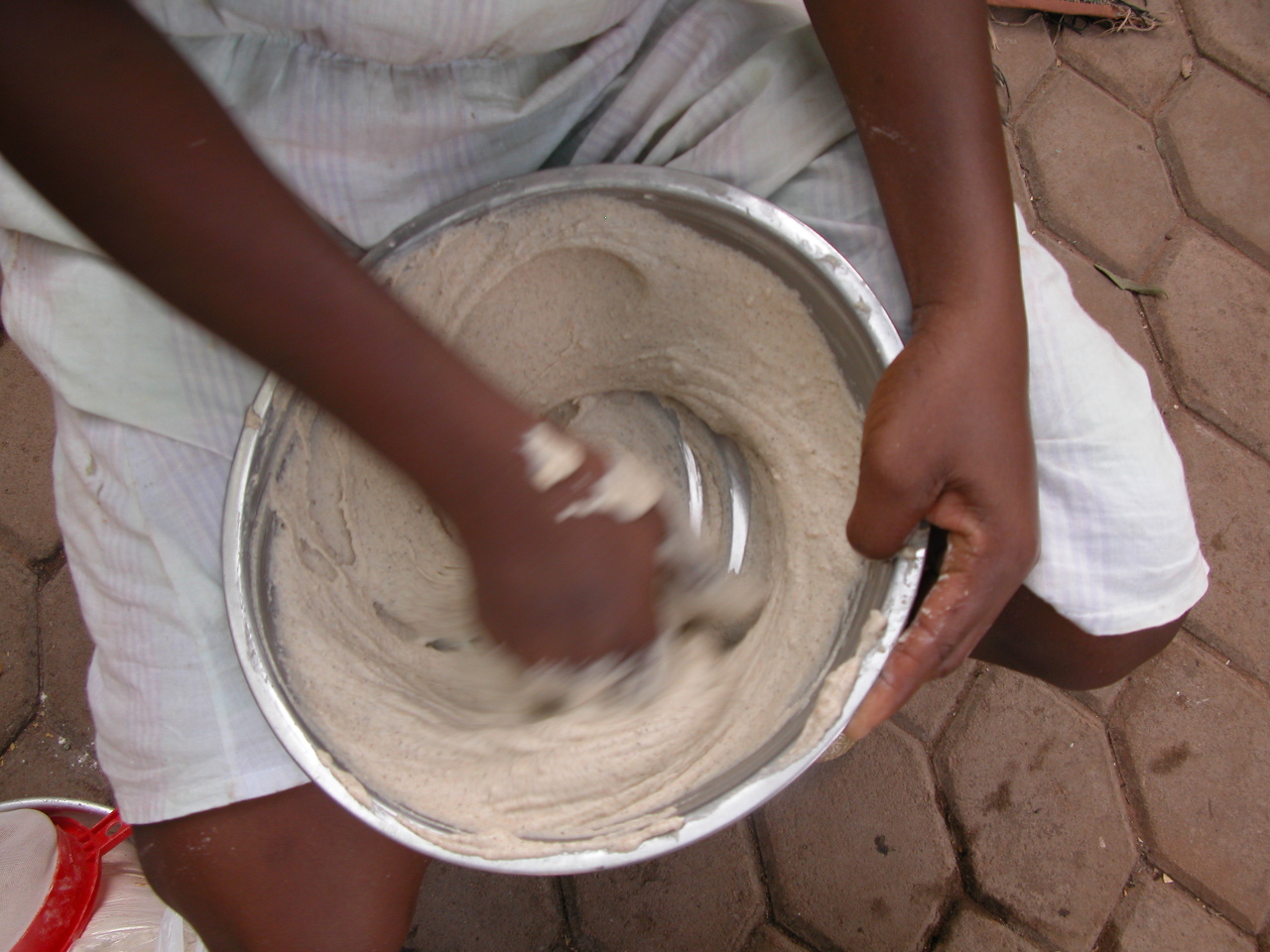
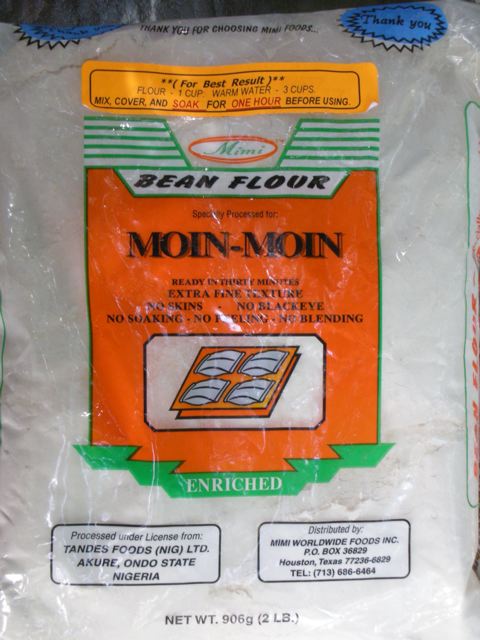
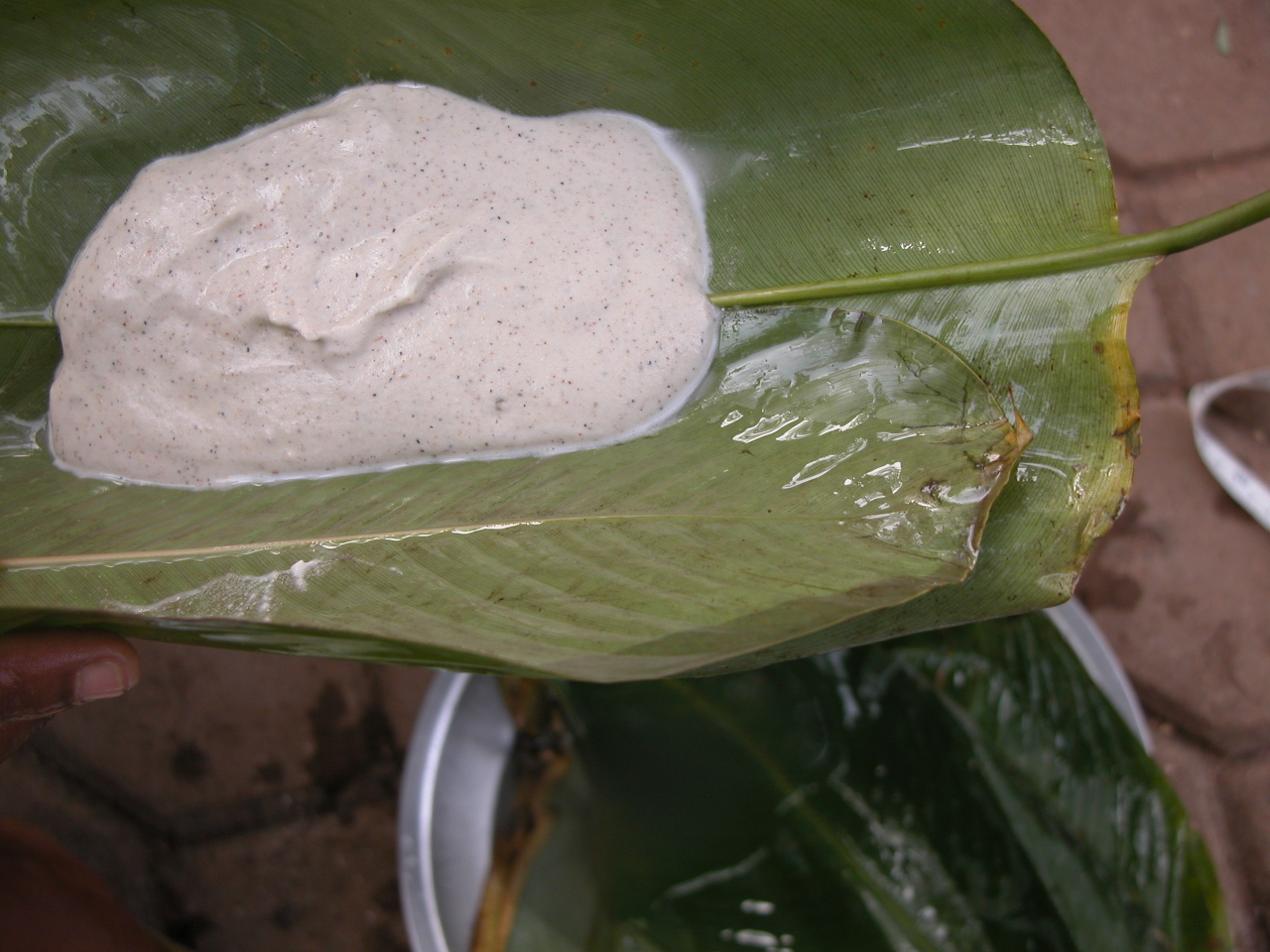
I spent the morning re-making tubaane. It was better, but I'm still struggling with the batter: the moin moin recipe on the package says to use 1/2 cup of the powder to 1 1/2 cups of warm water, and let it sit for an hour. I tried that and it was a watery mess that could never be spooned onto a leaf, so I added more bean flour, 1/4 cup at a time, until I eventually ended up using 1 1/4 cups of flour to 1 1/2 cups of water. That seems like a lot, but anything less and the batter was too thin.

Next I used an electric mixer to beat it for 5 minutes (rather than by hand as we did in Tamale), added 1/2 teaspoon of baking soda (to replace the
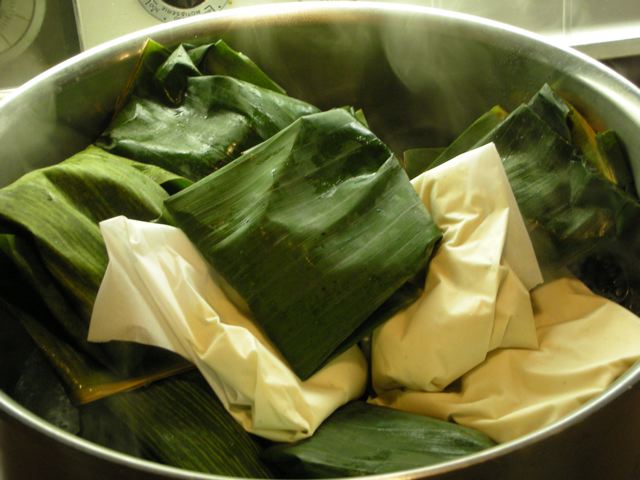
kanwa we used in Ghana), and beat it for another 5 minutes, then spooned it into plantain leaves (and tried a few with parchment paper, but those crumpled up badly, whereas the plantain leaves made a smoother package).


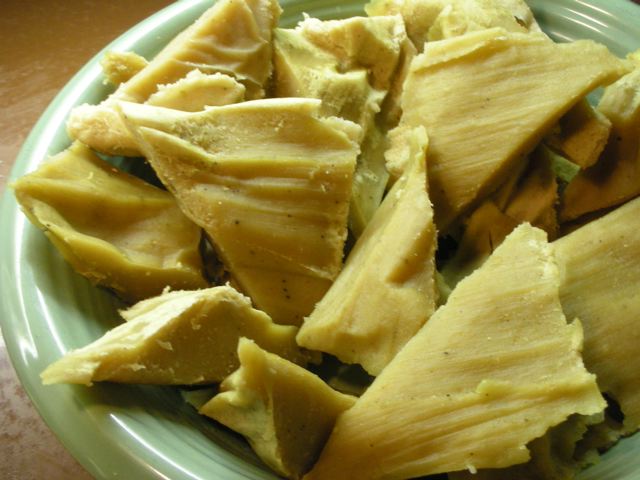
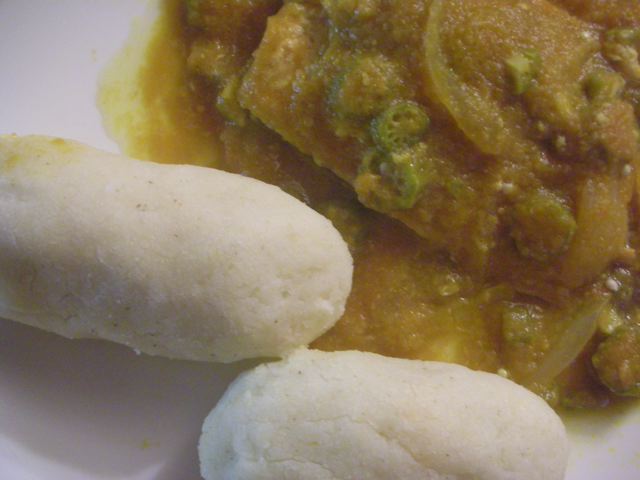
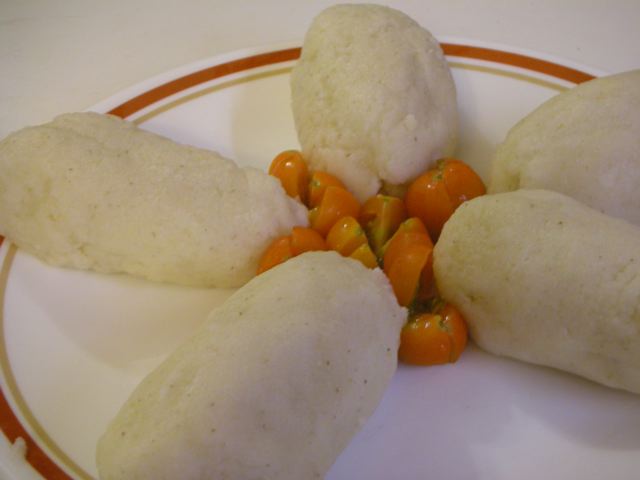
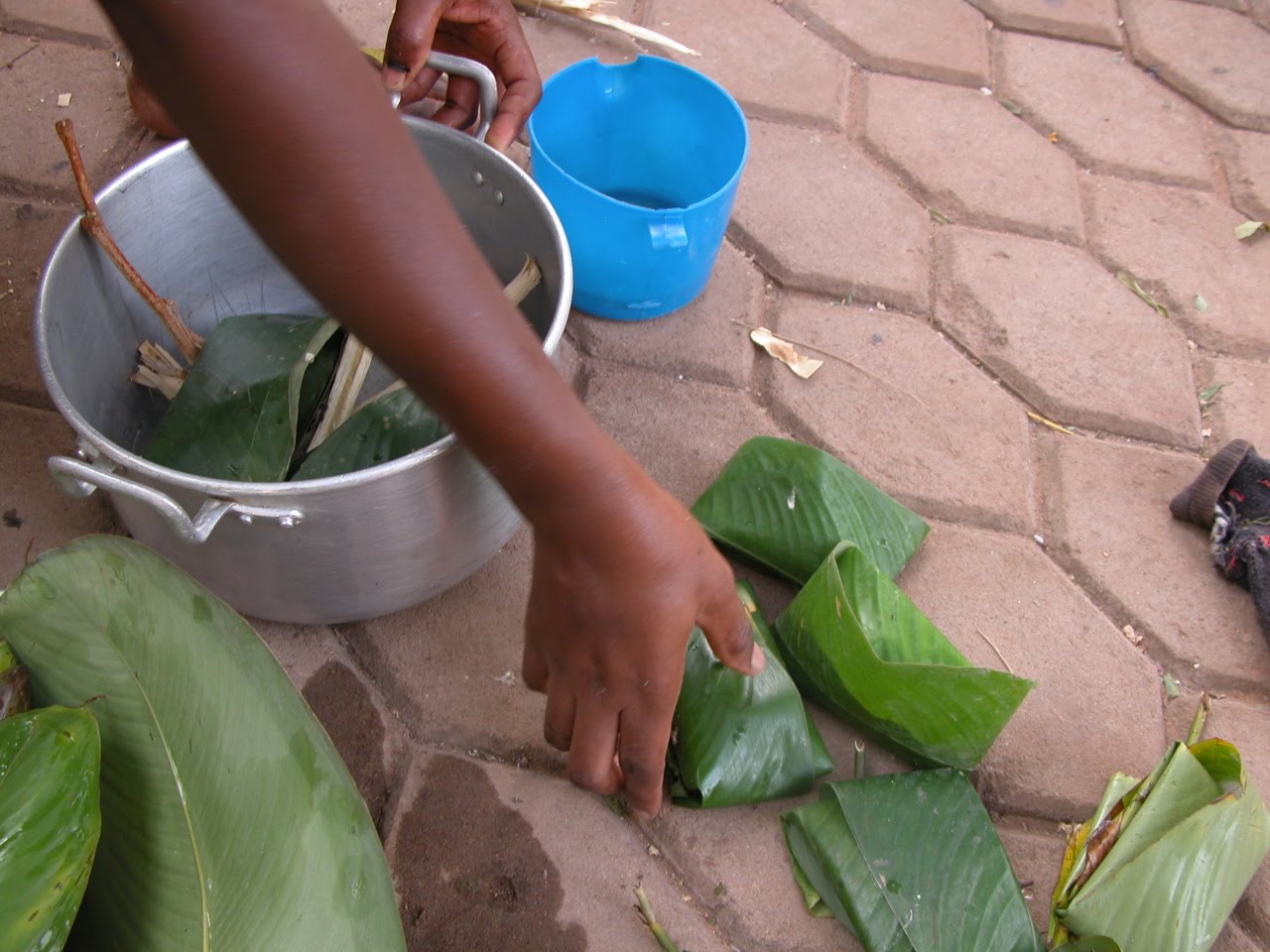
Please note that the pictures of the tubaane above were taken in Ghana, whereas the leaves and batter I used in Pennsylvania today are in the other pictures. To form the packets, make a slight "cup" in your palm and, holding the leaf with the underside up, spoon a spoonful into it, then fold one side over, then the other, then the two ends, one at a time, as in the photos. Put a steamer insert into a large pot with a little water in it and add the packets, then steam them for about an hour. I probably could have taken them out sooner, since they were a little harder than I'd have liked. After unwrapping them, cut them in half on the diagonal (as I was taught in Ghana) and put them into a bowl.

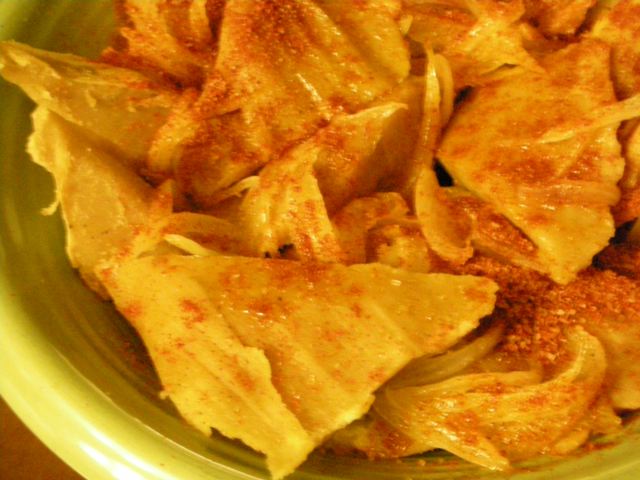
In Ghana they were served
with some sliced onion sauteed in a little vegetable oil and added to the bowl (but I was told NOT to use palm oil), along with some salt and dried red pepper mixed together and sprinkled over it. It made a nice snack (or "small chop" as they say in Ghana).

The plantain leaves enhanced the delicate flavor of the beans, and the red pepper gave it a nice kick (if you're not fond of spicy food, mix in some paprika to cut the heat).

At the same time that I was working on the
tubaane, I was making some kenkey with some more corn dough I mixed up a few days ago. The next recipe will be Ga-style kenkey.

Thursday, August 20, 2009

Recipe #10: Tubaane (Steamed cowpea paste cakes)

In March, 2007, I interviewed and shadowed Mrs. Sodeinde to learn how to make the famous Nigerian seasoned steamed cowpea paste cakes known as moin-moin (moyin-moyin, moi-moi), of which there are varieties ranging from simple to complex. Ghana has a cowpea paste cake steamed in banana leaves and known as tubaane (which I understand is called ekuru in Yoruba).

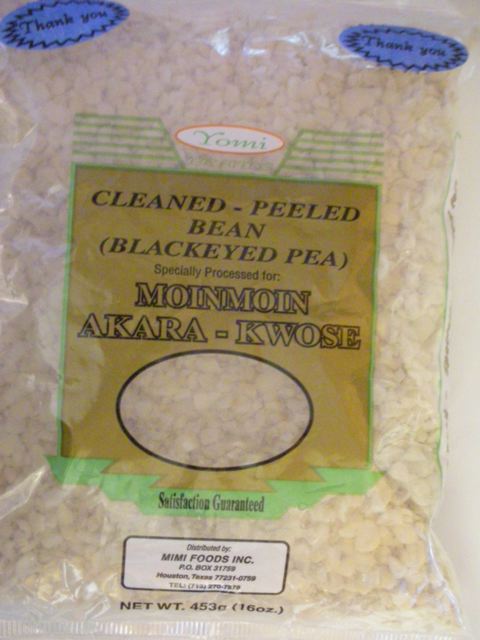
Cowpea paste is a basic building block of a number of West African recipes, including akara (kose, koose, akla). It is commonly made from dehulled dried black-eyed peas. The traditional way of preparing the black-eyed peas is to soak the beans briefly (experts recommend only for about 10 minutes so that the peas do not absorb excessive amounts of water), and use your hands and/or a food processor to remove the skins. The moin-moin posting above shows some video clips demonstrating how to do this. However, this time-consuming process is now simplified by 2 versions of convenience foods: both dried beans (peas) with the skins already removed, and a prepared powder that only needs to be reconstituted in water.

A couple of days ago I made some tubaane using the powder, but had problems determining the correct amount of water to add and also neglected to beat air into the paste the way they do in Ghana. My tubaane was too heavy and dry.

I'll try again tomorrow, using a mixer for 5 or 10 minutes to whip the paste before I wrap and steam it. In Ghana we wrapped the dough in plantain leaves, so I bought some frozen ones from an international market, and will see if I can use them. Otherwise, I'll opt for parchment paper. Hope you'll stop back to see how it works out.

Tuesday, August 18, 2009

Recipe #9: Okra/Eggplant/Fish Stew

Banku is often eaten with a stew made from okra and/or garden eggs (a kind of eggplant, which is what is often substituted in the U.S.), and smoked and fresh fish. I especially love smoked mackerel, but my husband was recently placed on a low-sodium (salt) diet, so we had to omit that and go with fresh salmon instead. I confess I missed the lovely flavor smoked fish adds. We tried to compensate for that by serving it with a little bottled chili sauce since I did not have any "black pepper" (shito) on hand.

The ingredients I used included: a medium eggplant (to get several cups, peeled and chopped), a large really fresh tomato (or 2), or substitute canned if you must, a large onion, chopped, a jalapeno pepper (or a hotter variety, more, etc., to taste), about 1 1/2 dozen fresh okra, (or frozen), 4 salmon fillets, 2 large garlic cloves, a couple of tablespoons of red palm oil (or other vegetable oil), a little fresh, peeled ginger (to taste, try starting with an inch or so), and some salt.

Salmon would not be a traditional fish (whereas tilapia, tuna, or red snapper would), but I've often had salmon served in West African restaurants in the U.S., and it works fine, especially the wild type, which are meatier.


First wash and prepare the eggplant. Peel it and chop it into cubes, then put it in a saucepan and
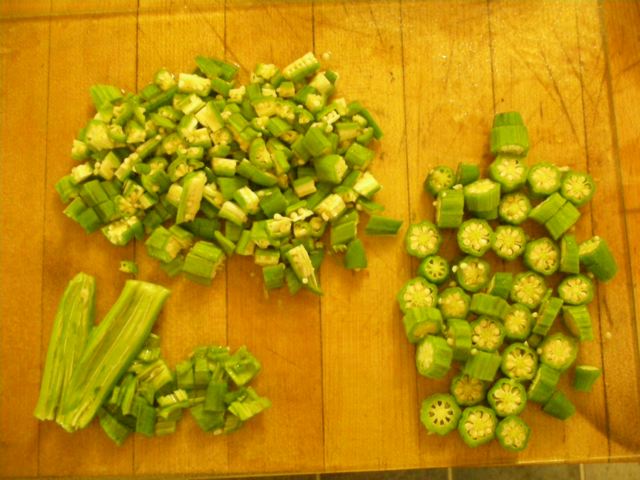
cover the eggplant with water. Cover the pan, bring it to a boil, then lower the heat and simmer it while you prepare the okra. If using fresh okra, rinse it, then trim both ends. According to your preference, you can 1) simply slice the okra into rounds, 2) chop it finely, 3) remove the seeds and slice it horizontally, 4) leave it whole. I generally chop it finely, unless I'm in a hurry, when I just slice it. When using frozen okra, I often leave it whole so it doesn't completely lose its body.

The stew can also be made with only one of the vegetables--either the okra, or the eggplant, but we like them combined, as they often are in Ghana.
When the eggplant is soft, remove it with a slotted spoon and puree it in a blender or food processor. Set it aside.

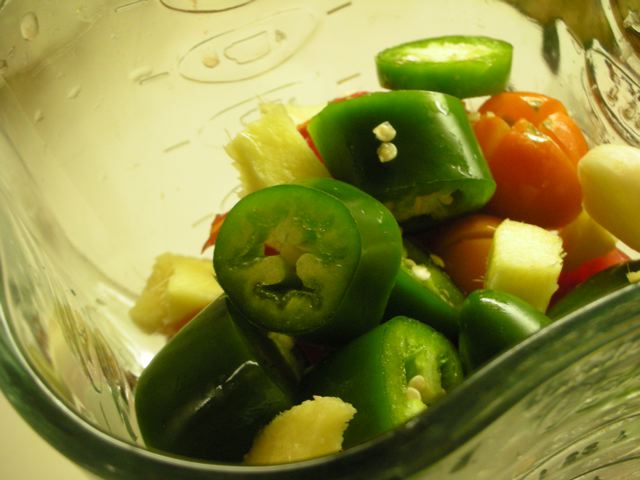
Similarly, peel and coarsely chop the ginger and garlic and tomato and puree them with a little water in the same blender container. No need to rinse it first.

Peel and chop or slice the onion. In a large, heavy pot or pan heat a couple of tablespoons of oil (I used a seasoned red palm oil from Ghana called "
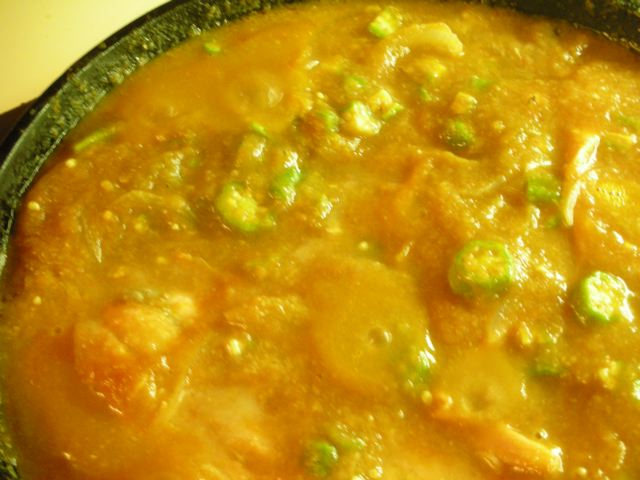
zomi") and fry the chopped onion on a medium heat for a few minutes, then add the pureed pepper and tomato and garlic and ginger (if you're a perfectionist like me, you can strain out the seeds, or seed the peppers and/or tomatoes before putting them in the blender). Add the eggplant and fish, turning the fillets to coat them with the spices and vegetables, then add the okra and salt (to taste) and stir. If it's not spicy enough, add a little dried red chili pepper. Add a little water if the sauce seems too thick, cover it and lower the heat and simmer until the fish and okra are cooked. This stew also goes well with plain rice, and should serve 4 people. If you want more tomato flavor, add a spoonful of tomato paste.

Monday, August 17, 2009

Recipe #7, continued (banku)

We ate our banku with a stew. Today I'll mention the steps to finish the banku, and tomorrow #9 will be an okra/eggplant/fish stew that pairs well with it.

Basically, when using the fermented Indian Head cornmeal dough, just bring a couple of cups of water to a boil in a saucepan (about a 3-quart saucepan, with a handle), add a teaspoon of salt, and gradually stir in the fermented dough. If you stirred the dough every day it should not have mold on it, but if there is any, scrap it off before adding the dough to the boiling water. Incidentally, the more days you let the dough ferment, the more sour it will be. If it's your first time, probably 2 days will be long enough.

Lower the heat and stir constantly to keep it from forming lumps. Stir the banku for about 15 minutes using a strong wooden spoon or paddle (something flimsy will likely break), scraping the bottom of the pan and turning the dough as it cooks. If necessary, add a little water to keep it from scorching, and/or turn down the heat. Once the banku is cooked, remove it from the heat and let it sit a few minutes. When it is cool enough to handle, wet your hands and shape the banku into one large or several small loaves (I generally make individual servings). Banku is usually eaten warm or lukewarm.

Has anyone tried making banku in the microwave? Please let me know if you have, and how it worked out. The same basic procedure is used when making banku from already-prepared frozen dough, after defrosting it. If using the powder, one must of course add more water (I would add some water to make the dough, then bring more water to a boil and continue as with the Indian Head fermented dough).

Gosh, just remembering this is making me hungry again.

Friday, August 14, 2009

Recipe #8: Bissap, Hibiscus Iced Tea

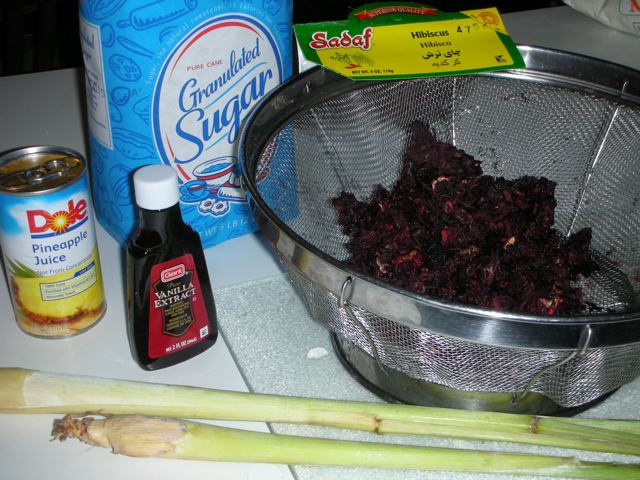
It's summertime, the season of requests for bissap or bissap rouge. This is a refreshing iced tea popular in Ghana and other parts of West Africa. It is made from dried hibiscus flowers. I pictured a mango-bissap version in a blog last year. It is easy to make and the smooth, sweet-tangy combination tends to draw rave reviews. While I'm waiting for my cornmeal dough to ferment to make the banku (recipe #7), here's recipe #8. As I've said elsewhere, the dried hibiscus flowers pair well with other flavorings, from pineapple to mango juices. This recipe is the one I first learned in Ghana, and still make most often, but feel free to experiment with other flavorings.

I can usually find dried hibiscus flowers in international stores that stock Mediterranean goods, or African stores carrying North African (especially Egyptian) foods or West African ingredients. Since a Christmas version is popular in Jamaica, perhaps a Caribbean market would also be a good place to look. Lots of herbal teas contain dried hibiscus flowers, so a health foods store or tea shop might be another place to locate them.

Fresh lemon grass is available in Asian markets where it's inexpensive, or your local grocery store where it may be less fresh and/or pricey. Also, I always use real, not imitation, vanilla flavoring.

Ingredients:
2 cups dried hibiscus flowers (
bissap or roselle)
1/4 cup fresh lemon grass, chopped (optional)

1/2 teaspoon vanilla or rum flavoring (or to taste)
sugar to taste (probably 1 to 2 cups; or sugar substitute)
5 cups of boiling water
1 cup of juice (optional, I'm using pineapple today)
You can mix and match flavorings according to your taste: e.g., 1/2 cup lemon juice, OR a cup of mango OR pineapple OR orange juice, OR mint sprigs OR a little fresh grated ginger. I have some pineapple juice handy, so I'm going with lemon grass, vanilla, and pineapple juice.


Bring the water to a boil. While it's heating, I generally put the 2 cups of hibiscus flowers in a metal strainer in the sink and rinse them lightly with water to remove any sand or grit they might contain (the dried flowers bleed immediately, so make sure you keep the strainer in the sink). Then I pull off the outside leaves of the lemon grass, rinse and chop it.

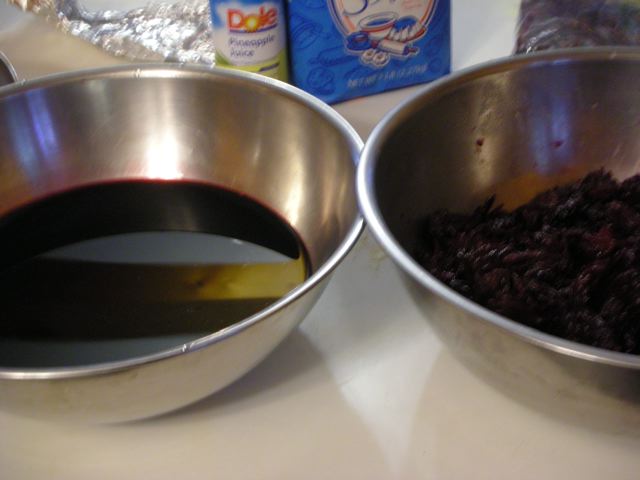
Put the rinsed flowers and the lemon grass into a large stainless steel or ceramic bowl, and pour the boiling water over all. I cover the bowl with a cheese cloth to protect it and let it sit for at least 4 hours.
Then bring another 5 cups of water (*see note below on reducing this amount of water and adding sparkling water when serving) to a boil. Place a strainer over a second large bowl and empty the liquid from the hibiscus/lemongrass mixture into it. Return the hibiscus/lemon grass to the original bowl and pour the just-boiled water over them. Stir the mixture well, and let it sit a few minutes, and pour it through the strainer again to add to the previously strained liquid, pushing down on the strainer with a spoon to remove as much of the water as possible (Actually, I use the cheesecloth I covered the bowl with to line the strainer before adding the hibiscus and lemon grass mixture the second time, and after pouring the boiling water through, twist it tightly to remove as much liquid as possible. In Ghana we don't waste a drop.) Discard the hibiscus flowers and lemon grass.

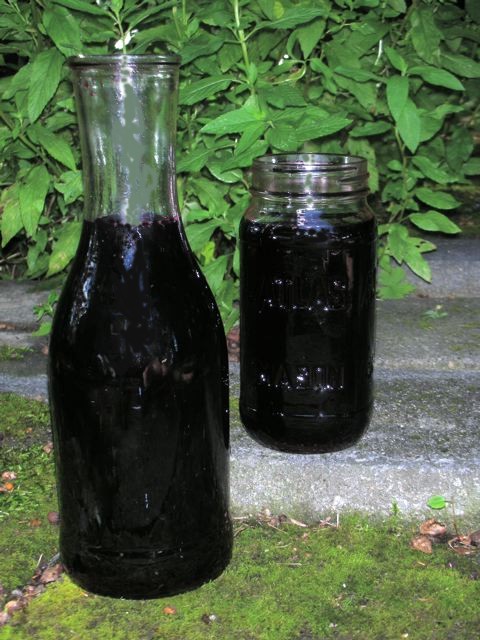
Now stir in the sugar to taste and your desired flavorings. Today, that's vanilla and pineapple. After all of the sugar has dissolved, carefully pour off the liquid into a pitcher or jar, making sure to leave any sediment behind in the bowl. Store the bissap, covered, in the refrigerator and chill. When serving, pour into a glass and add ice and/or water as desired. If you use a cheesecloth to line the strainer the second time you pour the water through the flowers, make sure to soak and rinse it well in cold water right away to keep from staining it.

*Sometimes I use less boiling water the second time (only 2 or 3 cups), and add chilled sparkling water when serving the bissap. Enjoy! But be forewarned: bissap is addictive.
Garnish: use fresh mint leaves, fruit slices, or a sugar cane swizzle stick.

Tomorrow: the corn dough is fermented now, so I'll finish the banku recipe.

Thursday, August 13, 2009

Recipe #7: Banku, 4 choices

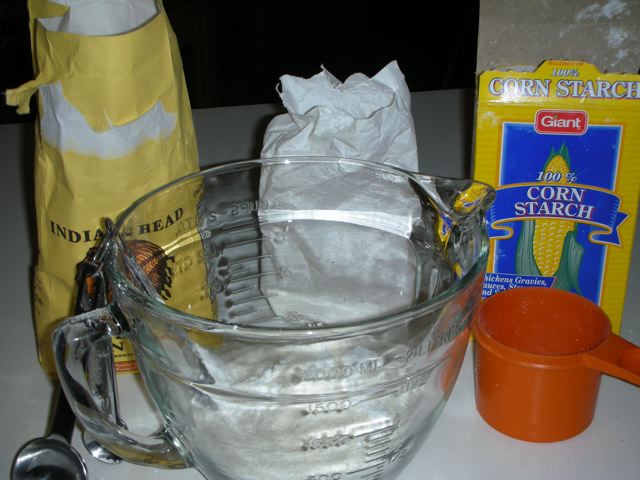
Yesterday I mentioned I'd begun fermenting some cornmeal to make the dough for the Ghanaian dish known as banku. The same dough can be used to make a firmer, steamed ball called kenkey (see the March 28, 2007 posting). It takes a few days to get to the right level of sourness, so it'll be a couple more days before I actually make the banku, and perhaps an eggplant or okra stew to serve with it. The way many Ghanaians make banku, and I did for many years, is to put 2 cups of white Indian Head cornmeal (or other similar stone ground cornmeal, but do not use masa harina) into a nonreactive container, like glass or ceramic) with 2 teaspoons of corn starch. Mix them together well (I use a wire whisk), then add 2 cups of lukewarm water. Mix thoroughly, cover lightly and leave to sit in a warm place (counter, stove top or oven) for several days, stirring once a day. The dough should begin to bubble up as it ferments.

The Indian Head cornmeal version requires no imported ingredients. If you're unable to find white cornmeal (the preferred one in most of sub-Saharan Africa, for reasons described well in James McCann's excellent 2005 Maize and Grace: Africa's Encounter With a New World Crop, 1500-2000), go ahead and use any stone ground yellow cornmeal/corn flour.

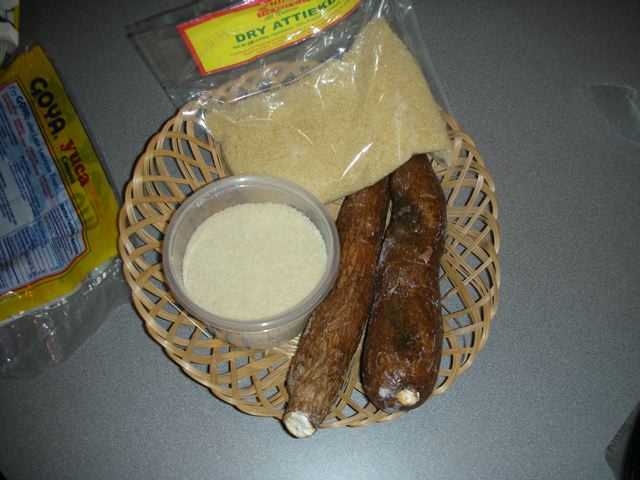
While we're waiting for the dough to ferment, let me discuss other options for making banku. If you look online or live near a large city that caters to African immigrants, you will likely find several possibilities. The first drawback of the dough described above is that banku is generally made not only from corn, but also cassava (aka, manioc, yucca). Also, the traditional process for producing the corn dough includes first soaking the whole corn overnight, then grinding it. Usually people just take the corn to a local mill that grinds it for them. The result is that the flavor is different (this flavor different has to something to do with the starch/sugar relationship, I was told) and also the corn is ground much more finely than the Indian Head or other stone ground cornmeal available in the U.S. Finally, Ghanaian food scientist Professor Sefa-Dedeh once explained to me that the actual bacteria that grow during the fermentation process are specific to Ghana, and will also produce a different flavor to the dough. He advised me to dry some corn dough in Ghana and use it to make banku in the U.S.

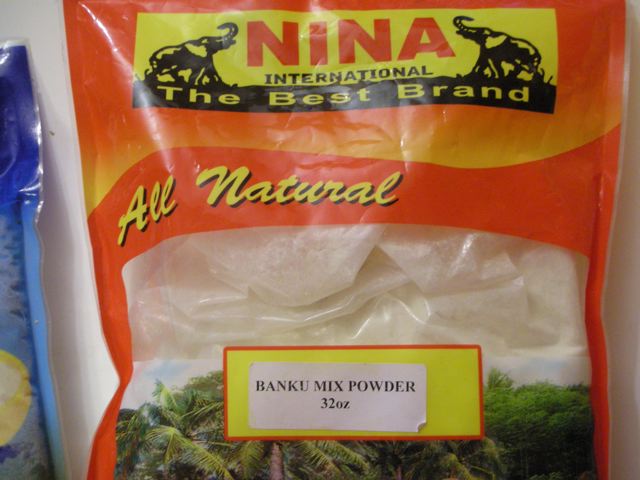
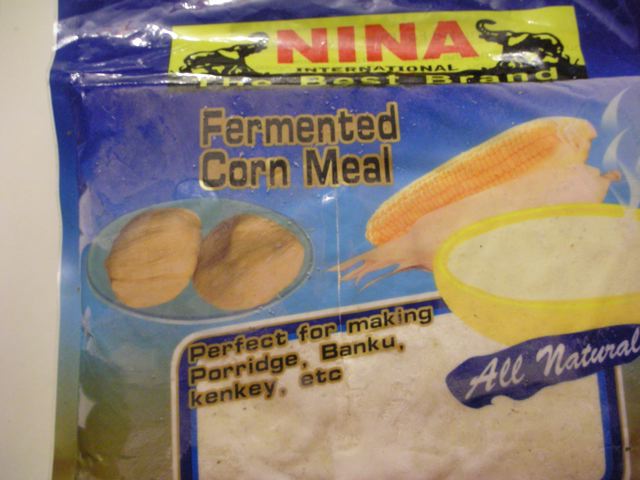
Fortunately, many shops now import frozen dough or dried powders directly from Ghana. There are several versions. The first is a dried, powdered form to which you just add water. Many people like this, but to me it has an aftertaste. I prefer the frozen dough that includes, as does the
powdered version, both the cassava and corn doughs. Nina International produces both versions. Finally, there is also the option of having a corn only version of the frozen dough, which has the advantages of being closer to the original banku texture, but without the cassava. It can also be used for other Ghanaian dishes, such as a popular porridge called koko.

Tuesday, August 11, 2009

Question #9: Doesn't African cooking require specialized ingredients and equipment?

Preface to this blog posting: I saw the movie "Julie and Julia" last week, and it encouraged me to continue posting the recipes for the Ghanaian cookbook Barbara Baeta and I have worked on the past few years with basically no encouragement from publishers. Wouldn't it be wonderful to do for West African food what she did for French food? Of course, everyone already knew that French food was amazing, but for many people West African food has negative stereotypes and/or just seems inaccessible. Do try cooking some of the recipes I'll be posting, and see if you don't also fall in love with the dishes of Ghana.

Now to tackle question #9 about the necessity of having specialized equipment and ingredients to master African cooking.

I've lived in England, Japan, and Brazil and had cooking lessons in each place. I've also learned Indian cooking from colleagues from India, Italian cooking from Italian colleagues, Chinese cooking from Chinese colleagues. It's usually possible to re-create dishes from other cultures even without all the specialized equipment and ingredients that are native to those places.


The same is true of African cooking, whether I've been taking lessons on Moroccan cooking in Morocco, Ghanaian cooking in Ghana, or South African cooking in Cape Town . . . Of course, one cannot always get the exact ingredients and cooking equipment one might like outside of those countries, but one can generally substitute and adapt.

Plus, when things like
sushi or kimchi or pad Thai make their way into our lives, we discover seaweed or bamboo mats or pickled ginger or special spices or lemongrass are actually not all that hard to locate in our cities. With the rising popularity of Latin foods and cooking in North America, along with Asian cuisines, fruits and vegetables and starches that were once unfamiliar are making their way into mainstream grocery stores: all kinds of chili peppers, ginger, tamarind, fresh and dried coconuts, mangos, papayas, yucca (cassava), cocoyams (taro), African yams, plantains--the list is practically endless. Many of these ingredients are integral to the cuisines of tropical and sub-tropical countries of Africa. Their increasing availability provides opportunities to explore a whole new world of flavors and textures. It's a very exciting development to me after many years where such foods were inaccessible or prohibitively expensive.

I further rejoice to watch Americans discover and embrace specifically African ingredients like South African rooibos (redbush) or honeybush teas.

As more African immigrants/students/professionals abroad demand the ingredients from their homelands,
the market provides those things, from fresh vegetables and root crops to moinmoin powder, teff, fufu flour, smoked shrimp, dende (red palm) oil, fermented corn and cassava doughs, etc. "Ethiopian" teff is now grown in the U.S. (BTW, I'm trying to find a way to import some wonderful kpakpo shito peppers from Ghana, and have 3 organic farmers ready to grow them here! If anyone knows of any sources, please contact me at fran@betumi.com)

Having said that, there are also many dishes that can be made using familiar North American ingredients, like stews using beef, onions, tomatoes, and oil, but combined with spices and eggplant or spinach or okra or mushrooms. There are curry and rice dishes, corn dishes, and bean stews, but with interesting twists like using canned sardines or corned beef or smoked fish or pureed nuts and seeds. Of course there are numerous chicken and fish dishes, too.

So, the short answer to Question #9 above is: No, African cooking does not require excessive use of unavailable ingredients and cooking utensils!


On the other hand, for purists, rest assured that if you wish to become a master chef of any African cuisine, you can move beyond the simple to the more complex--just like any of us can make tacos or fajitas or enchiladas or burritos, but someone like Rick Bayless takes Mexican food to a whole new level. For example, last week my
electric mitad arrived from Bethany Housewares. A mitad is a round griddle and lid that can be used to make injera, even though it was originally designed as a lefse maker for that Scandinavian flatbread. Incidentally, it can also be special ordered, without the lid, from Target. The previous week I was in Portland Oregon visiting family and stopped by some Ethiopian stores to buy some specialized ingredients: Ethiopian cardamon, green coffee beans, shiro powder, berbere, niter kibbeh (clarified, spiced butter), tea, alecha seasoning, and a woven mat that is used to remove the injera from the mitad. In other posts I've already praised my asanka (ridged grinding bowl from Ghana), and, yes, I have a tagine from Morocco. . . Do I absolutely need the special grill and spices to make my Ethiopian injera and stews? No. Certainly not. I made some fine flatbreads on a nonstick skillet on my stove, and I made a "make-do" version of the clarified butter myself, and even a "fake" berbere. I can also get many of the ingredients I need, from teff to millet flour to garbanzo beans and Ethiopian coffee, locally here in central Pennsylvania. And blenders and food processors do much of the work of African mortars and pestles.

However, I'm a perfectionist (I also have specialized ingredients and equipment for make other things like Japanese or Chinese foods). Since I do cooking classes, I can convince myself to spend a little extra money to purchase the spices and cooking equipment.
It's also always fun to serve meals with "authentic" serving dishes/mats/tablecloths, etc.

In summary, African cooking is quite forgiving and adaptable for novices, but there are also many layers one can explore to master more complex flavors. In other words, there's something for everyone.

As an example, today I've mixed up some corn flour/meal to ferment so that I can post the recipes for banku and Ga kenkey, two Ghanaian favorites. I have 4 options to choose from, using both local white Indian Head cornmeal and imported flours and doughs from Ghana. Check back tomorrow to learn more.

Question #8: Why so few African restaurants?

At a local community business event in central Pennsylvania recently I asked fellow business owners whether or not they'd eaten any African food. I got no positive responses. Zero. That included not having tasted the most popular and visible sub-Saharan African cuisine, Ethiopian. None of the people I spoke to had ever heard of injera (see my last few postings). I shared that information with Ethiopianist Harry Kloman in June, and he responded "There are about 250 Ethio/Eritrean restaurants in the U.S. There are more than 1,000 Chinese restaurants in New York City alone. Simple math!" (It's hard for me to believe the number can be that low for Ethiopian restaurants. Does anyone else have any information?)

People often ask me why there are so few African restaurants. An obvious reason is that they are non Euro-American cuisines, and not places where many North Americans have visited/done business/been stationed during a war/have family members, etc. The tourism industries that exist tend to favor safaris (Kenya or Tanzania) or wineries (South Africa), not culinary and cultural heritage. Thus there has been little exposure to and consequently, little hankering for, the foods of these places. The only exception might be small numbers of diplomatic, academic, religious or Peace Corps people.

Several West African restaurant owners have told me they had to include "Caribbean" in their restaurant names in order to attract customers (e.g., "Caribbean and West African Restaurant," or "Afro-Carib foods"). I've also been told that they need to include bar service and music groups to attract customers. Perhaps "Afro Pop" and "World Music" have an appeal that is better recognized than cuisine.


Another possibility is that there just have not been that many African immigrants into the U.S. Looking at recent
immigration figures and trends shows that in 1967 there were reported to be about 35,355 African immigrants in the U.S., but by 2007 that figure had jumped to 1.4 million, most arriving after 1990. The countries with the highest number of immigrants in the U.S. are Nigeria (13.1 percent, or 185,787), Egypt (9.6 percent, or 136,648), Ethiopia (9.5 percent, or 134,547), Ghana (7.4 percent, or 104,842), and Kenya (5.7 percent, or 80,595). The 2007 figures further show half of all African immigrants residing in 7 states, in the following order: New York (10.7%), California (10.2%) , Texas (8.4%), Maryland (7.9%), Virginia (5.6%), New Jersey (5.2%), and Massachusetts (4.9%). I'm hopeful that the rapidly growing number of immigrants may create a larger market for African restaurants.

However, I also realize that in many parts of sub-Saharan Africa there is not a tradition of restaurant-going equivalent to that
I've seen in Japan or Europe or Brazil. West African immigrants here say to me "Why would I go to a restaurant when I can make my own food, better, at home?" For weddings they may well hire an African caterer to provide quantity cooking, but they're not likely to go to a Nigerian or Ivorian or Ghanaian or Senegalese restaurant for a meal out.

Over half of the immigrants are from West Africa. So why are Ethiopian/Eritrean restaurants the most popular of sub-Saharan African restaurants? Perhaps it has to do with war and immigration. Perhaps because Ethiopians are seen as somehow less "black" than other sub-Saharan Africans, and hence more acceptable.

Some people claim that West African food is less accessible to Western palates than other "exotic" cuisines. That is nonsense. (I've already stated my opinion of such things as the claim that Africans prefer "rubber tire" toughness to their protein sources (see my April 22, 2009 posting). Perhaps a goodly part of the blame falls to mistaken racist ideas that are linked to negative media images of Africa, and, by implication, the belief that African food is primitive, boring, "poor" in all senses: nutritionally, level of sophistication, variety, quality, etc. On the other hand, some of the family-style African restaurants (such as those favored by African taxi drivers) do pay scant attention to the presentation of the food and the surroundings in which it is served, and instead emphasize huge serving sizes. That seems to be changing as there are increasingly more places like Teranga, featured in my last blog, with increased emphasis on creativity, ambiance, and quality over quantity.

That is surely going to accelerate as more and more African restaurants emerge, especially in large cities. Oh, another thing I've learned about African restaurants--they're often undercapitalized, and it's hard for potential entrepreneurs to get loans and other community support.

I look forward to the day that we organize a voice for African restaurants, markets, farmers, processors, etc.--a professional African culinary association, to promote industry visibility and provide a public face that showcases Africa's fascinating culinary richness and diversity.
Monday, August 03, 2009

Teranga, new Senegalese cuisine in Boston

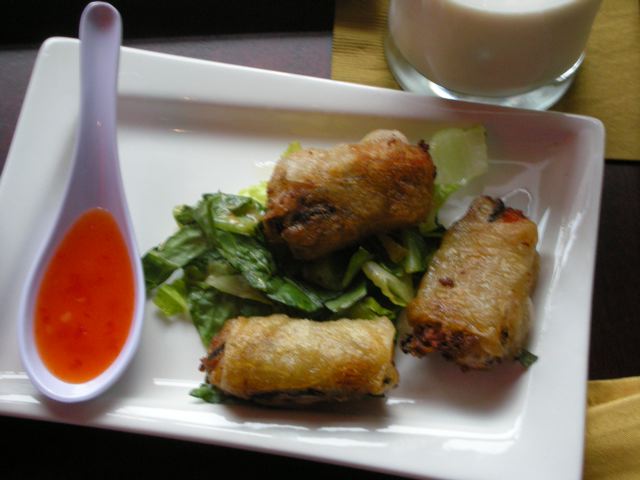
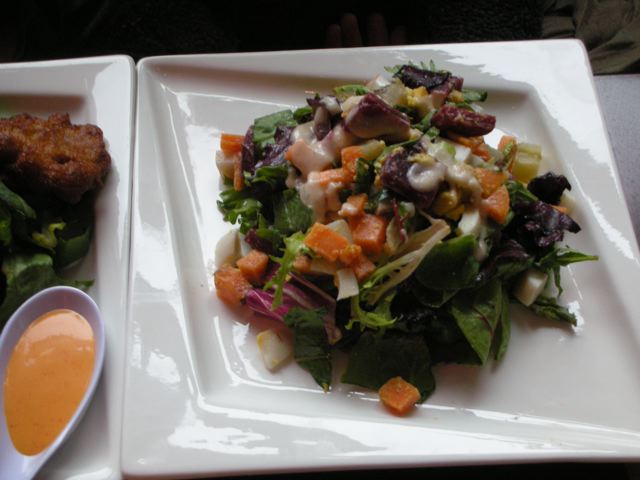
On my birthday on May 30th we had an African pot-luck feast at our house, but a week later (just before I left for Jamaica) when I was in Cambridge, my great family surprised me by showering me with gifts, time and attention. One highlight was a trip to the newly opened Teranga, the first (or, as one reviewer said, the "first serious") Senegalese restaurant in Boston (1746 Washington St., at the corner of Mass Ave. and Washington St.) For details about the menu, more pictures, and warm endorsements of the restaurant, check out the July 29, 2009 reviews in The Boston Phoenix or The Boston Globe. Let me simply say we had a delightful evening, fun and tasty, and I learned about the Vietnamese links to Senegalese cuisine (e.g., spring rolls called nems).

I wish the vivacious, talented owner Marie-Claude Mendy all the best. One thing I appreciated about the restaurant was its contemporary feel and the tasteful emphasis on presentation and overall ambiance, all too often lacking in "chop bar" type restaurants. We were there just after it opened in May, and they were still gearing up (not all their equipment and serving dishes had arrived on time), but the atmosphere was cozy and friendly, and as the evening wore on the noise level rose accordingly. This was clearly the place to be the night we were there.

I have since learned that, just as a lot of Ethiopian restaurants have names like "Awash" or "Red Sea" or "Blue Nile," teranga, the Wolof word for hospitality, is a favorite for Senegalese restaurants. The reason is clear: Marie-Claude is not just serving up good food--she's also providing an inviting window into a culture that is little known in the U.S. Stop by if you have an urge for a flavorable glass of bissap (hibiscus drink) or bouyé juice (a creamy white baobab drink), or some other Senegalese standards, like mafe, thiebou djeun, or accra.

Tuesday, July 14, 2009

Recipes for Doro Wat, Gomen Wat, and Kik

Here are those recipes (courtesy of Laura Litwiller) for some of the dishes in our injera (Ethiopian flabread) videos (See last few blog postings).

Chicken (Doro) Wat

Remove skin from about 2 pounds of chicken pieces (We used Cornish game hens. Traditionally a whole chicken would be cut into 8 pieces).

Sprinkle with
2 Tablespoons (T) of lemon juice and 1 teaspoon (t) of salt. Let stand while preparing other ingredients.

Heat 4 T vegetable oil.


Add, cover and cook on low heat until onions are just browned:
2 cups (c) finely chopped onions, 1 T minced garlic, 1 t ginger root grated (or 1/2 t ground dried ginger).

Add: 1/4 t fenugreek, crushed, 1/2 t ground cardamom (Ethiopian, if available), 1/8 t ground nutmeg.

Stir well and add: 2 T berbere (for a mild wat) and 4 T paprika (for a hotter stew, use 4 T berbere and 2 T paprika),
2 T tomato paste, and 1 c water (or more, as needed).


Bring all ingredients to a boil and cook slowly, stirring often, for about 45 minutes. The sauce should be the consistency of heavy cream. Add a small amount of water if necessary.

Add the
chicken pieces to the sauce, turning the pieces to coat. Add 2 T butter (Ethiopian spiced clarified butter, niter kibbeh, if available). Lower the heat and cook chicken for about an hour, turning the chicken often to prevent sticking and so it cooks evenly.

Prepare 1
hard-boiled egg for each person. Peel the eggs, and cut about 5 shallow slits in them to allow the wat to permeate the eggs. Add to the sauce the last 10 minutes of cooking time, gently stirring them into the stew to coat them.

Serve with injera.


Ethiopian Greens (Gomen Wat)

1 pound of green kale, chopped fine
1 medium onion finely minced
1/2 - 1 t chopped garlic
1/2 t ground ginger
1/2 t turmeric
1/2 t salt (or to taste)
1/2 t black pepper
1 jalapeno pepper, chopped (or to taste)
1/4 c vegetable oil

Saute onion in oil till clear, add garlic and spices and cook 3 minutes, add chopped kale and 1/2 c water. Cover and cook kale until tender (about 30 minutes). Add jalapenos and cook 5 minutes on low heat. Add more salt to taste (serves 6).

Serve with injera.
(Note: We made this with kale on the video, but I made it this week with some Swiss chard and it was also delicious).


Kik Pea Alecha (chick peas/garbanzo beans stew)

1 1/2 c minced onions
1/4 c vegetale oil
2 c cooked chick peas (garbanzo beans)
1/2 t turmeric
1/2 t fresh chopped garlic (or 1/2 t garlic powder)
1/2 t chopped ginger (or 1/4 t ginger powder)


Cook onions in oil until onions are clear. Add chick peas, turmeric, and 1 1/2 - 2 c water.
Cook for 20 minutes.
Add garlic and ginger. Cook until soft. Mash (or use blender or food processor to process until smooth).

Serve hot with injera.

My first attempt after the video to make the injera on my own was a disaster. I bought an inexpensive electric skillet, but it was not heavy enough to provide an even heat, and also it had an inaccurate thermostat, so part of the injera was burned, and part was not cooked. Plus I made the batter too thick. I tried again on the weekend. The first time I used my favorite cast iron pan, which made a lovely injera, but it stuck to the pan when I tried to take it out. Secondly I tried using a small nonstick pan on the stovetop, and added a little extra water to the batter when I added the self-rising flour, and everything was perfect. The only problem was it took me forever to finish making the injera because my pan was so small. I guess I'll either buy an electric mitad (the official injera-making pan) or a larger nonstick skillet. By the way, I made sure the skillet was completely grease-free when I used it. I scrubbed it with salt before cooking the injera, and each time after making an injera, I wiped the pan with a paper towel to clean it.

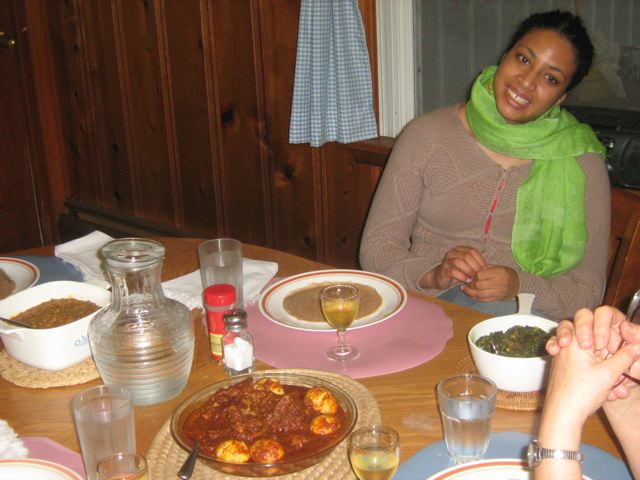
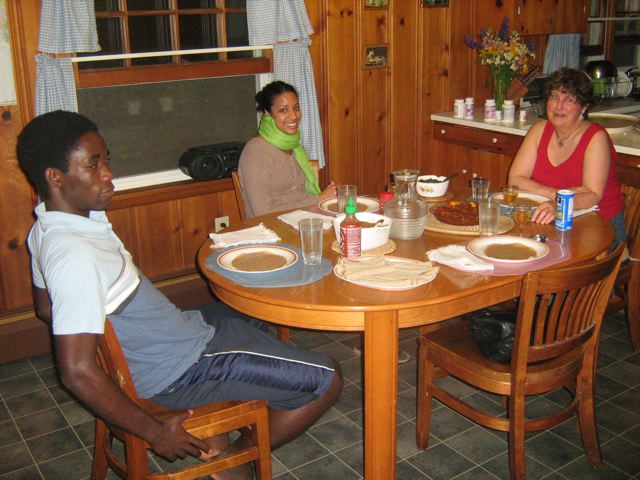
Good luck. If you try this, let me know how it works for you. By the way, that's my daughter Masi (home from New York for the weekend) and Sam, my nephew/son and a junior at Penn State at the table with me.


Wednesday, July 08, 2009

Step-by-step Injera, Part 4 (plus doro and gomen wats)

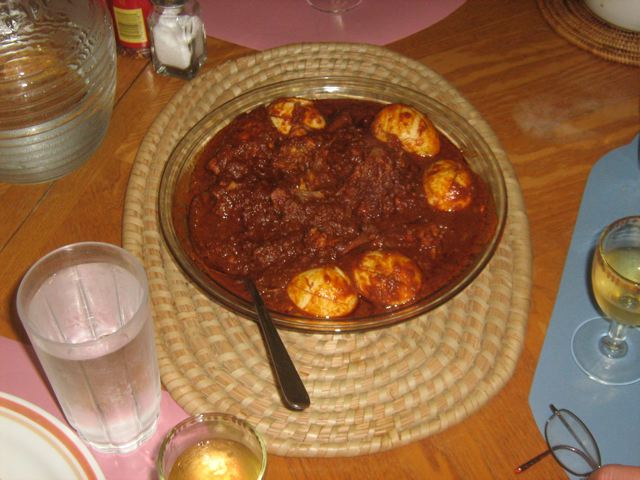
Along with our injera, we prepared 2 stews to accompany it--a mild version of the classic doro wat (a famous Ethiopian spicy chicken stew with hardboiled eggs, berbere and an Ethiopian clarified spiced butter called niter kibbeh). We also made gomen wat, a vegetarian stew from kale. Below are some video clips taken during the process of cooking, cooling, and rolling the injera and preparing the stews. (Before we made our injera and stews I also whipped up some lamb sambossas, a tomato, onion, and green pepper salad, and a garbanzo bean [chickpea] dish called kik, plus bought some mead [honey wine] to round out the meal. We invited some friends over and feasted.)


Now, here in central Pennsylvania, I no longer have to wait for a trip to Washington DC or New York or Boston to get my injera fix!


Here's Laura Litwiller's Doro Wat recipe

1. Remove skin from about 2 pounds of chicken pieces (we used Cornish game hens) [each chicken is generally cut into 8 pieces]
2. Sprinkle with 2 Tablespoons lemon juice and 1 teaspoon salt
3. Let stand while preparing these ingredients:

4. Heat 4 Tablespoons vegetable oil in a heavy pot
5. Finely chop 2 cups of onions, mince 1 Tablespoon of fresh, peeled garlic, peel and grate 1 teaspoon ginger root (or use 1/2 teaspoon dried ground ginger)
6. Mix all ingredients together with the heated oil and stir well. Cover and cook on low heat until the onions are just brown.

7. When the onions are slightly browned, add
1/4 teaspoon fenugreek, crushed
1/2 teaspoon Ethiopian cardamom (if available, otherwise substitute regular cardamom)
1/8 teaspoon ground nutmeg

8. Stir well and add:
2 Tablespoons berbere (for a mild stew) and 4 Tablespoons paprika [for a hotter stew, add 4 Tablespoons berbere and 2 Tablespoons paprika] NOTE: If authentic berbere is not available, make your own "make-do" using: 1 teaspoon ground ginger, 1 teaspoon ground cayenne pepper, @ Tablespoons plus 2 teaspoons paprika, 1/4 ateaspoon ground cloves, 1/2 teaspoon ground cinnamon [again, for a hotter berbere, substitute more cayenne pepper for the paprika], 2 Tablespoons tomato paste, and 1 cup water (or more as needed).

9. Bring to a boil and cook slowly, stirring often, for 45 minutes. The sauce should be the consistency of heavy cream. Add a small amount of water if necessary.

10. Add the chicken pieces (or Cornish game hen pieces) to the sauce, turning pieces to coat. Add 2 Tablespoons of butter (preferably, authentic Ethiopian niter kibbeh or ghee, if you have it; a "make-do" niter kibbeh can be found at the link above). Lower the heat and cook the chicken for about an hour, turning the pieces often to prevent sticking and to so it cooks evenly.

11. Prepare 1 hard-boiled egg for each person. Peel the eggs and cut shallow slits (5-6 for each egg). Add the eggs to the sauce, stir, and simmer them in the sauce for the last 10 minutes of cooking time.

Serve with plenty of injera.
Since we didn't have a proper round
Ethiopian table (as we did at my son DK Osseo-Asare and his good friend Lionel Lynch's recent graduation celebration in Cambridge, Massachusetts at Addis Red Sea), and had to cook our injera in a square pan, we did not serve it the traditional way (on top of the injera, with more on the side), but simply let people do as they liked: either unroll it and spoon the stews on top, or eat it straight from their plates. Either way, clean hands were the only utensils we needed.

Monday, July 06, 2009

Step-by-step (American-style) Ethiopian Injera, Part 3

Here's the next installment of our injera series. 2 days after making the injera batter (leet), it has fermented enough to continue with the second part of the process. After adding self-rising flour and water to the batter, we allow it to sit for a couple of hours (during which time we were preparing some stews to serve with the injera later in the evening when our guests arrived).


The basic recipe we used for the batter (compliments of Laura Litwiller):

Day #1: Mix by hand with wire whisk:

4 cups all-purpose flour
1 Cup teff flour

In a separate bowl also mix by hand with a wire whisk:

1 cup injera batter (leet) starter from a previous recipe (or make your own--see June 25 posting)
3 cups tepid water

Leave the injera covered in a warm place without stirring for about 2 days.

Day #3 (or until batter bubbles up, then separates into clear liquid on top and thick batter below). Drain off liquid and discard. Mix 2 cups self-rising flour and 2 cups of water until smooth. Add to batter mixture and blend until smooth. Let rise 2 hours.

(Save 1 cup of batter in glass jar with a lid. Store in the refrigerator until you make injera again).

Bake injera on a preheated Teflon-coated electric skillet at about 375 degrees. The skillet should have NO oils on its surface. One recipe yields about 11-13 injeras. It takes about 1/2 hour to bake about a dozen 9" by 9" injeras.

Variations: More teff flour can be used in place of white flour. Barley flour can be used in place of some white flour.

Serve injera with Ethiopian watt.

Check back soon for Part 4, which will show the last part of our preparations, including the 2 stews (watts) we made, and the final product.

Thursday, June 25, 2009

Step-by-step American-style Injera, Parts 1 and 2

Here are parts 1 and 2 of the video I promised of our injera cooking lesson. As I mention in the introduction, we used 4 cups of all-purpose wheat flour with 1 cup of teff flour (I can buy teff in the organic/health section of our local supermarkets, or you could likely find it in a health foods market or African market catering to East Africans). Laura Litwiller suggests, however, using 2 cups of teff and 3 cups of all-purpose flour.

Day 1 (Wed): Assuming you have some starter already, you prepare the injera batter. (Note: Laura provided us with some of her starter, but she explains you can make your own using approximately a tablespoon of yeast, a half cup of teff and a half cup of white all-purpose flour, and warm water. Mix it together and let it ferment for a day or two before using it the first time). Starter is just a cup or so of batter you save each time you make the injera and set aside in a covered jar in the refrigerator. We let our starter come to room temperature before using it.


1. Begin by mixing the all purpose wheat flour (about 3 cups) and the teff flour (about 2 cups) with a wire wisk. The flour should be at room temperature, and we did not sift before adding it to a non-corosive lidded container (we used an enameled pot). Laura repeatedly reminded us "it's not an exact science."

2. Drain and discard the water off the top of the stored batter (leet). Using a spoon or spatula, scrape the thick batter remaining into a large bowl (this will be much less than the cup or so you started with). Heat 5 cups of water slightly (barely tepid) and pour a little of the water into the jar that contained the starter, shaking it to remove all of the starter batter. Add that to the bowl with the along with the rest of the water, and blend with the wisk.


3. Add about a quarter or a third of the water to the pot containing the flours, stir with the wisk, and repeat until all the water is used, stirring well after each addition, and making sure to blend all the flour in the bottom corners of the pot.


4. Cover the pot, and set it in a warm place free of drafts for two days to ferment. We had cool weather in our kitchen last week, so I kept my pot on the stovetop with the overhead stove light on, and by the end of the first day the fermentation process had still hardly begun. I cooked pizza that night and the heat from my oven must have warmed the stovetop slightly because after that the dough began fermenting in ernest. However, according to Laura, the normal procedure is for the dough to rise up and then separate into water on top and thick batter below. That didn't really happen very much, and we had very little water to remove when we were ready to make the injera. Laura said that was fine, too. Resist lifting the lid too often to see how the process is progressing, and certainly never stir it.

On Day 3 (Friday), 2 days later, we made the injera, along with 2 Ethiopian stews. I'll post those videos and recipes next.

Incidentally, I haven't forgotten that I still have 3 questions on African cooking to answer: the next one is the one about why African restaurants do not seem to be as popular or prevalent as other restaurants, from Asian to Chinese or Italian. I'll get back to those (and to the recipes from the regional Ghanaian cookbook) as soon as I catch up a little.

Friday, June 19, 2009

Step-by-step Ethiopian Injera

My family and I are great fans of Ethiopian/Eritrean cooking. After my son graduated from Harvard's GSD a few weeks ago, he and his co-graduate friend selected an Ethiopian restaurant in Cambridge for the celebration meal for both our extended families. That's the one time I forgot my camera! Anyhow, this week I'm cooking Ethiopian.

On Wed., Sore Shields and I had a preliminary cooking class with Laura Litwiller, a skilled local maker of injera, the spongy sour dough crepe/pancake that's emblamatic of Ethiopian cooking. She lent us some of her starter (years in the making), and helped us prepare a batter using teff and wheat flour. For the last 2 days it's been fermenting. I videotaped much of the process, and will soon post the video here.

Today (Friday) she's returning in the afternoon, and we'll be making the actual injera, along with a few side dishes, doro watt (a spicy chicken stew), siga tibbs (a beef stew) and gomen watt (an Ethiopian version of cooked kale). I think she's also bringing some shiro (a spicy legume powder), as I asked to see it. Since I've invited several friends for dinner (always the optimist), I'm going to whip up some kik pea alecha watt (a mild stew with chick peas, aka garbanzo beans), and an Ethiopian tomato salad, along with a vegetarian sambossa as an appetizer. If our local liquor store carries it, I'll probably pick up some Ethiopian tej (honey wine). All of that means I won't have any more time today to follow up on blog postings about our trip to Jamaica, a new Senegalise restaurant in Cambridge, answering my next question on African cuisines (about restaurants in the U.S.), and also posting another recipe from the Ghanaian regional cookbook. Trust me, I haven't forgotten. There just don't seem to be enough hours in a day!

Monday, June 15, 2009

Historic African Cuisine Panel at the ASFS/AFHVS Conference


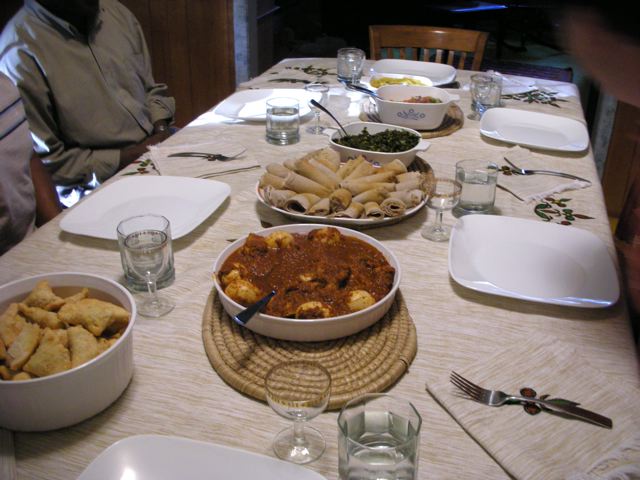
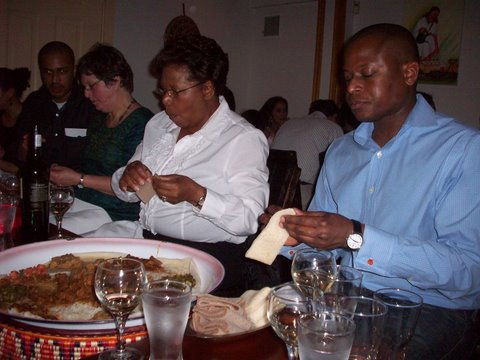
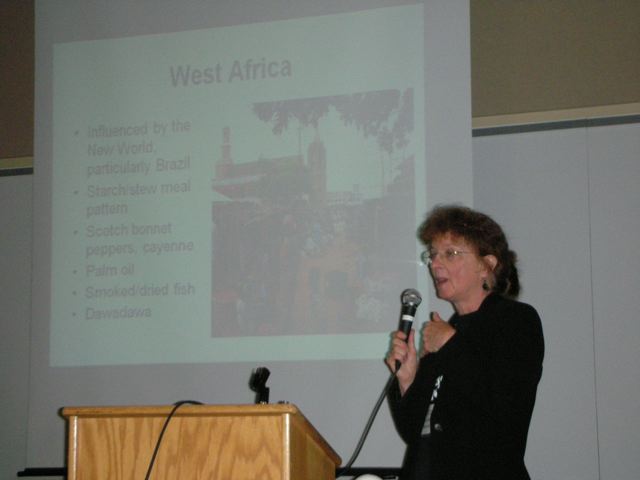
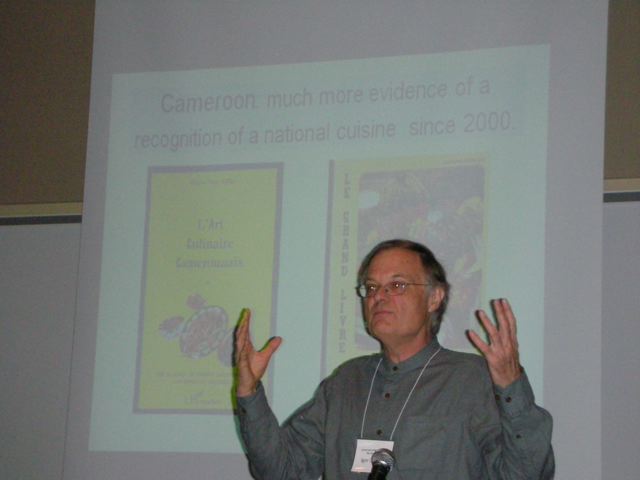
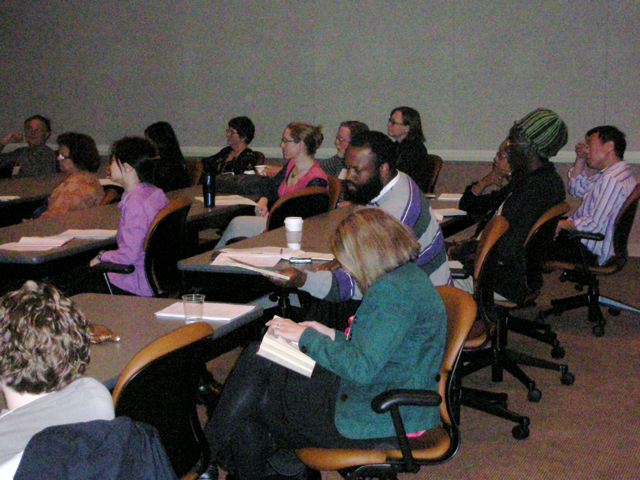
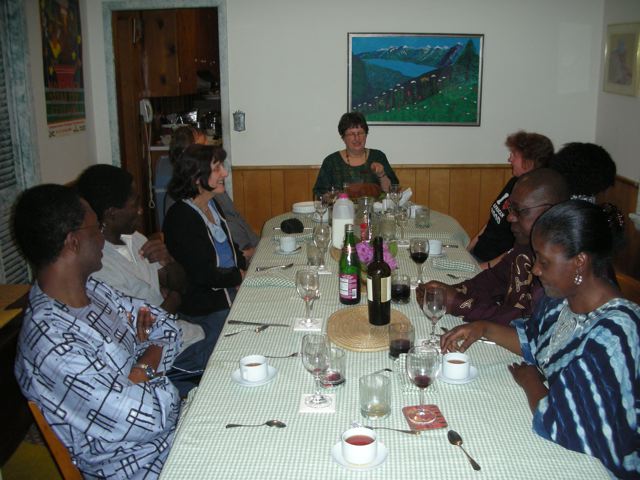
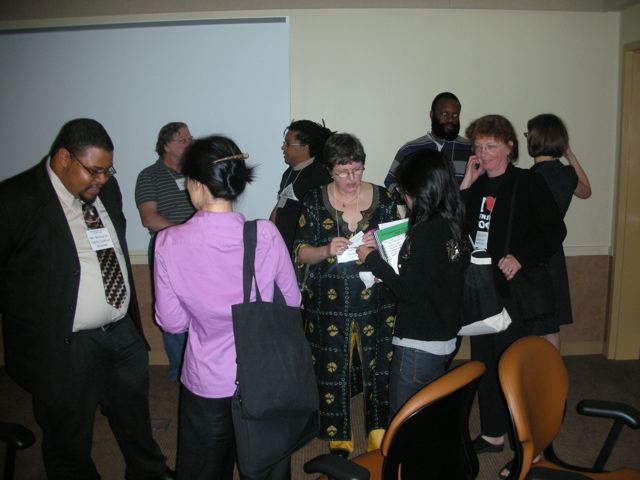
I'm back from 2 weeks of graduations, being with family and friends, tasting Jamaica, and generally being treated like a queen. There is much to catch up on, beginning with a few words about the panel on "Interdisciplinary Perspectives on African Cuisines" held on May 30th at Penn State and the small dinner party afterwards. The panel went well (despite being scheduled for 8 a.m.
Saturday morning): we started off with Cindy Bertelsen's overview of African flavor principles (see her Gherkins and Tomatoes website for more information: principles-out-of-africa/ (the basics); principles-out-of-africa-a-fish-tale/; principles-out-of-africa-its-the-beans/ (fermentation and oilseeds); http://gherkinstomatoes.com/2009/06/06/10572/ (pumpkins). Igor

Cusack followed up with a discussion of cookbooks and national identity in Africa. Through what seemed incredible indifference and inefficiency on the part of the U.S. Embassy in Yaounde, Forka Leypey Mathew Fomine was unable to receive a visa in time to attend the conference, so I (Fran Osseo-Asare)
summarized his original research on the evolving role of the African giant land snail in the diet in parts of Cameroon. Please contact me if you wish to obtain an electronic copy of his fascinating paper. I then made some observations of my own about the cassava "saga" in Africa, and the transformation of cassava from an orphan crop to a nurturing "mother," and an important emerging cash crop in West Africa. Culinary historian Michael Twitty rounded out the session with a look at ethnic culinary variation in West African links and contributions to American Southern cooking. There was some lively discussion, and the general consensus was that there is a huge need for more of these kinds of opportunities to focus on African cuisines. I would
personally love to see sessions on African cuisine in literature and art, or on African cuisines and culinary tourism. Our biggest frustration that Saturday morning was "so much to say, so little time!"


For more pictures, go to BETUMI on flickr (ASFS/AFHVS May 30, 2009).