Showing posts with label banku. Show all posts

Thursday, July 21, 2011

Recipe #93: Akple (corn and cassava dough)

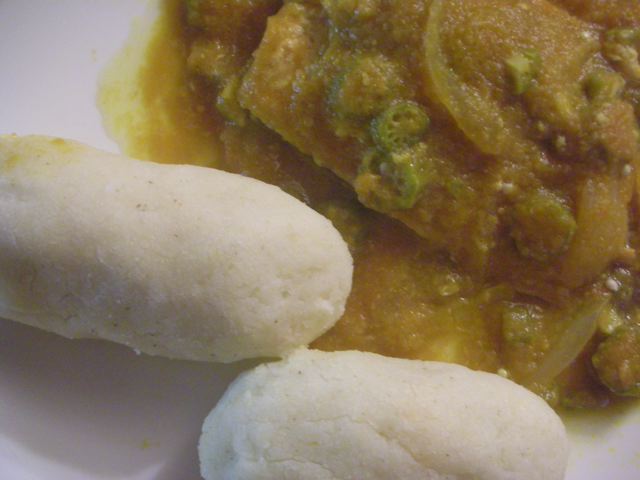
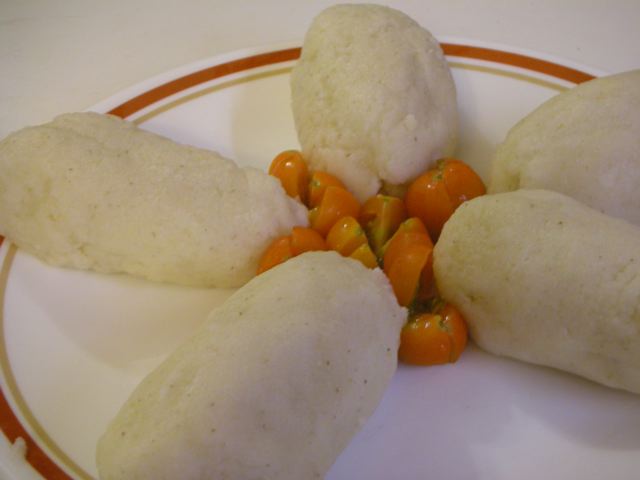
In July I discussed cassava (yucca, manioc) dough, and began describing how to make it--at least as far as grating the peeled cassava and pressing it to drain it for 2 or 3 days. Today's post follows up on that. After 3 days, you will have a dry, tightly pressed together clump of cassava. I added a cup of water to a blender, and blended the cassava to a dough/paste. That is what I'm using today. (I had several cups of dough, and have the rest stored it in the freezer). A photo at that previous blog posting shows the Ewe answer to banku: akple. Once one has the cassava dough, it is simple to make. I decided akple would go well with the yesterday's garden egg stew, so only made a small amount since I'm home alone this week. You might want to try this small recipe first, and if you like it, increase the recipe next time you make it.

Recipe #93: Akple (cooked corn and cassava dough)

The proportions for making akple are 1/3 of cassava dough to 2/3rds corn dough. It is my understanding that akple is made from unfermented corn dough. I used
  • 1/2 cup of cassava dough
  • 1 cup of corn dough
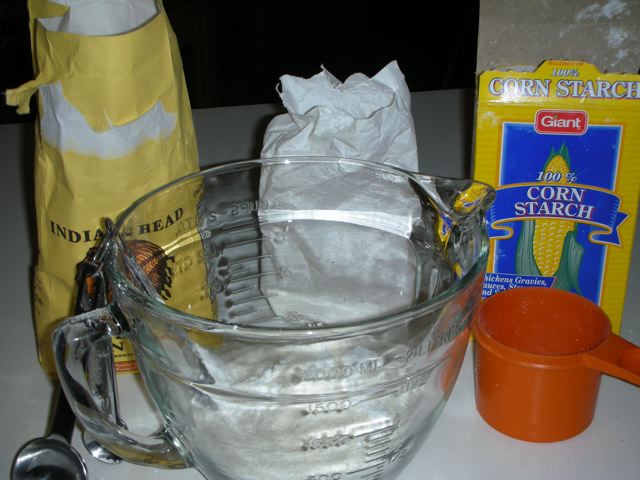
To make the corn dough, I put a cup of white Indian Head cornmeal in a blender to make it a little finer (optional), then mixed it in a bowl with a teaspoon of cornstarch (also optional) to make a slightly smoother dough, then mixed 1/2 cup of water into it. (NOTE: the photo shows the cassava dough on the left and the corn dough on the right.
  •  Mix together the 2 doughs in a saucepan with a half cup of water to get a smooth creamy mixture, and add a little salt (I used ~1/4 teaspoon). A nice heavy wooden spoon or stick works well.
  • Put the mixture on the stove on a medium heat and stir it as it heats, adding another half cup of water all at once and continue stirring until it forms a solid mass (about 10-15 minutes). Do not allow the dough to become lumpy or scorch on the bottom. Turn it as you stir.
  • When the mixture becomes fairly solid and no longer "wet" looking, take a calabash (or bowl), wet it thoroughly and put a spoonful of the dough into the calabash, shaking it vigorously and rolling the dough inside into a circle or oval shape.
Originally, akple was eaten mainly with fetri ma or fetri detsi, but now it goes well with other dishes, such as fried fish with pepper sauce or shito, or palaver sauce. As I said, I'm enjoying mine with garden egg stew.


Thursday, July 07, 2011

Recipe #76: Cassava (yucca) Dough

The Ewe people number between 3 and 6 million people (I've seen figures citing both),  mostly living in Southeastern Ghana in the Volta Region and also southern parts of neighboring Togo and Benin. While my collaborator Barbara Baeta can and does prepare dishes from all 10 regions in the country, she is an Ewe woman, and her heart belongs to places like Keta along the coast. On her own table, she displays a love of dishes featuring the  riches of the sea and coast, fresh and dried seafood, garlic, okra, and dishes including cassava dough, such as akple, the Ewe answer to banku. The main difference between the two is fermentation and the  cassava dough (banku is all or mostly made from fermented corn dough; akple is made from unfermented corn dough and cassava dough).

One of the challenges in writing our Ghanaian cookbook for folks outside of Ghana  is the difficulty in duplicating some of the ingredients easily found in any open-air market there,  such as corn dough and cassava dough, or even fresh cassava. However, the name of this blog and network, "BETUMI," comes from the Akan word "tumi," meaning "to be able to."

So, in the spirit of "can do," here is my approach to creating the doughs. I've already explained how to make fermented corn dough using white Indian Head corn meal (see the link to banku above), and 2 days ago I decided to try using dried hominy corn to make a smoother corn dough. That's the whiter one in the photo to the right and the  one I may use when I make the akple after my cassava dough is ready in a couple of days (Incidentally, the Goya corn I ground doesn't seem to be fermenting anyway. I wonder if it was treated with lime or something?) Or, you can make the dough as for banku (the one on the right in the photo), but without letting it ferment.

To make akple you need to combine twice as much corn dough as cassava dough. Today's recipe, following the sketchy directions in my notes, is for cassava dough:

"Peel cassava, wash it, grate it very fine, mix water if not too wet, put in a sack and put a stone or heavy pot on it and let drain for 2-3 days."

Recipe #76: Cassava (yucca) dough
  • Finding fresh cassava is the first challenge. It is a root and will probably be called yucca in the market. It will be likely coated in wax. Unapologetically ask someone in the produce department to cut a few tubers in half before you buy them to make sure they are not rotten (I usually find they are when I shop).  When you get them home (I bought 3 and still had to discard part of one), peel them and drop them in some water. I usually cut the ends off, cut them in half at the center, then use a sharp knife to kind of peel back the dark bark. I ended up with about a pound of peeled cassava.
  • The next step is not for the fainthearted. Roll up your sleeves and use some elbow grease to grate the cassava into a clean bowl. I used the "fine" side of a box grater. It's possible that a food processor could also do this, but I'm sticking exactly to my notes this time. If you also cut the pieces horizontally, you'll see a kind of stringy piece that runs down the cassava. I pulled a few of those out, but also grated some of them along with the rest of the cassava.
  • "Mix water if it is not too wet" was cryptic, so I decided to add some water, reasoning that if it was too much it would just drain out eventually. To my 2 1/2 cups of grated cassava, I added about a half cup of water in the bowl and swished it around in the stainless steel bowl I was using.
  • How to drain it? I decided to put the grated cassava into a clean pillowcase, set a stainless steel bowl weighted down with rocks on top of it, placed the pillowcase on a patio chair with a plastic pan under it to catch the starchy water draining out. Not too elegant, but it seems to work. I also doubled the pillow case, and put a paper towel between the chair. If rain threatens, I'll move the chair into the garage, but I've got it outside during the day.
  • On Saturday I'll take it out and see what we have. . .

Tuesday, August 18, 2009

Recipe #9: Okra/Eggplant/Fish Stew

Banku is often eaten with a stew made from okra and/or garden eggs (a kind of eggplant, which is what is often substituted in the U.S.), and smoked and fresh fish. I especially love smoked mackerel, but my husband was recently placed on a low-sodium (salt) diet, so we had to omit that and go with fresh salmon instead. I confess I missed the lovely flavor smoked fish adds. We tried to compensate for that by serving it with a little bottled chili sauce since I did not have any "black pepper" (shito) on hand.

The ingredients I used included: a medium eggplant (to get several cups, peeled and chopped), a large really fresh tomato (or 2), or substitute canned if you must, a large onion, chopped, a jalapeno pepper (or a hotter variety, more, etc., to taste), about 1 1/2 dozen fresh okra, (or frozen), 4 salmon fillets, 2 large garlic cloves, a couple of tablespoons of red palm oil (or other vegetable oil), a little fresh, peeled ginger (to taste, try starting with an inch or so), and some salt.

Salmon would not be a traditional fish (whereas tilapia, tuna, or red snapper would), but I've often had salmon served in West African restaurants in the U.S., and it works fine, especially the wild type, which are meatier.


First wash and prepare the eggplant. Peel it and chop it into cubes, then put it in a saucepan and
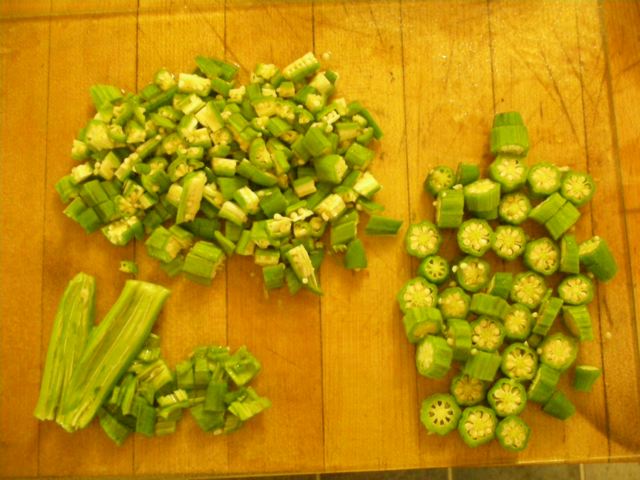
cover the eggplant with water. Cover the pan, bring it to a boil, then lower the heat and simmer it while you prepare the okra. If using fresh okra, rinse it, then trim both ends. According to your preference, you can 1) simply slice the okra into rounds, 2) chop it finely, 3) remove the seeds and slice it horizontally, 4) leave it whole. I generally chop it finely, unless I'm in a hurry, when I just slice it. When using frozen okra, I often leave it whole so it doesn't completely lose its body.

The stew can also be made with only one of the vegetables--either the okra, or the eggplant, but we like them combined, as they often are in Ghana.
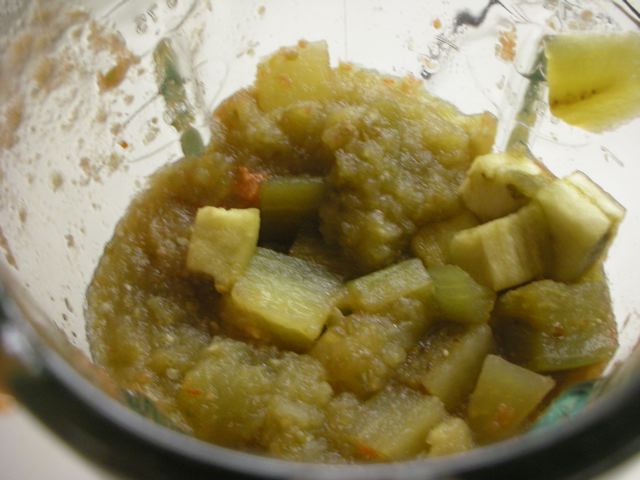
When the eggplant is soft, remove it with a slotted spoon and puree it in a blender or food processor. Set it aside.

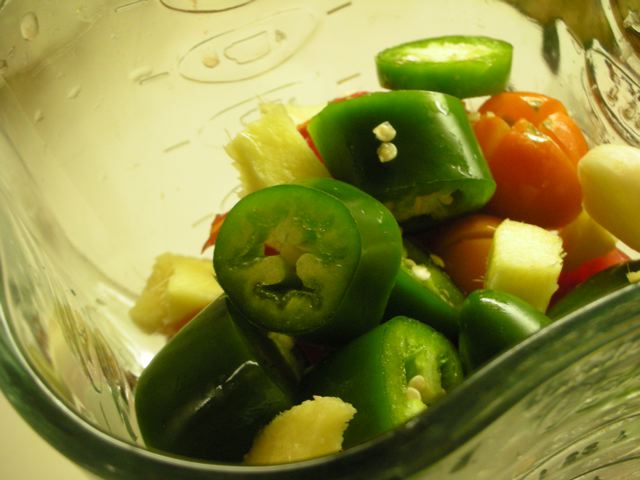
Similarly, peel and coarsely chop the ginger and garlic and tomato and puree them with a little water in the same blender container. No need to rinse it first.

Peel and chop or slice the onion. In a large, heavy pot or pan heat a couple of tablespoons of oil (I used a seasoned red palm oil from Ghana called "
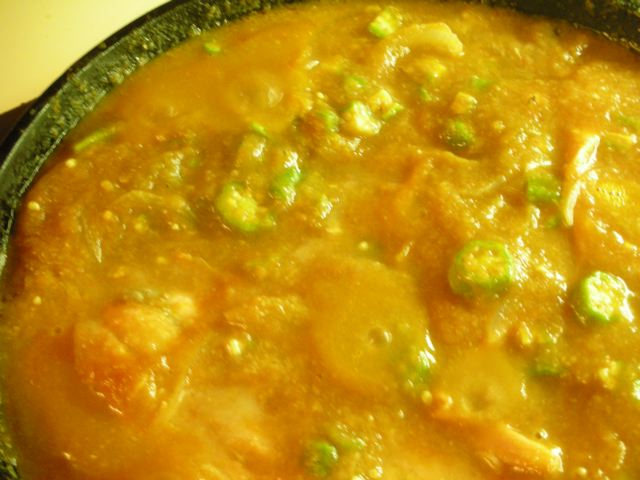
zomi") and fry the chopped onion on a medium heat for a few minutes, then add the pureed pepper and tomato and garlic and ginger (if you're a perfectionist like me, you can strain out the seeds, or seed the peppers and/or tomatoes before putting them in the blender). Add the eggplant and fish, turning the fillets to coat them with the spices and vegetables, then add the okra and salt (to taste) and stir. If it's not spicy enough, add a little dried red chili pepper. Add a little water if the sauce seems too thick, cover it and lower the heat and simmer until the fish and okra are cooked. This stew also goes well with plain rice, and should serve 4 people. If you want more tomato flavor, add a spoonful of tomato paste.

Monday, August 17, 2009

Recipe #7, continued (banku)

We ate our banku with a stew. Today I'll mention the steps to finish the banku, and tomorrow #9 will be an okra/eggplant/fish stew that pairs well with it.

Basically, when using the fermented Indian Head cornmeal dough, just bring a couple of cups of water to a boil in a saucepan (about a 3-quart saucepan, with a handle), add a teaspoon of salt, and gradually stir in the fermented dough. If you stirred the dough every day it should not have mold on it, but if there is any, scrap it off before adding the dough to the boiling water. Incidentally, the more days you let the dough ferment, the more sour it will be. If it's your first time, probably 2 days will be long enough.

Lower the heat and stir constantly to keep it from forming lumps. Stir the banku for about 15 minutes using a strong wooden spoon or paddle (something flimsy will likely break), scraping the bottom of the pan and turning the dough as it cooks. If necessary, add a little water to keep it from scorching, and/or turn down the heat. Once the banku is cooked, remove it from the heat and let it sit a few minutes. When it is cool enough to handle, wet your hands and shape the banku into one large or several small loaves (I generally make individual servings). Banku is usually eaten warm or lukewarm.

Has anyone tried making banku in the microwave? Please let me know if you have, and how it worked out. The same basic procedure is used when making banku from already-prepared frozen dough, after defrosting it. If using the powder, one must of course add more water (I would add some water to make the dough, then bring more water to a boil and continue as with the Indian Head fermented dough).

Gosh, just remembering this is making me hungry again.

Thursday, August 13, 2009

Recipe #7: Banku, 4 choices

Yesterday I mentioned I'd begun fermenting some cornmeal to make the dough for the Ghanaian dish known as banku. The same dough can be used to make a firmer, steamed ball called kenkey (see the March 28, 2007 posting). It takes a few days to get to the right level of sourness, so it'll be a couple more days before I actually make the banku, and perhaps an eggplant or okra stew to serve with it. The way many Ghanaians make banku, and I did for many years, is to put 2 cups of white Indian Head cornmeal (or other similar stone ground cornmeal, but do not use masa harina) into a nonreactive container, like glass or ceramic) with 2 teaspoons of corn starch. Mix them together well (I use a wire whisk), then add 2 cups of lukewarm water. Mix thoroughly, cover lightly and leave to sit in a warm place (counter, stove top or oven) for several days, stirring once a day. The dough should begin to bubble up as it ferments.

The Indian Head cornmeal version requires no imported ingredients. If you're unable to find white cornmeal (the preferred one in most of sub-Saharan Africa, for reasons described well in James McCann's excellent 2005 Maize and Grace: Africa's Encounter With a New World Crop, 1500-2000), go ahead and use any stone ground yellow cornmeal/corn flour.

While we're waiting for the dough to ferment, let me discuss other options for making banku. If you look online or live near a large city that caters to African immigrants, you will likely find several possibilities. The first drawback of the dough described above is that banku is generally made not only from corn, but also cassava (aka, manioc, yucca). Also, the traditional process for producing the corn dough includes first soaking the whole corn overnight, then grinding it. Usually people just take the corn to a local mill that grinds it for them. The result is that the flavor is different (this flavor different has to something to do with the starch/sugar relationship, I was told) and also the corn is ground much more finely than the Indian Head or other stone ground cornmeal available in the U.S. Finally, Ghanaian food scientist Professor Sefa-Dedeh once explained to me that the actual bacteria that grow during the fermentation process are specific to Ghana, and will also produce a different flavor to the dough. He advised me to dry some corn dough in Ghana and use it to make banku in the U.S.

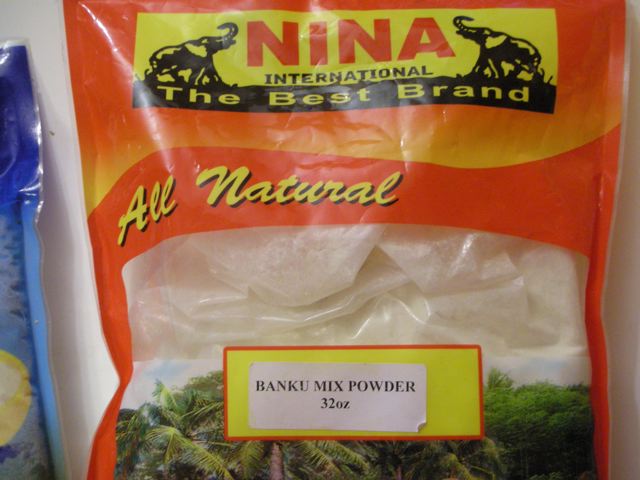
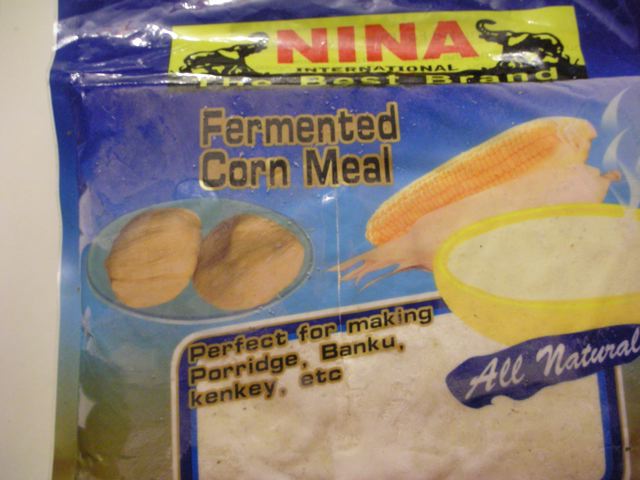
Fortunately, many shops now import frozen dough or dried powders directly from Ghana. There are several versions. The first is a dried, powdered form to which you just add water. Many people like this, but to me it has an aftertaste. I prefer the frozen dough that includes, as does the
powdered version, both the cassava and corn doughs. Nina International produces both versions. Finally, there is also the option of having a corn only version of the frozen dough, which has the advantages of being closer to the original banku texture, but without the cassava. It can also be used for other Ghanaian dishes, such as a popular porridge called koko.