Monday, May 11, 2009

Recipe #3: Pot Luck Gari foto

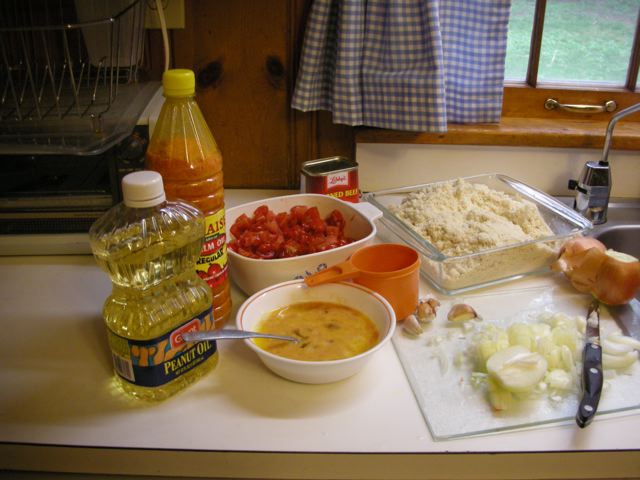
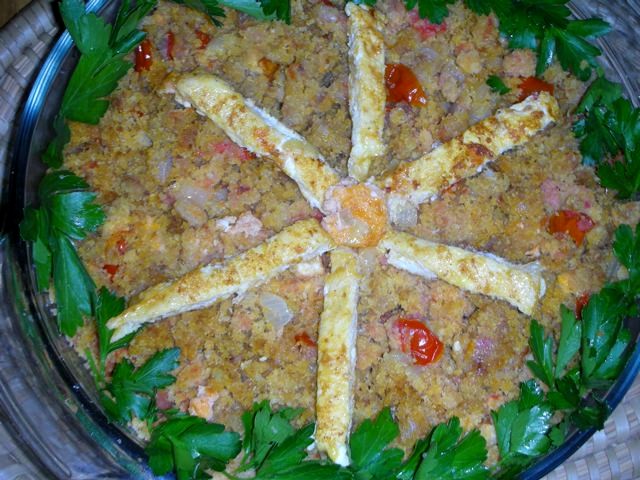
Last Sunday for a fellowship meal at church I made some gari foto (Americans would say "Gary PHOto") a one-pot dish that's hearty, quick and easy and inexpensive to prepare, and a new (but not too new--Ghanaian gari has a mild taste that is quite acceptable and accessible to North Americans) flavor combination. Basically, one whisks and cooks a couple of eggs as you would for Chinese fried rice, sets them aside and makes a simple stew of oil, chopped onions, garlic, ginger, tomatoes and red pepper (and, if you like, something like canned corned beef, or tuna or sardines, or any other leftover meat or fish; I imagine tofu would work, too), and mix it together with some gari that has been pre-moistened. If you are not near a market that sells African ingredients, locate one online that will ship it to you.

As I mentioned recently, gari is a form of cassava (aka, manioc, yuca) that has been soaked, grated, fermented, dried, and roasted to make a convenience food that is reminiscent of couscous and is gaining in popularity in urban areas of Western Africa. Gari is especially popular in Ghana and Nigeria. Another day I'll talk about a delightful cousin of gari from Côte d'Ivoire called attiéké.

Gari foto is also called gari jollof, and is similar to classic West African jollof rice, which is a one-pot stew and rice dish. The main difference is that gari foto is faster, since you don't have to wait for it to cook as you would rice. While it was once a humble end-of-the-week-leftovers dish, today it is just as likely to be served at dinner parties in Ghana.

I'm putting recipes up on this blog and hope you will try them out and send me feedback, but I've been advised that I should mention that each of these are original recipes and are copyrighted ;-) ©Fran Osseo-Asare, 2009

Basic Gari foto with Corned Beef (this is the way I most commonly make it)

1 onion, chopped
2 large fresh tomatoes, or 2 cups grape tomatoes, chopped (or 3 drained canned tomatoes, chopped), seeded if preferred
1/2 tin of canned corned beef (or about 6 oz., or 1 cup of any leftover fish, meat, or beans), in chunks
1 Tablespoon tomato sauce (optional)
6 Tablespoons of peanut or other vegetable oil
2 eggs, beaten
2 cups of gari
3/4 cup water
1/4 teaspoon salt
2 Tablespoons red palm oil (if available)
1 teaspoon fresh grated ginger (or 1/2 teaspoon dried ground ginger)
1/4 teaspoon ground red pepper (or to taste, or a little chopped fresh hot pepper)
parley for garnish, optional [that's a Western touch ;-)]
1 or 2 cloves of garlic, peeled and minced or pressed in a garlic press (optional)

Prepare ingredients: chop onion and tomatoes, grate ginger (if using fresh), peel and mince or press garlic (if using), open the corned beef can (if using), tomato sauce can (if using), break eggs in a bowl and beat well, measure out the gari in a separate bowl. Assemble other ingredients: oils, salt, ground red pepper, etc.
Measure out 3/4 cup of water and add a little (1/4 teaspoon) salt, and gradually sprinkle it over the gari, mixing it in with a fork (I usually just use my fingers so I can judge how wet it is). The gari should be dampened, but not dripping wet. Let the gari sit while you prepare the eggs and stew.

For a fancy version, you can fry a little of the chopped onion in a tablespoon of peanut or other oil, then mix a tablespoon of the tomato sauce into the beaten egg, and fry it as you would an omlett, then cut half of it into strips to garnish the finished gari foto (I usually omit this step for family meals, and just basically scramble the eggs and set them aside to break up and mix into the gari foto after mixing the gari in with the stew.)

After removing the eggs from the pan (I use a heavy cast iron skillet, but any heavy pan or pot will work), add the 2 Tablespoons red palm oil (this is called dende oil in Brazil, and there's a special spiced red palm oil from Ghana called zomi, if you can get it) and 1/3 cup, or 5 Tablespoons, peanut oil (or any other vegetable oil you like. Some Ghanaians have started using imported olive oil in cooking because they hear it is healthier, but that is not the traditional flavor). You can adjust the proportions of palm and peanut (or other oil, like canola) to taste. I usually use a light hand with the palm oil for those unfamiliar with it.

When the oil in the pan is hot, add the chopped onion and saute it until it is clear, then stir in the corned beef, if using. It will disintegrate as it cooks, which is good. After a minute or so, add the garlic, then the tomatoes, ginger, and red pepper. If you are using half of the egg mixture to garnish the dish keep it aside, then break the rest into small chunks, and stir into the stew. If you do not wish to garnish, add all of the egg into the stew. Turn the heat to low and mix in the gari mixture, using a fork to break up any lumps of gari. Keep turning it until the stew saturates the gari and there are no dry white (or yellow) lumps of the gari. Add salt to taste.

If desired, garnish the finished dish with fresh parsley and decorative egg strips.

Hints: Gari foto may be eaten alone or with a vegetable side dish, with a pepper sauce, or may be accompanied by a red bean stew.
A couple of teaspoons of dried ground shrimp may also be stirred in with the other seasonings to give it a distinctive West African flavor.
If you are leery of grating and chopping fresh hot pepper and/or ginger, just throw them into a blender with a little water and blend them together to add them. Remember that the more membrane and seeds you include from any hot pepper, the hotter it will be. I recommend using ground red pepper to have more control over the heat of this dish, which is usually not served spicy.

Enjoy.
Friday, May 08, 2009

Question #6: What makes YOU the expert, white American lady?


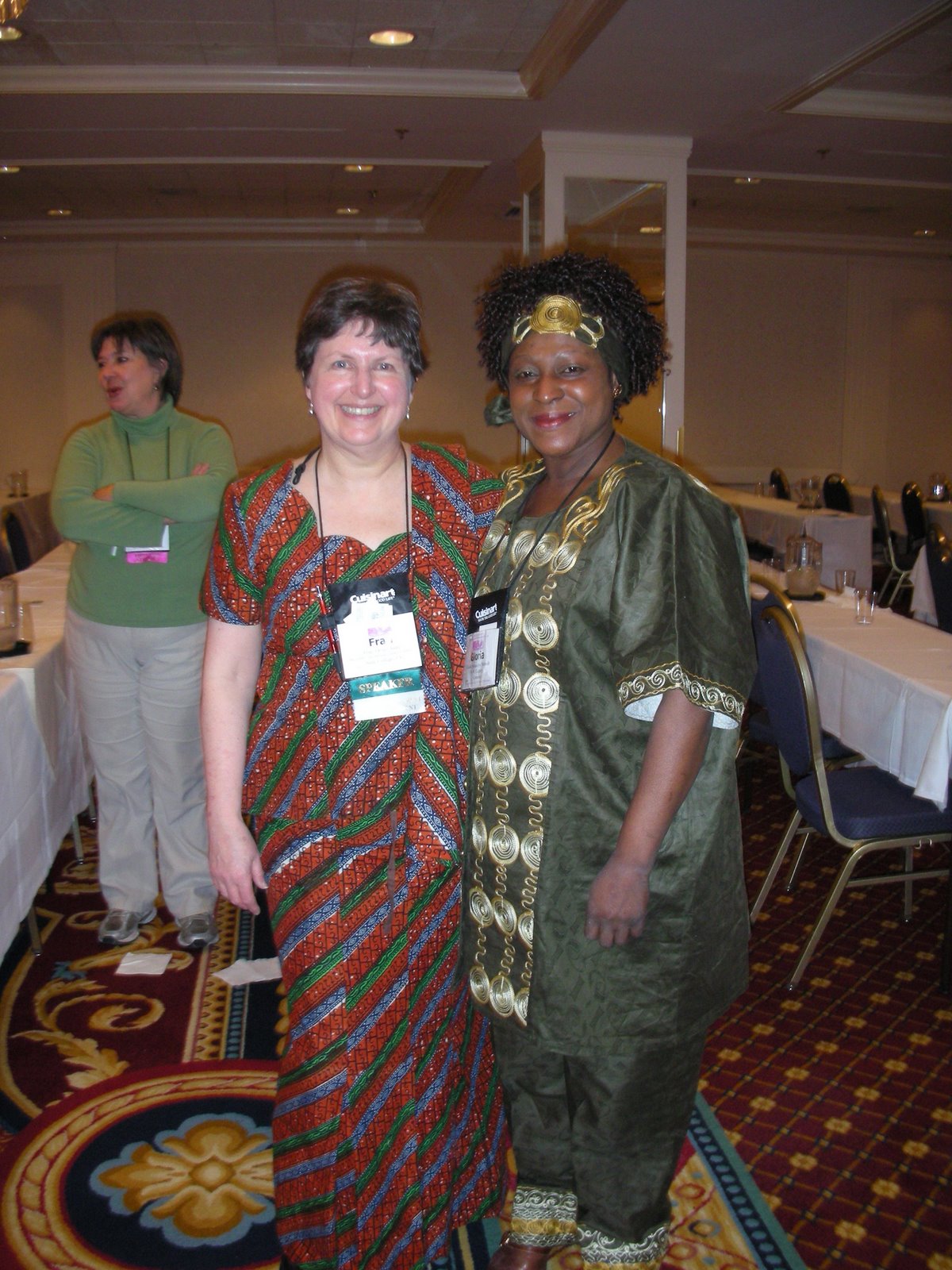
When my book A Good Soup Attracts Chairs came out in 1993 I made a conscious decision not to put my photo on the book jacket. A few months after the cookbook's publication I was speaking to the African-American book buyer for our local university and she looked at me dismissively and said (more or less) "If I'd known you were white, I'd never have gotten the book." Not everyone feels that way, but some, especially African Americans, resent white people telling them how to cook the foods that are part of their heritage. They want to write (and read) their own cookbooks, such as those by Jessica Harris. I can accept that, and understand it. That's why when I do presentations before large groups, if possible I try to be with a (black) African co-presenter.

On the other hand, I don't believe people today think Julia Child, author of Mastering the Art of French Cooking, was somehow inadequate because she wasn't French. I would never presume to call myself the Julia Child of Ghanaian cuisine, but there are a couple of parallels, particularly in her ability to make French cooking accessible to ordinary people in the U.S.

Since the 1970s I've been eating and learning in the kitchens of family, friends, and colleagues how to prepare Ghanaian food. As a sociologist, a writer, and a "foodie," I've also looked for the stories behind the food. Since marrying my Ghanaian husband in the 1970s I've spent decades looking at his culture from the inside out, and/or the outside in, at a different level than most foreigners will ever have the opportunity to do. I've lived and studied and worked in Ghana. Finally, as a doctoral student in rural sociology during the late 1980s and early 1990s doing ethnographic and survey research, my field work took me around Ghana talking to women and men about the food they eat and grow and purchase.

Did I mention I truly love Ghanaian cuisine? We cook and eat it in our home every week, so in that sense I know what I'm talking about (of course, we also eat Mexican, Brazilian, Japanese, Thai, Italian, Korean, Mediterranean, Eritrean, Moroccan, French, Chinese, regional American, etc. food, too!) Learning to cook Ghanaian dishes, to adjust them for Western palates and substituting for or locating unusual ingredients has taken me years. My first attempts at fufu, for example, were disastrous, as were my early efforts at fermenting cornmeal to make kenkey or banku dough. I remember with pride, though, the stunned look years ago on one Ghanaian university student's face when a group was over at our house chowing down from a huge pot of palmnut soup (along with fufu and omo tuo, or rice balls. He kept looking around, disbelieving that I was the cook. He couldn't even look at me. "But, but, but," he stammered, "she's white. How could she?" I'll always treasure that memory.

Though Ghanaian cooking is basically an oral tradition, I possess an unsurpassed collection of West African and Ghanaian cookbooks as part of the African Cookbook project. I have spent months shadowing master cooks at Flair Catering in Ghana and received a travel grant to travel throughout the country to study cooking in all 10 regions, including the unfamiliar northern regions of Ghana. That makes me able to fill in the many blanks in other's books and experiences, frequently written or explained by Ghanaians who do not quite understand how much North Americans don't know about their country and culture or that Ghanaians modify (unnecessarily) to please the imagined foreign palate. Other culinary writing by short-term Western visitors to Ghana frequently suffers from "stranger's eyes" who miss a lot and make lots of amusing (and incorrect) assumptions. I have finally recognized my place at the intersection of two worlds is a strength.
As I've said before, I got fed up (pun intended) hearing the negative and distorted nonsense people said about West African cooking, so started writing about it from my perspective (see link under features to the article "We eat first with our eyes: on Ghanaian cuisine." ) I also ended up doing a lot of cooking demonstrations for schools, 4-H, scouting and other community, church, etc., groups, including the African and nonAfrican community (faculty, staff, and students) at Penn State where my husband teaches and where I earned my doctorate.

After the 1993 book I insisted I'd never write another cookbook. It was a very time-consuming and detail-oriented project (undertaken while I was completing my doctoral dissertation and raising 3 children), I had to learn to be a food photographer, and the multiple recipe testings part was a hassle, too. Nevertheless, that book catapulted into the world of culinary professionals, and I joined a group Julia Child helped found, the IACP (International Association of Culinary Professionals). My career has shifted dramatically since that time, and in 1997 I founded the African Culinary Network. In the mid-1990s I was approached several times about writing the sub-Saharan Africa volume for an upcoming Greenwood Press series on Food Culture Around the World, including several persuasive emails from series editor Ken Albala. The first few times I brushed the idea off because I was no expert on sub-Saharan African food: I only knew a bit about Ghanaian and Anglophone West African cooking.

Finally, I recognized that if I didn't write it, it might not get written at all, or else someone who didn't care as much as I did might do it and not get it right. I began immersing myself as much as possible into sub-Saharan African culture (travel, books, films, restaurants, internet research, interviewing people, etc.) Several years and trips to Africa later, by the time the book came out in 2005, I realized that I do in fact know more about African cuisines that most people in North America. Also that most people I know in Ghana and other parts of Africa do not have the luxury of studying and writing about their cuisines, and appreciate my efforts. I also realize that people outside of Africa (or in other parts of Africa) ARE interested, and curious, and that is another reason behind this blog.

Finally, I've been fortunate to live in different parts of the U.S., from Berkeley, CA to Cambridge, MA; from Golden, Colorado to central Pennsylvania; beyond the U.S., from Ghana to Japan to the U.K. to Brazil. Plus I've been able to travel extensively: Hawaii, Louisiana, Texas, Nigeria, China, South Africa, France, Tanzania. . . You get the idea. Mix all these experiences together and you understand that I have quite an international perspective. When that is blended with my specific set of personal experiences: my writing career, my community organizing and sociology backgrounds, raising my own 3 children and 2 adopted nephews from Ghana, my teaching and instructional design experiences, my love of good food, etc., they have created in me a passion (I use that overworked cliché warily, but it is at heart a wonderful word) to share what I know.

Thursday, May 07, 2009

Great gari: Recipe #2: Simple Gari (Ghana's first fast food)

The response so far to my ambitious proposal of a couple of days ago, while thoroughly encouraging and supportive, is: "don't go crazy (and make us crazy) trying to bang out a recipe a day: focus on quality, not just quantity." That's good advice. I'll revise my plan to just 1 or 2 recipes a week.

Also, some people have written to ask if putting recipes online might not imperil a cookbook contract. I remember when I worked at Penn State as an instructional designer for their "World Campus," and there was a great emphasis on controlling the information available in online courses so that it didn't escape "out there" in the cyberworld. A year or so later our family spent a sabbatical at MIT in Cambridge, Massachusetts, where the school announced they were making all of the information from their online courses free to anyone who wanted it. They were not marketing their knowledge, but their expertise. I guess I feel the same about my upcoming cookbook. Besides, all of the recipes won't be there, nor will those that are be in their final form, nor will the professional photos from Ghana be included, nor the supplemental information, and a lot of the stories.


At the end of May I'll be talking at a conference about cassava, a hugely important staple in many parts of Africa (and other tropical countries outside of Africa from Brazil, where it originated, and spread to other parts of Latin America and the Caribbean, as well as Indonesia and Asia). Particularly important in West Africa is the coarse cassava meal known as gari. Gari (aka gali or garri) is a processed form of cassava (or manioc, mandioca, yucca, yuca, singkong, ketela, or ubi kayu, depending on what part of the world you are from and what language you speak). When I was in Brazil in 2007, I explained that it was similar to the Brazilian farinha de mandioca. It is a popular convenience food in West Africa due to its low cost, easy storage, long shelf life, and ease of preparation, plus it is very filling.

Gari is made from cassava, a root crop we in North America really only know when processed into the starch tapioca, which we use to make puddings and thicken things. But there is much more to the cassava than that. It is a staff of life to many people in tropical places, and especially in West Africa. There's no room here to go into a detailed history (plus there are already a lot of places on the web you can get that info: just do a google search on cassava); the same is true of West African gari (just don't confuse it with Japanese pickled ginger: that's a totally different gari!)

The processing of the cassava root involves washing, peeling, grating, soaking, pressing, drying, and toasting. The net result is a kind of cassava "couscous," that can be served simply by adding lightly salted water. I always boil my water before I sprinkle or pour it on the gari, but that is just me. Gari is very filling. It swells up when water is added, and can be eaten as a side accompaniment to a stew.

Preparing gari this way is faster than rice, and easier than couscous. The picture above shows 1/4 cup of dry gari on the left, with 1/4 cup gari sprinkled (and then stirred and let sit until it swells) with 1/2 cup of boiling water. There's a wonderful tangy smell from the fermentation of the cassava that releases when the water hits the gari.

Serve with a stew or sauce. For example, put a little oil in a frying pan, slice some onion into it, saute until golden, open a can of Goya sardines (rich in omega oil!) in tomato sauce, add it to the pan, sprinkle in a little red pepper if you want (and/or some beaten egg, or spinach if you like), and you have a meal in less than 10 minutes, even if you have to cook the spinach in the microwave before adding it to the stew. I've served gari to many North Americans who had never tasted it, and it was a very accessible flavor: it's mild, and makes a good canvas for a variety of stews, or when cooked into a one-pot as in
gari foto. Incidentally, not all gari is the same texture: the Nigerians prefer a much coarser cassava meal than Ghanaians. However, you will have to find an African or International market to find it, or order it online since you will not be able to find this at your local supermarket. By the way, it's also very inexpensive.

There's a lot more to say about how to eat gari, but not today. (I just finished hosting a symposium luncheon for all the students in one of my husband's graduate courses, and as we were finishing up discovered a Ghanaian family is in town for their son's graduation, and I've invited them for dinner, so it's back into the kitchen. BTW, I made plantain chips to serve as an appetizer today to use up four plantains I had left over and they were a huge hit with students from: Nigeria, India, Japan, China, Ghana, Brazil, and Pennsylvania!

Wednesday, May 06, 2009

Recipe #1: Green Plantain Chips

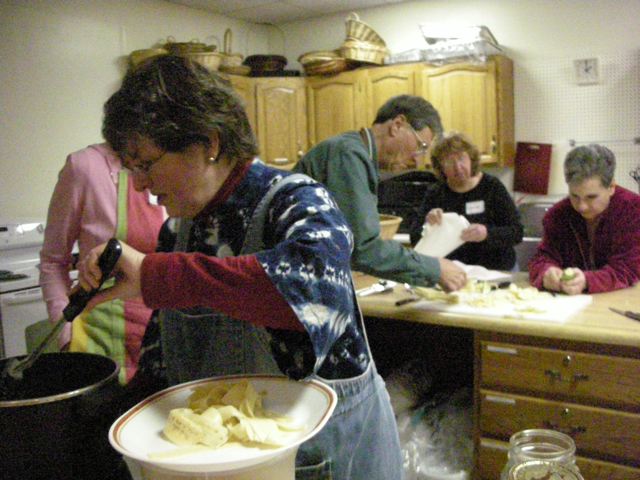
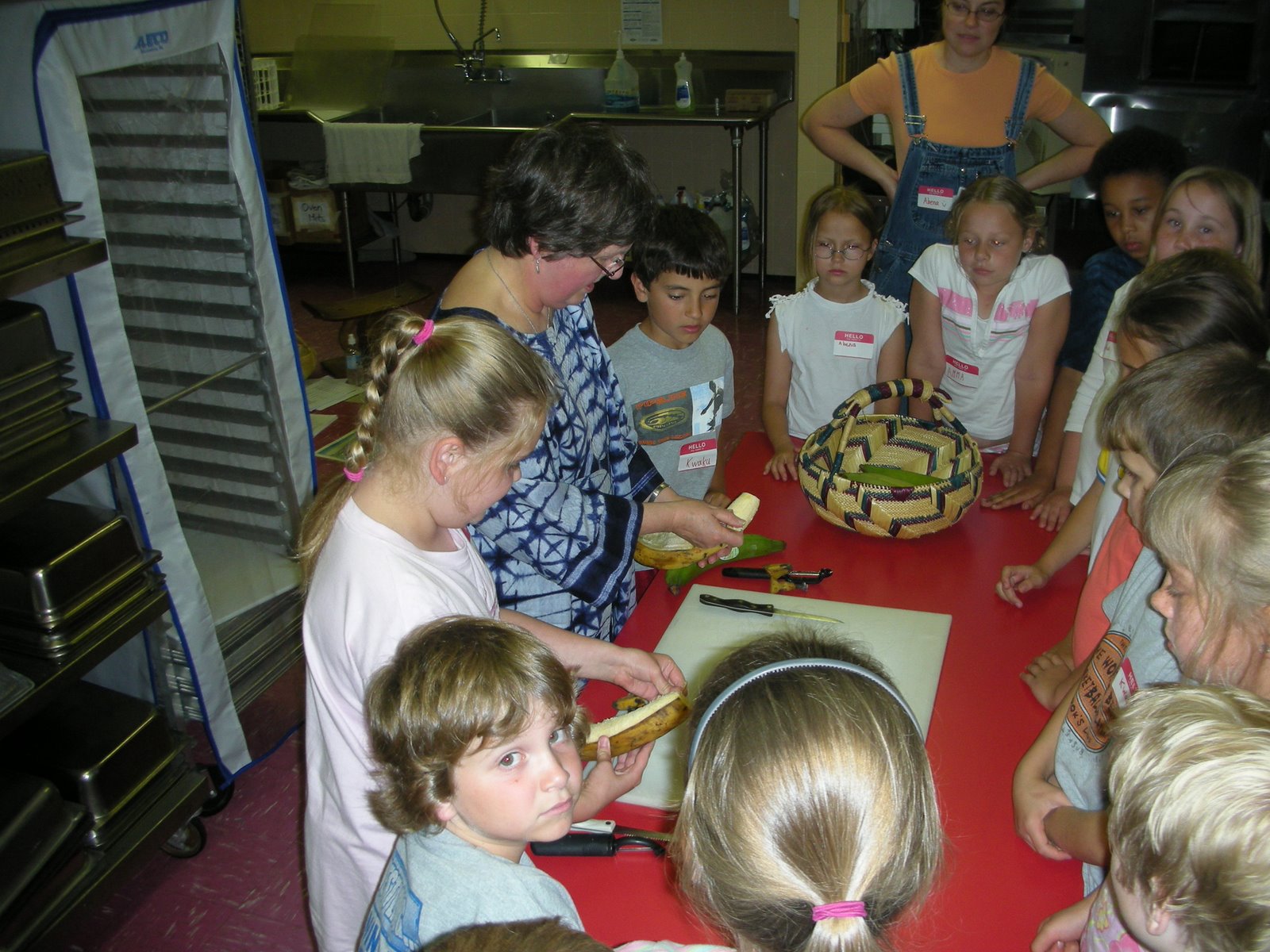
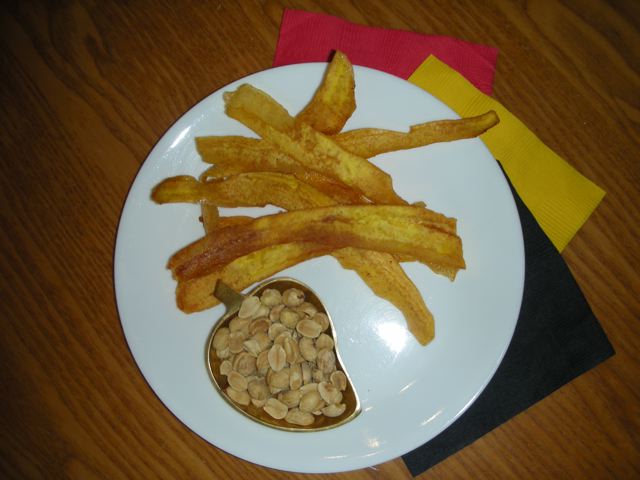
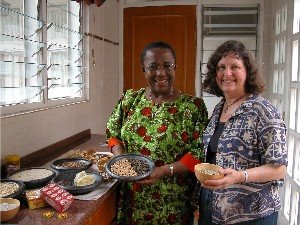
I hope you read yesterday's post about my new challenge to myself. I calculate that if I put up a recipe (at least a draft) every day, taking Saturday and Sunday off, for the rest of the year, that will be 171 recipes. That should cover most of the book. I'll begin with a very popular item throughout Sub-Saharan Africa: green plantain chips. I make these frequently--twice in the last week: once with a cooking class on "The meaning of food" (see the photo on the right) and once for the local Chamber of Business and Industry "Spotlight" for members. Both times we had them with bissap, a hibiscus iced tea, but that recipe is for another day.

BTW, green plantain chips are a great way to impress your friends if you're from Pennsylvania where they're exotic (but not so if you're from, say, Florida), they're cheap and easy to make, and I never have any left over! Our local African Market owner says they're the one sure seller in her store, too. Freshly made chips have it over those packaged ones in the stores any day.


Start with big green plantains. Since they sell them by the "each" in our stores here, I always buy the biggest, greenest ones I can get, but that's not necessarily the most flavorful. Most people won't know the difference. If you plan to use a vegetable peeler to make them into strips, it's a good idea to try and find plantains that are fairly flat as opposed to really curved.


Here's the basic recipe:

Ingredients
1. 2 or 3 large plantains will make enough for several people for a snack

2. vegetable oil for deep frying (I usually use canola)

3. salt to taste

Equipment:

1. a sharp knife a sturdy vegetable peeler (I'm partial to my Farberware one) or mandolin or grater
2. a strainer basket or colander lined with paper towels for draining

3. a heavy deep pan for frying (I use a deep fryer or my large cast iron skillet)

4. cutting board (optional)

5. a long-handled slotted spoon


Directions:
Rinse the plantain and peel it by slicing off each end, then make a long slit along the length without cutting into the plantain itself. Make a cut around the circumference of the center of the plantain peel, also avoiding the actual plantain. This allows you to remove the peeling in pieces.

Use the tip of the knife to pry the peeling loose to get started. Scrape off any fibrous strings on the plantain with the knife.

There are different ways to slice the plantain: some like to cut them into thin circles or ovals on a cutting board. I prefer to make elegant long slices using a potato peeler (or you could use a grater or mandolin). These are easy to make very thin and crisp.
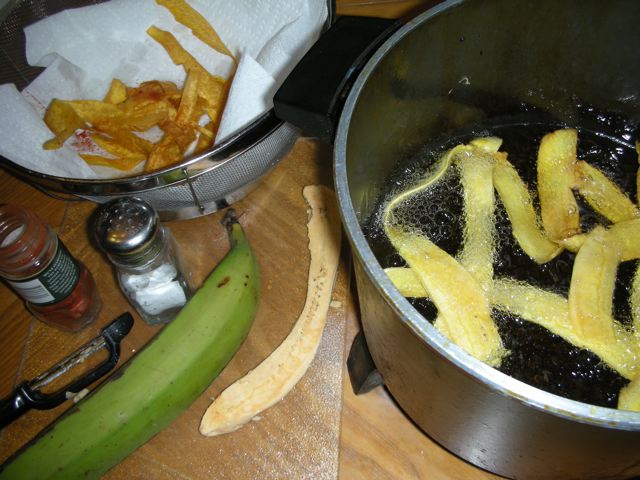
Fill the pan or deep fryer not more than half full, then heat the oil to about 365 degrees Farenheit (185 degrees Centigrade). [If I'm using my stove top, the medium high setting will give me approximately the correct temperature, but I do have to turn it up and down to keep it from getting too hot. If you drop a piece of plantain into the oil and it sits on the bottom, the oil is too cold. If as soon as you drop it in it comes to the top and almost immediately begins to brown, the oil is too hot.]

You can either make a bunch of slices and then drop them one by one, or drop them in as you slice each one. I usually get about 1 1/2 dozen slices ready and then put them in. Don't add them all at once or they'll clump. I usually keep nudging them as I put them in to keep them from sticking to each other. Stir with a long-handled spoon to make sure they cook evenly. After a few minutes, remove the chips when they are golden and drain them on a lined colander. If the chips "bend" they're not fully cooked: they should be crispy, like potato chips.

Salt the chips while they are still warm. After they cool, store them in an airtight container.


Hints: I often just lie a plantain on a cutting board and run the peeler along it a few times, turn the plantain over and do the same thing, then turn the plantain a quarter turn to do it again (and finally rotate it one more time, then repeat as necessary. This keeps the slices nice and even and it works for me. If it's too complicated for you, do whatever is easiest. Also, if you don't want to fuss with long slices (or they won't fit in your fryer/pan), just cut the plantains in half and make shorter slices.

Variation: if you prefer spicy, sprinkle the chips with salt AND ground red pepper to taste.


Chips go well with any cold drink, from beer to iced tea.
Also, you can make these from plantains that are somewhat yellow, but not soft. They'll look a little darker, and be just a little sweeter. School children particularly love to help make plantain chips (just make sure an adult handles the deep fryer, and that young fingers do not go into the oil or splash it when adding the plantain slices). Oh, by the way, when you get as many plantain slices as you can before the plantain begins breaking apart, don't throw out those odd pieces: fry them up and enjoy them yourself them or hand them out to an observer! If you try this recipe or have any other tips, suggestions, etc., please let me know here (comment) email me (fran@betumi.com), or twitter me.

Here's a not-so-great plantain I have in the kitchen right now. At least it will give you the idea.

Tuesday, May 05, 2009

They say it's impossible. Is it? I'd like to see.

Today's blog posting is more personal than usual. I need some advice.

I've spent almost 40 years preparing to write a certain book. Along the way I've written other books, and parts of books, but not the one of my dreams--the book to cause Americans to fall in love with one African cuisine: Ghana's. Over the years, every time I've approached editors and agents I've gotten similar responses: "Regrettably, after discussing this carefully and considering potential publishers, we feel that the topic is narrow
and will likely be met with reluctance by publishers." "I don't know where I could place this book." "There is, unfortunately, no market for single-country African cookbooks." "African cookbooks traditionally do not sell well."

With the recent decline of cookbook publishing, even an editor at Hippocrene, a press noted for its regional African cookbook series, had this to say "In this current economic climate, we have just not been able to take on all the projects that we would like. Since our cookbooks are the most expensive to produce and more of a risk in terms of marketability/sales, we have slowed down cookbook acquisitions considerably this year. . . if you are still looking in a year or so, please touch base . . . "

I've been thinking a lot recently, and decided that this negativity is unacceptable. My blog audience and presentations before culinary groups convince me that there are many people out there who ARE interested in more in-depth coverage of the cooking of a specific African country (e.g., Ghana). And the time is NOW to get the cookbook Barbara Baeta have collaborated on since 2002 in print. I'm thinking that I'll turn to you, my blog family, to help with the recipe testing. I'd like to post a recipe a day (gulp--what do you think? is that realistic? there are about 200 recipes) from the cookbook (there are lots of possible titles you can advise me on, too, from The Good Soup Comes From the Good Earth: Regional Cooking of Ghana
to Fran Cooks With Flair: Essentials from Barbara Baeta's West African Kitchen to
Cooking of Ghana: Akara to Tuo Zaafe.)

My children recently encouraged me to read some of Chris Guillebeau's writing (including his free pdf's for "279 Days to Overnight Success" and "A Brief Guide to World Domination," both available at the link above. As I stare age 60 in the face this month, in the back of my mind is the memory of Susan Boyle's brave "I'm going to make that audience rock." Ms. Boyle and Chris are my examples. What do you all think? Would you be ready to support me, test my recipes, give me feedback, and help me live my "impossible" dream? To finish this book, publisher or no, by the end of this year? And to get it into print.

Tuesday, April 28, 2009

Question 5; Why should I be interested in African cuisines?

This could also be called the "Who cares?" or "So what?" question. Here we get to the crux of the matter. Where to begin to answer it?

First, consider a U.S. automaker analogy. Today's U.S. auto industry is in so much trouble partly because it didn't understand the world was changing. That the needs and interests of car buyers were changing. The same is true in the culinary world. Global culinary rules are shifting. There was a thoughtful article in our local newspaper recently by food writer Ann Quinn Corr, who began her article: by saying that ". . .there are questions that haven't been discussed on any of the talk shows: Will the food served in the White House reflect the multicultural background of our president? Will African dishes be on the table in the White House?" In the U.S. we have a president whose father was from one of "those places"--Kenya in East Africa, with its Swahili coastal influences. Look at President Obama's cabinet members and at the changes taking place in our communities, in our universities, in other words, everywhere. So, we should care because the world is changing. Our neighbors and our neighborhoods are changing.


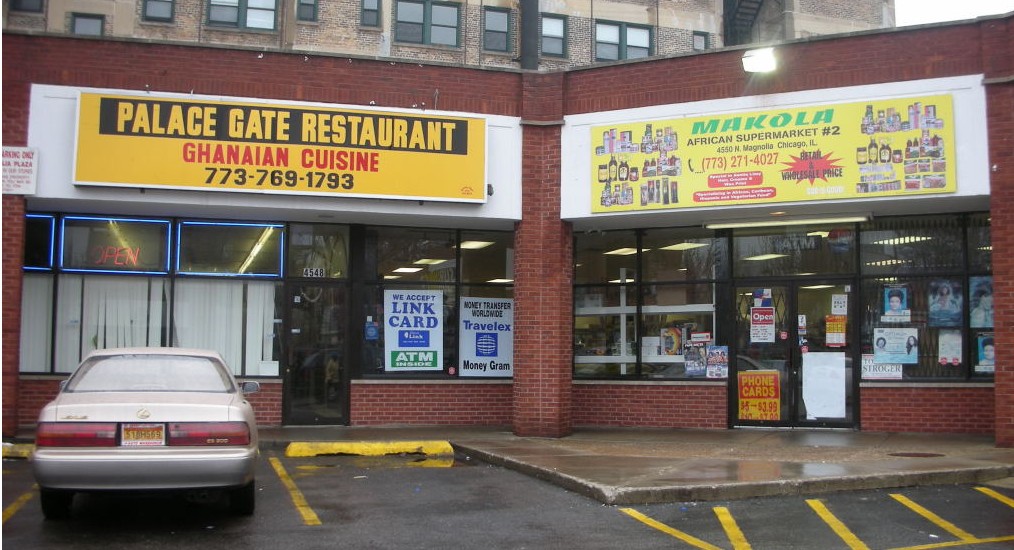
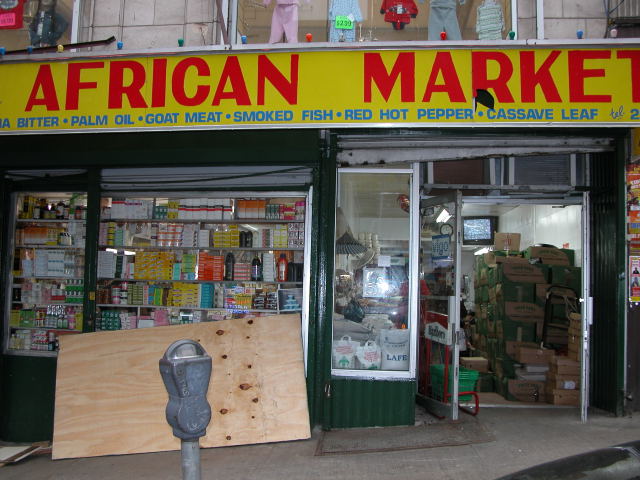
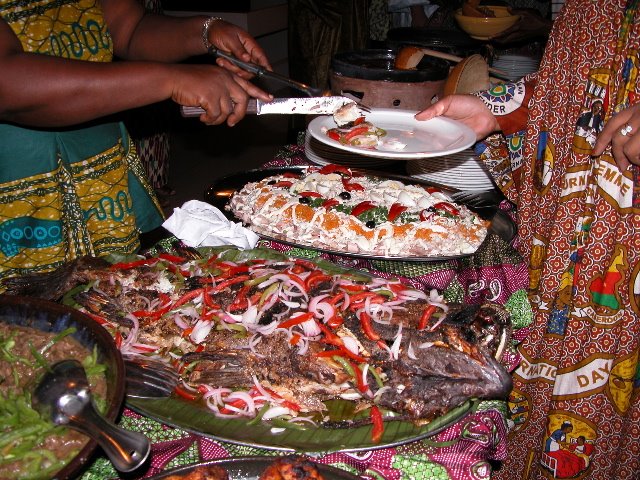
There are now sizable numbers of immigrants from all parts of Africa. They are introducing their foods into our culture, just as Italian and Irish and Polish and Chinese and Jewish, etc., people of earlier generations did. The annual African cultural Ghanafest in Chicago, for example, is entering its 20th year and attracts many thousands of people every July. Other African cultural festivals are held in Texas, California, Maryland, Georgia, Massachusetts, etc. Many large urban cities now sport mobile West African food trucks, and small family-style restaurants are emerging as well., both in cities and university towns. Today's blog features a few pictures I took in New York, Chicago, and Berkeley. Plus there's one from a local store, The African Market, in State College, Pennsylvania. There are reportedly over a million African immigrants in the U.S., and most of them entered between 1990 and 2000. This is probably undercounted by hundreds of thousands of undocumented immigrants as well. The phenomenon of emerging African churches and mosques in the U.S., and African missionaries, is another sign of the changing times. These are basically demographic, sociocultural kinds of reasons.

There are good culinary reasons, too. For example, discovering fresh ideas for cooking: new ways of using familiar ingredients, like peanuts or black-eyed peas (e.g., groundnut stews/soups or steamed bean puddings or fritters), as well as using new ingredients in familiar ways (ripe plantain pancakes or green plantain chips), along with finding new ingredients and new processing techniques (e.g., using things like cassava, taro, fresh coconut, millet), that can enrich and energize our diets.

Some other attractive reasons: the growing "slow-foods" movement that savors fresh, local ingredients slowly simmered is a good fit for many African one-pot dishes that can be cooked in a crock pot and/or frozen and taste even better when the flavors have had a chance to meld. They're also fast to reheat in the microwave.

The creative one-pot dishes of many African cuisines are great budget-stretching ways to include vegetables with protein sources like meat or fish or poultry adding flavor without taking over the entire stage. They're a lot easier to serve and clean up, too. Also, they introduce us to the possibilities of pureed vegetables or beans or nuts to thicken our soups or stews instead of cream, or invite us to use smoked or dried meat and fish and poultry to infuse hearty, comforting flavors to our dishes.

Africans can introduce us to new, interesting seasonings and spices, like "tiger nuts" (chufa) or tamarind or "grains of paradise" or lemongrass or dried hibiscus flowers. . . Plus, we are just beginning to really appreciate some of the health benefits of chili peppers.

Westerners are already beginning to embrace some of the flavors of African plants, such as the soothing and healthful rooibos (redbush) or honeybush tea leaves of South Africa. Ethiopia is reputed to be where coffee originated and it has a long and impressive history associated with it there.

Many Africans get their calcium from other sources than milk, and a Ghanaian diet, for example, is ideal for people who are lactose intolerant. The same is true for those who are allergic to wheat, which is an imported ingredients in the diets of most West Africans, and where flours are made of many other grains from rice to cassava.

In other words, we are enriched by the diversity that comes from learning from other people's creativity. As Alan Dundes (my college anthropology professor) also said, at least I think it was him "To see is to adjust the vision." Or as a Ghanaian proverb puts it, "The stranger's eyes are big with looking, but he/she doesn't see anything." Actually, while it's true that the person who doesn't know where to look will miss many things, it's also true that we see what we expect to see. If we look for boring, insipid food from Africa, that's what we'll see. If we expect wonderful, interesting, flavorful, exciting food, it's right
there waiting for us.


Thursday, April 23, 2009

Eating African: interdisciplinary perspectives panel

Several of you have requested information about the annual conference this May, 2009 held jointly by the Agriculture, Food, and Human Values Society and the Association for the Study of Food and Society, May 28-31 (AFHVS/ASFS) at Penn State.

Here are details about the panel I've organized and will be moderating, called

"Eating African: Interdisciplinary Perspectives on African Cuisines" (Sat., May 30)"

The 5 panelists and their topics and abstracts include:

"The cassava (manioc) saga in Africa: farofa to gari" by Fran Osseo-Asare, food sociologist and culinary historian, BETUMI: The African Culinary Network

This presentation briefly describes the migration of manihot esculenta from the Amazon Basin to Africa and the processing techniques that emerged to remove toxins, but focuses primarily on the contemporary, ongoing transformation of cassava from a marginalized "orphan" crop to a crucial player in the future of agriculture in tropical and sub-tropical regions of Africa. Specifically, it examines the important shift from rural to urban West African markets for the processed manioc meal known as gari.

"A Yoruba woman brought that soup: Ethnic-based West African cuisines and the birth of southern cooking in historic Virginia" by Michael W. Twitty, culinary historian, founder of AfroFoodways.com.

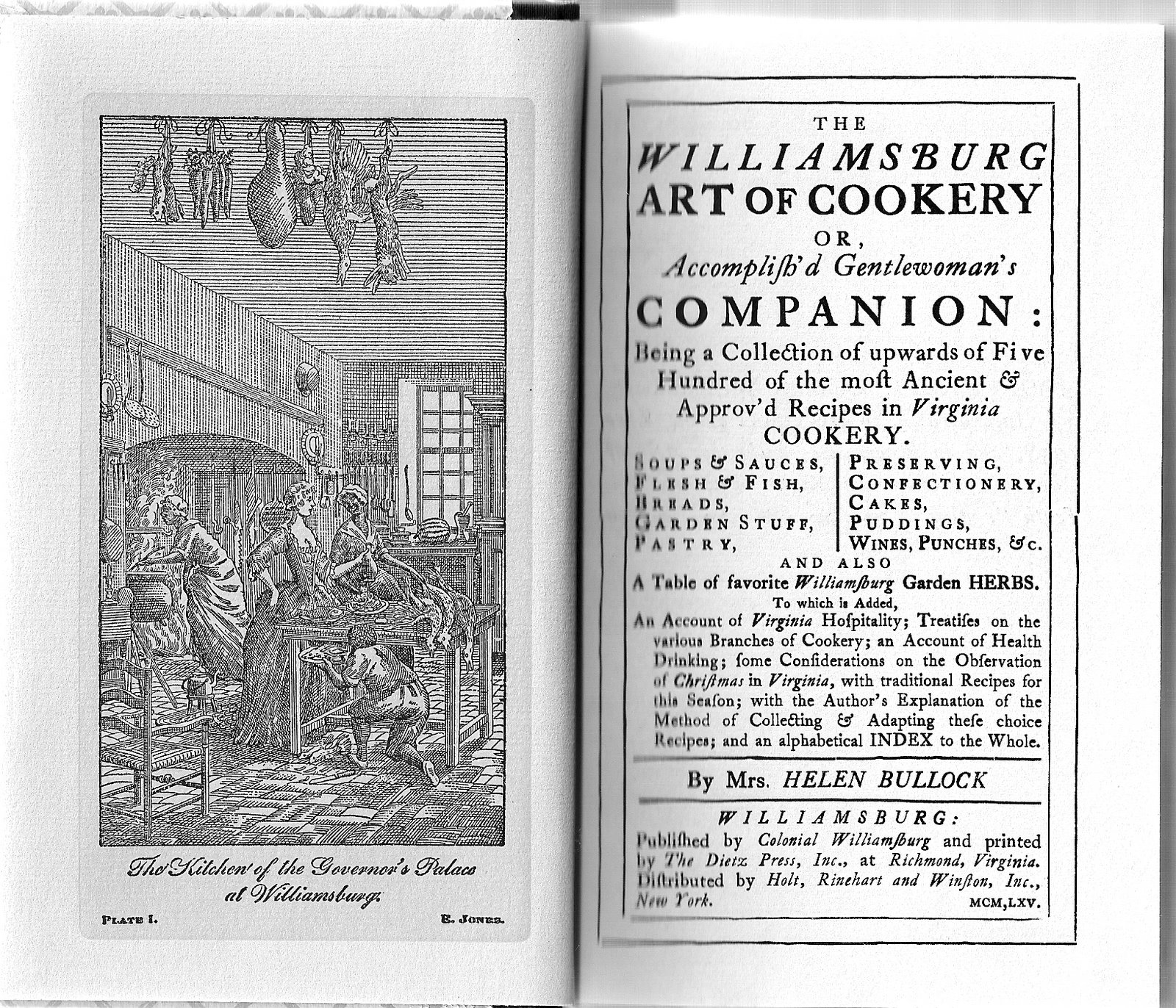
It is often glossed over in food history that the hands of enslaved West and Central African men and women helped shape the development of Southern cooking. However few writers dare to tell exactly what specific African dishes came across the Atlantic and how they were morphed into American foodways. “African” is often described as a singular culture rather than the expression of many ethnic groups often broken into distinctive linguistic and sub-cultural elements each of which had their own effect on the food traditions and food knowledge that came to the early American South. Despite the constrictions of enslaved life, food preferences, cooking methods, flavor principles and dietary supplements tied to distinct ethnic traditions were maintained and even passed on to Euro-Virginians in the form of cherished heirloom “receipts.” Enslaved Africans not only contributed agrarian knowledge related to crops and domesticated animals brought in the course of the slave trade and commerce with the West Indies, they also reassessed the ecology of Tidewater and Piedmont Virginia according to their own understanding of what was edible and gastronomically pleasing. They extended the culinary geography of Africa, transforming the Virginia into a edible outpost of Onitsha, Kumasi, Futa Djallon and Luanda. This paper uses documentary material from historic Virginia (1720-1880) including Mary Randolph’s The Virginia Housewife, the narratives of formerly enslaved men and women and first-hand accounts of and from indigenous West Africans to decipher the origins of recipes, ingredients, and taste preferences mentioned by both Blacks and Whites of the period and their ultimate origins among the ethnic groups of historic West and Central Africa.

"Smoked Fish and Fermented Locust Beans: Flavor Principles Associated with the Diversity in African Cooking" by Cynthia D. Bertelsen, nutritionist and culinary historian, founder of “Gherkins & Tomatoes: Food History and Culture

There is no such thing as “African cuisine.” Africans—coming from over 50 diverse countries—do not all cook the same way. A wide range of regional ingredients, cooking techniques, and food-processing practices exists. This paper first briefly examines the flavor principles that guide food preparation in the regions of West, North, East, Central, and Southern Africa, and why those principles exist. It then focuses on two ancient food-preparation processes used worldwide: smoke-drying of meat or fish and fermentation, examining how Africans developed and adapted these methods to suit their situations and flavor their foods. Finally, the trade and production implications of smoke-dried fish for the global African diaspora market present interesting possibilities for future aquaculture. Recipes, firsthand accounts, examples of culinary material culture, photographs, a glossary, and bibliographies enhance the presentation.

"The African giant land snail (archachatina marginata): An indispensable source of nutrition and medication in the Southwest Region of Cameroon from early to recent times" by Forka Leypey Mathew Fomine, History Department, University of Younde, Cameroon

Both marine and terrestrial species of snails are consumed in most countries worldwide, including in southwest Cameroon where it is an age-old practice among certain groups. However, few production and consumption statistics are available, and these are mostly for countries like France and Italy with highly developed snail farming practices. In Africa, particularly southwest Cameroon, snail farming is practiced on a relatively low scale, and most of the production is for local consumption. Before the introduction of snail farming in the southwest region of Cameroon in the 1990s, all the residents acquired snails via gathering.
There is significant internal variation in the history of land snail consumption among 4 ethnic groups (Banyang, Mbo, Balung and Bakweri) of the Southwest Region of Cameroon. The long history of land snail consumption among the Banyang and Mbo can be attributed to their geographical proximity to the eastern region of Nigeria, where the consumption of land snail has been widespread since ancient times. In contrast, until recently land snails were perceived by the Bakweri and Balung as filty pests that crawled and ate dirt, especially excrement, and thus were unhealthy and/or taboo for human consumption. This paper intends to demonstrate how land snails were persistently marginalized by certain ethnic groups in pre-colonial times and during foreign rule in Cameroon (1884-1960), and how that changed so that they currently occupy a pivotal position in their diets due to the snails’ multifarious importance as both a source of food and medicine.

"Cuisines in Africa: A vital ingredient of national cultures?" by Igor Cusack, University of Birmingham, Department of Hispanic Studies, School of Languages, Cultures, Art History and Music, UK

Some countries in Africa, such as Angola, Cape Verde or Senegal have well-recognized national cuisines. These cuisines are the product of various cultural and political ideologies, associated with imperialism, class and gender and are nurtured by a complex group of actors including the national ruling elites. Such cuisines are proclaimed on national websites and have attached to them a corpus of “national dishes” which are assembled in cookbooks in the “West” and in Africa. Elsewhere, such as in Equatorial Guinea, the process of building a national cuisine is in its infancy and the resulting concoction may not reflect what most Equatoguineans eat in their daily lives. This paper will explore to what extent national cuisines contribute to the broader set of discourses which help define a particular African national identity.

There's still time to register, even if only for the Saturday of the panel! Hope to see you there as we continue to focus attention on African's various cuisines and foodways.

Wednesday, April 22, 2009

Question 4: Isn't African food too . . . .?

Here are some thoughts on Question #4: Isn't African food too. . . ? insert preferred negative term (e.g., hot/bland/primitive/boring/tough/oily/, etc.)

There's a profound yet simple proverb about ethnocentrism in many African societies (e.g., the Baganda, Akamba, Kikuyu, Bemba, Haya, Igbo, and Yoruba). Translated, it means "The one who has not traveled widely thinks his/her mother is the best cook."

This proverb often comes to mind when I hear Americans talking about African food, especially Sub-Saharan African food, in a patronizing, superior way, and also lumping a whole continent together in a way they would never dream of doing for other global locations. A missionary in Ghana once sniffed and said to me disparagingly "They eat grass," when referring to the greens cooked in stews. In Pennsylvania we carefully distinguish among varieties of apples (Rome, Gala, Granny Smith, Red or Golden Delicious, Macintosh, Pink Lady, Ginger Gold, Braeburn, Crispin, Cameo, etc., etc.). In Ghana that discrimination applies to greens, of which it's documented that people savor 47 different kinds. Just because our palates haven't been trained to detect the textures, degrees of bitterness, saltiness, etc. doesn't mean that the food is inferior.

Similarly, people often say that Africans eat some kind of starch, but they lump them all together, without detecting the differences among, say, types of yams, rice, plantains, millets, sorghum, corn, sweet potatoes, potatoes, cassava, taro (cocoyams), even wheat, along with very different methods of preparation (fermented, unfermented, pounded, dried, fresh, boiled, fried, roasted, steamed, stirred, etc.).

Also, some tastes are acquired, as I found living in Japan and learning to eat bean paste, raw seafood, and miso soup--but once acquired these foods are treasured. And just because, as Marcus Samuelsson (celebrity chef/author and owner of 3 New York restaurants) laments, people don't know what piri piri, thieboudienne, or mafé are, doesn't mean the food is somehow unpalatable, just that our culinary literacy needs upgrading.

It is true that some African food is spicy hot from a variety of (originally New World) chili peppers. So is some Chinese food, or some Mexican food, but that does not mean it's somehow "bad." In fact, many people prize the foods for that very quality. Also, many African foods have nonspicy options (e.g., Ethiopian alichas [alechas] mild stews, rather than wats [watts, we'ts], which are spicy stews). Some people in Ghana "cannot take pepper" and so always have their food prepared without it. In other parts of the continent, such as inland in some East African countries, the foods are much blander, but it may be that people there savor the pure flavor of vegetables and oils used in cooking.

Cindy Bertelsen from the delightful food history blog Gherkins & Tomatoes just sent me the link to a NY Times article ("In Epicurian New York, the Challenge of Africa") from July 2008 on African cuisine's cool reception in New York City. (NOTE: you may need to have a free account to access this article.) The article reminds me of assumptions many people make about the continent's cuisine. First, that "You think of sub-Saharan Africa stereotypically as the continent of scarcity," says Prof. Ray of NYU. Let's also add to the list of negative things about "African food" the words "tough, tough meat." “One of the things that may put American diners off West African restaurants is that Africans vastly prefer tough, tough meat,” said Robert Sietsema, restaurant critic for The Village Voice. Yeah, that'll get you excited about trying sub-Saharan African food. I again remembered the words of Alan Dundes, my college anthropology professor that "We fail to see the lens through which we look." In France, a snail (escargot) is haute cuisine, but in Africa they are likely "so tough you would have difficulty distinguishing (them) from a section of rubber tire" (Sietsema). The spongy, crepe-like pancake made of teff in Ethiopia is simply described (in the same article) as "rubbery." Grains of paradise or melegueta pepper, a spice once a fashionable substitute for black pepper in the 1300 and 1500s in Europe, and related to cardamom and ginger, is called "pungent," not a particularly flattering description.

Sietsema also suggests that “For them (my bolding) eating something for dinner is not an appreciation of tenderness. It is an appreciation of toughness, and they want to really chew on the meat and enjoy it because meat is so rare.” I'm not sure where he got that explanation, and the article says nothing about the fish and seafood and poultry and vegetables that many people consume far more often than meat. Certainly, free range chickens are tougher (and more flavorful) than the fryers in our supermarkets. My nephews from Ghana refuse to eat American fryer chickens because they're so soft and mushy. I agree with them. As for "tough, tough" meat--no upscale African restaurant in the U.S. is likely to give something like that to Americans.

The quote I mentioned in my last posting mentioned Rozin's dismissal of Sub-Saharan Africa's cuisines as "neither rich nor complex" (Ethnic Cuisine, 1983). She includes a cursory consideration of only 2 recipes for the almost 50 countries that make up the area. The disparity in her book with representation of other cuisines is quite conspicuous and consistent with my findings when I looked at "Sub-Saharan African Cuisine and Western Perceptions" (see slides at link at betumi.com). I was dismayed when I read Jack Goody's book years ago Cooking, Cuisine and Class to see that his whole book was written to answer the question "Why are traditional African cultures largely lacking a differentiated cuisine?" He came up with an impressive argument, basically the reasons that societies in China and the West had very different hierarchies and specialization related to food, concluding essentially that there was a "high" cuisine for those, and a "low" cuisine for African societies (never mind that he also also warns at the beginning of the book against "placing societies in simplistic binary categories.") I found it difficult to articulate what exactly bothered me about the book, except that I sensed he had a superior attitude (at one point I seem to remember him saying that if a chief needed more help in his kitchen, he simply married another wife, and my thinking that not all women are equal in the kitchen, and maybe he married a skilled chef). Finally, I wonder at the preference for the elaborate over simplicity.

Let me briefly mention oil. It is true that many West Africans (especially Nigerians!) love to have a lot of oil in the soups/stews, especially red palm oil. This is something that really goes against the grain of Westerners, and we are quick to note that the "big man" or woman in many West African countries is indeed just that. We also forget that bigness is often a prized stature in these countries. Only the wealthy and powerful can get fat! It is important to remember that historically most people in Africa were not able to afford lots of oil in the food, except on special occasions. Oil (like being "fat") is often seen to be a symbol of prosperity and generosity and hospitality and respect and nurturing. Also, oil is a highly concentrated form of energy, useful in societies where farmers and others do hard physical labor. We've been taught to believe that "palm oil" (shudder, shudder) is very unhealthy and saturated. It's true that a little goes a long way (as is true of butter or cream, but we seem to ignore that), but as I mention in my article in Gastronomica "We Eat First With Our Eyes: On Ghanaian Cuisine"
we often confuse palm kernel oil with palm fruit oil, neglect to consider palm oil may be refined or unrefined, and that there are multiple qualities, just as there are with olive oils.

Health issues and African cuisine will be covered in Question #7, but if one considers obese Americans stuffing down hamburgers and French fries and chips and drinking super-sized soft drinks, or the pastries and mega-size sugared drinks being consumed in coffee shops, one has to wonder about the claims of superiority of our very differentiated "high cuisine" Western diet.
Is a society that may prefer fresh fruit to sugared cakes, cookies, and pastries really that "low"?

Monday, April 20, 2009

Question 3: How can there be cuisine where there is so much chaos: starvation, wars, corruption, malnutrition, AIDS?

The media image of African society in the U.S., including its food, has been almost uniformly negative. Africa's Media Image, a book published in 1992 and edited by Beverly Hawk examined why this consistently superficial, stereotypic and negative image has come to be. It includes commercial criteria (e.g., the under-representation of media resources on the continent [in 1986, 31% of newspaper correspondents were stationed in Europe compared to 8% in Africa], p. 17, presumably because Africa does not "generate attractive revenues") and the focus on the sensational such as war, famine, and AIDS; political criteria (this has to do with "power" issues, and traditionally African countries have been viewed as largely insignificant), perhaps excluding the immediate independence years of the late 1950s and early 1960s coinciding with the Civil Rights Movement in the U.S., when Africa was briefly fashionable, or in the 1990s when Nelson Mandela was elected President in South Africa; sociolcultural criteria, where American news correspondents have been largely insensitive to cultural nuances in African countries (there are exceptions, such as Lydia Polgreen of the New York Times). In 2005, The Africa Channel was created to counteract the superficial and negative-biased coverage available in the U.S. On the radio, a similar effort is being made via "Africa and the World." In addition, there has been the emergence of a number of African bloggers, both male and female, (including, notably Emeka Okafor whose influential Africa Unchained and Timbuku Chronicles and the links on his sites aim to showcase the faces of Africa that are too often invisible in U.S. media.

Many parts of Africa are going through struggles with poverty and social upheaval. We should not ignore the reality of these challenges, and must try to understand corruption and greed and respond to problems in Darfur or the Nigerian Delta or Ethiopia. However, that is, once again, only a piece of the story.

When I was a student at the University of California in Berkeley during the upheaval of the 1960s and 1970s my parents saw news stories and were sure my life was in danger because Patty Hearst had been abducted near when I lived, or the campus had been shut down during a protest over the Vietnam War or a conflict over "People's Park." The sensatonal media portrayal was completely divorced from the reality of day-to-day life.

In addition, though India, China, or Ireland have all suffered times of famine, we do not assume they have no great culinary traditions. Throughout Africa, people still celebrate births with outdoorings and naming ceremonies, along with marriages, engagements, holidays, initiations, festivals and funerals. People like to eat the food they consider good when they have the resources to eat what they want. Why should Africans somehow be different? The claims that Sub-Saharan African cuisines are "neither rich nor complex" (Elisabeth Rozin), or are "low" (as opposed to "high") (Jack Goody), will be tackled in the next posting.


Tuesday, April 14, 2009

African and African-American Cuisines

One difficulty in researching African cuisine is that African and African-American cookbooks are mixed together in collections, and often people think the two are basically inter-changeable. That's a problem. The obvious linkage of Southern regional cuisine, or "soul food," or "Creole" cooking to the perception of "African cooking" is part of the confusion (black-eyed peas, cooked greens, corn, deepfrying, peanuts, spicy seasoning, barbeque, etc.) Also blurring the line is the American African-inspired holiday of "Kwanzaa," a blend of African traditional values mixed with Pan-African influences, but celebrated largely by people who were not raised in Africa. (In time, this will likely change, since all festivals have to have a beginning, but when I was in Ghana, Ghanaians generally felt like Kwanzaa wasn't a "real" festival, in the same way as those they'd grown up celebrating historically.)

Finally, about half a million people, mostly West Africans, came to the United States as slaves. Between the early 1500s and 1888,when slavery was abolished in Brazil, as many as 12 million slaves were transported throughout the "New World," many of them to the Caribbean Islands. Those islands have been more accessible to people from the U.S. than has Africa itself, and because many flavors and cooking techniques overlap, people assume that "African" cooking is pretty much the same as "Caribbean" cooking. For one thing, West Africa is only one region of the whole continent, and it is a mistake to assume that other African regional influences have made their way into the U.S. to the same extent. Also, some of the ingredients available in the U.S., particularly sugar cane and dairy products, were not widely available to earlier generations of West Africans. Sweet potato pie and macaroni and cheese would be unrecognizable to them. Some techniques popular in Africa, such as fermentation and steaming, are also not widely part of the repertoire in what is commonly referred to as "African-American" cooking.

I recently rewatched the PBS documentary "The Meaning of Food," introduced and narrated by Marcus Samuelson, and was struck with an episode in Part 2 where Verta Mae Grosvenor, Nicki Finney, Julie Dash, and Julie's uncle talk about growing up Geechee (Gula), as descendants of enslaved Africans who skillfully grew the famous "Carolina gold" rice. She was in the kitchen with her family members and friends, talking about the central role of rice in their diet: how a meal wasn't a meal without rice. I thoroughly enjoyed listening to them share their kitchen conversation and insights (and the "trick" of covering the rice with paper and covering the pot with a lid and NEVER lifting until the rice finished cooking was a technique I was also taught in Ghana). But I remember, too, differences between the people of the Sene-gambia, the rice-growing areas of West Africa, and the people of the yam-growing areas there. I also remember the 1986 book by Nigerian poet Flora Nwapa who in her "Cassava Song" praises the New World crop cassava as a mother and nurturer, and in "Rice Song" curses the politics that led to dependence on an expensive imported product that poor people could not afford. Something like rice is not even the main staple for many people throughout the continent: sorghum and millet, plantains, yams, corn, sweet potatoes and cassava are all found to be the "staff of life" in various parts of Africa.

In the Smithsonian's 1991 book Seeds of Change celebrating the 500 years since Columbus arrived in the "New World," there's a picture at the beginning of the chapter "Savoring Africa in the New World" of an African-American couple eating at Bob the Chef's soul food restaurant in Boston: the table has what looks like a Coke (the cola nut used in Coca Cola originally came from Africa), corn bread, blackeyed peas, fried chicken, sweet potatoes, and a bottle of "RedHot" hot sauce, and the opening paragraph pays homage to the influence of gumbo (an African word for okra), peanuts (or goobers, from another African word), rice, and banana pudding or yam pie sweetened with sorghum molasses as African products eaten regularly in the U.S. They don't mention that the "yam" pie sweetened with molasses is a thoroughly Western interpretation of those ingredients.) It seems like they missed cooked greens as another West African influence, along with watermelon and sesame.

The short answer to the question "Isn't African cuisine the same thing as 'African-American' or 'Soul food?'" is: no, while there are similarities between "African-American" cooking and some West African cooking, there are many more differences: the first time my sister-in-law Afua saw a package of spaghetti in Nungua, Ghana, she burst out laughing, and the only thing she could think to do with it was break it up and cook it in some rice. She never even tasted cheese. When my 2 teenage nephews from Ghana came to live with me in Pennsylvania, they could hardly eat the food here, everything had so much sugar in it. Forget cookies and cakes and pies and ice cream--give them fresh papaya, pineapple, or sweet oranges and mangos. They still cannot drink coffee.

It is well established that many of the cooks in the Southern kitchens were slave women who were gifted in preparing wonderful meals, drawing on their own experiences and cooking techniques and mixing them with the foods available to them in the U.S. They have definitely stamped an African influence on the food. But that is only a small part of the story. Africa has many more stories to tell, not only of West African cuisine, but of that of North, South, Central and East as well.

Thursday, April 02, 2009

Questions 1: Is there an "African" cuisine?

The word cuisine is often used to imply a cooking style that is somehow sophisticated and skilled and elaborate, as in haute cuisine. It seems everything sounds fancier to English speakers when said in French, even though the word literally means "kitchen." Technically, cuisine just refers to the way food is prepared and/or the food itself. Somehow the question above sounds a lot less profound when phrased as "Is there such a thing as 'African cooking' ?"

It is said that when the renowned South African food writer Laurens van der Post was approached in the 1960s to write the Russian volume of the ambitious Time-Life "Foods of the World" series, he was suffering from a medical condition that prevented him from using his hands to write. Instead, he offered the editors an alternate suggestion: that he travel the continent and do the one on Africa (dictating his notes, I believe). Apparently the editors of the series were stunned: they had no idea there was such a thing as "cuisine" in Africa, and had no plans for such a book in their "comprehensive" series. Van der Post assured them it existed, convinced them, and set out to write the landmark
African Cooking, the first book I've seen published in the U.S. that takes African gastronomy seriously (another French word!). While it is has some flaws, van der Post's book includes carefully researched recipes and fabulous photography. Its chapters highlight history, culture and geography of: "The Ancient World of Ethiopia," "New Cuisines for New Nations" (i.e., West Africa), "In the Highlands of East Africa," "The World of Portuguese Africa" (i.e., Angola and Mozambique), and, not surprisingly given his roots, three chapters on South Africa--actually, four, if you include the introductory chapter "My Continent: A Personal View," "East and West Meet at the Cape," "Great Cooking from Rich Farms," and "On the Track of the Voortrekkers".

As this suggests, there is no single "cuisine," but rather rather multiple cuisines throughout the continent. As Europe is not a single country with but one cuisine, so Africa has many flavors and ingredients and cooking techniques. While North Americans would generally not merge Italian, Swedish, Spanish, English, German, French and Portuguese flavor palates to a single "European cuisine," it is often considered that "Africa" has only one "kitchen." There are many kitchens, given the 53 countries of the continent. While each country has its own regional and ethnic variations, geography and history, it is possible to divide the continent into 5 general geographic regions: north, south, west, central and east. Eastern Africa is often subdivided into the countries of "The Horn of Africa" (the northeast countries of Ethiopia, Eritrea, Djibouti, and Somalia), and the rest of East Africa. Another approach is that of van der Post to consider countries speaking the same language of their former colonizers, as he did for Angola and Mozambique. Also, people usually make distinctions between the food and culture of countries north or south of the Sahara Desert.

Africa has made numerous global culinary contributions already, and still has an immense repertoire to offer the rest of the world. Its cuisines have, in turn, been heavily influenced by other religions and people from other countries, including, for example, Malaysians, Indians, French, British, Portuguese, or people from the Arabian peninsula.

In addition, food tastes are constantly evolving and changing. For example, in the U.S. there is fusion and "California" cuisine. When Laurens van der Post went to the newly independent countries of West Africa in the 1960s, he rejoiced that he found "a rapidly expanding middle class," whose experimentation and exploration in the kitchen he described as having "a kind of morning freshness" a "taste. . .exhilarating and exploratory" and marked by a "lively" inventiveness, with meals ". . . that stimulate not only the palate but the mind." (African Cooking, p. 62)

In summary, the answer to the question is "no," there is no African cuisine. But, yes, there are numerous exciting and flavorful African cuisines to discover. As Lydia Polgreen wrote in an article in the New York Times on February 1, 2006, "People travel to Africa for history and for scenery but never the food. I don't get it . . . Africa, with thousands of languages and cultures, each with its own cuisine, always rewards an adventurous eater." I heartily second her opinion.

Tomorrow's question: Is there really much of a difference between "African" and "African-American" cuisines?


Wednesday, April 01, 2009

10 Questions about African Cuisine


I was thinking today about some of the spoken or unspoken questions that people ask me when they first hear about the whole subject of African food and culture. I'll list them in no particular order here and begin sharing my answers a little every day for the next couple of weeks. Let me know of other questions you'd like answered, or add your comments.

1. Huh? Is there even such a thing as African "cuisine"? Never heard of it.

2. Isn't it just the same thing as African-American cuisine? "Soul food"?

3. Aren't most Africans starving or fighting or dying from AIDS and living at a subsistence level?

4. Isn't the food too hot/bland/boring/primitive?

5. Why should I be interested?

6. What makes you the expert, white American lady?

7. Isn't African food really unhealthy?

8. Why aren't there African restaurants like there are Italian or Indian or Chinese or Thai restaurants?

9. Doesn't it require too many weird ingredients or kinds of cooking equipment?

10. Where can I go to learn more about (or taste) African cuisine?

Friday, February 27, 2009

Touch of Africa; Spring Class on African Food and Culture

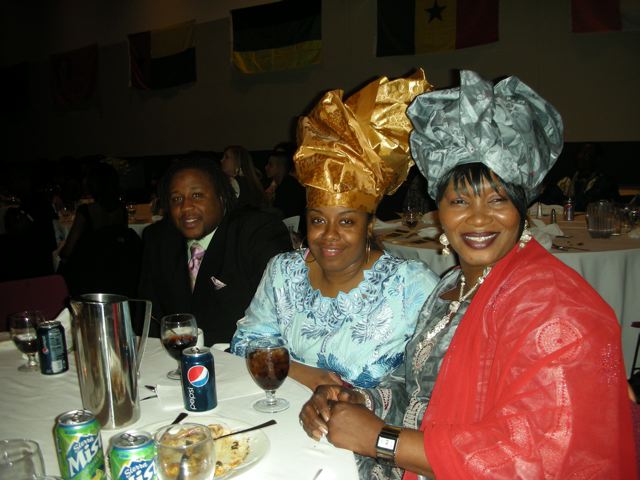
It's been hectic for me lately. Last Saturday night was Penn State's annual Touch of Africa celebration sponsored by the African Students' Association. As usual, it was a sold-out event (500 tickets) and a cultural extravaganza that gave the students and the community an opportunity to taste unfamiliar foods and experience the music, fashion, story-telling and energy of Africa, largely normally unavailable to central Pennsylvanians. I was brought in late in the game to oversee the preparation of the food with the The Penn Stater's professional cooking staff and some student volunteers. I don't generally do quantity cooking, so it was a challenge, but the team managed to pull it off with help from The Penn Stater's chef Ken Stout and his staff. A few (very few--I was too busy to take pictures) photos from the event are up on my BETUMI account on flickr. The menu included several West African dishes, representing the heavily West African ASA membership (efo stew with greens and beef and smoked fish and smoked ground shrimp and palm oil), egusi (a.k.a agushi, a fabulous melon seed and one of the so-called "lost crops of Africa") soup, puff puff (a Nigerian doughnut), chicken jollof rice, fried ripe plantains, hot and mild versions of Ghanaian-style tomato gravy, and bissap (hibiscus chilled tea with lemon grass and pineapple juice), as well as North African-style couscous, East African coconut basmati rice and Somali sombosas, roasted chicken, tilapia with sauce, and all-Africa tropical fruit salad with flaked coconut.

Sore Shields of The African Market and I coordinated a silent auction to raise money for 2 charities in Africa, and Kunmi Oluleye of Flavors of Africa generously donated copies of her cooking dvd of Nigerian, Kenyan, and South African cooking (first in a series of 17 planned). Thank you to everyone who helped and bid on the items.

Now, I need to get ready to teach a five-week African cooking (and culture) course beginning March 18. . . Never a dull moment.

Wednesday, February 11, 2009

Food Science of African Tastes: comminution and the asanka

Anyone familiar with African cuisines knows that grinding and pounding are important cooking techniques, and texture matters. She or he also knows that while an electric blender is a lot faster and easier than a mortar and pestle or a grinding stone or bowl, it comes at a cost: a deterioration of flavor.

Prof. Sefa-Dedeh, Professor of Food Science and Technology, and Dean of the Faculty of Engineering Sciences at the University of Ghana, talked to me about why these taste differences occur.

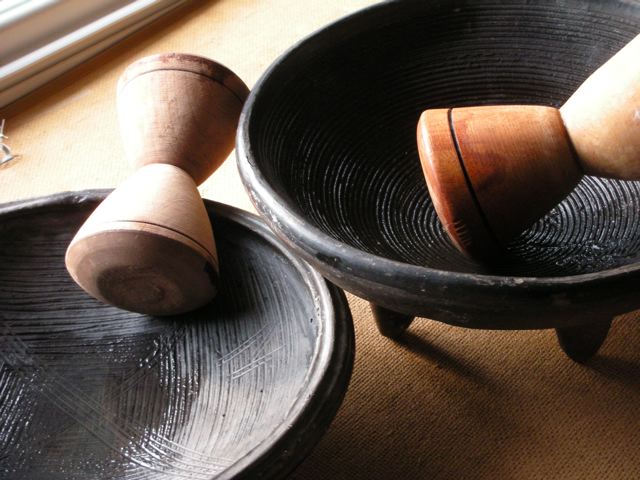
I asked why a blender gives such different results, than say, the Ghanaian asanka pictured above. Asankas are ubiquitous in Ghanaian kitchens: they are clay grinding/mashing bowls with ridged surfaces and are used with a wooden masher. I keep several in my Pennsylvania kitchen, especially for making fresh pepper sauces.

He explained to me that there are several reasons for the differences and began by mentioning there are "attrition" and "impact" forces. First, you begin with a solid material like ginger or tomato or chili peppers or garden eggs (similar to a small eggplant), cooked or uncooked, which you want to shred. Each ingredient has cells in it with a structure, and in the cells are all the taste and flavors. For example, when you break a piece of ginger you begin to smell it because you have broken down the cells and some of the compounds begin to interact.

When you use an asanka as your "size reduction equipment," the amount of force you apply to the ingredients is much less than you get from a blender. With something like a pepper, you generally don't want a lot of impact, you're more interested in shearing and tearing the structure, but not completely. In the blender you are "comminuting" (pulverizing) all the ingredients together so you may actually lose some of the flavor. Ghana's traditional mashing bowl conserves the flavor because of the way it separates the particles.

Finally, when you eat a product, different particle sizes will likely give different tastes even though the ingredients may be the same. For example, some people may cook a soup with a whole pepper in it. If you're eating the soup and you bite into certain peppers, a single bite of the pepper releases the compounds that interact with your tongue and palate and gives you a certain sensation in your mouth (the flavor chemistry).

So, the differences are partly due to the equipment used for the size reduction to give you a certain product. When you put that product in your mouth a certain reaction takes place. To summarize, when you put food into a blender to blend it you have virtually broken all the tissues into one mass, and the effect in your mouth is not the same as when you pound or mash the ingredients.

I guess I intuitively knew this, but still it was nice to have Prof. Sefa-Dedeh explain it. Soon I'll share his insight about fermentation and answer to my question about why I have not yet succeeded in souring dried corn to make an authentic corn dough for Ghanaian-style kenkey.

Footnote: Last week I mentioned that BETUMIBlog had been selected as one of the "100 Best Blogs for Learning About Africa." This week I was informed that it is on another list: this time as one of the "Top 50 Blogs for Studying Africa." I'm not sure who "University Reviews Online" actually is, but thought I'd mention it for what it's worth.

Friday, January 30, 2009

BETUMIblog in top 100; May Panel on African Cuisine/Foodways/Food History


I received word today that BETUMIblog has been listed as one of the 100 Best Blogs for Learning About Africa. It's thrilling to be included in this impressive list.

Also, I just realized I never mentioned here a special panel being organized on African cuisine/foodways/food history at this year's annual joint meeting of the Association for the Study of Food and Society (ASFS) and the Agriculture, Food and Human Values Society (AFHVS) to be held at Penn State University (Pennsylvania, United States) May 28-31. While abstracts for the conference are due February 2, 2009, it is possible to consider those arriving within a few days of the deadline--just let me know to expect it. More information about the conference and submission procedures are available at http://www.afhvs.org/2009mtg.html. Please forward abstracts for consideration to Fran Osseo-Asare . This is a wonderful, all-too-rare opportunity for us to have some face-to-face conversations, and folks from as far away as the U.K. and Cameroon are making plans to attend.

*************************

"Eating African: Interdisciplinary Perspectives on African cuisines"

Africa, especially sub-Saharan Africa, has long been marginalized in world culinary literature. There have been few positive attempts to approach African food culture from a "culinary" perspective. This session will broaden the topic of "food in Africa" beyond questions of food insecurity, failing markets, poverty and health deficits to consider African food in the arts, history, popular culture, and gastronomy.

Possible topics might include, but are not limited to, changes in diet or food processing technologies, food and national or ethnic identities, food as portrayed in popular culture or literature or other media, dining etiquette and utensils, or the history and role of specific ingredients, “classic dishes,” or flavor principles.

Abstracts which can not be included in this special session will be forwarded to the conference program organizer as general conference abstract submissions.

Thursday, January 22, 2009

CUISINE D'AFRIQUE, CUISINE D'AILLEURS, FOOD AND AFRICAN CUISINE


African food historians (historiographers?), I just discovered a great resource. In 2005, the School of Humanities of the University of Western Australia archived an African food-themed issue (Number 15, September 2000) of Mots Pluriels, an online journal published from 1996 to 2003. Joan Wardrop was the guest editor for this issue of the bilingual journal (French and English), and it includes some terrific articles on African food culture, food in literature, and food and identity, as well as the politics of food. I'm now working my way through them, which include, among others:

Eating raw nothing, committing suicide: The politics and semiotics of food culture by Obododimma Oha

Nourriture et identification sociale au Nigéria de Françoise Ugochukwu

Talking food: a conversation about Zimbabwe, cooking, eating, and social living by Gertie Bonzo, Norma Kitson and Joan Wardrop

We eat out of the same pot: Poison, Food and Power in colonial Libreville c.1865-1921 by Jeremy Rich

"La vie est belle": Everyday life under Article 15 by Janice Spleth

Tropismes alimentaires dans "Enfance" de Nathalie Sarraute d'Hélène Jaccomard

Survie et création: la nourriture dans les contes louisianais et martiniquais de Valérie Loichot

La femme et la nourriture dans l'oeuvre de Gérard Etienne d'Isabelle Gros

Les gargotes de la liberté de Germain Sylaï Gotto, David Ndachi Tagne, Pierre Barrot et Jacques Douti Soutou

L'amour entre par la cuisine Une nouvelle de Kesney Mikolo (Congo)

L'estude de Gargantua, selon la discipline de ses precepteurs sorbonagres de François Rabelais

L'Afrique côté cuisines. Regards africains sur l'alimentation. Compte rendu de Jean-Marie Volet

I only wish I could read French better! Be sure to check this archive out now, in case it disappears in the near future. The archived issue also links to Safundi, the online journal that in 2000 published and now sells a classic article that helped me make sense of the historical treatment of African cuisine, Lynne Huston's "Serpent's Teeth in the Kitchen of Meaning: A Theory of South African Culinary Historiography.

Thursday, January 08, 2009

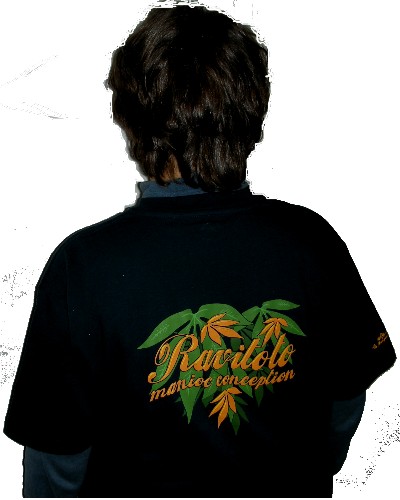
Ravitoto manioc conception


My daughter Abena delighted me in December with multiple Christmas gifts from Madagascar, including this t-shirt emblazoned with "Ravitoto manioc conception," which apparently is a favorite Malagasy dish--a meat stew (especially pork) made with manioc (cassava) greens.

Sorry, I've already eaten my fabulous dark chocolate (Robert Chocolat Noir Spécial) bar so I can't show that. It looks like it was made from chocolate from Madagascar in Antananarivo for "Chocolaterie Robert S. A." (South Africa?)

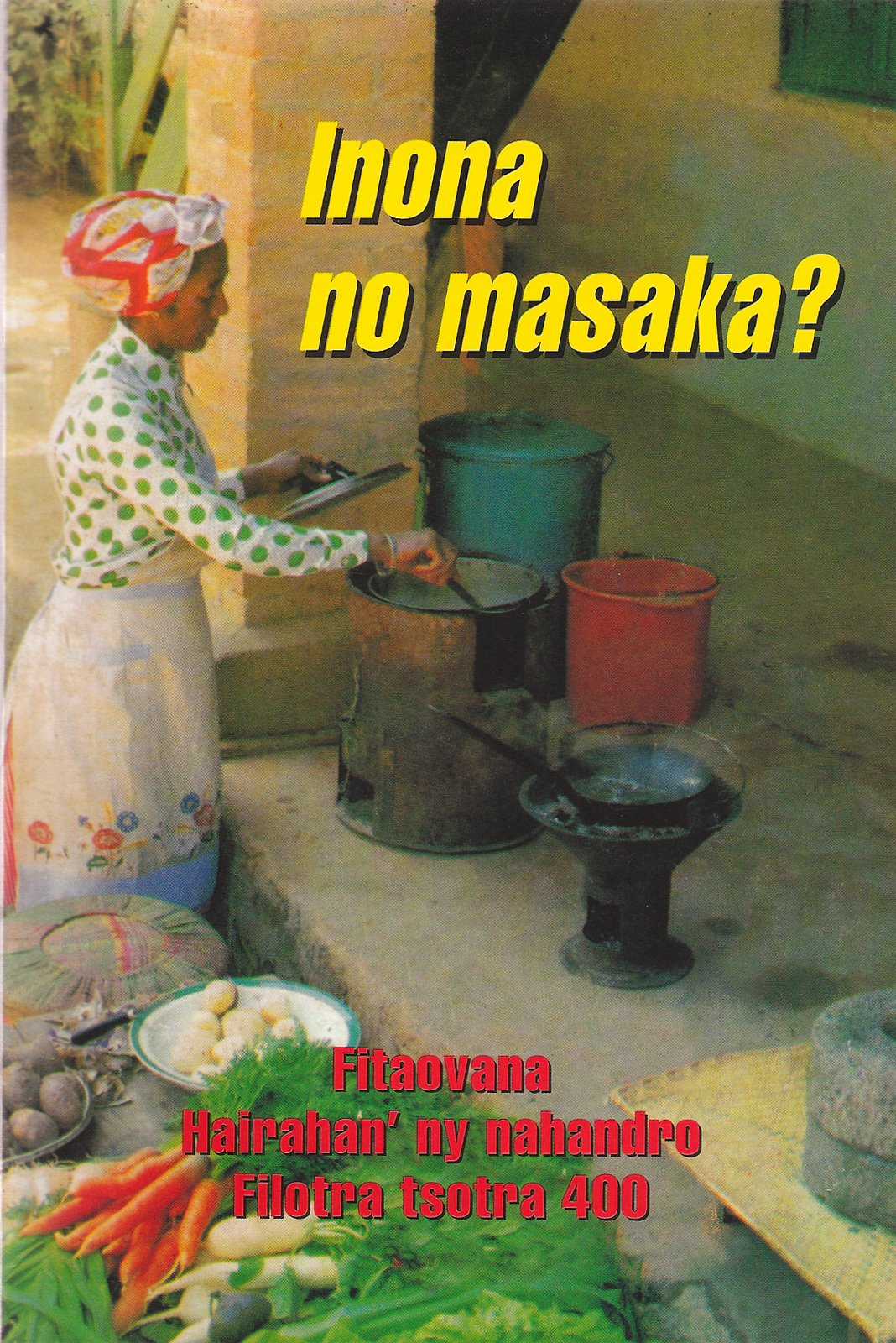
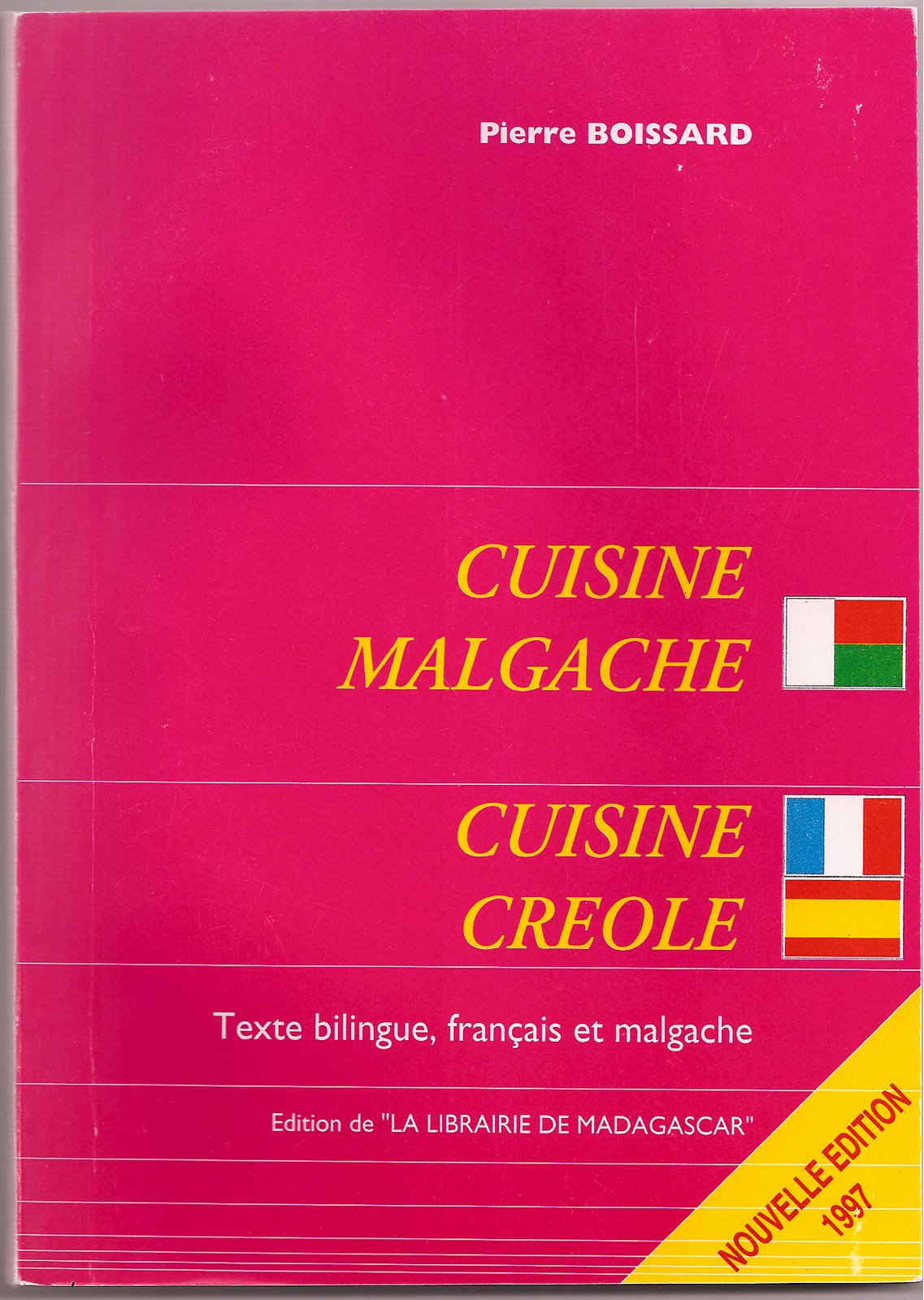
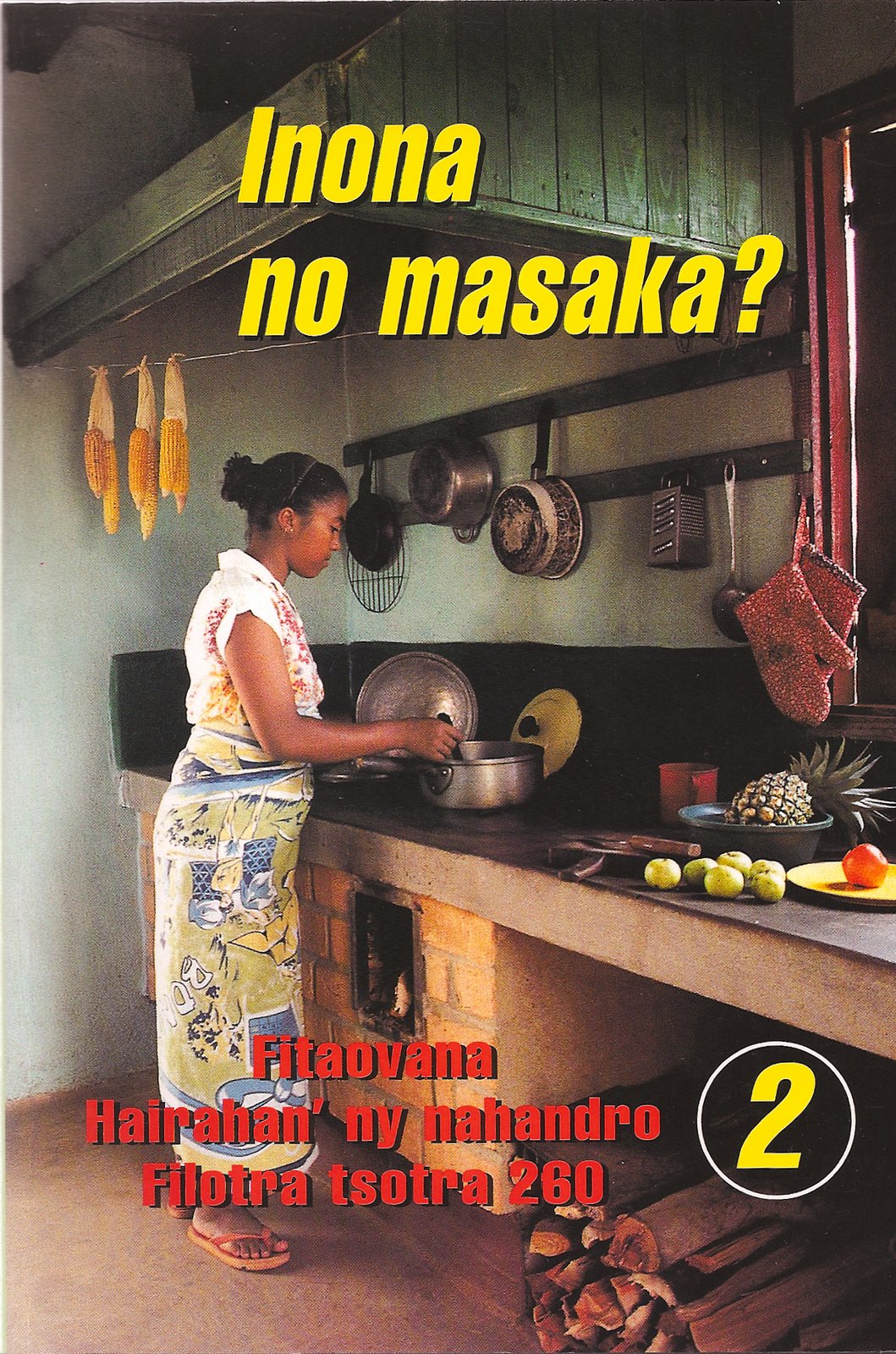
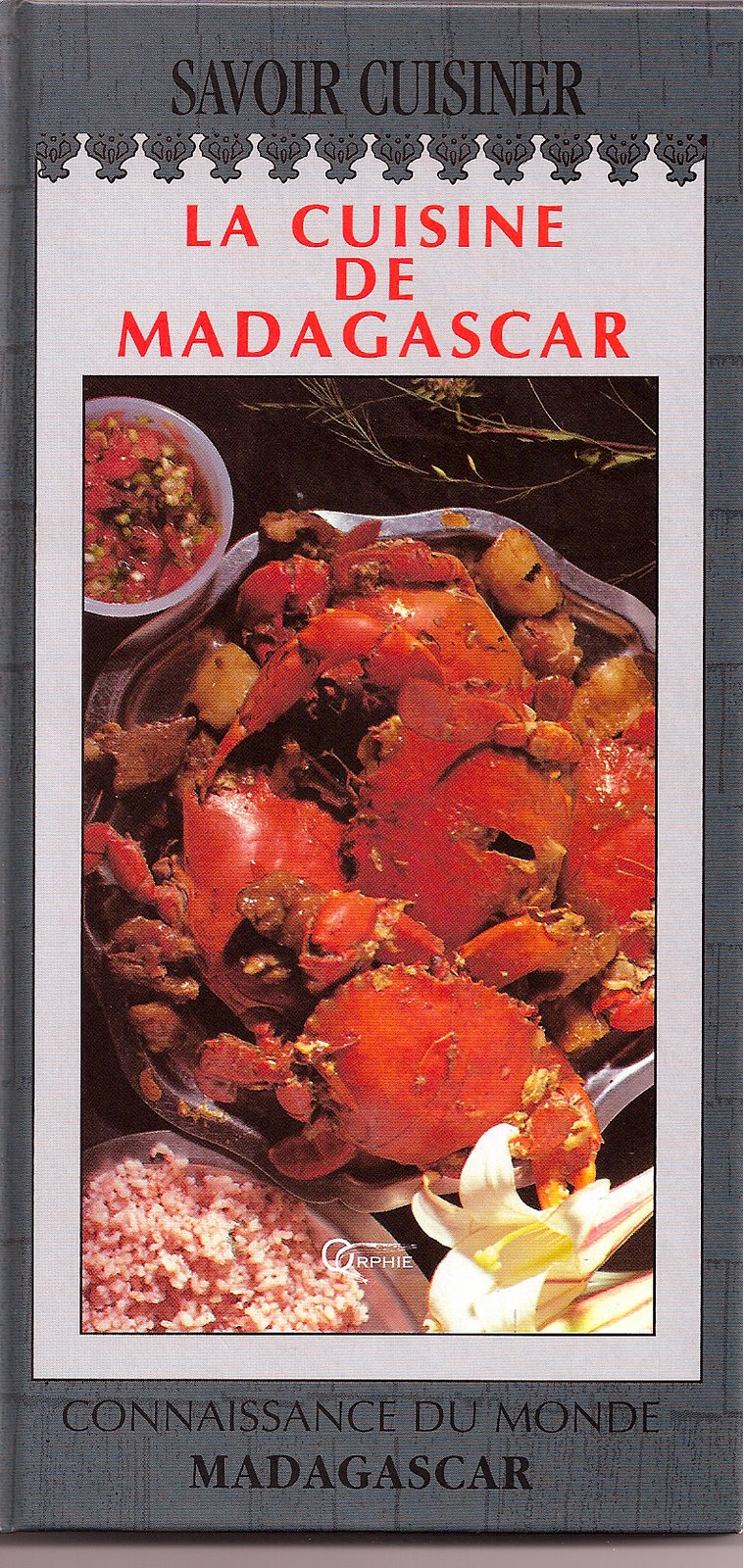
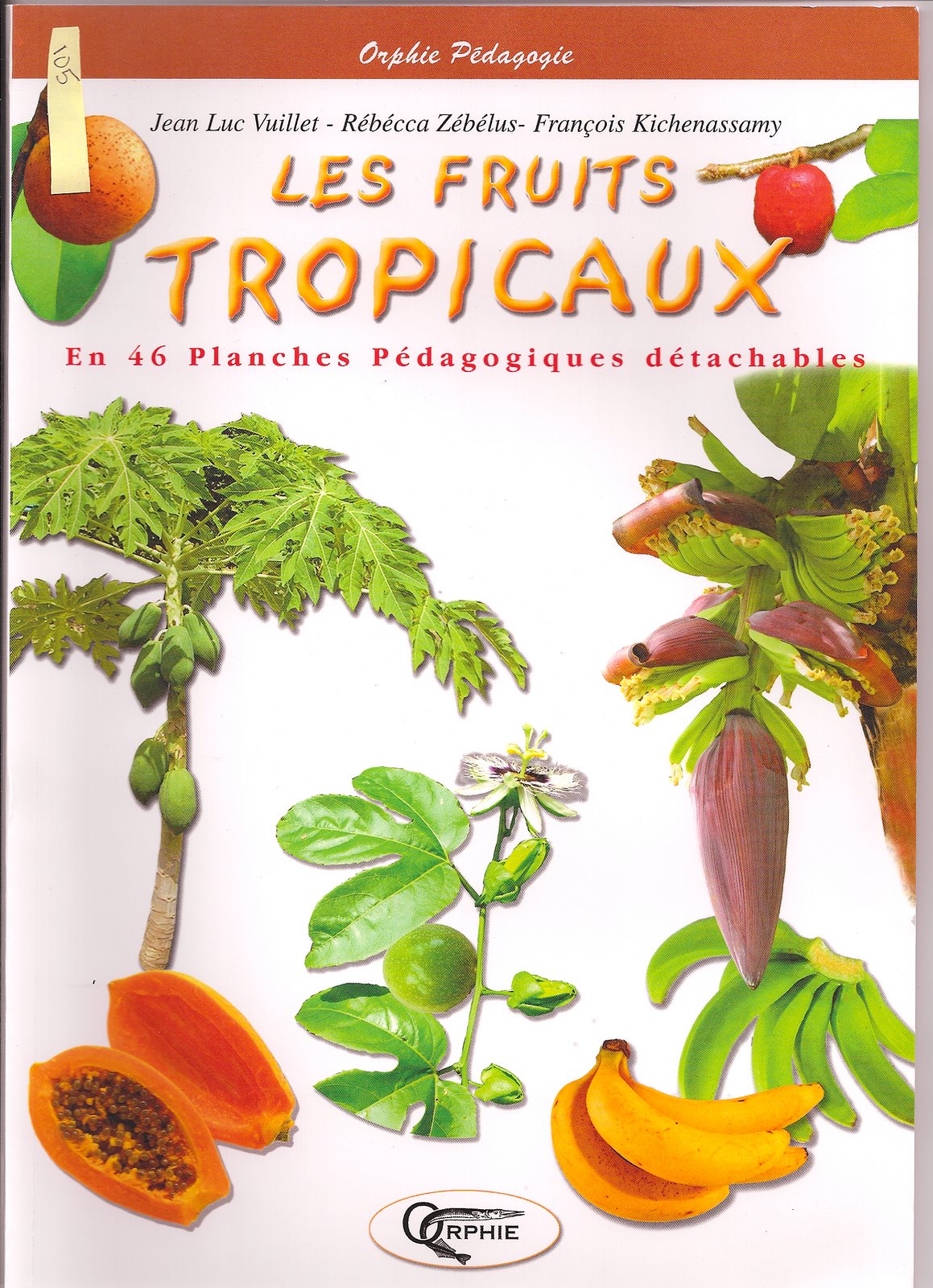
She also collected 5 new cookbooks for the Africa Cookbook Project on her travels. Two of them are totally in Malagasy (Inona no masaka? vols. 1 and 2), one is both in French and "Malgache" (Cuisine Malgache/Cuisine Creole), another is in French (La Cuisine de Madagascar), and the final one, a book on tropical fruits published in France (okay, so maybe it doesn't technically qualify for the Africa Cookbook Project), is also in French (Les Fruits Tropicaux). Now I'm struggling with online dictionaries to understand the Malagasy. Can anyone recommend an English-Malagasy dictionary to me?


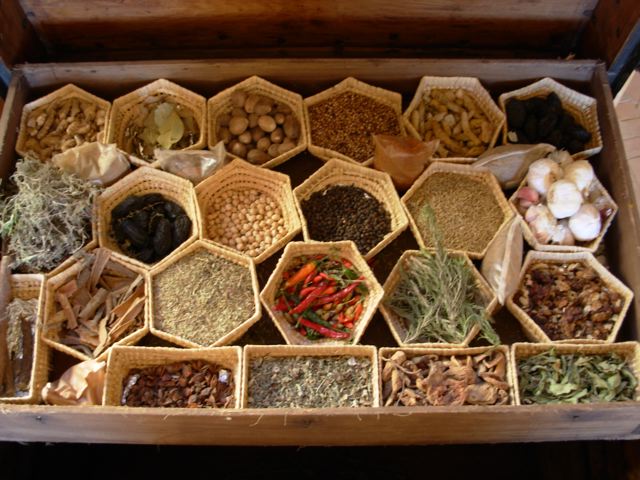
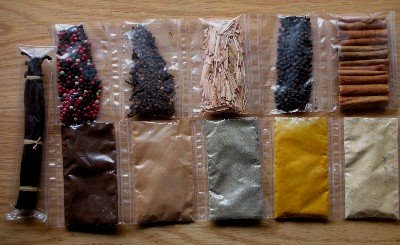
She also brought me samples of spices from there, including vanilla, cloves, pepercorns, cinnamon, ginger, etc. Just looking at them helps me forget the ice and snow outside my window. Abena knew the best way to get me to put Madagascar on my "must see" list was to give me a hint of the food there. It worked.