Monday, October 12, 2009

Recipe #17: Tatale (ripe plantain pancakes)

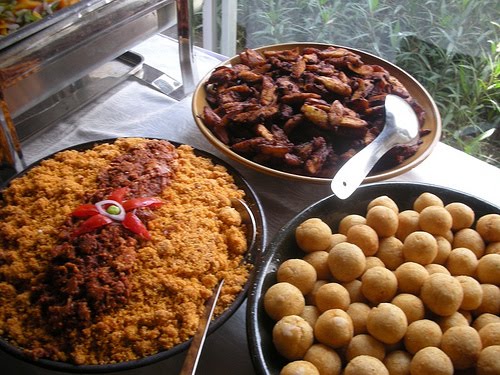
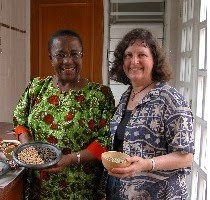
I'm partial to versatile ripe plantains. One of my favorite ways to cook (and eat!) them is as a simple savory (no syrup, please) pancake as in this photo from a party in Ghana.

The first, and possibly the hardest, step is to find ripe-to-overripe plantains. In colder weather in central Pennsylvania this is difficult. I'm not sure if the imported green plantains are held at too cold a temperature or something, but half the time the plantains will not ripen, even if you put them in a paper bag with apples, keep them in a warm room, in sunlight, etc.), but just get wooden and rot. In the summer I rarely have that problem. However, I generally buy twice as many plantains as I need two or three weeks before I need them ripened.
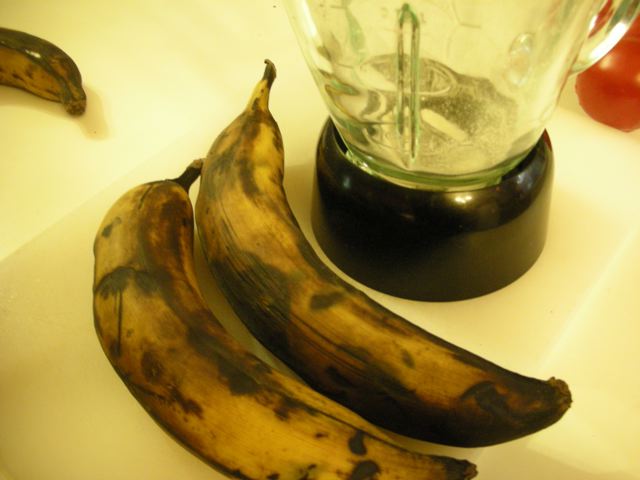

I cooked
tatale (aka tetare) a couple of weeks ago, and made boiled bambara beans to go with them. This is a classic way to eat tatale in Ghana. It's also the only dish I know of, apart from porridge, where sugar is served on the side and may be added to taste (though some purists insist that even that's a foreign intrusion).

BTW, I didn't have any rice flour so I threw some long grain rice into a blender and made my own. It worked fine. You may also substitute cornmeal for all or part of the flours.


Here's the basic recipe:

3 or 4 large over-ripe plantains, about 1 1/2 lbs. after peeling), or about 3 cups when sliced
4 oz. of onion (about 2 medium), or shallots, finely grated
2 oz rice flour (about 1/3-1/2 cup)
2 oz wheat flour (about 1/2 cup)
2 t dried ground red cayenne pepper (more or less to taste)
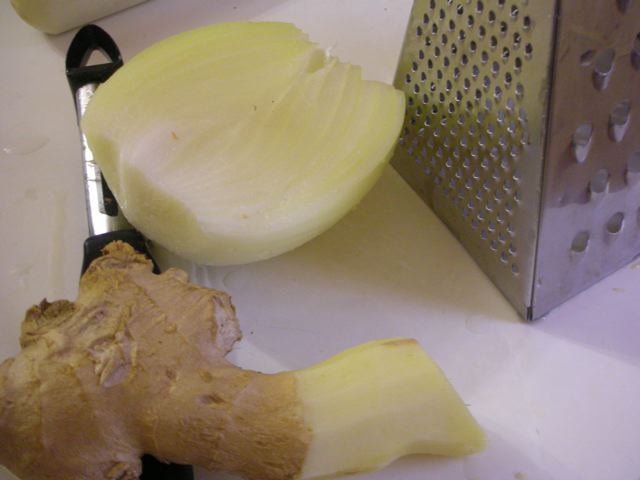
3 t fresh grated or ground ginger
about a cup of oil for pan frying (palm oil is traditional if you can get it. I usually make these on a nonstick electric griddle so I don't need too much)
1/4-1/2 t salt (optional)
a cup of water

For equipment, I recommend:
paper towels, for draining the pancakes (that's because I don't want too much oil. They would likely omit this step in Ghana);
a frying pan or griddle (nonstick is nice);
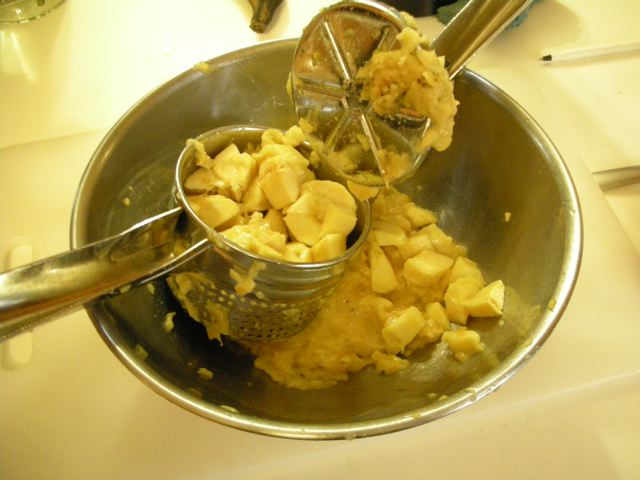
something to mash the plantains (I would've used a potato masher but it's still in boxes since our last sabbatical, so I ended up squeezing them through a potato ricer and then mashing them with a fork. A mortar and pestle would also work (they use a rounded wooden mortar in Ghana), but I'd stay away from a blender or food processor if you want the proper texture (if that doesn't bother you, blend away);
a knife
a grater (for the ginger and onion)
a cup
Directions:

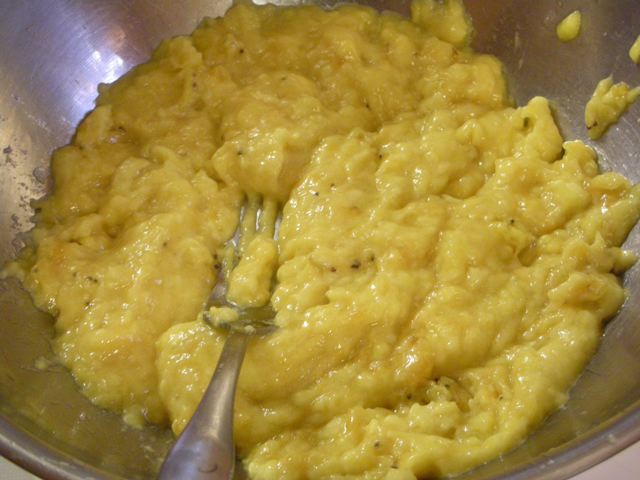
Cut the ends off, and make a horizontal slit along one side, then peel each of the plantains and slice them into slices about 1/4 - 1/2 inch thick. As mentioned above, traditionally these would then be pounded in a mortar with a wooden pestle. It should not be completely smooth. If you feel you must use a blender or food processor, keep some of the plantain out and mash it and add it after you've blended the rest.

Stir in the grated ginger, dried red pepper and grated onions. Add the rice and wheat flours (or cornmeal if you prefer). Add a cup of water and stir again.

It's good to let the mixture sit for 20 - 30 minutes before you cook the pancakes. The batter can actually be made a day ahead and refrigerated until you're ready to cook the tatale.
Heat a heavy frying pan or griddle as you would for regular pancakes (medium high heat). I use a pastry brush to brush palm oil on the pan, then drop the batter onto the griddle (either small, like "silver dollar" pancakes, or somewhat larger, say using 1/3 to 1/2 cup batter.) I usually use a spoon to spread the batter into a circle shape.

As soon as the tatale is firm enough to turn without breaking, carefully turn it over with a pancake turner and press the turner down firmly on the pancake to flatten it. Continue doing this every few minutes while the pancakes cook.

Drain the pancakes on paper towels and add a little more oil to the pan for each batch of tatale. Avoid stacking them--spread them out to drain, and serve them on a large platter. The tatale can be made in the morning and kept warm in a low oven, but will become tough if heated too long. A better alternative is to zap them briefly in the microwave to heat them before serving them. Both Barbara and I like our tatale quite brown, but if you prefer it less crusty, cook it to suit your taste.

Serving suggestions:

The classic way to serve tatale is with boiled bambara beans (aboboe) as in the photo above, or bean stew. Tatale and aboboe is a wonderful, elegantly simple party snack, especially pleasant when washed down with cold glasses of beer. It is also hearty enough for nonvegetarians to adore. Peanuts supplanted bambara beans in much of West Africa. I'll bet if you boiled fresh peanuts you'd get a tasty substitute, though I've never tried it. I usually serve tatale with bean stew since it's difficult for me to get dried bambara beans. Some organic farmers in my town tried to grow some for me, but the plants did never fruited. Watch for recipes for boiled bambara beans and bean stew soon.


Tuesday, September 29, 2009

Injera in State College

Our Ethiopian cooking class last week was fun. True, it was a challenge for everyone to get the injera thin enough, and we cheated after roasting the Ethiopian coffee beans in a cast iron frying pan by grinding them in a coffee grinder (along with a few cloves and a short stick of cinnamon). And we had to use an American coffee pot to serve the coffee, plus we had to substitute mead for tej at dinner. You can only special order a whole case of tej to get it in the state liquor stores here in central Pennslvania, where there are no Ethiopian/Eritrean restaurants, but a good time was had by all.


The stews (wats and alechas) and Ethiopian-style cheese were a hit and people were eager to take home some of the sour dough starter made with tef, as well as authentic
berberé to try their hands at duplicating our meal.

The electric metad (aka lefse maker) worked fine, and we served the injera on 16-inch pizza pans at the table. Tomorrow I'll get back to the cookbook recipes. Watch for recipe #17, Ghanaian tatale (ripe plantain pancakes).

I'm still waiting to hear who else is teaching African cooking classes, and where.

Wednesday, September 23, 2009

Question #10: Where can I go to learn more about (or taste) authentic African cuisine?

In April I posed 10 questions about African cuisine, and today I'll begin to tackle the last one, which is how to learn more about African food, or where to go to taste it. There are many pieces to the answer to Question #10, and many places to learn about and eat African cuisine. A quickie first step is to find some African cooking classes. This is not likely to be at any culinary institutes, since I am not aware of any schools where African cuisine is part of the mainstream curriculum (though I'd love to be corrected here).

Also, culinary tourism and the opportunity to take short culinary classes in Africa is almost nonexistent, apart perhaps from Northern and Southern Africa. There are many online videos, some free and some not (and of widely varying quality), websites, and books. My favorite way is to make friends with Africans and have them teach you or eat at their homes, or visit restaurants (if you live in a big city), or attend cultural festivals. I'll write more about all of these later.


For now, you may have noticed I've fallen off on posting recipes from the Ghanaian cookbook these past 2 weeks. That's because I've been busy teaching classes and doing presentations, which will continue at least through October. I'll post new recipes as I'm able.


However, I've had several requests for information about the classes I'm currently teaching. Last
week it was a cooking class on North African (Moroccan) cooking and a demonstration class on West African (Ghanaian) food and culture. This week it's Eastern African (focus on Ethiopia), with classes on West and Southern African food and culture in upcoming weeks. If anyone or any groups within range of central PA (State College) would like more information, or to arrange a custom class (either here or where you are), I'd be happy to work with you. Here's a summary of the next few classes, each of which are held in my home from 6-9:30 p.m. and are $50:

Thursday, September 24: East Africa--includes tej (honey wine), injera (traditional flatbread crepe) and doro wat (chicken stew with eggs), gomen wat (chard stew), kik alecha (pureed bean stew), lab (Ethiopian-style cheese), Ethiopian coffee.

Wednesday, September 30: West Africa--includes bissap (hibiscus iced tea), beef chichinga (West African kebab with a spicy rub), ginger beer, green plantain chips, palaver sauce with African yam, groundnut soup and omo tuo (rice balls), tropical fruit salad with coconut and “twisted cakes.”

Thursday, October 8: Southern Africa—includes South African wine, shrimp
peri peri, samp and beans with tomato bredie, curry and rice, and melktert (milk tart).

If anyone else is currently teaching African cooking classes, or would like to recommend resources, please let me know and I'll be thrilled to post that information here.


Thursday, September 10, 2009

Recipe #16: Gari potowye (soaking)

Gari-potowye (gari soaking)

Yesterday
I featured a recipe for iced kenkey. Today I'd like to share another snack/porridge- type food I learned to call "gari soak" or "gari soaking." My sister-in-law, Theodora, was unfamiliar with those terms, but knows it by its Fante name "gari-potowye."

It's also simple to make. Take a small amount of gari (I've only used the finely sifted Ghanaian version, not the coarser Nigerian one, but it would work, too). For Americans, I imagine 1/4 - 1/3 cup makes a serving, though for Ghanaians it might take twice that much. Remember that gari swells up to almost 3 times its size when liquid is added to it.

Traditionally people pour the gari into a bowl and fill the bowl with water a couple of times to clean the gari and allow them to pour off any impurities that float to the top.


Like iced kenkey, Theodora agrees gari-potowye "is cheap and easy to make. . . people eat (it) mainly to quench thirst/hunger until they can make or eat something more filling. . ."

To make
"gari- potowye," after rinsing the gari and pouring off any chaff/impurities and most of the extra water, one adds cold or iced water, remembering to add enough to keep it from becoming too thick. For 1/4 cup, after draining off most of the water used to rinse the gari, use 1/4-1/2 cup cold (ice) water. If you are adding milk, you may stay with the lower amount of water. You can always add more milk or water if after it sits for a few minutes you think the mixture is too thick. Conversely, if you add more liquid than you like, you can always sprinkle in a little more gari. As I've said before, Ghanaian cooking is very flexible and forgiving.

Theodora likes her gari potowye best after refrigerating it for about 30 minutes (i.e., it will be softer). As with the iced kenkey, one may add roasted peanuts (in Ghana these would likely be dry roasted and unsalted), milk (evaporated, powdered or fresh) and sugar to taste.

I found an online site in the U.K. that sells processed gari
"Kwik meal gari soaking" to make this dish. Their Kwik brand included cocoa in the mix, something I've never heard of before in Ghana (nor had Julia or Theodora).

Julia affirms, "Yes, it's (gari soaking) delicious with roasted nuts, usually not crushed. It is also not described (as) a drink, though some people may dunk it, but rather (is) watery and eaten with a spoon since the gari thickens if you don't have enough water. The milk tends to slow this down."


Gari soaking has a milder taste than iced kenkey. It can be prepared more or less thick, crisper or soggier, according to taste. As Holli, a Canadian living in Ghana for over a dozen years noted in a comment on yesterday's posting "There is. . . (a) food . . .that my kids love, . . . made with dried gari (cassava powder). Pour the dried gari into water, add evaporated milk (Ideal Brand here!), peanuts and sugar... it has a similar flavour to breakfast cereal!"

Gari prepared this way is another student and boarding school staple.
I think of this cassava meal as Ghana's favorite convenience food, and "gari soaking" is another example. In the coming months I'll feature gari regularly, in ways both savory and sweet.

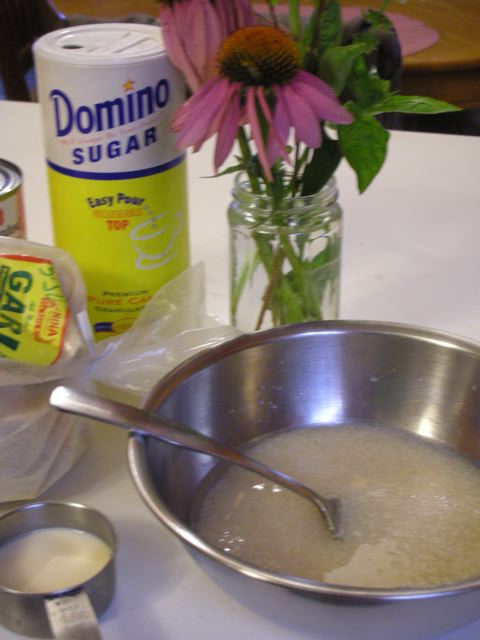
By the way, the images I'm posting these days were generally meant to be functional, not carefully composed food photography. I leave my camera in the kitchen and take utilitarian photos so you can see what I'm describing. Our cookbook will be visually much more exciting! Also, today I was fresh out of peanuts, so they're missing from the picture, though the added crunch they give to gari soaking is wonderful. For those with allergies, try another type of nut.

Wednesday, September 09, 2009

Recipe #15: Iced Kenkey

I remember that when I was a child growing up in California my Tennessee-born mother sometimes snacked on graham crackers she crumbled into a bowl and covered with milk.

Iced kenkey: Similarly, my late sister-in-law Afua used to enjoy a Ghanaian snack in the early 1970s when she attended the boarding school where I taught in Nungua, Ghana. It was called "iced kenkey." She simply crumbled part of a ball of Ga kenkey with her fingers into a cup and added cold water and "plenty" of evaporated milk and sugar (it was sugar cubes in those days), stirred it well, and drank/ate it from a large mug. We had no refrigerator, but if we had I'm sure she would have used ice water to prepare it.

I never developed a taste for iced kenkey, so I checked in with a couple of Ghanaians--my sister-in-law Theodora, and my friend Julia--to make sure I had the recipe right.

My friend Julia Yeboah said that "iced kenkey" made from Fante kenkey is superior in taste to that made from other kenkeys. Fante kenkey is the one steamed in plantain or banana leaves, rather than corn husks, and is generally unsalted.

"Iced kenkey" is quick and easy to make. It is a popular inexpensive snack/street food sold throughout much of Ghana. It can tide people over until they can have a more filling meal. Iced kenkey is also used as a weaning food for children. "Iced kenkey" is never served hot (duh, right?)

To make enough for one-two people, take about a cup of kenkey (I used some leftover from the balls I blogged about on Aug. 26, recipe #12), and crumble it into pieces in a bowl with your fingers. I cheated and used a fork to help smash it up. Then add about a half cup of ice cold water and mix well. I used a wire whisk, but think this would work well if blended in a blender like a smoothie, even though that's not traditional and it would change the texture. Add milk and sugar to taste. It took me about a tablespoon of sugar to smooth out the sourness of the kenkey, and about 1/3 cup of evaporated milk (you can use other milk, but I wanted to recreate the taste I remember from Ghana).

It is about the consistency of rice water, and can be drunk or eaten with a spoon, or a combination. It is frequently eaten with unsalted roasted peanuts (but not crushed) sprinkled over it.

Tuesday, September 08, 2009

Recipe #14: Rice Water

On Sept. 5, Global Voices Online posted a fun and informative bit of information about Ghanaian cooking. Thank you to Kajsa Halberg Adu for drawing it to my attention, and also for featuring BETUMI in her posting on Sept. 7.

Last week my husband had to take his once-every-10-years colonoscopy. That meant a few days of diet changes, which made it a good time to make a light and easy-to-prepare/easy-to-digest Ghanaian porridge/drink called "rice water." It's basically just cooking rice with extra water. While "rice water" is an ordinary breakfast porridge eaten by everyone, in Ghana it is especially recommended for children and invalids--especially when made thinner with even more water, and richer with extra milk. It has a different consistency from North American "Cream of Rice" cereals which are made from ground rice.


As is frequently the case, there is plenty of room for personal preference. I use about a half a cup of white rice (or about 4 oz.--frequently in the past in Ghana it was "1/2 cigarette tin"). I use long-grain rice, but any grain works fine. In Ghana, people boil the water first, then wash the rice and add it with salt to taste (maybe 1/2 teaspoon). I skip the pre-boiling and washing part.

The proportions vary, but about 4 cups of water to the rice works for me. Bring everything to a boil and lower the heat and simmer it until the rice is tender and kind of
starts to disintegrate. Add more water if you think it looks too thick.

The rice water can be served in a bowl or a cup, with milk and sugar added to taste. In Ghana I first learned to drink it with canned, or "tinned," evaporated milk, as fresh milk was not available. More recently people add powdered whole milk (like Nestle's NIDO) to it (and other
porridges.) Fresh milk can also be used. The amounts of each can be adjusted to taste. Rice water can be served hot, warm, at room temperature, or cold.

Tomorrow I'll continue in this vein and share recipes for "iced kenkey" and "gari soak."

Thursday, September 03, 2009

Breakfast menu for the Obama visit to Ghana 11 July 2009

Below is the menu provided to me by Barbara Baeta Bentsi-Enchill, the Executive Chairman and founder of Flair Catering Services in Ghana, of the breakfast buffet served to President and Mrs. Obama and their entourage at the Presidential Castle on 11 July 2009.

I've unsuccessfully scoured the Internet trying to locate ANY photos of the food or buffet lines. This omission seems to indicate a glaring lack of curiosity about or interest in Ghanaian cuisine displayed by the myriad photographers--all of the breakfast pictures show only the important dignitaries present, and I've not been able to find one that shows the food.

What an opportunity missed.


Menu

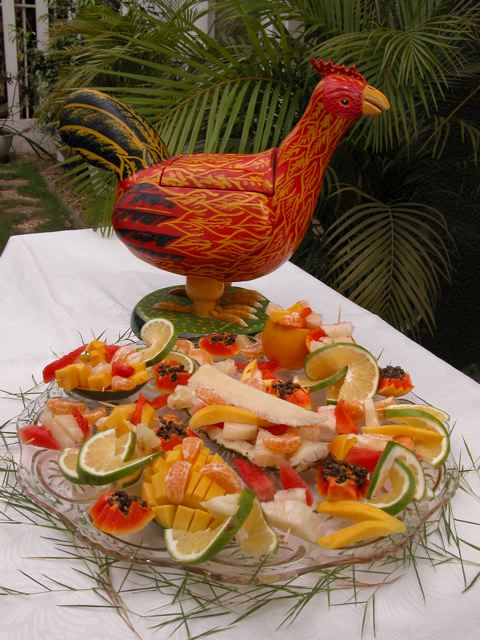
Tropical Fruit Juices (NOTE: I assume this would have included orange, pineapple, mango, papaya or similar juices). All of the items in bold will be found in our upcoming cookbook, and some are things I've already blogged about. I've included a couple of representative photos I've taken at Flair, but these ARE NOT from the July breakfast.

Variety of Tropical Fruits (Again, probably Ghana's fantastically sweet pineapples, along with papayas, mangos, soursop, melons, oranges, etc.).

Tom Brown (porridge made from toasted corn flour)
Hausa Koko (a spiced millet porridge)
Akra (a black-eyed pea fritter, aka kose, akara)
Beans Stew (a stew often made with smoked fish and red beans or black-eyed peas and eaten with ripe plantain)
Fried Plantain (probably ripe or "red" plantain slices)
Waakye with Meat Stew (rice and black-eyed peas with a meat stew made with tomatoes, onions, probably beef, etc.)
Galifoto (also known as "gari foto," a one-pot made from cassava meal similar to Brazil's farofa)
Oto with Boiled Eggs (a traditional dish made from mashed yam, onion and palm oil garnished with hard-boiled eggs)
Individual Steaks of Fried Fish (while Ghanaians often eat tilapia, Barbara said they used grouper steaks for this meal)
Abolo (a baked corn dough and flour or sweet potato dough; another version omo abolo is made from rice) & Kenkey (steamed soured corn dough balls)
Shito (pepper sauce)
Scrambled Eggs with Bacon
Grilled Tomatoes & Sausages
Brown & White Rolls
Butter
Assorted Jams & Marmalade
Tea
Coffee
Hot Chocolate

Wednesday, September 02, 2009

Flair Cooks for Obamas in Ghana

I telephoned my colleague Barbara Baeta of Flair Catering in Ghana (and my collaborator on our upcoming Ghanaian cookbook, the recipes of which are appearing in development on Betumiblog regularly) to find out if she could help me discover what the Obama family was served during their stay in Accra in July. It turns out the one State meal catered for them was breakfast, and her own Flair Catering was selected to provide that meal (for 600 people)! She's sending me the menu tomorrow (Thursday), so check back to find out what was served. Barbara was quick to point out that she knows what Flair served, but not what the Obamas themselves actually ate.

She compared the security there in 2009 to that when she cooked for President Jimmy Carter (pre 9/11)--then it was much looser, and she was able to chat with the President; this time, though she was a few yards away from President Obama, and saw his wife come down, she was unable to meet them and security soon hustled everyone away. Plus, there were meetings going on upstairs, where Flair also set up a buffet table, but she doesn't know if President Obama actually tried any of the food or not. A combination of Ghanaian and European food was served.

Barbara commented to me that some of the culinary
reporting was inaccurate. Among other things, they got her name wrong and called her "Henrietta." Also, while kenkey was part of the buffet, tilapia was not ("I wasn't going to take a chance on all those bones."). Instead, she said, they prepared grouper fillets. I hope she'll be able to get some pictures of the tables, too. She said everything looked lovely, but security was so tight there was no way for her to photograph anything herself. For some photographs I took at Flair's 40th birthday party in 2008, go to BETUMI's flickr account.

Monday, August 31, 2009

How cool is this: 2009 Ghana Obama cloth

The U.S. and Ghana have a long history of friendship, even though relations have sometimes been strained. Ghana's first Prime Minister, Kwame Nkrumah, got his bachelor's degree at Lincoln University in 1939. There's a nice 1958 picture of him placing flowers at the Lincoln Memorial. I remember the joy with which President and Mrs. Rawlings and Ghanaians embraced President Clinton and his wife when they visited Ghana in March 1998. In 2008, during a visit by President and Mrs. Bush, Ghana's President Kufuor decided to name a future 6-lane road the George Bush Motorway.

But never has there been as much excitement as President Barak Obama's election generated. When President Obama visited Ghana in July, 2009, that joy overflowed.
Ghanaians honored him, as they do great leaders, by designing a special commemorative cloth (red, white and blue!) printed with the words "akwaaba," meaning welcome, and with important cultural symbols: the adinkra symbol "Gye Nyame," which means "except for God," and gives honor to God, and also traditional stools, symbols of authority, with a little exuberant yellow brightening things up. Definitely a cool, made-in-Ghana original(Akosombo Textiles Ltd). I've already gotten a couple of yards for a tablecloth, but I may get some more to have an outfit sewn. Available online from AfricaLiving.
Now, does anyone know what Obama ate when he was in Ghana? And has he eaten any African food at the White House? The day in November after he was elected, I called his office in Chicago and asked if I could send my book A Good Soup Attracts Chairs: A First African Cookbook for American Kids to his wife Michelle and their 2 children. I was told it was fine as long as the value wasn't over something (I forget the exact amount). I wrote a letter, sent the book, and waited. A couple of months later it was returned to me unopened. I was very sorry. I really think Sasha and Malia would've enjoyed making peanut soup or meat pies or twisted cakes.

Thursday, August 27, 2009

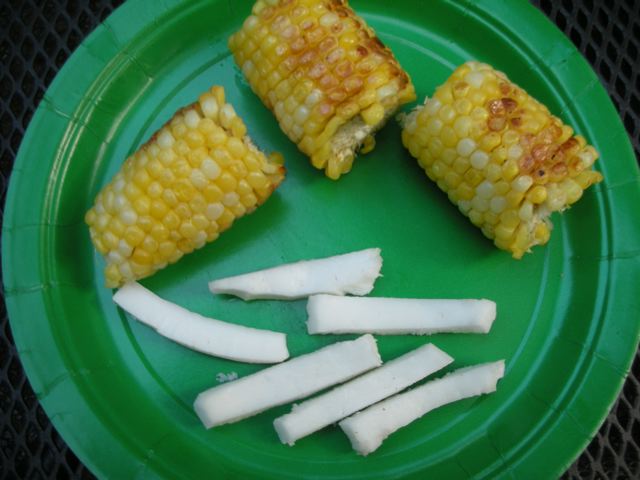
Recipe #13: Small chop: corn and coconut snack

We've been enjoying wonderful sweet corn lately from our local CSA (community supported agriculture) group, Plowshare Produce. Yesterday I prepared a quick and simple, but popular snack (in Ghana known as "small chop"). While North American sweet corn is much softer and sweeter than Ghana's corn, and thus cooks much more quickly, sweet corn can easily be substituted to make what proves to be a delicate and complementary combination of flavors and crunchy and chewy textures, and a hearty snack.

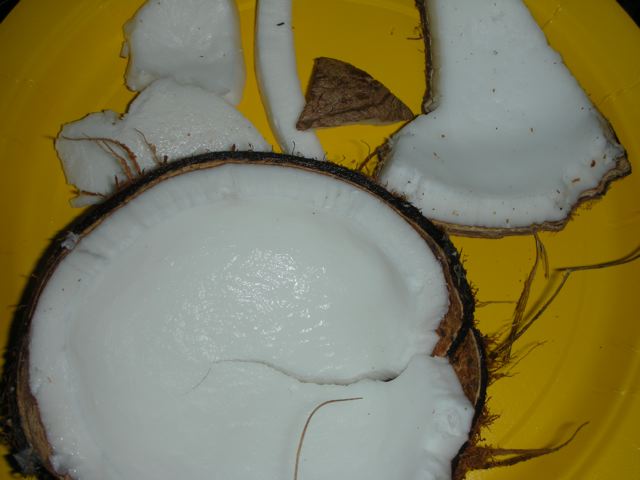
First, prepare a fresh coconut. Actually, the ones usually seen in supermarkets here are the hard, dried ones with a hairy brown covering. The really fresh ones (not the ones we want today) are green on the outside. When shopping for coconuts, I always shake them first to find one that seems full of liquid. If you haven't recently opened a coconut, I recommend some newspapers spread out on the floor under the coconut, a good-sized glass, cup, or bowl, a hammer and an ice pick or sharp object like a screw driver or clean nail, a knife and/or a vegetable peeler.

Hold the ice pick, or screwdriver over one of the 3 "eyes" in one end of the coconut, and use the hammer to make a hole there. Repeat for the other 2 eyes and then invert the coconut over the cup or bowl and drain out the liquid, shaking it if necessary to get all the coconut water out. If the coconut is fresh, this liquid will be very refreshing, and can be drunk by itself, poured into tropical fruit salads, etc.


Next, take the hammer and start whacking the coconut (make sure no one is standing nearby, and be careful of flying bits of coconut shells) until it breaks apart into pieces. Carefully use the knife to pry the coconut away from the hard brown shell. Then use the knife/vegetable peeler to peel off the thin brown coating on the back of the coconut, leaving only the white pieces. Once you can get past the idea that coconut has to be flaked and coated with sugar, this is a delightful combination. Rinse the coconut and cut it into slices or cubes.

To prepare the corn, boil the corn cobs in salted water, grill them over an open fire, or cook them in the microwave. Serve pieces of corn and coconut together. This is a great snack on a hot summer afternoon or evening, especially when accompanied by an ice-cold beverage of your choice, like ginger beer, bissap, puha, or beer.


Wednesday, August 26, 2009

Recipe #12: Kenkey (Ghana's challenge to polenta)

I've posted before about the steamed fermented corn dough ball in Ghana commonly called kenkey (aka dokono, dokon, kokui, tim or komi). Here are the directions for making it from basically the same corn dough used to make banku. Banku is very soft, whereas kenkey is steamed (or sometimes, boiled) to make a much firmer ball that can be sliced or served whole.

As with the
banku, take white stone ground cornmeal (as finely ground as you can find, but not the degerminated type, nor masa harina), and make a soured dough by adding warm water as described below. As with Ethiopian injera batter, the longer you let the dough sit, the more sour it will be. I let mine sit for about 3 days here in central Pennsylvania, which has a cooler climate than Ghana's.

Mix together 3 cups of cornmeal/flour this time (plus add a tablespoon of corn starch if you wish to make it a little smoother), and about 2 1/2 cups of warm water (use a little more if the dough seems very dry) in a nonreactive glass or ceramic container. Keep it in a warm place, loosely covered and stir well every day, removing any mold that forms on top or on the sides (but don't worry about
aflatoxins--name brands of corn flour will have been properly processed). Some people say that if you don't want to wait for the dough to sour, you can just add a teaspoon or so of vinegar to the unfermented dough and use it immediately, but I feel like that's cheating, and I don't do it.

I prefer Ga-style kenkey because I first lived in Nungua along the coast of Ghana, so that is the kind I make (I'll post on other versions, such as the the Fanti style, which has no salt, is steamed in plantain leaves and formed into a different shape, another time).

Making kenkey involves several steps:

Traditionally Ga kenkey is wrapped in dried corn husks, which are available where Latin ingredients are sold. Ghanaians abroad often substitute aluminum foil (and also use plastic wrap now, too) but in my opinion, though convenient, this is a mistake unless you have no other option. The foil does not allow the balls to steam in properly, and also you lose the wonderful delicate flavor of the corn husks.
Plus I worry about the transfer of unwanted materials from the foil or plastic into the dough itself.

Before preparing the dough for steaming, put corn husks in a bowl of warm water to soften for about half an hour or until they are pliable, pushing them under the water to make sure they are covered. You'll probably need 2-4 husks for each ball of kenkey. The 3 cups of corn flour used to make the dough should form 3 or 4 good-sized balls. To prepare the kenkey, first prepare what is known as the "aflata," in which part of the fermented dough is cooked with water, then added to the uncooked part of the dough before being formed into balls and steamed or boiled.

To make the
aflata, first mix 2 cups of water in a 3-quart saucepan with a teaspoon of salt (or less) and half of the dough, then cook the mixture over medium heat for about 10 minutes, stirring constantly with a heavy wooden spoon or paddle, being careful not to scorch or burn it. The dough will thicken in about 5 minutes, and by 10 minutes will be quite thick. If it gets too thick and hard to stir, you can add a little water around the outside of the pan to warm, and then stir it in to the dough.

Remove the pan from the heat and stir in the uncooked portion of the corn dough, mixing them together well.
To make the balls, Ghanaians would just hold the dough (about 1/3 or 1/4 of it) in one hand and expertly shape it into a ball by repeatedly tossing it up a little and turning it. For Americans like me, it's easier and safer to wet one's hands and use both of them to shape the ball, then place it on top of a good-sized corn husk, which should be softened by now (take one with no tears or holes in it) with the "fat" end facing the bottom.

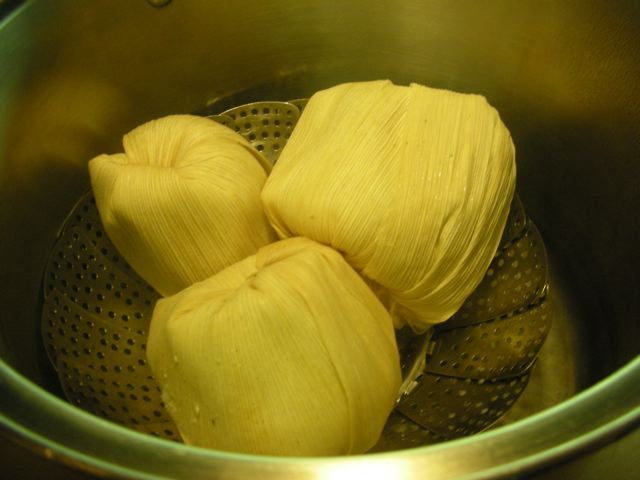
Still holding the ball of kenkey and corn husk in one hand, place another corn husk over the uncovered part of the kenkey ball, making sure that it overlaps at least 1/4 " over the previous husk. Repeat the process if necessary until the ball is covered. Twist the narrow ends (at the top) of the corn husks together tightly and poke a hole in the topside
of the dough by pushing the corn husks apart at a place where they overlap), and push the twisted end into the ball of kenkey and cover it with the soft dough, then slide the corn husks back to the overlapped position. Do the same thing for the other end (this is trickier because the husks are thicker). My original 3 cups of cornmeal made 3 balls of kenkey. In Pennsylvania I simply put a steamer insert into a stainless steel pot with water and place the balls on top and steam them for about an hour, adding a little water as necessary.

In Ghana I was actually taught to put corn husks in the bottom of the pot and fill it with water, then boil the balls for a couple of hours, but I find steaming works fine for me.
When removing the balls from the pot (it usually takes mine a good hour), be sure to let them cool slightly before unwrapping them, so as not to burn yourself. They are best warm, but can be stored in the refrigerator or frozen and thawed. Classic accompaniments for kenkey include seasoned fried fish ( "kenan" or "kyenam," a recipe for another day), a fresh hot pepper sauce (also for another day) or the classic "shito" (coming up later, too). Kenkey and a stew or fried fish and pepper sauce is a great meal to eat with your hands, but kenkey is also often served sliced as a side starch.

Tuesday, August 25, 2009

Recipe #11: Meat Stew with Browned Flour


This is an easy, tasty stew that uses familiar ingredients in familiar ways, but with a different twist. While wheat flour is an imported ingredient, it has found its way into many classic Ghanaian dishes, such as this stew my sister-in-law taught me years ago. The secret is that you begin by browning the dry flour in a heavy pan (I use the same cast iron frying pan I got with S&H green stamps when I was first married. You'll see it regularly in the photos I'm posting at the blog).

Begin with a clean, dry, heavy frying pan and heat it to medium, then add a couple of tablespoons of white wheat flour into the pan. Stir or gently shake the pan until the white flour turns brown. (I've never tried this with whole wheat flour, but it would probably be fine that way, too). It will probably take 10 to 15 minutes, but watch it carefully to keep from burning it. When the flour is brown, empty it into a small bowl so it doesn't keep cooking, and set it aside. Take the pan off the heat, too.

Slice a pound of meat such as chuck roast or top round into medium strips--not as thin as you normally would for a stir fry, but not as thick as you would for regular beef stew. Peel and chop or slice a medium-sized onion and peel a couple of cloves of garlic to mince or press in a garlic press. Seed and mince a couple of peppers (I used jalapenos for this, but depending on your taste for chili peppers, you could use a Scotch bonnet or habanero, or a milder pepper). If you are not used to cutting fresh hot peppers, remember that the oils can get on your hands and be careful especially not to touch your eyes. Many people advise using rubber gloves when cutting hot peppers, but I've never seen such a thing in Ghana, and cannot imagine doing so myself, though I've been known to hold peppers with a fork when mincing them. Another strategy is to remove the stem and throw peppers into the stew whole, eventually squeezing the hot juice from them into the stew, but removing the actual pepper to give to those who like them.

Heat a couple of tablespoons of oil (I used peanut oil this time) in the frying pan over a medium heat, the throw in a little of the chopped onion for a minute or two, then the meat, raising the heat a little so that it browns on all sides. Add a little more oil if necessary to keep everything from sticking. Add the rest of the chopped onion and the garlic and chopped pepper and stir well, then add a little dried red pepper to taste (begin with 1/8 teaspoon if you're not in favor of very spicy food), an 8-ounce can of tomato sauce, a teaspoon of salt or to taste, and a cup of water. Stir well. Sprinkle the browned flour over the stew and stir again. Lower the heat to simmer, cover the pan and cook the stew until the meat is tender, maybe 20-30 minutes.

Because I'd just received a bunch of fresh kale from our CSA farmers that day, and because I'm a big fan of one-pot meals, I washed and chopped it, and added it when I added the meat, so that they all cooked together. Check and adjust the seasonings (salt and red pepper) before serving.

By the way, I had no shito (Ghana's hot pepper condiment, also known as black pepper) handy, so I just grabbed a bottle of chili sauce from the refrigerator, and let everyone add his or her own at the table. We ate this stew with basmati rice.

Friday, August 21, 2009

Tubaane (steamed bean pudding), continued

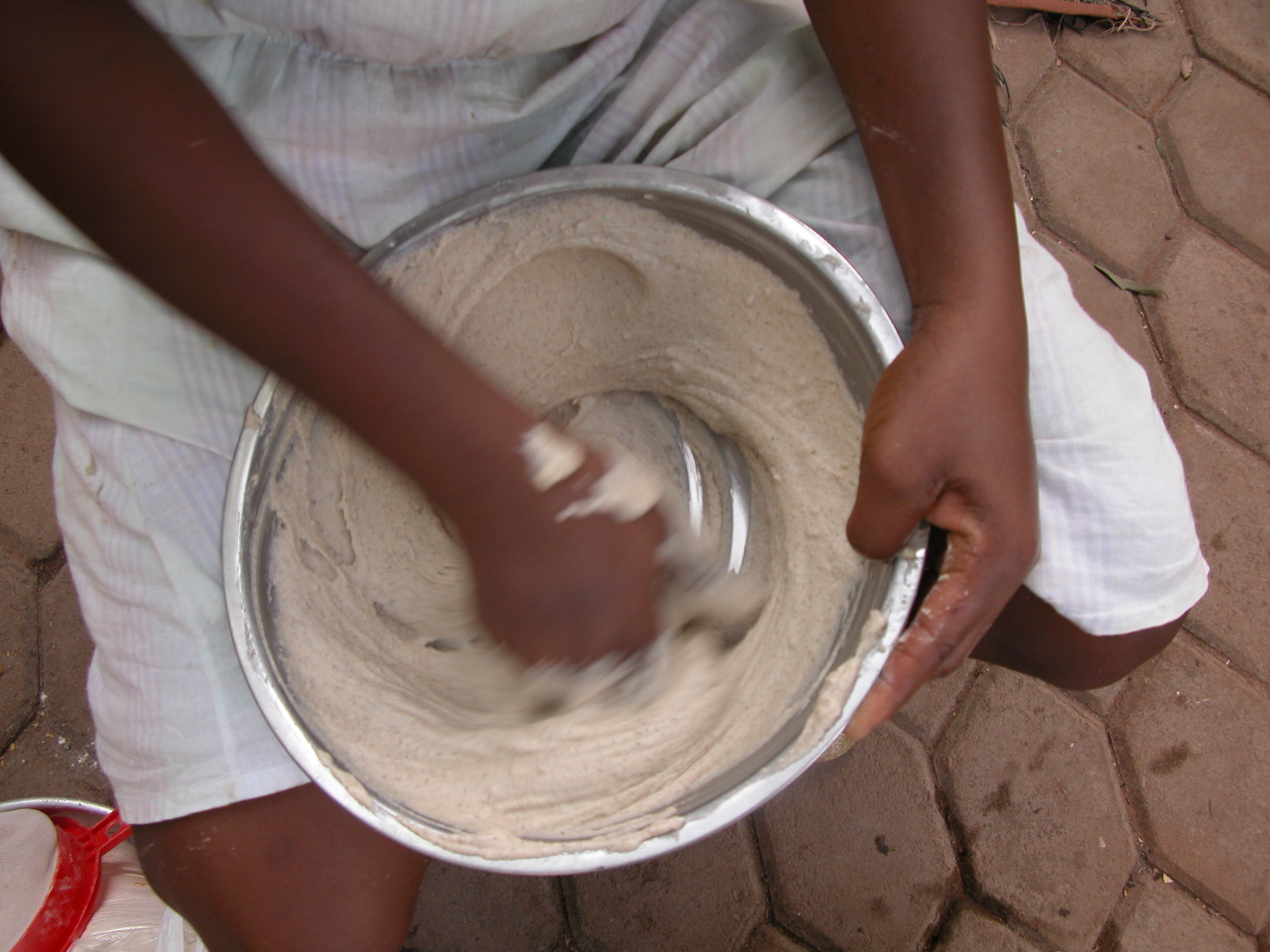
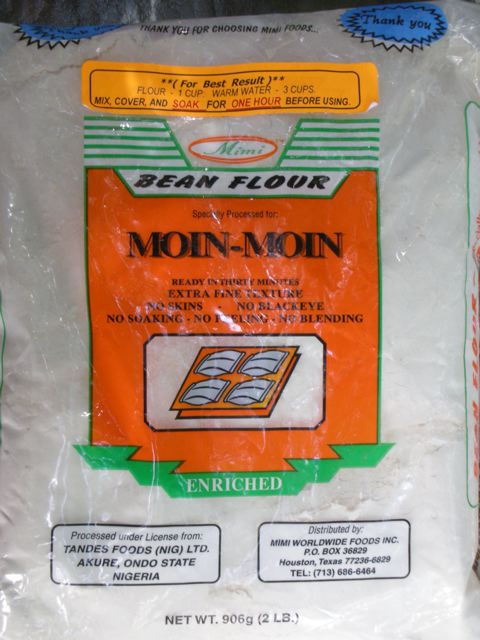
I spent the morning re-making tubaane. It was better, but I'm still struggling with the batter: the moin moin recipe on the package says to use 1/2 cup of the powder to 1 1/2 cups of warm water, and let it sit for an hour. I tried that and it was a watery mess that could never be spooned onto a leaf, so I added more bean flour, 1/4 cup at a time, until I eventually ended up using 1 1/4 cups of flour to 1 1/2 cups of water. That seems like a lot, but anything less and the batter was too thin.

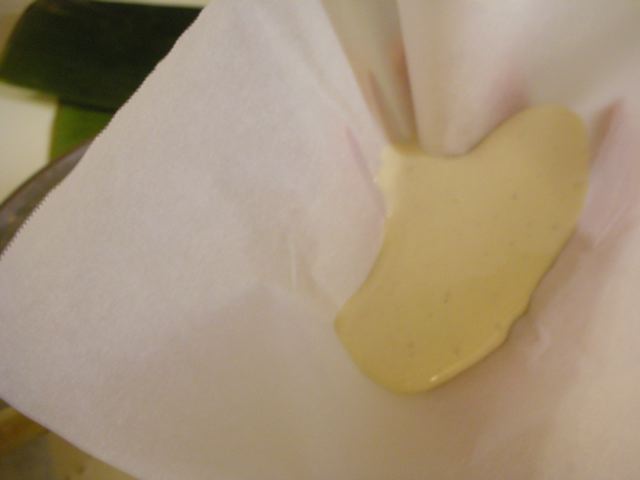
Next I used an electric mixer to beat it for 5 minutes (rather than by hand as we did in Tamale), added 1/2 teaspoon of baking soda (to replace the
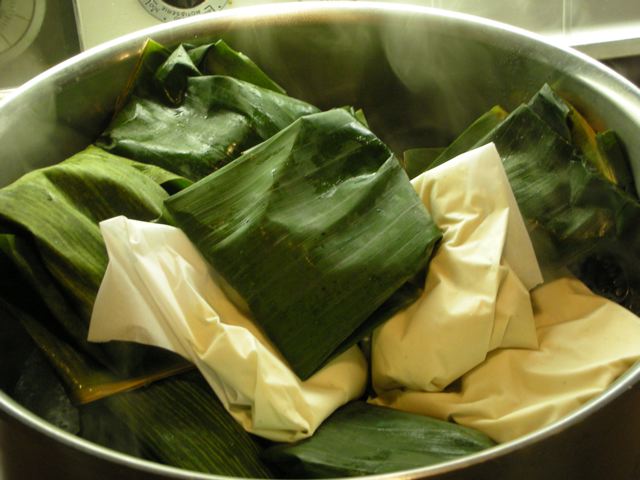
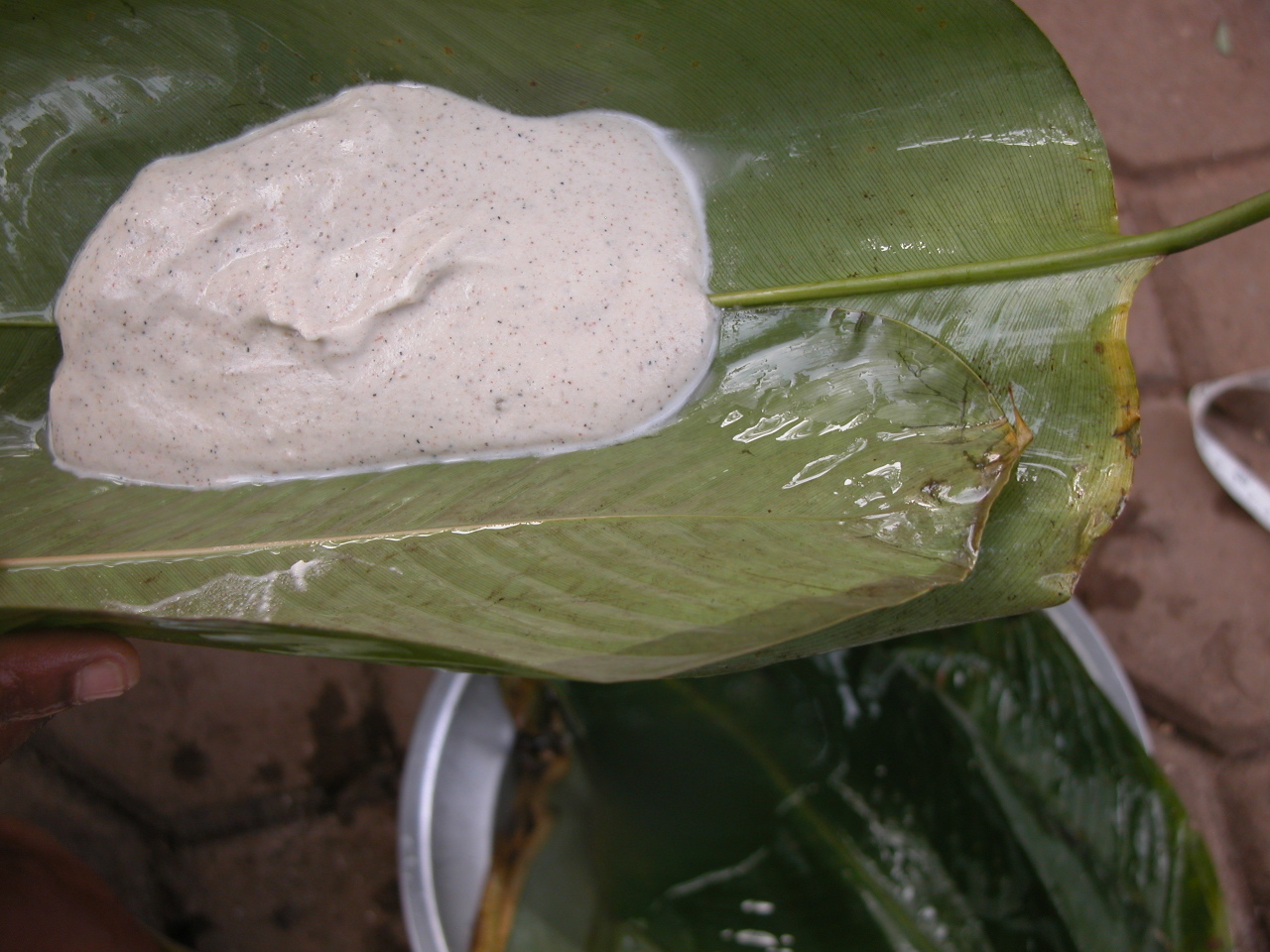
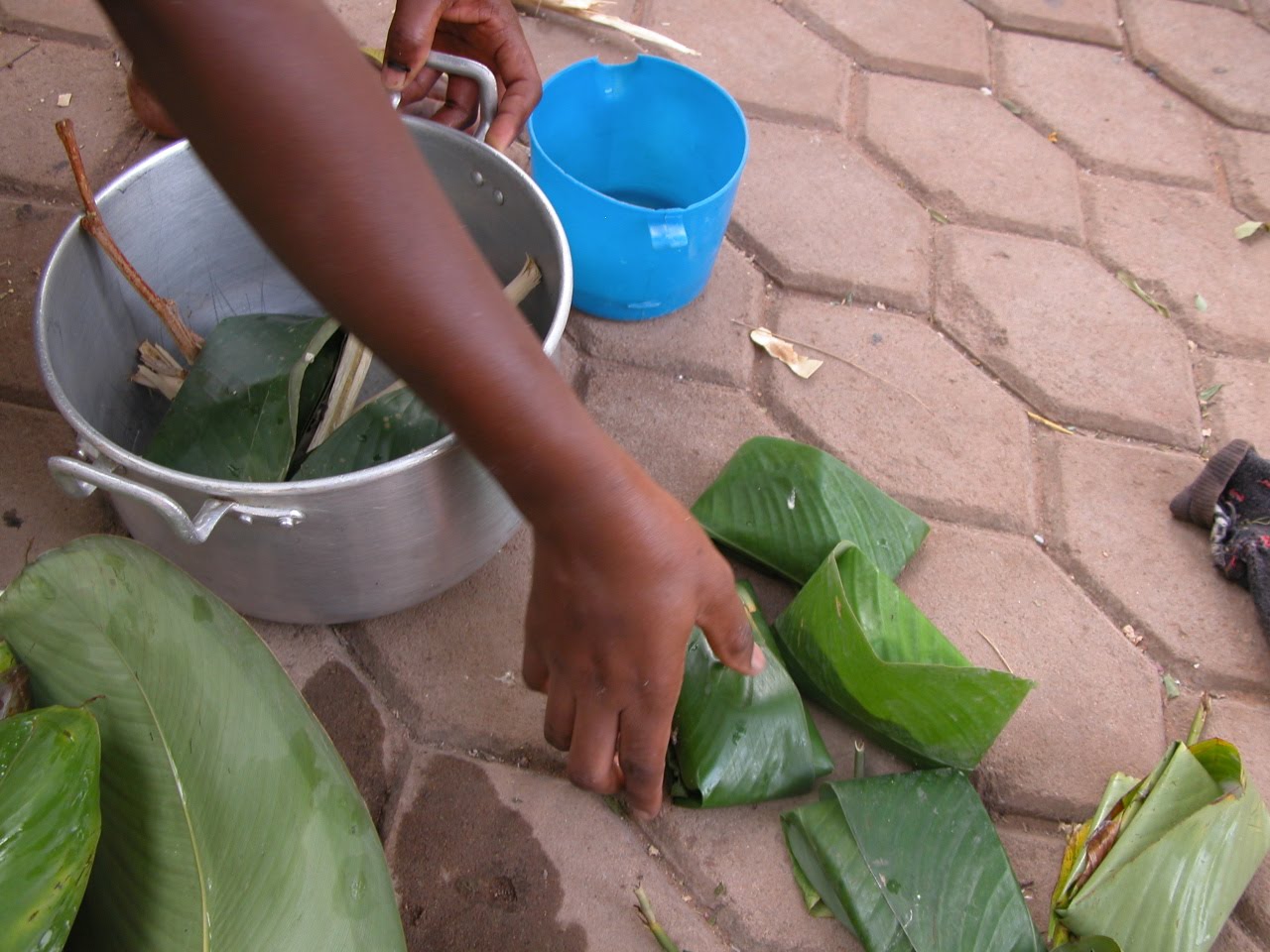
kanwa we used in Ghana), and beat it for another 5 minutes, then spooned it into plantain leaves (and tried a few with parchment paper, but those crumpled up badly, whereas the plantain leaves made a smoother package).


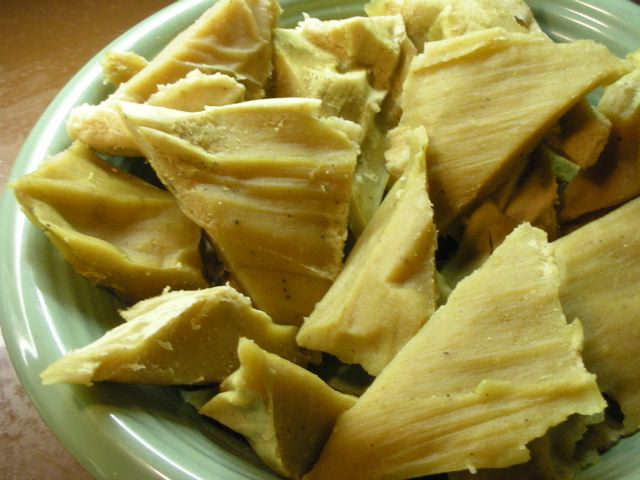
Please note that the pictures of the tubaane above were taken in Ghana, whereas the leaves and batter I used in Pennsylvania today are in the other pictures. To form the packets, make a slight "cup" in your palm and, holding the leaf with the underside up, spoon a spoonful into it, then fold one side over, then the other, then the two ends, one at a time, as in the photos. Put a steamer insert into a large pot with a little water in it and add the packets, then steam them for about an hour. I probably could have taken them out sooner, since they were a little harder than I'd have liked. After unwrapping them, cut them in half on the diagonal (as I was taught in Ghana) and put them into a bowl.

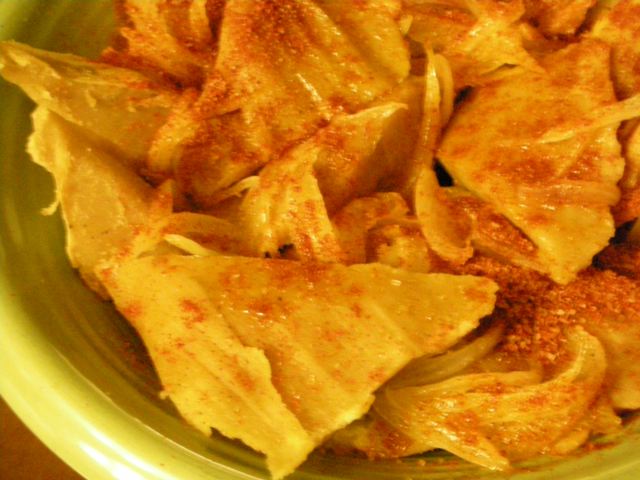
In Ghana they were served
with some sliced onion sauteed in a little vegetable oil and added to the bowl (but I was told NOT to use palm oil), along with some salt and dried red pepper mixed together and sprinkled over it. It made a nice snack (or "small chop" as they say in Ghana).

The plantain leaves enhanced the delicate flavor of the beans, and the red pepper gave it a nice kick (if you're not fond of spicy food, mix in some paprika to cut the heat).

At the same time that I was working on the
tubaane, I was making some kenkey with some more corn dough I mixed up a few days ago. The next recipe will be Ga-style kenkey.

Thursday, August 20, 2009

Recipe #10: Tubaane (Steamed cowpea paste cakes)

In March, 2007, I interviewed and shadowed Mrs. Sodeinde to learn how to make the famous Nigerian seasoned steamed cowpea paste cakes known as moin-moin (moyin-moyin, moi-moi), of which there are varieties ranging from simple to complex. Ghana has a cowpea paste cake steamed in banana leaves and known as tubaane (which I understand is called ekuru in Yoruba).

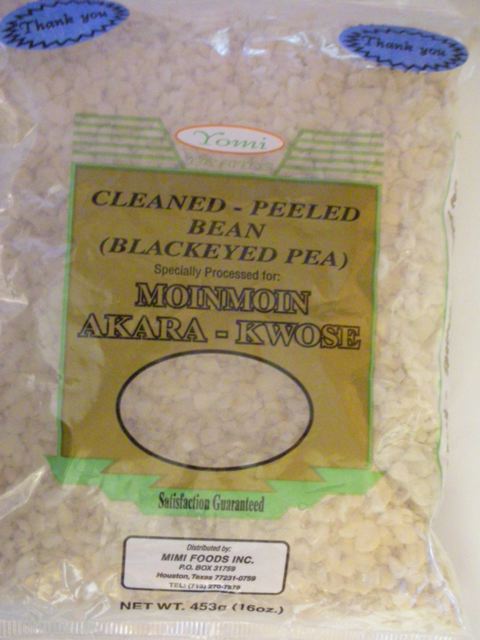
Cowpea paste is a basic building block of a number of West African recipes, including akara (kose, koose, akla). It is commonly made from dehulled dried black-eyed peas. The traditional way of preparing the black-eyed peas is to soak the beans briefly (experts recommend only for about 10 minutes so that the peas do not absorb excessive amounts of water), and use your hands and/or a food processor to remove the skins. The moin-moin posting above shows some video clips demonstrating how to do this. However, this time-consuming process is now simplified by 2 versions of convenience foods: both dried beans (peas) with the skins already removed, and a prepared powder that only needs to be reconstituted in water.

A couple of days ago I made some tubaane using the powder, but had problems determining the correct amount of water to add and also neglected to beat air into the paste the way they do in Ghana. My tubaane was too heavy and dry.

I'll try again tomorrow, using a mixer for 5 or 10 minutes to whip the paste before I wrap and steam it. In Ghana we wrapped the dough in plantain leaves, so I bought some frozen ones from an international market, and will see if I can use them. Otherwise, I'll opt for parchment paper. Hope you'll stop back to see how it works out.