Saturday, June 12, 2010

Salutations to the Gut and other Africa Cookbook Additions

An irresistible  gift edition of a 1962 essay by Nobel prize-winning Wole Soyinka, Salutations to the Gut (Bookcraft, Ltd, Nigeria, 2008) is a paean of praise to the Yoruba, a "leading race of lyrical gastronomes." As he says in it "It is sad that daily the business of the world becomes more hurried, and the few who still possess leisure lack true poetry of food." It was kind of pricey for me, so I resisted the book for about a week, but the poetry and illustrations charmed me at last. It is not a cookbook, but a celebration of life and good food as exemplified by the Yoruba, "the true hedonist who has felt in every morsel the soul of the open kitchen."

A second book, Granny's Special Cookery Book--Nigerian and Brazilian Dishes by Virginia Akerele
was also published by the Nigerian publisher Bookcraft in 2008. It immediately caught my attention for several reasons: my love of Brazilian food, my exploration of Afro-Brazilian culinary links, and finally because I'll travel to Nigeria in a few weeks and am eager to learn more about Nigerian cuisine. I didn't realize how much influence freed Brazilian slaves returning to Nigeria and settling around Lagos on the coast in the 19th century had on the cuisine (e.g., the  introduction of several ingredients, such as bell peppers, olive oil, and garlic). Various versions of imoyo is another example. However, the recipe for "tapioca" in Akerele's book is quite different from the one I was taught in Rio.

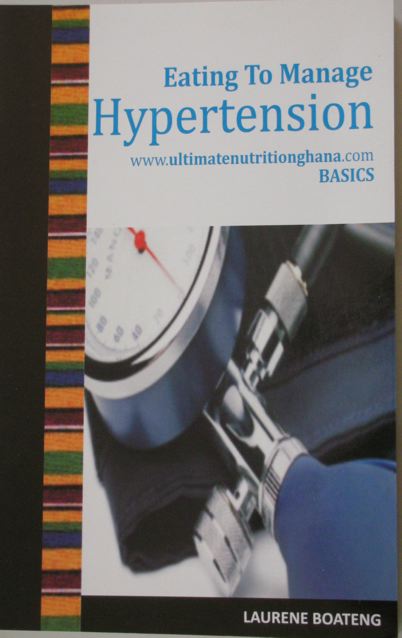
My third addition is a set of 3 small booklets by Laurene Boateng, a dietitian backed by a group of other healthcare professionals committed to helping Ghanaians address healthy eating and other fitness issues. They also have a useful website called  Ultimate Nutrition Ghana and Ms. Boateng hosts a weekly radio show called "Food in Focus" on an Accra-based radio station. The paperback booklets I bought were all published in 2009: Healthy Eating Made Simple, Basics (87 pages); Eating to Manage Hypertension, Basics (42 pages); Eating to Manage Cholesterol, Basics (45 pages). I am thrilled to see this kind of effort beginning, and wish them well. My only problem was that some of their suggestions seem to be aimed at only a small portion of the population. For example, the books stress eating brown rice and brown bread and whole grains, but even at 2 of the major shops in Accra I could find no brown rice nor whole wheat flour, much less pasta. I know there is a local rice, and it may be available at the outdoor markets, but I wonder how easy it is for ordinary folks to purchase the kinds of ingredients, like imported olive oil, that are being recommended. A number of Ghana's indigenous foods seemed to be missing from the discussions, whereas Western-style ingredients were praised. That made me nervous, as did the stress on eating things like salads. The cover of Healthy Eating Made Simple celebrated eating lettuce, cucumbers, tomatoes, green onions, and, goodness, were those radishes or apples on the cover? However, these comments are not meant to undercut the importance of the booklets: they're definitely making important health information more accessible to Ghanaians.

Wednesday, June 09, 2010

More Obama sightings in Ghana, and Ghana's "dessert"


Last week shortly after I arrived I had omo tuo and palmnut/groundnut soup at Agbamami restaurant in Tema (Tema's version of Asanka Local) with Kajsa Adu (an active member of ghanablogging.com) and her family. I admired her Obama bag. Signs of the Obama family's popularity abound: DK served Obama biscuits [cookies] to some students last week, and yesterday I saw some Michelle Obama cloth at a seamstress' shop.

Kajsa remarked at lunch that they refer to the ubiquitous toothpicks on the tables, commonly used at the end of the meal, as "Ghana's dessert." Very apt.

Thursday, June 03, 2010

Dinner in Ghana

I arrived in Accra today and managed to get a little food in the house in Tema. I threw together dinner tonight (carpenters are downstairs in the kitchen, so I brought a hot plate and rice cooker upstairs, and balanced everything on a tiny table): just rice, braised cabbage, and a simple stew, with Ghana pineapple for dessert.

This post is also to let folks in Ghana know I'm here. My old SIM  card doesn't work, so tomorrow I'll get a new one and likely a different phone number, too. Husband home in Pennsylvania Skyped me and insisted I take a picture of the first meal I cooked in our house here.

It's fabulous to be home (more on the house that DK built later). I'm pretty tired, though, and managed to slice my finger while I was cutting peppers. Ouch.

Thursday, May 13, 2010

Update on Africa Cookbook Project

Here are the 3 latest additions, all paperbacks,  to the Africa Cookbook Project, which I launched semi-officially in 2007. I'm still collecting cookbooks. Two of the cookbooks are Ghanaian and one is Kenyan.

The Ghana Cookery Book was originally compiled by the Gold Coast Branch of the British Red Cross Society and published in 1933 as The Cold Coast Cookery Book. In 2007, David Saffery (who seems to have made a career out of republishing old African cookbooks) reprinted it via the "Jeppestown Press" in London, dressed it up with a glossy cover of Ghanaian GTP textiles, and used illustrations from both the original book and the 1922 South and East African Year Book). As would be expected, it is basically a "Western" cookbook, whose (unedited) recipes were contributed by residents in Ghana "upon whom the sole condition was imposed that all the ingredients of every recipe should be easily obtainable in the Gold Coast." This includes things like canned asparagus, cheese, and strawberry jam ;-)  While most of the recipes are quite foreign to Ghana, several--especially those provided by Sister Antonia (Keta) and Sister Angele (Cape Coast)-- do include some indigenous dishes (e.g., palmnut soups, tigernut cream, garden egg and groundnut soups, okra stew). It's an important historical addition to my collection.

At the other end of the spectrum is another recently self-published Ghanaian cookbook, Akwaaba, A Taste of Ghana (Recipes from the African Gold Coast) by Sandra Amoako, a young  woman from Accra who attended Bucknell University in Pennsylvania and is part of a growing group of Ghanaians who are proud of their culinary heritage and want to introduce it to Western audiences. She has included a helpful index in the book. It covers the same general territory (about 50 recipes and variations) as other books, includes some time-saving adaptations, and is a welcome addition to the introductory cookbooks on Ghanaian cuisine.

From Kenway Publications in Nairobi/Kampala/Dar es Salaam (a subsidiary of East African Educational Publishers Ltd.) comes a classic cookbook based on her long-running  popular television cooking shows Mke Nyumbani: Alice Taabu's Cookery Book,  and first published in 2001. It is carefully illustrated with black and white drawings, and is clearly intended for a Kenyan audience.


Tuesday, May 11, 2010

Nutrition, health and the W. African diet

As I prepare to travel to Ghana, one of my main goals while there will be to refine a nutritional breakdown of the classic recipes in the cookbook Barbara Baeta and I are writing. A Penn State undergraduate student, Katie Cochrane, see Eat My Work, is helping with the nutritional analysis. Katie is majoring in both food science and integrative arts, and will assist also in doing some interviews and  in developing a collection of food-themed Ghanaian textile images, such as as the design I commissioned on the right, or this classic VLISCO wax print rendition of yam leaves.

Speaking of nutrition and the classic West African diet, you might like to check out  a recent article on the subject at The Ismaili Nutrition Center that makes suggestions on how to monitor and  modify intake of salt and fats, and also how to adjust cooking techniques for better health.


Saturday, May 01, 2010

Ready, set. . . . preparing to leave for Ghana and Nigeria

You'll note that there were few posts in April. Things have been heating up here with preparations to travel to Ghana and Nigeria for the summer. Last week I also gave a presentation at Penn State on Ghanaian cookbooks, and served Ghanaian snacks (if you're interested in viewing the powerpoint, my slides are up at google doc http://bit.ly/cFZTUX )

A week earlier, I hosted a Ghanaian dinner for a visiting Korean distinguished professor and his Vietnamese student. Lots of cooking: this week I'll prepare a catered (African) luncheon for a symposium on May 6. Plus I've been hustling funds for an undergraduate assistant to travel with me to Ghana for 2 weeks, and generally dealing with a long list of things to do: ordering equipment, arranging immunizations, contacting people and setting up meetings in Ghana, etc.

It's likely that I'll be pretty quiet this summer as far as posting on betumiblog. My main goal is to meet with Barbara Baeta and work as hard as possible in getting the Ghanaian cookbook into shape for publication--while my writing and credentials are respected, we've yet to locate a publisher willing to publish a lavishly illustrated African cookbook on a single country ("no U.S. market" is the common explanation). If any of you have suggestions, please let me know. Self-publication is a last, last resort.

Incidentally, Katie Cochrane, who will accompany me for part of the time in Ghana, noted in the blog she's just begun for this project a recent positive New York Times restaurant review of a new Ghanaian restaurant,  Papaye, in New York City.

Friday, April 09, 2010

Recipe #47: Light Soup with Lamb, Eggplant, Mushrooms and Zucchini

I was wondering what to cook for dinner last night that would be fun, healthy, simple, and delicious, when I realized I had lamb shoulder (on sale the week after Easter), portabella mushrooms, zucchini squash, jalapeno peppers and eggplant all on hand. Plus, I always have tomato paste/sauce/canned tomatoes, garlic, onions, salt, dried red pepper and fresh ginger in the house.

Voila! Everything I needed for a wonderful “light soup.” That’s the English name in Ghana for a light stock-based soup, named that long before the West started talking about “light” foods. A light soup can be contrasted with heavier “groundnut” (peanut) or palmnut (palmfruit pulp-based) soups. Light soups have infinite variations, and are easy to adjust according to what you have on hand: but remember to include onion, pepper and tomato!

By the way, I recently realized that I've numbered the Ghanaian recipes I've posted so far incorrectly (I actually repeated numbers a couple of times), so this is really recipe #47.

Anyhow, here are the proportions and ingredients I used:

LIght Soup with Lamb, Eggplant, Mushrooms, and Zucchini

1 3/4  pounds of lamb round shoulder chops (mine had bones), fat trimmed and cut into chunks
6 cups of water
1 1/2  teaspoons salt (or to taste)
1 cup chopped onion (1 large)
1 cup tomato sauce (1 small can)
a few spoonfuls of tomato paste (optional)
6-8 ounces of eggplant, peeled and cut into quarters (a whole small Japanese eggplant, or a third to a half of a larger regular eggplant)
one medium zucchini (about 4 ounces), cut in half
1 small jalapeno or other chili pepper (or use dried red pepper to taste, if desired, beginning with 1/8 teaspoon). If you like things spicy, use the whole pepper; if not, cut it in half and carefully remove the seeds and membranes first
about 6 ounces of fresh mushrooms (I had portabella on hand, but any mushroom will work)
(optional seasonings: a 1-2 teaspoons fresh grated ginger, a couple of tablespoons chopped onions, 3 peeled, crushed cloves of garlic, a sprinkling of ground red pepper)

Trim the fat from the lamb, and cut it into chunks. Put the meant in a soup pot with a cup of water. The next step is optional, but I almost always season and “steam” my meat before making the soup, so if you want to follow tradition: on top of the meat, sprinkle a couple of tablespoons of fresh, peeled, grated ginger, a few cloves of peeled, crushed garlic, a couple tablespoons of chopped or minced onion, and sprinkling of dried ground red pepper and salt or seasoned salt. Cover the pot, bring it to a boil, then lower the heat and let it simmer while you prepare the other ingredients.

Chop the onion. Open the can of tomato sauce (and paste, if you want to use it). Rinse and trim the zucchini and  cut it in half. Peel the eggplant and cut it into quarters. Prepare the mushrooms (rinse, wipe dry with a paper towel, and slice in thick slices, or, if they’re small leave them whole or cut them in half or quarters).
Set the mushrooms aside to add near the end.
Add the other vegetables, except the mushrooms, to the pot, along with another 5 cups of water. Add the salt, stir well, bring it back to a boil, then let it simmer, covered, until the vegetables soften (about 10-15 minutes).

Use a slotted spoon to remove the eggplant, pepper, zucchini (and I also usually spoon out some of the chopped onion floating in the soup) into a blender or food processor container. You may need to add a little broth from the pot, or to do this in 2 batches. Blend the vegetables until they are smooth and return them to the soup.

Add the mushroom slices (at this point I tasted the soup and decided it needed more tomato flavor, so spooned in a couple of tablespoons of tomato paste), stir, cover, and allow the flavors to blend for another 10-15 minutes. Before serving, adjust the seasonings to taste, and skim any fat from the lamb that may have risen to the surface.

While the soup finished simmering I made some fufu to go along with it, but you could serve it with rice, or bread, or whatever you like. If you want to try an American version of microwave fufu using easily available ingredients, you might like to check out BETUMI's YouTube video. However, eating fufu is a slightly acquired taste. Also, pieces of fufu are swallowed whole without chewing them, so you might try the soup first with bread or rice or rice balls (omo tuo). This recipe makes a fairly thick soup: you can adjust or omit the eggplant, zucchini, etc. to suit your tastes, or cube the vegetables instead of blending them. (With American children I generally find it's better to grind the vegetables if they're not used to eggplant and zucchini).   Ghanaian women overseas also tend to be innovative cooks. It was a Ghanaian neighbor in Pennsylvania who first shared with me her discovery that pureed zucchini makes a nice complement to (or substitute for) Ghana’s “garden eggs” in light soup. Similarly, my friend and colleague in Canada, shared that her discovery that pureed carrots are a fabulous addition to chicken light soup, and my sister-in-law blended red bell peppers to get the color she wanted in her soups. This recipe serves 4 to 5 people.

Bon appétit.


Thursday, April 08, 2010

African Culinary Tourism, Cookbooks, etc.

March was a busy month and I've not really stopped to update folks on my recent and upcoming activities.
  • It was a delightful surprise to be invited to be featured in a short documentary video about the work of BETUMI: The African Culinary Network for a joint project of the Interinstitutional Consortium for Indigenous Knowledge (ICIK) and the Humanitarian Engineering and Social Entrepreneurship initiative in the College of Engineering at Penn State. They interviewed me and came to one of my cooking classes to talk to some students, too. I understand the video will be available around June.
  • I've always been a huge supporter of the glaring, if invisible, need to promote African Culinary Tourism, so was delighted when Kitty Pope,  the Director of the International Association of Black Travel Writers approached me about writing about African food and culture  for their new online magazine African Diaspora Tourism. You'll find my groundnut (peanut soup) recipe and a little food history there.
  • Check out my interview for bizymoms.com (in March they picked me as a top food blogger for 2010!)
  • I plan to spend the month of June in Tema, Ghana finalizing the Ghanaian cookbook Barbara Baeta and I have been collaborating on for several years.
  • In July I'll travel to Abuja, Nigeria to teach an intensive writing course and explore Nigerian cuisine.  

    Monday, March 29, 2010

    Shrimp Curry, Cape Malay-Style

    South Africa is famous, among other things, for its "Old Cape" or "Cape Malay" cooking. In preparation for the southern African cooking class this March, I met with Gabeba Baderoon, a South African poet teaching at Penn State, for advice on how to prepare a curry similar to the wonderful ones I remember from Cape Town. She sat down with me and 3 of her favorite cookbooks and shared some of her knowledge. (She also promised to get me copies of all 3 cookbooks this May when she visits home!) I settled on an adaptation of a crayfish curry (we substituted jumbo wild-caught shrimp) from Faldela Williams' The Cape Malay Cookbook for the class, and it was very popular.  The recipe calls for fish masala, so I purchased a couple of different kinds from our local international and Indian markets--the one we ended up using was "MDH fish curry masala,"  a mixture of coriander, chilli, turmeric, cumin, fenugreek leaves, salt, black pepper, bishop's weed, dry mango, dry ginger, mustard, pulse, cloves, nutmeg, cinnamon, caraway, cardamom seeds, mace, and asofoetida. This recipe is simple to prepare--the slowest part was cleaning and deveining the shrimp.

    Cape Malay-style Shrimp (or crayfish) Curry
     
    2 pounds  large, wild-caught shrimp (or 2 pounds of crayfish tails, in shells, or one large crayfish)
    1/4 cup sunflower oil (or other vegetable oil)
    2 large onions, thinly sliced (at least 2 cups)
    2 ripe tomatoes, skinned and puréed (could probably substitute canned)
    1 green bell pepper, seeded and puréed
    2 teaspoons crushed garlic
    1 tsp crushed dried chili pepper
    1 tsp turmeric
          2 tsp fish masala
         1 tsp ground cumin
                                  1 Tablespoon lemon juice
                                  1 tsp sugar
                                  1 tsp salt

    If using shrimp, remove shells and devein. Rinse and set aside.  (If using whole crayfish, wash well, wemove legs and tail, and set aside. If using small crayfish, leave shells on). Slice the onions and prepare the tomatoes, green pepper and garlic. Fry the onions on medium heat until golden, about 5-10 minutes. Add the tomatoes, green pepper, garlic and dried crushed chili pepper and cook, stirring occasionally for 10 minutes. Make a paste from the cumin, fish masala, turmeric, lemon juice, sugar and salt (add a little water if necessary) and cook until the gravy thickens, about 10 minutes. Add the shrimp (or crayfish) and cook over medium heat for 15 minutes.

    We served this wonderful curry with basmati rice.

    The 2 other cookbooks Gabeba recommended are Cass Abrahams Cooks Cape Malay--Food From Africa and Zainab Lagardien's Everyday Cape Malay Cooking. The photos alone in these books will set your mouth watering

    Monday, March 22, 2010

    Southern African "Rainbow" Cuisine and Online Interview

    Last week was the Southern African cooking class. Southern African cooking has so many different influences it's often called a "rainbow cuisine." The class was great fun: we started off making some vegetarian samoosas (reflecting the Indian influences) and ate them while sipping the Cape's famous rooibos tea. After a short presentation, we returned to the kitchen to prepare the main meal (while listening, intermittently, because my cd player didn't cooperate, to: the Soweto Gospel Choir, Miriam Makeba, the Soweto String Quartet, and Ladysmith Black Mambazo). When we sat down to eat we feasted on 2 versions of samp and beans, a classic tomato (and lamb) bredie (stew), grilled periperi chicken (made with roasting chicken, marinated beforehand), chakalaka salad (wildly popular), a fabulous Malaysian shrimp curry (using jumbo wild caught shrimp--yum!),  basmati rice, and several South African wines. The class voted to begin with a sauvignon blanc, followed by S. Africa's signature pinotage, and ended the meal with a rosé paired with a yummy custard dessert called a "melktert" (milk tart).


    All my students get an A+!

    Also, this week an online interview I did for bizymoms.com was posted if you'd like to check it out.

    Friday, March 05, 2010

    Cooking the West African Way

    At my March 3rd cooking class we prepared  a West African dinner in my home. We dined on ginger (and regular) beer, bissap, green plantain chips, chichinga (suya), chicken groundnut stew (and a fish-broth-based version for one non-meat/poultry eater), palaver sauce, omo tuo (rice balls), gari (cassava meal), ampesi (we used white sweet potatoes, green and ripe plantain, cocoyam (taro), and, unfortunately but not surprisingly, the Mexican yam we got was rotten). We had atwemo (like chin-chin) and a fresh coconut and  tropical fruit salad for dessert. 

    The participants were great and from the feedback so far, a wonderful time was had by all.  Here are a few pictures taken near the end of class. Kudos to all of my students! I'll share some of the other recipes we prepared, but since we were too busy to take pictures, will probably have to re-cook the groundnut stew, omo tuo and palaver sauce to illustrate for you.

    In 2 weeks, it'll be time for a trip to southern Africa. I'll let you know how that class goes (or, if you are in the State College area and want to sign up, I still have a few openings). Here's some information on that class:

    March 18: Southern Africa--includes South African wines, shrimp peri peri, samp and beans with tomato bredie, chakalaka salad, curry and rice, melktert, and rooibos tea. Each class includes an illustrated introductory lecture (and snack), followed by preparation and enjoyment of classic beverages and dishes.

    Sadly, I was at our local Barnes and Noble bookstore today. There were bookcases and bookcases of international cookbooks: France, Italy, Spain, China, India, Brazil, Japan, Thailand, Mexico, Germany, etc., etc. etc., but the only "African" cookbooks were 3 on Moroccan cooking. This is most unfortunate. Africa has so very much to offer and teach us.

    "The one who has not traveled widely thinks his/her mother is the only (best) cook"--African proverb among the Baganda, Akamba, Kikuyu, Memba, Haya, Igbo, Yoruba  

    Monday, March 01, 2010

    Racism and food color preference: white corn, white wheat, white rice

    I wonder about a connection between racism and food color preferences in sub-Saharan Africa, where "white" is always the best (e.g., corn, rice, flour). In James McCann's important Maize and Grace, Africa's Encounter with a New World Crop, 1500-2000, he explains how much of southern Africa's preference for white corn over multi-colored corn evolved from policies of colonial governments  ("What's in a color," pp. 111-118).

    Similarly, Ghana produces no wheat of its own, but imports wheat flour heavily from places like the U.S., and white bread has long been considered more prestigious than flour from any locally grown grains or root crops. While recently "brown bread" has begun to appear (also from imported flour), traditional breads from grains and processed cassava and plantains, etc., seem to have no future. I realize this is mixing other things besides simple color issues, but it still gives me pause.

    In Nigerian poet Flora Nwapa's poems Cassava Song and Rice Song, cassava is the nurturer and imported rice is the enemy. It seems strange to Westerners to hear rice being denounced that way. Not every African grows up eating rice. Yes, there are rice growing areas, but even in Ghana, the more nutritious native rice from the Northern regions is being supplanted by subsidized imported white rice from places like the U.S. and Thailand (often lower quality, broken rice, too). It is said that Ghana now imports about 80% of its rice from these two countries. The inability of indigenous rice farmers to compete against white wheat flour or white rice has negative consequences for development.

    All of this makes me very sad, and I long for people to recognize and change these realities.

    Thursday, February 25, 2010

    Candy (toffee), Ghana-style: Recipes #44 Groundnut "cakes and #45 Coconut "cakes"

    Ghanaians use available ingredients to create simple candies, or "toffees." Here is a version of "peanut cakes" (recipe #44) and a similar "coconut cake" made with toasted dried coconut instead of peanuts (#45).

    Recipe #44 Groundnut toffee (peanut cakes)

    This relative of peanut brittle requires only 3 simple ingredients:  peanuts (dry roasted, unsalted), sugar and a little water.

    The only equipment needed: a measuring cup and tablespoon, a rolling pin (or meat tenderizer or something similar), some waxed paper or sturdy plastic or paper bag (optional), a heavy 2-quart saucepan, a long-handled metal or wooden spoon for stirring, a flat glass surface like a cutting board or a baking pan,  a spatula, knife, or spoon, and a stove.

    Measure out:

    3/4 cup dry roasted unsalted peanuts
    1/2 cup of sugar
    2 Tablespoons of water

    1. Coarsely crush the peanuts (easiest between 2 pieces of waxed paper or in a plastic or paper bag) with a rolling pin or other heavy object like a meat tenderizer.
    2. Wet a glass cutting board or pan (like a lasagna or cake pan) with a little water and set aside.
    3. Also wet (or rub a little margarine or butter) on the spatula, spoon or knife and set it aside, too.
    4. Put the water and sugar into the saucepan and briefly stir it on medium high heat just until the sugar is mostly dissolved. Turn it to medium and let it continue cooking on MEDIUM WITHOUT STIRRING  it at all until the mixture turns brown (probably around 10 minutes). If crystals form you probably stirred it too long or your heat wasn't high enough.Turn the pan gently if the burner browns unevenly. Be careful once the mixture begins to brown so that it doesn't burn and turn into charcoal.
    5. When it is a nice golden brown, remove the pan from the heat (turn off the stove) and quickly stir in the nuts.
    6. Immediately turn the toffee onto the wet cutting board and use the prepared spatula or knife or spoon to press the toffee flat. It will be VERY HOT so do not touch it with your fingers.
    7. As the candy cools it will harden. You can simply break it into pieces, score it while it is still warm into squares, diamonds or triangles and break them off when it is hard (top row in top photo, right), or take small spoonfuls of  the warm, but not hot candy, and roll it into balls (top left in photo above)

    A yummy treat that will also keep well.

    Recipe #45: Coconut "cakes" (toffees)

    To make coconut candy (aka coconut "cakes"), you will substitute unsweetened dried grated coconut for the peanuts.  

    Before beginning, preheat an oven to 350 degrees farenheit (medium heat). Put  3/4 cup dried, unsweetened flaked or grated coconut onto a cookie sheet and toast it in the oven, shaking the pan every couple of minutes. It will probably take only 4-6 minutes to lightly toast the coconut (it smells wonderful, by the way). Immediately remove the cookie sheet and set it aside. Follow the instructions above for making the carmelized sugar syrup, but instead of adding peanuts, add the toasted coconut, then follow the same steps of pressing it onto a wet platter or board to make the crisp "cakes" (the bottom row right in the top photo above). The candy on the left bottom row of the photo at the beginning of this post is made with fresh coconut and makes chewier toffees. I'll describe how to make them another day.

    The day I cooked these I sent a batch of both types of candy with my husband to share with his students and colleagues at Penn State. No candy came home with him.

    Special thanks to Katie Cochrane for her help in the kitchen and with the camera this week.


    Monday, February 22, 2010

    Step-by-step: How to Crack Open a Coconut

    Last August when I listed Recipe 13 (corn and coconut snack) I  summarized the process of preparing your own coconut. In case you missed that summary, or want more detail, here is is.

    This basic recipe is handy to know for many world cuisines, including African,  Brazilian, Asian and Indian ones. "Fresh" coconuts in North America mean the brown hairy ones with hard shells sold in the produce section. As I've explained before, in Ghana they call those "dried," and when they say "fresh" coconut, they mean the literally fresh green ones right off the trees, often sold with the tops whacked off in front of you with a machete. For those coconuts the inside is soft and melting and you can drink the coconut water right out of it, and scoop the meat up with a spoon or a piece of shell.

    The basic equipment I use when preparing coconuts includes:
    a hammer, an ice pick or similar sharp implement (I've used screw drivers, clean nails, and today the meat pick from a nut cracker set), newspapers, a cup, a knife and/or vegetable peeler. By the way, this is a fun activity to do with all ages of children and young adults--just be sure that they stand back when someone is pounding the shell in case of flying pieces.

    I usually crack open coconuts in my garage where I have a cement floor, but you can also do it inside if you prefer. Spread a few newspapers under the coconut and turn it up so you see the three eyes at one end. Place the ice pick or whatever you are using in the center of one of the eyes, and hammer it through the eye to make a hole. Wiggle it around to enlarge the hole and remove it. Repeat the process with the other 2 eyes. Turn the coconut over a glass, cup, or small pitcher and let the coconut water run into it. It's always good to get a "juicy" coconut (shake them in the store before you buy). Remember that this is NOT the coconut "milk." We'll talk about that another day.

    Once the liquid is out of the coconut, move the glass or cup away to a safe place, and begin hammering away at the coconut. Many times there will be a small line around the center of the coconut that has been made to make it easier to crack the coconut open. If there is such a line, aim at it or otherwise at the center (not the end where the eyes are or the other end). When the coconut begins cracking open, keep pounding away until many of the pieces of the white meat have broken off from the shell (they will have a brown coating on one side), and the rest can be pried off carefully with a knife. A vegetable  peeler will remove the brown skin from the coconut, which can be cut or broken into pieces and served that way, or grated or chopped into fruit salads or other recipes.

    I needed coconut today when I was making some Ghanaian candy (toffee), including both peanut "cakes" (like peanut brittle) and 2 kinds of coconut "cakes." Those recipes will follow soon.

    Friday, February 12, 2010

    Recipe #43: Akara (bean balls or cowpea paste fritters)

    I've frequently alluded to the hugely popular West African bean paste fritter called akara (aka  kose, akla, accara, koose, kosai). A version that traveled to Brazil is called acarajé. Akara is commonly eaten as a snack or breakfast food. This dish, of course, has many variations. While Ghanaians like to take credit for it, it is also popular in Nigeria. Jessica Harris, in The Africa Cookbook, gives recipes for Nigerian versions  akara awon (with beans and okra), akara egusi (beans and ground egusi, or agushi, a kind of melon seed), and even cheese akara

    The first step in making this dish is to remove the skins from the black-eyed peas (the most common version in Ghana) and grind them. Yesterday I made a couple of batches using some "pre-hulled" black-eyed peas from Nigeria. I thought it would be a nice time-saver, but failed to notice the tiny pieces of stone in the package (I picked out the big ones), and ended up with gritty akara even after I rinsed and strained the beans. I remade the akara after first sifting out all those small sand-like bits of gravel, but still re-strained it before frying it, and it worked fine. 

    A number of online YouTube (with Chi-Chi)  videos (by Zukatrading) suggest using bean powder. (NOTE: the two videos I've linked to from here are for Nigerian-style akara, and omit the fresh ginger, plus are shallow-fat fried, and are larger and flatter and are made from a somewhat thinner batter than the Ghanaian version I'm posting). If bean flour is available, it certainly is a time saver. However, I have to say, for the best akara, I'll still go with de-hulling my own dried black-eyed peas (For a way to do this using a food processor, see BETUMI's YouTube video. It's also possible to omit removing the skins and just grind the beans unskinned, but, then, I'm a purist and that's not how akara is traditionally made. I sometimes skin a pound of black-eyed peas then store them in the freezer to use as I need them. I haven't tried frozen black-eyed peas, but that's another option. I usually use dried red pepper because it is easier to control the spiciness of the akara, but you can substitute a fresh chili pepper (for example, a green or red Scotch bonnet or habanero, seeded, or if you're really brave, whole).

    I like to make small bite-sized akara to serve with toothpicks and dips as a party appetizer.

    Ingredients

    1 cup dried black-eyed peas
    1/2 cup of minced or grated onion (about 1/2 of one medium)
    3-4 teaspoons of fresh grated ginger, peeled
    1/2 teaspoon salt (or to taste)
    about 1/2 teaspoon dried ground red pepper (or to taste)
    about 4 cups of vegetable oil (I often use canola)

    Begin with a cup of dried black-eyed peas. Pick them over, rinse, and soak them in about 3 or 4 cups of water for at least 30 minutes (when I used the pre-hulled cowpeas I let them pre-soak in warm water).

    While they're soaking, prepare the other ingredients, and put the oil into a deep fryer (if you have one), or a large heavy kettle if you do not. Do not fill the kettle or fryer more than half full.

    After you have removed the skins of the black-eyed peas, either by rubbing them between your hands to loosen them and floating them out of a large basin or using a food processor as described in the YouTube video above, drain the water off and put half of them into a blender or food processor and blend them until they are smooth. Use up to 1/4 cup water (necessary if using a standard blender) to grind the beans to a paste, regularly pushing them down the sides with a spatula to make sure they are thoroughly ground. This will take several minutes.

    Empty the first batch into a bowl and repeat the process with the second half of the beans (including using up to 1/4 cup water again). When they are fairly well ground, add in the salt, onion, pepper and ginger and continue mixing until the paste is well blended.

    By now you should begin heating the oil. In a deepfryer, set the temperature to 275 degrees Farenheit. On my stove, I need to alternate between a medium high and high heat.

    Empty the bean paste into the same bowl as the first batch, and mix (I like to actually use a mixer, but a whisk or spoon could be used) until air is incorporated into the batter to make it light (think egg whites or whipped cream, though that's not a perfect analogy). It will take a couple of minutes.

    Depending on the size you want, dip a long-handled teaspoon (for tiny balls) into the oil to coat it, then dip it into the paste. In Ghana skilled cooks drop the paste right into the oil, but I'm not that adept. I use one spoon, and quickly use another spoon to slip it off into the oil, repeating until the fryer is filled but not crowded. If the balls do not turn over by themselves, turn them over halfway. It will just take a few minutes until they are nicely browned. You can make between 2 and 3 dozen small balls from this recipe. If the balls fall down to the bottom of the pan, the oil is not hot enough, and if they brown immediately without having time to cook through to the center, the oil is too hot. I drain them on paper towels in a colander to cool.

    The balls can be eaten warm or at room temperature, alone or with a dip. I often use hot sauce and/or a version of a peanut sauce--in the picture I had some leftover groundnut and okra stew, so we used that.

    Enjoy!


    Wednesday, February 10, 2010

    Recipe #42: Tuna Fish Turnovers

    "Meat pies" commonly refers to turnovers filled with a meat, fish, or other filling and are popular appetizers/snacks/street foods in Ghana and other parts of West Africa. The filling may include  items ranging from canned corned beef to leftover fish or cooked meat or ground beef, or even vegetables. Sometimes the pastry includes egg yolk and the filling other spices, such as a little nutmeg.

    Here is our family's favorite (and easiest) version. I often double this recipe to make party snacks (or to take to church or school functions), or our family eats the turnovers as a light supper (or a very portable make-ahead picnic lunch) when accompanied with a salad or side vegetable and fruit. Fish turnovers are mildly reminiscent of Indian or East African samosas or sambusas, which are deep-fried rather than baked.

    Ingredients for the filling:
    1 egg
    1 1/2 teaspoons tomato paste
    1/2 cup canned tuna fish in water, drained (or leftover cooked, flaked fish)
    1 tablespoon onion, minced
    2 tablespoons margarine
    2 tablespoons water
    1 tablespoon flour
    1/2 teaspoon salt (or to taste)
    a dash or two of ground red pepper (or to taste)

    Ingredients for the pastry:
    2 cups flour, plus extra for rolling out pastry
    1 teaspoon salt
    2/3 cup shortening
    6-7 tablespoons cold water

    Utensils
    small saucepan
    can opener
    paring knife
    measuring cups and spoons
    small bowl
    large mixing bowl
    frying pan
    cutting board
    waxed paper (optional)
    2 table knives or pastry blender
    rolling pin
    ~3-inch circle (jar lid, glass, bowl, biscuit cutter, etc.)
    a fork
    cookie sheet
    pancake turner
    wire rack

    Directions:
    Filling:
    1. Assemble the ingredients and utensils. Hard boil the egg in a small saucepan, peel, and set aside.
    2. Open the tomato paste and tuna fish, and drain the water off the tuna.
    3. Peel and mince the onion. Mash the peeled egg with a fork in a small bowl.
    4. Melt the margarine in a frying pan over medium-low heat. Add the onion and cook for a few minutes, then turn the heat to low and add the water, tomato paste, flour, salt and pepper. Stir well, then flake the tuna fish and stir it and the mashed egg into the pan. Cook for a couple of minutes then set the pan aside while you prepare the pastry.

    Pastry:
    Sift the flour and salt into a large mixing bowl, then using a pastry blender, two knives, or your (clean) hands, cut the shortening in until it is in pieces the size of small peas. Sprinkle 2 tablespoons of water over part of the flour mixture, then gently mix it and push it to the side with a fork, continuing until all the pastry is moistened. Dust your hands with flour and form the mixture into a couple of balls.

    Dust a work surface and rolling pin with flour (I often use wax paper on a barely moistened counter to make cleanup easier), then roll out one of the balls (cover the other one and/or put it in the refrigerator while you work) until it is between 1/8 and 1/4 inch thick. If the dough is too crumbly, add a little more more water and if it is too sticky, add a little more flour. Using the biscuit cutter or glass or even a knife,
    cut the dough into circles and place them on the cookie sheet.
    Preheat the oven to 400 degrees. Fill a small glass or bowl with water. Put a heaping teaspoon of the filling in the center of each circle. Dip your finger into the water and moisten the edges, then fold the pastry over to form half circles. Dip a fork in flour, then crimp around the edges of the turnover to seal it well. Prick the top several times with the fork to let steam escape, but don not prick through the bottom side of the turnover.
    Bake in a hot over (400 degrees F) for about 20 minutes (check after 15 minutes) until they are crisp and golden. Cool on a wire rack.
    Repeat until all the dough and filling is used, re-rolling scraps once or twice but not until they become tough.