Wednesday, September 17, 2008

Pamonha: Brazil in Ghana

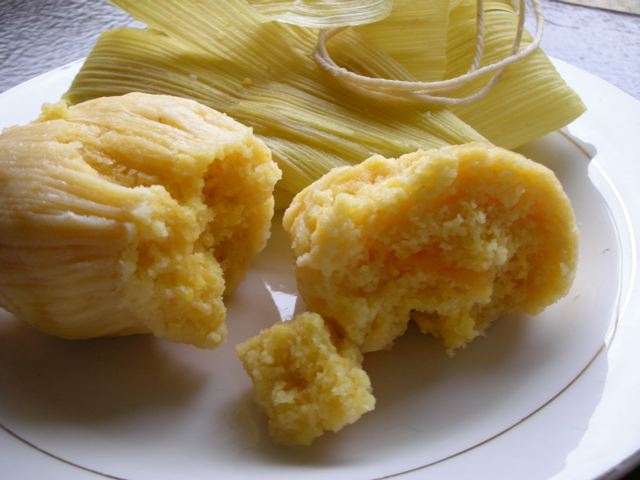
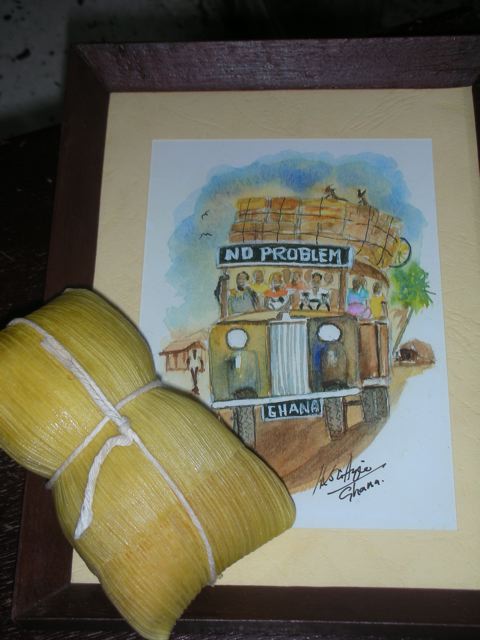
Just before we left Ghana in July, one day we dropped in at the Brazilian Embassy to chat with the wonderfully friendly and helpful staff there. When one of them learned I like Brazilian food, he insisted that I accept a packet of a steamed cornmeal delicacy.

I'm embarrassed to say that I misplaced the scrap of paper on which I scribbled both his name and that of the wonderful snack he gave me. I had to email my pictures to someone in Brazil to help me out, and learned that the name of the dish I enjoyed is pamonha. The one I had was a sweetened ground corn paste that had been boiled, but my friend in Brazil said he especially likes it made with cheese. Apparently they can be either sweet or salty/savory. Though wrapped in corn husks and boiled, it's very unlike Ghana's kenkey, which is heavier and fermented. Still, in the 1970s my sister-in-law Afua in Ghana used to love iced kenkey, a sweetened drink from crumbled or mashed kenkey mixed with evaporated milk and sugar (though we had no refrigerator to chill it and thus the word "iced" always seemed kind of silly).

I understand for pamonhas milk is added to the ground corn, or sometimes coconut milk. It is said that the word pamonha comes from the word for "sticky" (pa'muña) in the Tupi language. As soon as I relocate that slip of paper, I'll be sure to thank the embassy staff for their generosity.

It excites me to continue to learn about Ghana and Brazil's history of friendship and cooperation. I have already said that I would love to see more explicit culinary sharing between the two countries, from Ghana's palmnut soup to the Brazil's tapiocas.

Monday, September 08, 2008

Giving Credit for African Cookbooks


I remember a conversation with Barbara Baeta one day when she was talking about how Laurens van der Post came to Ghana and met with her in the 1960s when he was writing his pioneering Foods of the World volume on African Cooking. She was young and flattered, and generously provided him with numerous recipes used in the book--even allowing herself to be photographed serving at a dinner party in Accra (p. 83). However, she has always regretted that she took the small lump sum the publishers offered her, while a more savvy colleague from Ethiopia negotiated a portion of the royalties and made many, many times over what Barbara earned. I wonder how often Africans provide hospitality and recipes and end up with someone else receiving the credit and money. . .

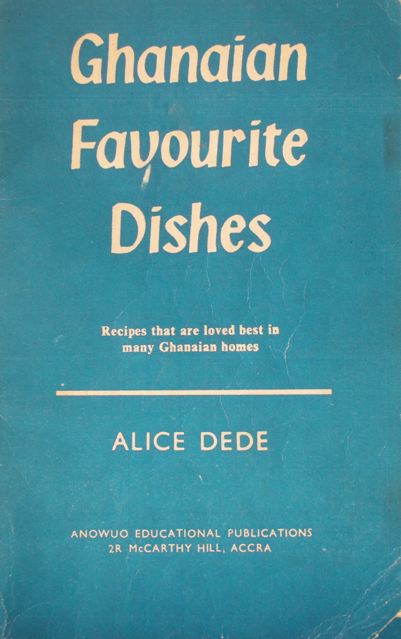
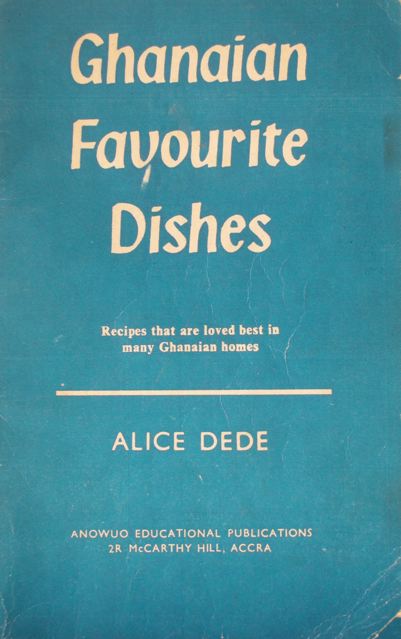
In a related vein, there's something I've been needing to get off my chest for a long time. In the early 1970s when I first came to Ghana, my future sister-in-law gave me a copy of Ghanaian Favourite Recipes (Recipes that are loved best in Many Ghanaian homes) by Alice Dede. It was first published, as near as I can tell, in June, 1969 by Anowuo Educational Publications in Accra. The cover bears Dede's name, and the inside title page declares that the book was compiled by Alice Dede. In the facing page it states "The Author acknowledges with thanks the help received from officials of various educational Institutions in Ghana."

Now it is possible that Alice Dede did this as a work for hire, all the recipes were contributed by others, and once it was compiled all the rights reverted to the publisher. I really don't know. But having written cookbooks myself, I know that even a "compiler" has to make many, many decisions to create such a book, and engage in recipe testing, etc., and deserves credit for that. I've often wondered who Alice Dede was, and what her background was, and what happened to her. I'd love it if any of you can tell me.

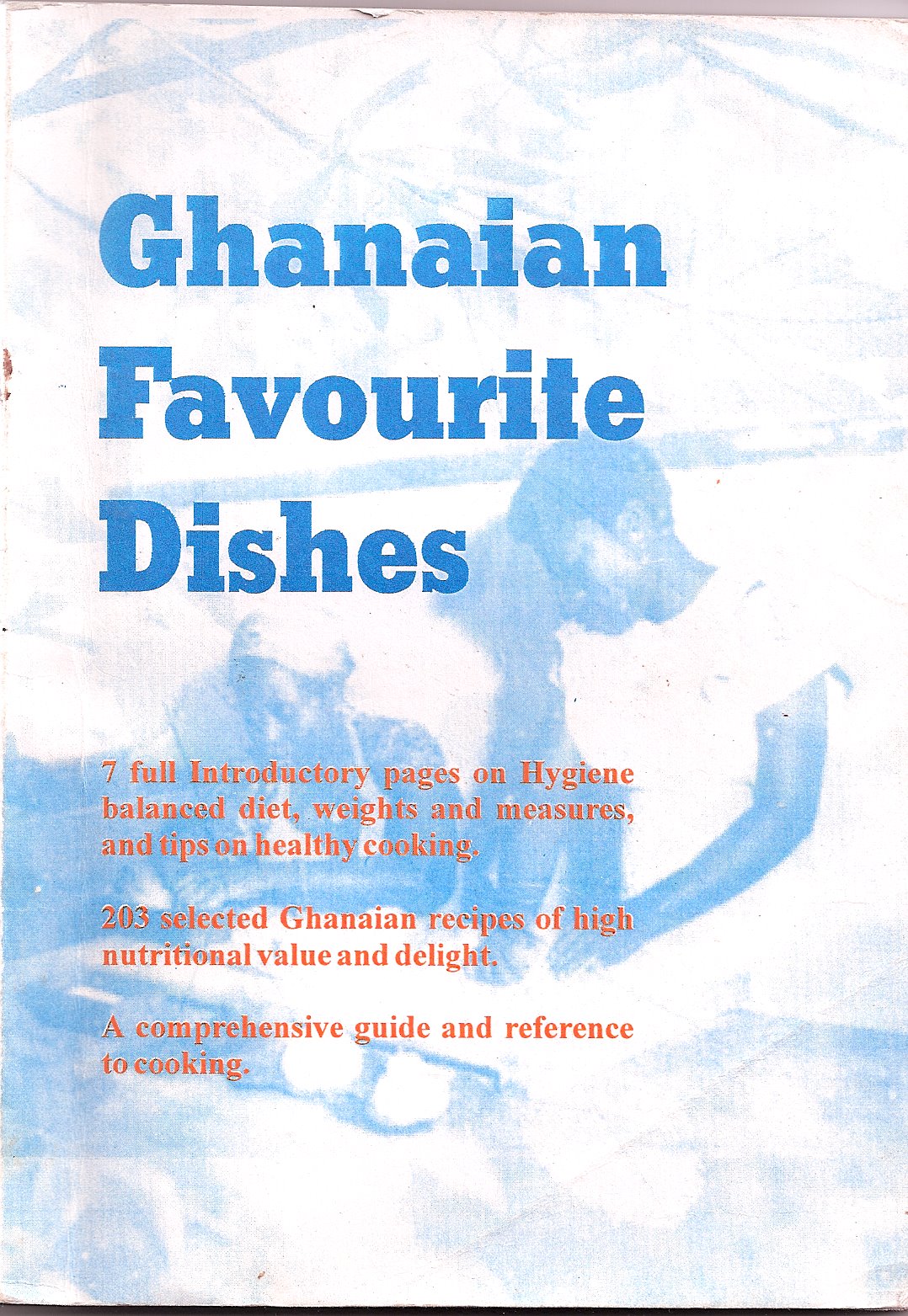
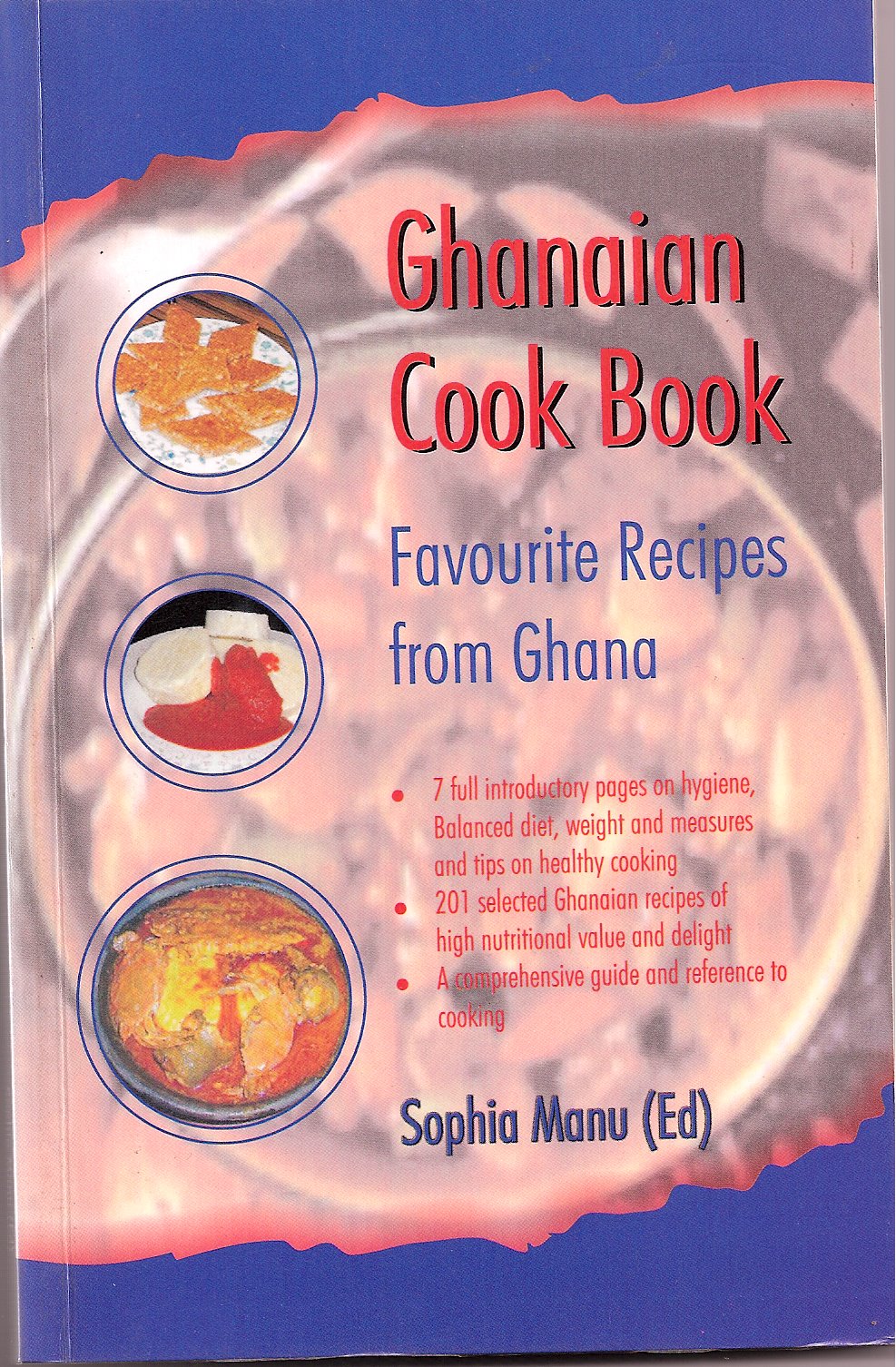
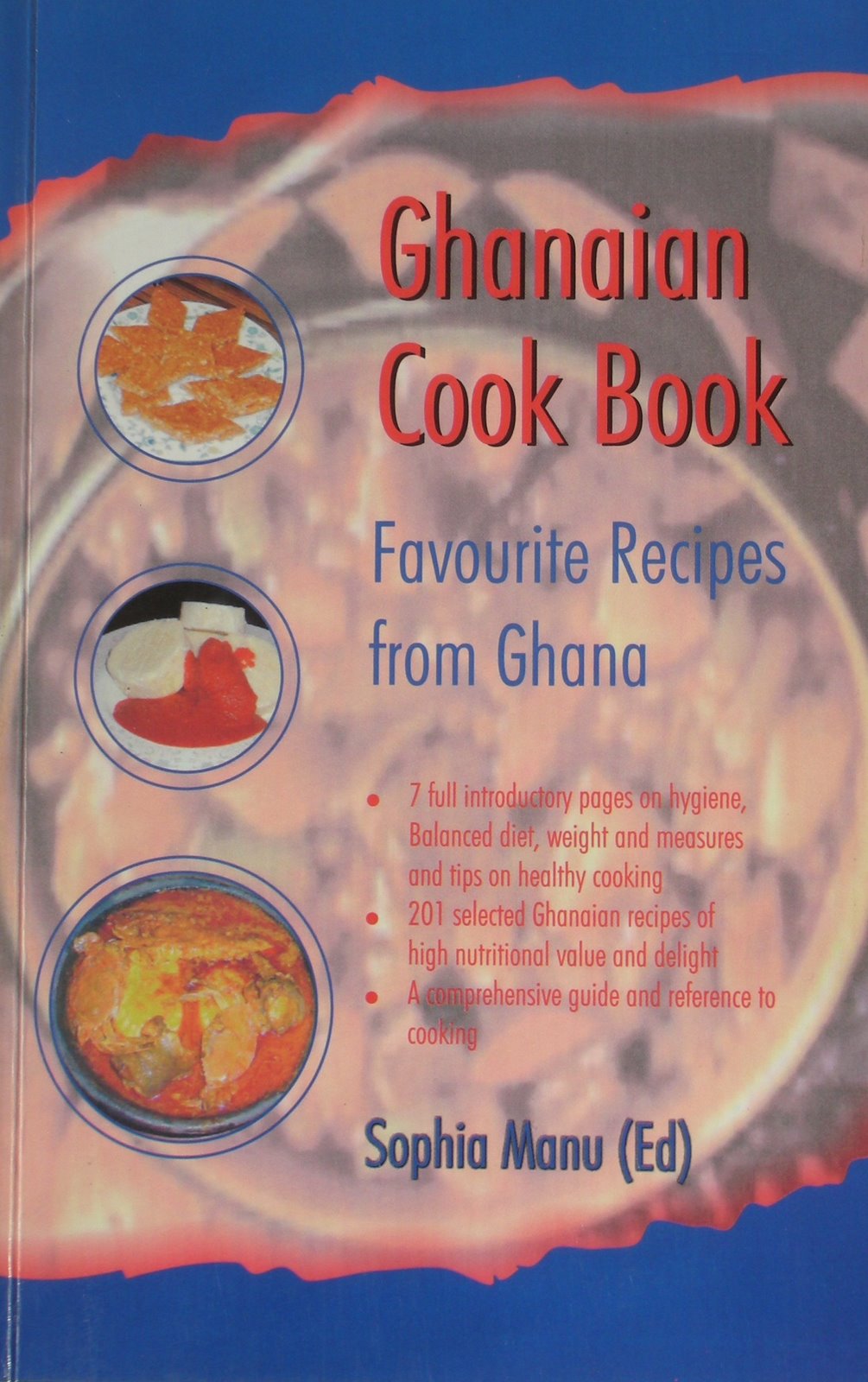
Dede's book became a classic and was reprinted numerous times during the difficult 70s and 80s. Gradually, the book was given cosmetic face lifts (new covers, slight reorganization of recipes, removal of 5 pages of a final chapter called "recipes from other countries" replaced by 4 new pages of introductory material). By 1985, the "Recipes that are loved best in many Ghanaian homes" was gone from the cover (though still on the reprinted front page of the book, where only Alice Dede's name was gone), and the book was said to include "203 selected Ghanaian recipes of high nutritional value and delight," and to be "A comprehensive guide and reference to cooking." Somehow Dede's name and authorship disappeared. In the latest edition I have, from 2006, the title has changed to Ghanaian Cook Book: Favourite Recipes from Ghana, and the book now has a new "editor," Sophia Manu. Apparently, along with editorial advisor S. Asare Konadu, she supervised the latest face lift: a new cover with photographs and more color, including 11 color photographs throughout the chapters and a san serif type face that is larger and easier to read, as well as a better layout design. But as far as the substantive content of the book, the recipes, there are few changes. Ms. Manu moved chapter 6 (baked goods) to chapter 1. It includes two recipes for garri biscuits (#3 and also #16). In copying the menu table from the early edition, there were several errors from the original (omitting words, placing words in the wrong column), and there were also several errors in copying pages and recipes from the original index into the new index, or omitting recipes.
While the latest edition is admittedly more attractive, what bothers me, apart from the fact that I believe Alice Dede should still receive recognition for her work, is that the book is basically a word-for-word duplication of the original recipes, including measurements in cigarette tins and beer bottles, and no indication of any changes in the diet or cooking equipment or techniques in the last 40 years. This is patently not true, and yet the book purports and appears to be a "new" book. Many things have changed, and Ghana deserves a genuinely updated, comprehensive cook book.

Friday, September 05, 2008

Africa Cookbook Project Update

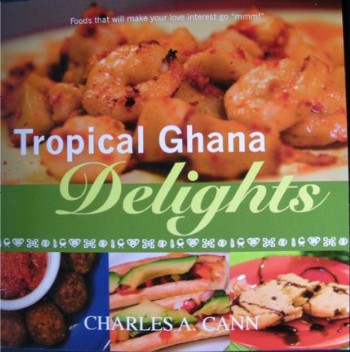
The Africa Cookbook Project has 3 new cookbooks. First, thank you to Ghanaian Charles Cann for a copy of his 2007 Tropical Ghana Delights. This brief 39-page paperback with lovely colorful photos and a matching breezy style contains a couple dozen recipes heavily infused with tropical fruits, from snacks and main dishes to sweets. (Charles, I was surprised not to see any tropical fruit smoothies in the book! I hope that's in the pipeline--Ghanaians generally seem to bond with them from the first taste). Charles' is not a book of traditional Ghanaian recipes: even his light soup recipe includes cucumber, cauliflower, fresh basil and carrots. Rather, it's what I like to think of as "second-" or even "third-" generation Ghanaian cooking. Like Marcus Samuelson, he's taken some basic flavor combinations and ingredients, and creatively added and mixed them up to suit himself. I'll soon be trying them out and reporting back. I must caution that while I love fresh fruits, I generally don't care for adding sugar or honey or sweet fruits to savory dishes. Of course, that doesn't always hold: I do love mango salsa, and sweet ripe plantains with savory stews.

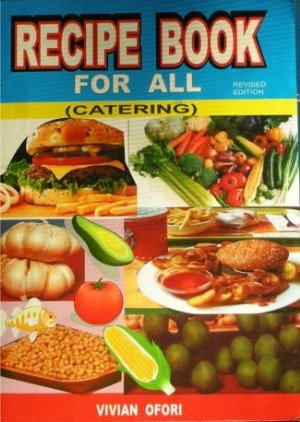
Secondly, after having a pleasant meal at a restaurant in Osu (my filing system is still disorganized, but think the name of the restaurant proprietoress, was Amelia Longdon, of Kalibre Catering Services), Amelia (?) showed me a book she'd recently picked up on the streets, called Recipe Book for All (Catering), an unpretentious but recipe-packed book by Vivian Ofori, apparently in its 2nd edition. I kept my eyes open and eventually found a copy for sale myself. It is a soft-cover 64-page book. The first part is devoted to recipes combining both traditional Ghanaian recipes (like jollof rice, ofam, and abolo), and "continental" recipes for things like pizza, spaghetti, and mayonnaise. These are bare-boned recipes with few explanations but designed for experienced cooks or caterers and using measurement mostly by weight. I counted just over 100 recipes. The book is divided into 2 sections, the first part the basic recipes and some general catering information; the second focused on the basics of nutrition, and including a number of recipes using soy beans and a lengthy section on moringa leaves and pods (Ms. Ofori explains moringa is called zogala or zogalagondi in Hausa, yevu-ti in Ewe, baganlua by Dagombas; ewe ile or idagbo monoye by the Yoruba and ikwe oyibo by the Ibos of Nigeria, and ben aile or boenzolive in French.)

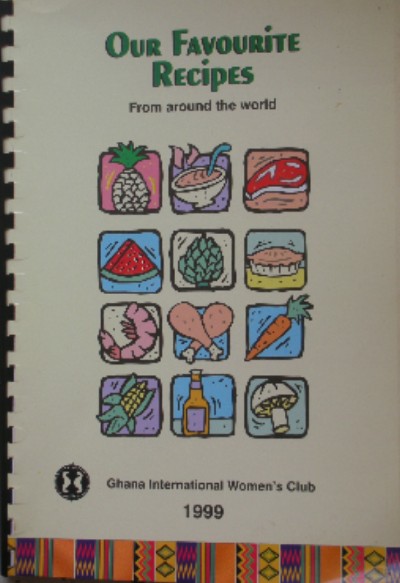
Finally, shortly before I left I discovered the delightful Akwaaba Beach Guest House owned and operated by Swiss innkeeper Helene Jäger. Helene has a lovely collection of African cookbooks, but one that caught my eye, and that I'd not seen before was Our Favourite Recipes: From around the world. This is a wonderful collection of recipes put together creatively and deliciously by the Ghana International Women's Club in 1999. It is truly an international collection, with recipes from The Netherlands, the U.K., Lebanon, Yugoslavia, Sweden, Germany, Brazil, Japan, Belgium, India, Switzerland, Korea, Israel, Malta, Hungary, Trinidad, the U.S.A., France, as well as a good selection from Ghana, and other African countries, including Nigeria, South Africa, Zimbabwe, and Egypt. There was no time to photocopy the book, so I photographed all 95 pages and printed them out when I returned to Pennsylvania. Now I'm going working on completing the data base of the volumes of the project.

Please continue to keep informing me about other resources. Thank you Emeka, about telling me about the June 29 posting on Field to Feast about the Babula Cooking III booklet put together by missionaries in Zaire (as a survival guide using local ingredients). I'd love to get a copy for the collection. That kind of book is also important as social history.

Tuesday, August 05, 2008

Kakum and Fresh Raw Cocoa

For years I've wanted to visit Kakum National Park in Ghana to walk its rope bridges and get a birds'-eye view of the rain forest. It's billed as only one of four "canopy" (above the rainforest) walks in the world, and the only in Africa. The trouble is, I guess, I never go to Ghana as a tourist.


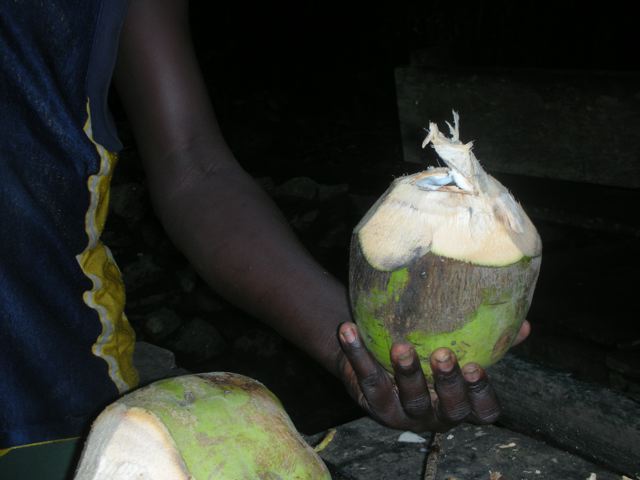
This time, we managed to get to Cape Coast before our 6 1/2 months was up in mid-July, and as usual I enjoyed the wonderful fresh fish, but this time we traveled the 12 or so miles to Kakum. At the end of our tree-top walk, as we descended to the entrance of the park, we stopped to enjoy juice and creamy pulp from some fresh coconuts.


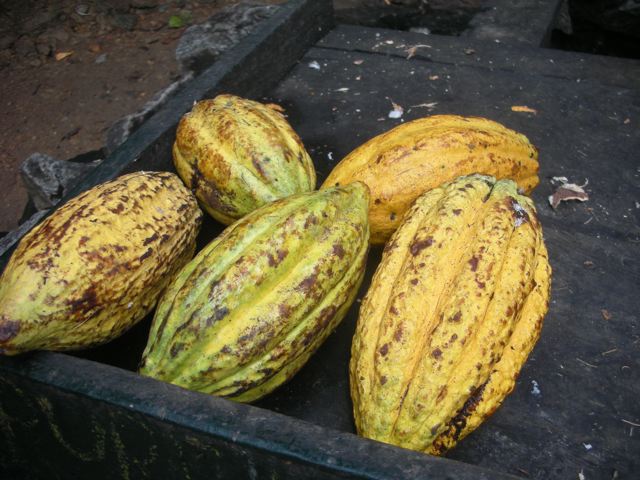
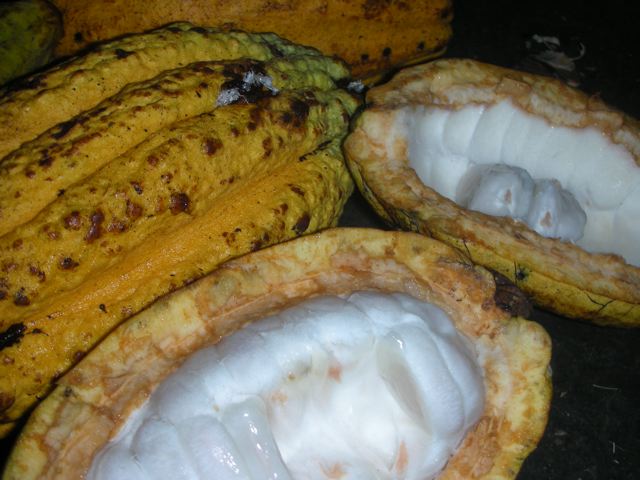
Also, I tasted my first fresh raw cocoa fruit, straight from the pod. We sucked the sweet white pulp from the seeds. The sellers said you can eat the bitter seeds, too (where the chocolate comes from), but others told me to just spit them out, which was my preference. If you're in Ghana, I recommend a trip to Kakum if possible.

I'm now back in central Pennsylvania, but have many stories from our time in Brazil and Ghana this past year to share. I'll soon post about a delightful experience tasting Brazil in Ghana!


Thursday, June 26, 2008

Culinary Entrepreneurship in Ghana


There is a surging sense of hope and creativity regarding things culinary in Ghana. Some of those, like fat-laden fried chicken, potato “chips” (fries), pizza, fried rice and other imported fast food crazes, don’t excite me at all.

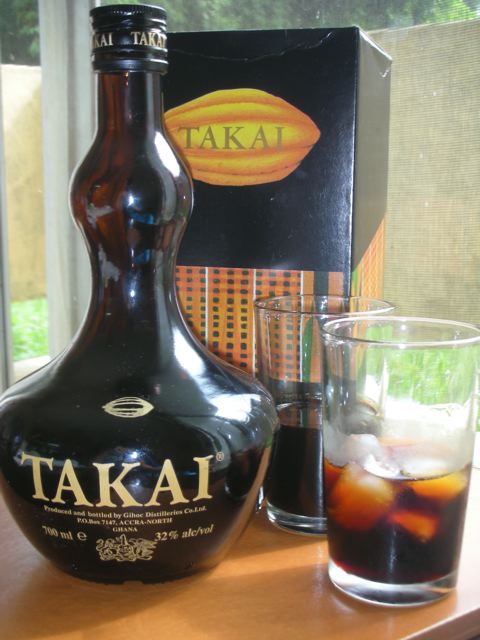
What delights me and my senses is some of the emerging “made in Ghana” foods featuring Ghanaian products. A sampling is included here. There's Takai, a liqueur “made from natural cocoa and coffee blended with other natural aromas” produced and bottled in Ghana by Gihoc Distilleries. The name “Takai” comes from a traditional dance and music of the Dagbamba/Dagomba people of Northern Ghana. The packaging is attractive: a dark box wrapped with a printed strip of kente below a golden cocoa pod (Ghana’s high-quality cocoa has been called its “black gold”). I drank Takai straight the first time, over ice the second. As both a coffee and chocolate lover, I savored the smooth blending of these ingredients with vodka. It was served to me as an aperitif , but would equally well act as an after-dinner liqueur. It also would likely blend well with other things, like cream. And the price in Ghana is under 7 cedis (less than 7 dollars)!

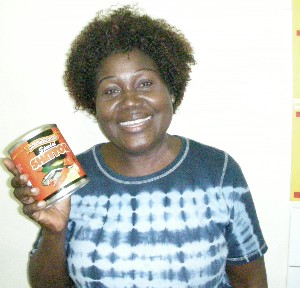
Designer and seamstress Abammaku, of Abammaku's Fashions
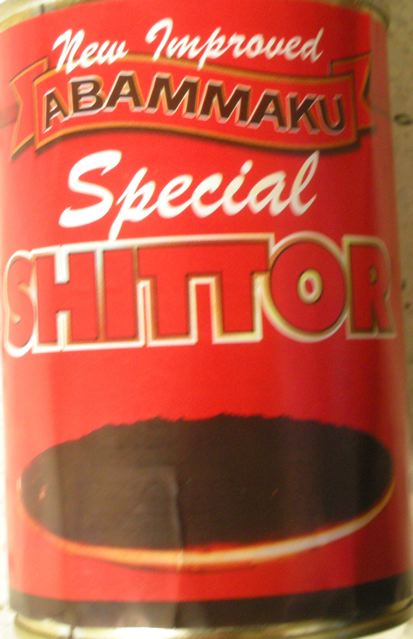
in Accra, has a son serving in the military overseas. He missed eating shito (or shitor), Ghana's lovely distinctive dried pepper-shrimp-herring condiment, and asked his mother to find and send him some. She searched in vain to find canned, not bottled, shito, and finally decided to make it herself. Along the way she discovered a local market for just such a product, and business is thriving.

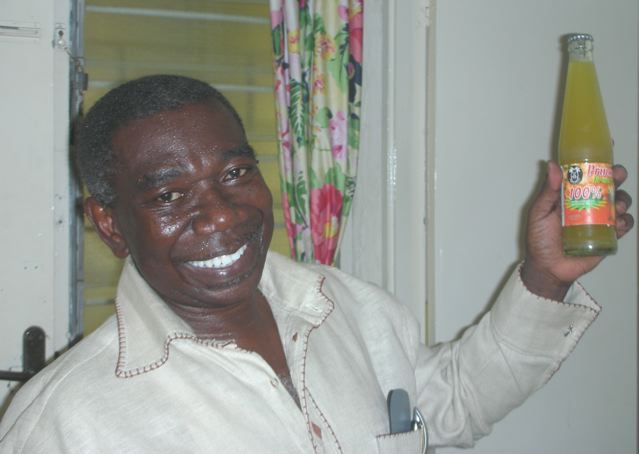
Ghana is also famous for its pineapples, especially its very sweet, low-acid "sugar loaf" pineapples (also known as royal pineapples). Dr. S. K. Dapaah, formerly in the Faculty of Agriculture at the University of Ghana, and once the Chief Director of the Ministry of Food and Agriculture, grows pineapples and bottles his own "Princess" brand pineapple juice, free of preservatives, coloring, or added flavors. We've enjoyed it by the case during our stay the past 6 months.

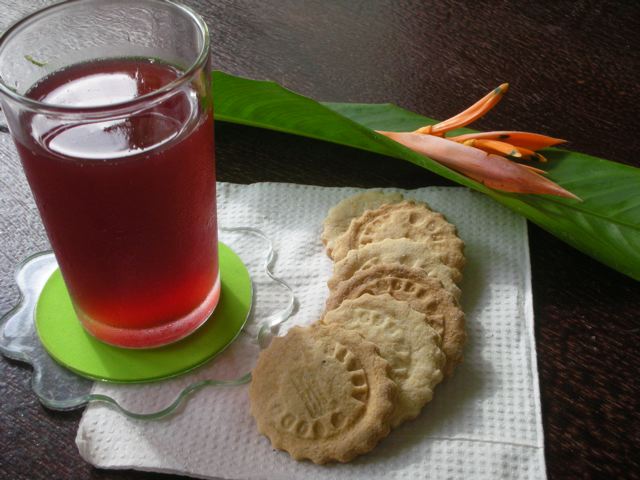
Finally, the humble and faithful cassava has been disrespected and taken for granted for many years. Though eaten daily in many households in the form of fufu or gari, it has rarely been used as a flour. Some entrepreneurs are now experimenting with using it to replace wheat flour in a variety of products, such as the cassava cookies (or "biscuits") made by Godsway Biscuit Factory in Hohoe in the Volta Region of Ghana and shown below with a glass of mango-bissap (bissap is a drink made from dried hibiscus flowers and it blends well with fruit juices such as mango or pineapple, or herbs like lemon grass).

Friday, April 18, 2008

Mushrooms in Africa


The rainy season has begun, and last week I noticed a huge yellow/brown mushroom growing outside our flat at the University of Ghana. A couple of days ago I bought some lovely local mushrooms (see the picture to the right) and cooked them in a simple stew . They were a lovely, meaty texture, hardier than most of the mushrooms we get in State College, Pennsylvania, even portabellas, and with a wonderfully delicate, almost smoky flavor.

I realized that I've no idea what kind of mushrooms grow in the wild here. Or where they grow. A little checking on the internet turned up a document that lists African mushrooms by their scientific names (but with nothing about Ghana or most of western Africa, and also, their technical names didn't help me much). More excitingly, I discovered an announcement about an upcoming conference: the Second African conference on Edible and Medicinal Mushrooms, to be held in Accra November 17-21, 2008. It's being organized jointly by CSIR--Ghana's Food Research Institute, and Accra Polytechnic. Sounds like a wonderful idea, and when I see what papers are being submitted, I'll know who to go to to ask my questions. Anyone who can tell us anything about mushrooms from any part of Africa, we're interested in hearing from you.

An Ethiopian woman once told me that mushrooms are not commonly eaten in her part of the country, where they are known as "the hyena's umbrella."

Saturday, April 12, 2008

African Cookbook Project: Recent Ghanaian Cookbooks

Sorry about the long silence in my postings. I've started numerous blogs but keep moving on to the next thing before I put them up: on Ghana's 2nd annual Chocolate Day (Valentine's Day) and Ghana's Chef's Association; on culinary entrepreneurs; on the manioc (cassava) project; on Ghanaian restaurants and fast foods. . . I will eventually share those thoughts but today will say something about contemporary Ghanaian cookbooks.


Besides documenting recipes and helping cooks, cookbooks are a great resource for studying social history and material culture. There's currently an explosion of authors self-publishing Ghanaian cookbooks, as well as some Ghanaian presses publishing them. This is good news for African food-lovers. It's a sign that Ghanaians are proud of their food and realize there's a need to write down recipes that are embedded in an oral tradition. There's also much experimentation and modification of traditional recipes occurring, and attempts to find short-cuts for some of the more time-consuming preparation steps. In addition, a growing awareness of the relationship of diet to health is prompting people to adjust their favorite dishes to make them more heart-friendly and healthier. Finally, Ghanaians outside of Ghana want to both re-create their beloved meals when some ingredients or cooking equipment are not available, and introduce versions of them to nonGhanaian friends. They, too, realize that there just aren't cookbooks filling this obvious need.

Each time I begin to write about the phenomenon, I hear about another book, and I'm off to find it, study it, and thus keep putting off sharing here. A good number of such books are written by Ghanaians outside of Ghana, and "launched" both in Ghana and abroad. Two of the books I'm writing about today were donated to our Africa Cookbook Project. One of the books was donated anonymously, but I'd like to publicly thank Nina Chachu for the second one, Chop & Grind.

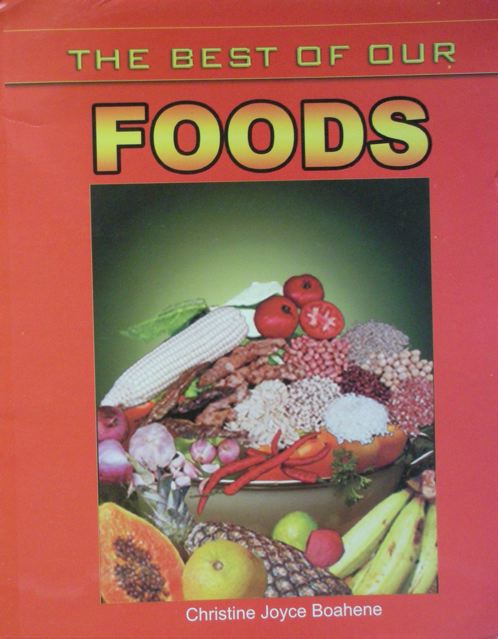
The Best of Our Foods
by Christine Boahene was first published in 2003 by Afram Publications in Accra, but this is the first time I've ever run across a copy of it. A week after I saw a few copies in the University of Ghana bookshop in Legon, they had all disappeared again. The author received her degree in Home Economics at Liverpool University College of Calder, and taught many years in the Ghana Education Service before her retirement. Her teaching background shows up in the book, with plenty of advice along with the recipes. It feels like a textbook, with a lot of nutritional and sanitation advice. I especially appreciated that she celebrates "Our Foods" (i.e., West Africa's) and also features a number of West African recipes from outside Ghana, especially from Sierra Leone, The Gambia, Liberia and Cameroon (127 pages, black and white, with drawings).

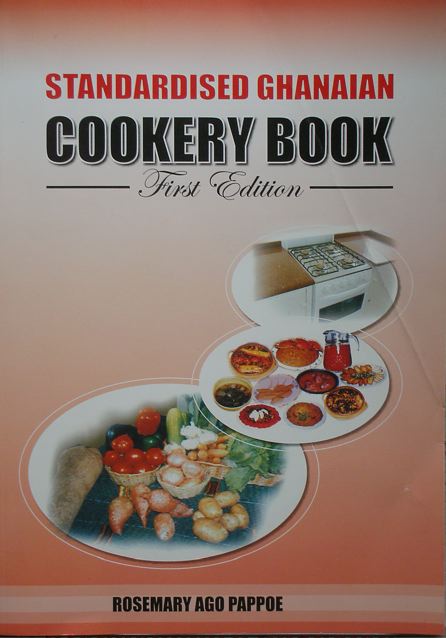
Another textbook-type publication is Rosemary Ago Pappoe's Standardised Ghanaian Cookery Book, First Edition (published, 2007, but just launched in March 2008). It is an ambitious and welcome resource for culinary professionals. Ms. Pappoe is the Domestic Exams Co-ordinator of the Standard Trade Testing and Certification Department of the National Vocational Training Instititute in Ghana. She has put together a standardized cookbook, appropriate for schools training students in good sanitation practices, attractive presentation of foods, and healthy and efficient preparation. It is in many ways a complete course. Included are recipes for soups (14), stews and protein dishes (27), one-pot dishes (10), carbohydrate dishes (35), vegetables (5), sweets and savories (25), fresh fruits, juices and drinks (13), local drinks (4), breakfast dishes (11), and salads (14). Color illustrations throughout show sample presentations of the recipes (152 pages, colored photos). It was no surprise to me to find Barbara Baeta Bentsi-Enchill acknowledged (yes, my collaborator on the regional Ghanaian cookbook we're working on but have yet to locate a publisher for) and her company Flair Catering Services, heavily featured in the "ideal kitchen setup" section.

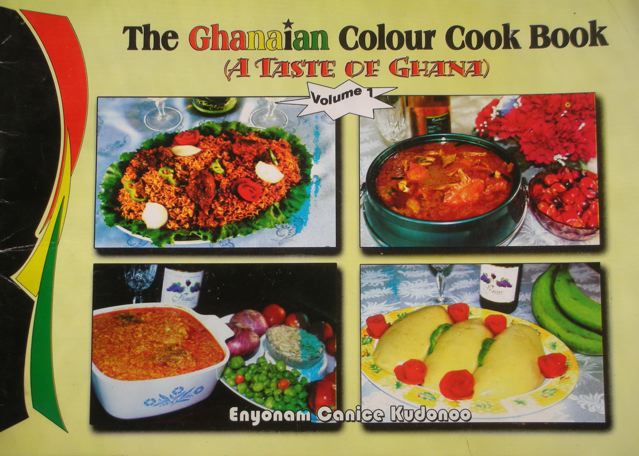
Enyonam Canice Kudonoo (author) and Professor Clara Opare-Obisaw (editor) are responsible for The Ghanaian Colour Cook Book (A Taste of Ghana, Volume 1), published in 2007 by SEDCO. This small book (49 pages) is the kind of book I've been searching for for a long time: an intelligent and authoritative introduction to Ghanaian cuisine. It contains 45 well-illustrated pictures of 25 classic Ghanaian recipes, along with helpful tips and notes. I hope volume 2 will follow soon. Ms. Kudonoo is a former Home Economics teacher, who, interestingly, taught at Flair Catering School (Barbara's school!). The editor teaches here at the University of Ghana (Food and Nutrition), Legon, where I'm based, and I fully intend to look her up very soon.

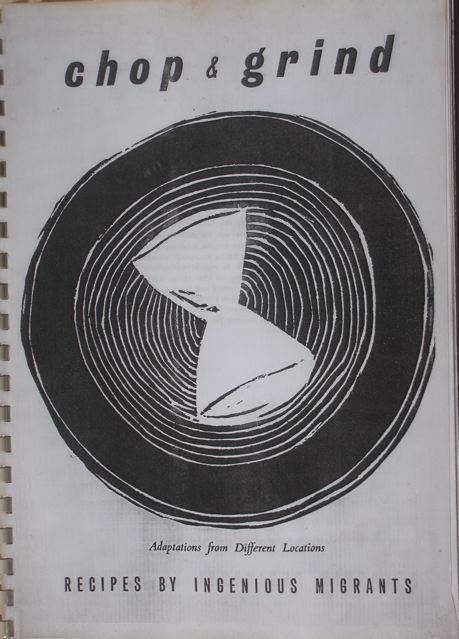
I've been a nonGhanaian married to a Ghanaian for over 35 years, but it was just in 2008 that I learned of the ISAG: The International Spouses Association of Ghana. In 2005 they put together and published a useful and interesting cookbook called chop & grind: Recipes by Ingenious Migrants (Adaptations from Different Locations). Its cover features a woodcutting of an asanka (a traditional clay grinding bowl) and the wooden masher that accompanies it. Chop & grind is made up of tried and true recipes from 22 individuals who are originally not from Ghana, though many of the recipes are for Ghanaian foods, and many are dishes from elsewhere, along with in ways to recreate other foods using Ghanaian ingredients (183 pages, black and white drawings, woodcuts). This community cookbook is a wonderful resource for the nonGhanaian who finds him- or her-self in Ghana. It appears to have been spear-headed by Pamela Clarkson Kwami and Celia Marshall. I really hope they, too, take on a volume 2.

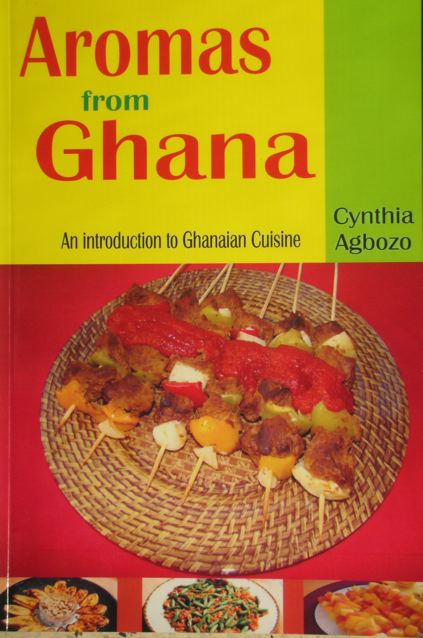
Perhaps so many cookbooks were published last year because 2007 was Ghana's 50th birthday (it became the first black African country to achieve independence, in 1957). That's also when Cynthia Agbozo's Aromas from Ghana: An introduction to Ghanaian Cuisine (DaySprings Publishing, Canada) was released. Her mother was a caterer in Ghana (so by default she apprenticed in her mother's kitchen), and Cynthia is another "can-do" woman who decided to address the paucity of resources on Ghanaian cooking with her 101-page book, clearly illustrated with color photos.

I've been trying to get in touch with another Ghanaian, Charles Cann, a 2005 commnications graduate of Northwestern University, who has written Tropical Ghana Delights. I want to find out more about him, and how to get a copy of his cookbook to review. From his PR, it sounds tempting, heavy on fresh tropical fruits. He's apparently "launched" it in several countries. I was here in Ghana when he launched it in February, but didn't hear about it until after the event. He has not yet responded to any of my queries. Charles?

As for the 3 cookbooks at the bottom of this page, I'll save my comments about them for another day. I have a serious complaint for the publisher, but do not want to spoil this celebration of Ghanaian cookbook authors. Similarly, I could make a few critical observations about the above cookbooks, but that's not the point of this posting. I'm sure issues of indexes, tables of contents, organization, measurement information, copy editing, food photography, special ingredients, clarity of information, etc. will resolve themselves over time.



Thursday, February 14, 2008

West African Convenience Foods and Inter-African Culinary Influences


Ghanaian Convenience foods

Since arriving in Ghana I’ve been dealing with some food challenges. The first one is getting/making fermented corn/cassava dough for banku and koko (porridge). With our minimalist kitchen in Legon and no car or household help, I’m ill-equipped to get involved in the time- and equipment-consuming tasks of preparation (e.g., soaking, then grinding the corn or cassava). It’s not a simple task of running to a market to have things ground or pick up what I need. Plus, the big supermarkets (Koala in Osu, Shoprite in Accra Mall) do not sell these types of Ghanaian foods, either. There are “instant” powdered versions on the market, but so far my husband and I have tossed out all of them we’ve tried. However, we have found shito (a special Ghanaian hot pepper sauce) and groundnut paste (peanut butter) made locally that we like.

In the U.S I use fufu powder to prepare and eat “make-do” fufu, and I make banku and kenkey from stoneground cornmeal and cornstarch, even though the dough lacks the proper flavor and texture. Here in Ghana I haven’t yet found any trusted small producers who can reliably supply me. Of course, I can eat many of these dishes in restaurants, but it would be nice to be able to prepare them at home. I’ll keep looking.

This conversation reminds me of an interesting article by Elisha P. Renne in a recent issue of American Anthropologist: “Mass Producing Food Traditions for West Africans Abroad” (Dec. 2007, Vol. 109, Issue 4, pp 616-625). It talks about how West Africans who are abroad and thus away from home turn to processed, prepared foods that use production processes that are “ideologically similar . . .but technologically very different” from traditional techniques. She illustrates with examples of palmnut concentrate, fufu powder, attiéké, and Nigerian chin-chin, It strikes me as an accurate and timely look at the diffusion of West African ingredients and culture into North American markets, with explorations of how memory, taste, and social identities interact. There are a few minor errors in the article, but it’s well worth reading.

Renne's article reminded me of an interesting paper presented by Tulasi Srinivas at the Joint 2006 Annual Meetings of the Association for the Study of Food and Society (ASFS) and the Agriculture, Food, and Human Values Society (AFHVS) at Boston called “'As Mother Made It': Global Food, the Indian Family and the Construction of Cultural Utopias," which explored how a whole industry has emerged in India to reproduce the labor-intensive meals craved by well-to-do but time-strapped Indian professionals in places like the U.S. I wonder if the same thing will happen for West Africans? I think of the individual-sized portions of Indian food being sold, and think of West African portion sizes, and I wonder. . .


Shoprite and Inter-African culinary influences

There was an article a few years ago about how supermarket chains from South Africa are beginning to spread into other African nations (Weatherspoon and Reardon, “The Rise of Supermarkets in Africa: Implications for Agrifood Systems and the Rural Poor,” Development Policy Review, 2003, 21 (3): 333-355.) Recently South African-based Shoprite, the biggest retailer in Africa, has opened a store in Accra. It reminded me how increasingly countries on the continent are being influenced by the foods of other African nations. For example, for the first time in Ghana I see canned South African chakalaka salad and butter beans on the shelves, along with numerous curry and periperi seasonings. Similarly, restaurants on campus here at Legon cater to Nigerian students and visitors (like the hundreds of Nigerians who came to see the African Cup of Nations matches) by preparing some of their specialties, such as eba (from gari), iyan (pounded yam) and Nigerian-style egusi (melon-seed) stew. Also, the newly opened branch of Maquis Tante Marie at the Accra Mall provides, as does its North Labone branch, upscale West African cuisine from a variety of both Francophone and Anglophone nations.

Thursday, January 31, 2008

Lunch at Elmina Beach Hotel


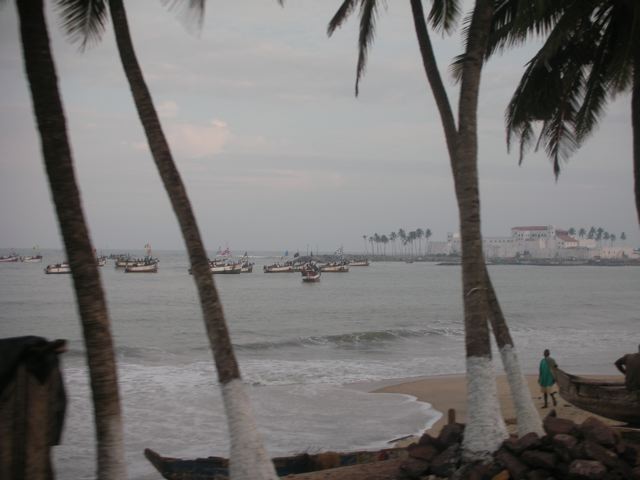
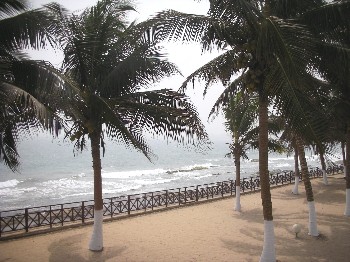
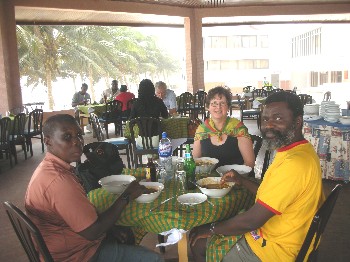
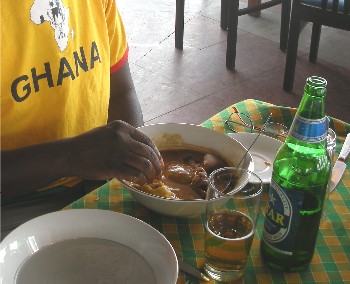
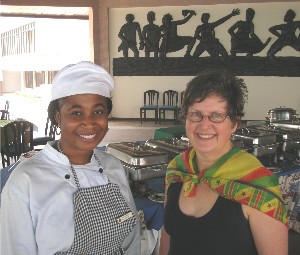
This week my husband and I headed to Tarkwa in the Western Region of Ghana. Driving along the palm-lined coast we passed through Elmina and Cape Coast (whose grim slave castles earn this region a place as a UN World Heritage site). Instead of Accra's Ga kenkey, we passed roadside stands selling the Fanti version. We stopped for a lovely lunch: cassava and plantain fufu with goat groundnut (peanut) soup and I chatted with Theresa Anokye, the demi-chef responsible for the soup. I was delighted to find that this restaurant regularly features a weekend buffet of traditional Ghanaian foods that moves beyond the ordinary dishes to include those less familiar (to tourists), like tatale and bambara beans or aprapransa. Ah, yes, note the Star beer, too. And my Africa Cup of Nations scarf.

Wednesday, January 23, 2008

Eating waakye, ripe plantain, gravy, and vegetables in Ghana


waakye.JPG
Originally uploaded by betumi
Things have already been hectic in 2008: 3 continents in as many weeks. We left Brazil Jan. 2, 2008, were in Pennsylvania for 5 days, and arrived in Ghana on Jan. 10. I still have many things to share from Brazil (such as how to make goma and how to prepare cassava/manioc filled pancakes), but right now I'm working on solving technical problems so I can upload photos and videos using my internet connection in Ghana. Today is my first try.
Last night I cooked up some waakye (pronounced "WAAchi where the "i" sounds like the "i" in "in" and made from rice and beans or black-eyed peas), fried some ripe plantain slices, made a little gravy (oil, onion, tomatoes, hot peppers, salt and tomato paste), and stir-fried some cabbage and carrots for dinner. Here's a picture to mark our new location and the foods easily accessible here.
Thursday, December 20, 2007

East and West African Food and Foodways


African food historians and scholars who are based in Africa can lead lonely lives. They need contact with and support of like-minded people. We need them to share their insights and publish their findings. I recently heard from Forka Leypey Mathew, in Yaounde, Cameroon, who has studied the social history of how traditional food preparation and eating patterns have changed among several groups in Cameroon, including the Bakweri (occupants of Buea and Limbe), Mbo (occupants of Melong, Santchou, Nkongsamba and other villages), Bamum (occupants of Foumban), Wawa (occupants of Banyo), Doowaayo (occupants of Poli), Guidar (occupants of Guider) and Kotoko (occupants of Kousseri and the entire Cameroon section of the Lake Chad Basin). Matew (fleypeymathew@yahoo.fr) welcomes correspondence with others who share similar interests.

Scholars outside of Africa are also doing exciting things. In 2006, Verena Raschke completed her doctoral work cojointly at the University of Vienna in Austria and Monash University in Australia, studying traditional East African food habits and their health benefits, and has made quite a bit of information available online. She's also been actively publishing the results of her research. For example:

1. Raschke V, Cheema B. Colonization, the New World Order and the Eradication of Traditional Food Habits in East Africa: Historical Perspective on the Nutrition Transition. Public Health Nutrition, in press, 2007

2. Raschke V, Oltersdorf U, Elmadfa I, Wahlqvist M, Cheema B, Kouris-Blazos A. Investigation of the Dietary Intake and Health Status in East Africa in the 1960s: A Systematic Review of the Historic Oltersdorf Collection. Ecology of Food and Nutrition, in press, 2007

3. Raschke V, Oltersdorf U, Elmadfa I, Wahlqvist M, Cheema B, Kouris-Blazos A. Content of a novel online collection of traditional east African food habits (1930s-1960s): Data collected by the Max-Planck-Nutrition Research Unit, Bumbuli, Tanzania. Asia-Pacific Journal of Clinical Nutrition, 16:140-51, 2007

4. Raschke V, Oltersdorf U, Elmadfa I, Wahlqvist M, Cheema B, Kouris-Blazos A. The need for an online collection of traditional African food habits. African Journal of Food, Agriculture, Nutrition and Development (AJFAND Online), 7(1), 2007; Available at: http://www.ajfand.net/Issue-XII-files/PDFs/VERENA_2330.pdf

5. Raschke V, East African Food Habits On-line. In: Wahlqvist ML. Healthy Eating Club. Melbourne, HEC Press. Web-site: http://www.healthyeatingclub.org/Africa/; 2005

Let's continue to identify and promote those who take African cuisine and food history seriously!

Monday, December 10, 2007

Tapioca Project and Cooking Contest

This week in Rio has been filled with fantastic opportunities to get to know Teresa Corção and Margarida Nogueira and their Manioc Project. The day after arriving I had the great good fortune to attend the 3rd “tapioca cooking contest” (a light, magical cassava “pancake” cooked without oil) held as part of their work with children, especially those from the favelas:


Their project has been so enthusiastically received by the children and the schools that Teresa and Margarida now have a bigger dream: to expand “Projeto Mandioca” to other cities and states in Brazil, beginning with São Paulo. They plan to develop materials to train and equip teams of qualified volunteers to duplicate and replicate the projects on a wide scale. Already they’ve worked in 6 schools and reached at least a thousand children. These dream-makers deserve our support and encouragement. Read (in Portuguese) more about the foundation they have just established, the
Instituto Maniva, to make it possible.

How does this relate to Africa? Teresa and Margarida are acting locally, but they are definitely thinking globally. They want to see the love of and respect for manioc (e.g., cassava) spread everywhere, moving beyond Brazil to Africa. After all, Nigeria is the world’s largest producer of manioc (cassava), and it was Nigerian poet Flora Nwapa who wrote the ode to cassava, Cassava Song and Rice Song. Let’s join them and dream together.


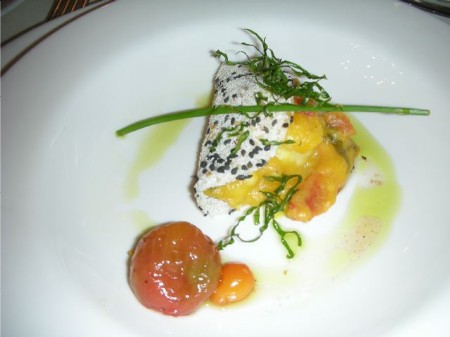
Another joy in Rio was to eat at O Navegador, Teresa’s world class restaurant (with its incredible organic salad bar ,".org") where I enjoyed a highly sophisticated version of a tapioca pancake with black sesame seeds and rock salt (and filled with bobo de camarão, a cassava puree with coconut milk, red palm oil, and shrimp, along with a little cilantro, onions, etc., and garnished with a sauce made of cherry tomato and pimenta biquinho). They also served the best pão de queijo I’ve tasted in Brazil. Now I have all these wonderful cassava recipes I hope to adapt and introduce to Ghana in January!

Wednesday, November 28, 2007

Feijoada Cooking Lesson


I'm having a lot of cooking lessons these last few weeks before I leave Brazil. This month I learned the basics for making feijoada, that wonderful bean and meat stew that's practically synonymous with "Brazilian food" (note: I first blogged about it on August 15).

Here is a quick summary:

On Friday, Nov. 9, 2007, Claudia Lima, her co-worker friend Ilda De Sousa Batista and I went to downtown’s sprawling, lively Mercado Central (Central Market) to buy the ingredients for Sunday’s feijoada party.

Our first stop was at what they assured me was THE BEST place in Belo Horizonte to buy the meat: O Rei da Feijoada Ltda. (the King of Feijoada). This was the first step in untangling the mysteries of all the smoked and salted meats that are integral to this dish.

Upon arriving at O Rei da Feijoada, they hand you a paper over the counter with a chart that lists 19 ingredients to choose from (in Portuguese, of course). We took 9 items, including a special sausage for an appetizer (tiragosto)
There we picked, taken from the receipt, as well as I can tell:

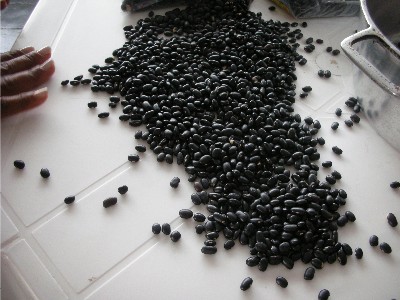
Feijao preto (black beans) 2 pkgs (1 kilo each)
Lingua suina salgada (.815 K)
Pe suina salgada (1 K) [salted pig’s feet]
Lombo defumado (1.1 K) [smoked pork loin]
Costela defumada inteira (1.15 K) [smoked pork ribs]
Linguica defumado ext. gros (.92 K)
Charque trazeiro (1.1 K) [smoked beef]
Rabo Suino salgado (.4 K) [salted pork tail]
Linguica Paio Edtra (.78 K) (special pork sausage)
Bacon Extra (.25 K)

Next Ilda went and bought some special Minas cachaça (Joao Mendes, or JM) for the caipirinhas while Claudia and I went to by the long grain rice (arroz), some vegetable oil (oleo) and salt. Then we went for fresh produce and fruits. Some couve (this is usually referred to as kale or collard greens).

Ilda spent Saturday de-salting and cooking of the salted meats, and pounding the garlic and salt and generally doing the prep for much of Sunday's work, when we actually cooked the beans and meats together (sautéing each of the sausages and smoked meats separately before adding them to the beans and salted meats), prepared the side dishes, etc. On Sunday Ilda and her sister Inesia de Sousa Batista and I arrived early at Claudia's apartment with cooking equipment and ingredients. We set up in the huge but private indoor-outdoor space for parties and people began arriving beginning mid-morning to early afternoon. There was a lot of fellowship, snacks and drinks to get people in the mood. Throughout the afternoon, Sonya Rocha played a few songs on her guitar, and by the end of the fun, relaxing (if busy) day, I felt more connected to Brazil than ever before.

Here are some pictures and a couple of video clips I took:

Friday, November 16, 2007

Garden Eggs in Suriname

More on garden eggs:

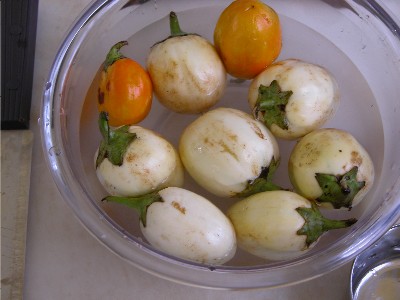
Several types of garden eggs (
Solanum aethiopicum) are grown in Ghana, with local names like aworoworo, obolo, asurowia, asusuapin, and antropo.

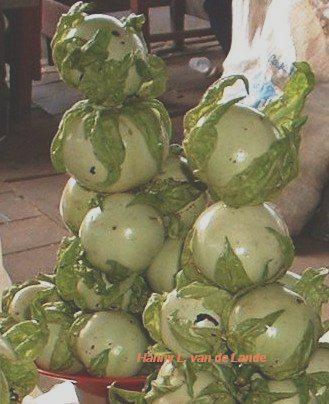
Suriname is a country in South America, about the size of Georgia in the United States, and one of Brazil's northern neighbors. Prof. H. L. van de Lande (h.vandelande@uvs.edu) biologist and plant pathologist, and department head of biology and chemistry at ADEK University, Leysweg/Paramaribo - shares a photo from the market in Paramaribo, along with information on garden eggs in Suriname, where they are known by the local Sranan Tongo name antruwa, and are also from the Solanaceae family (and thus related to eggplant, or aubergine), but it seems a different type, Solanum macrocarpon.

Interestingly, Ramon Finkie from the same university tells me that many Surinamese people descended from slaves originally from Ghana.

According to Prof. van de Lande:

"Antruwa is used in a variety of ways: as a vegetable, stewed with onions, sometimes pieces of salted beef, or with dry shrimps, or, as it is. it is also used in okra soup, or it can be cooked in water, and then some vinegar, sugar maybe some pieces of hot pepper added. It is then eaten as a side dish, pickled antruwa, mostly with a mixed rice dish, which we call moksi aleisi.

Moksi aleisi
(also the Sranan Tongo name)
or mixed rice, can be very variable depending on who is making it; you can make all kinds . . . depending what ingredients (or, leftovers) you have available and in which cultural environment you were brought up. The mixed rice made by the Chinese is much different from the mixed rice made by the Javanese or by the Creole or by the Hindu people. But when one says: "moksi aleisi", then one generally refers to the mixed rice dish made by the Creole or the Negroes."

She further explains that "Sranan Tongo is the local Surinamese language, which is spoken by practically everyone; it can be considered the bridging language between all cultures and etnic groups. The official language is Dutch, which is spoken by the majority of people in Suriname. Still, especially older people in the rural area or in the interior speak either their language of their culture/ethnic group of origin (this can be the local Javanese language, different from the one in Java, Indonesia, the local hindi language which is again slightly different from Hindi in India, local Chinese, or the various languahges spoken by the descendants of the Maroon people or the differen languages spoken by the indigenous people, the Amerindians etc. etc. for all other cultural/ethnic groups."

I love all the Afro-Latin links I'm discovering during my stay in Brazil. Another day I'll share what I've learned about cassava/manioc in Suriname!

Wednesday, November 07, 2007

Capoeira, cassava bread, and fried manioc in Brazil

Okay, I admit it. This post is about African culture in Brazil, not just African food culture, but the line is kind of blurry, isn't it? I can't think about African food without thinking about music and community, anyway. Last weekend friends were here from Chile, and my sister from Oregon, so a group of us went to Ouro Prêto, a UNESCO world heritage site. I especially wanted to show them the carvings of Alejiandnho ( nicknamed "Little Cripple," the son of a Portuguese architect and a black slave, and one of the most famous sculptors of Brazil), and the church built by Chico-Rei, an African king from Angola who was captured with his entire tribe and sent to work in a mine in Ouro Prêto, and who later earned his freedom, his son's, and the rest of his people's, then re-established his court, African clothing, and African customs in Ouro Prêto. He is a folk hero among Brazilian blacks. While we were lounging in Tiradentes Square in the town's center, some guys started playing and "dancing" capoeira, a form of African martial arts/dance that was developed by slaves to fight their masters, and disguised as a kind of dance. It's noted for its "fluid and circular" movements. I pulled out my camera, got their permission (but they didn't want money), and recorded a few minutes of the dance to share.

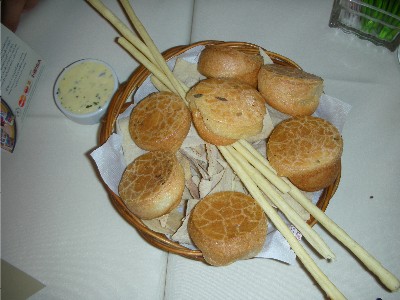
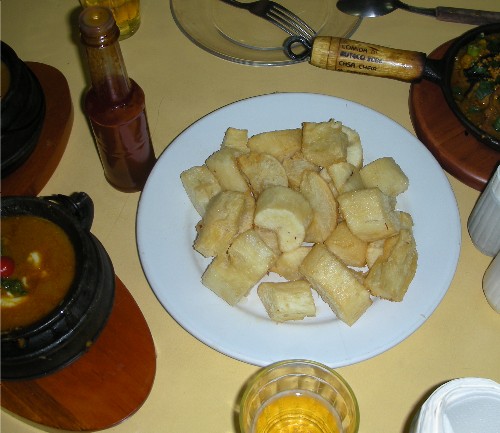
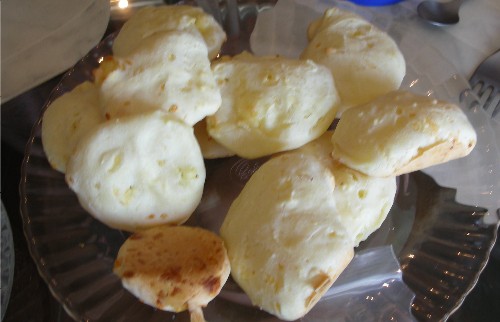
There's a lot of African influence in Minas Gerais. This Friday I'm heading to Central Market again to shop for a cooking class this weekend where I'm learning to make feijoada for friends who're coming on Sunday (remember I wrote about eating it in August when we first arrived). By the way, a couple of weeks ago I tried my hand at pão de queijo, a great specialty of the region, a kind of cheese popover made with tapioca flour, eggs, cheese, and butter. It's one of my husband's new-found favorites, along with the mandioca fritas I've also been learning to make, both illustrated below.

Wednesday, October 24, 2007

Fufu in Brazil?

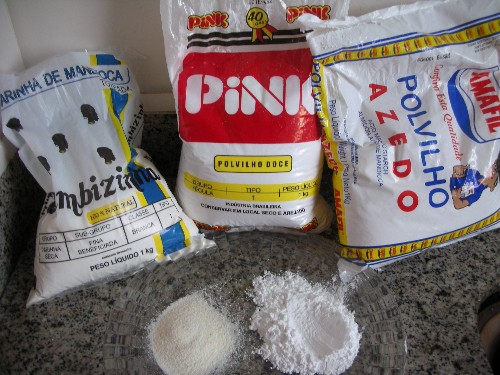
We've been in Brazil for 3 months. We're getting really tired of omo tuo (rice balls) in all our Ghanaian soups. I decided this week to attempt to make fufu with what is available when one does not have a mortar and pestle for pounding it from fresh cassava and plantains or cocoyams. At the market I picked up some polvilho (manioc, or cassava, starch). It seems to be the same thing as tapioca starch in the U.S. There're 2 kinds: doce (sweet) and azedo (acid). I also bought some farinha de mandioca, torrada or toasted, (a cassava meal that's like a really, really fine unfermented gari).

I spent a couple of hours last night trying to make Ghana-style fufu. You don't want the gory details. Suffice it to say that, with a great deal of trial and error, I produced a semblance of fufu that we managed to eat with our chicken light soup with okra. It was kind of a cross between that paste you use to stick wallpaper on the wall and fufu. Next time I need to drastically reduce the amount of starch, increase the amount of water, and figure out how to keep it from clumping up. Help! Have any West Africans lived in Brazil who can tell me what to do? We still have 2 more months here.

On a more hopeful note, I'm going to use some of the polvilho, along with a special cheese from Minas Gerais, to practice making a delightful type of puffy Brazilian cheese ball known as pão de queijo (bread of cheese), but that's another story.

Tuesday, October 16, 2007

Jiló in Brazil, garden egg (ntroma) in Ghana

A few weeks ago, a Brazilian friend and I went to lunch at an award-winning cafe in Belo Horizonte, Minas Gerais. One of the featured items on the menu had "jiló" (pronounced zhee-LO) in the name. "What's that?" I wanted to know. "Oh, it's a vegetable especially popular in Minas Gerais. It tastes wonderful" she assured me. She held her thumb and forefinger almost together to make an oval, and said "It's shaped like this, and about this size."

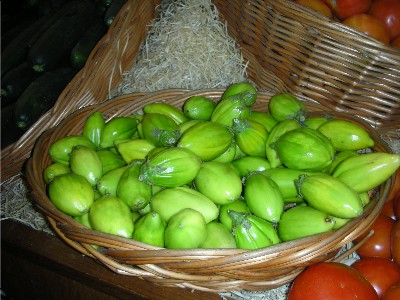
I decided to order a different dish for lunch, but the next time I went grocery shopping I picked up a "jiló" to try. When I cut it open, I was surprised to realize it was an unripe garden egg, the beloved little egg-shaped eggplant vegetable used in Ghana and other places in West Africa. I added it to whatever stew I was making that night, and found it more bitter than I remembered the garden eggs in Ghana. Interestingly, Brazilians find the ripe fruit bitter and the market will only accept the "young, sweet" green jil
ó. It's true that's the only kind I've seen here in the 3 months I've been in Brazil. I generally substitute eggplant in the U.S. because I don't have access to fresh garden eggs, though I have seen some Japanese eggplants in the stores that look similar. Jiló, too, can be used interchangeably with eggplant.

It turns out that there are 2 kinds of jiló
(Solanum gilo), both from the Solanaceae family: the kind popular in Belo and other parts of this region (comprido verde claro, or "long light green") and a rounder, more bitter type called morro redondo). Jiló is originally from Africa and found its way to Brazil, though not other Portuguese-speaking countries, via the slave trade.

It never ceases to amaze me how interconnected the world is!

Friday, October 12, 2007

Africa Cookbook Project Update, October 2007


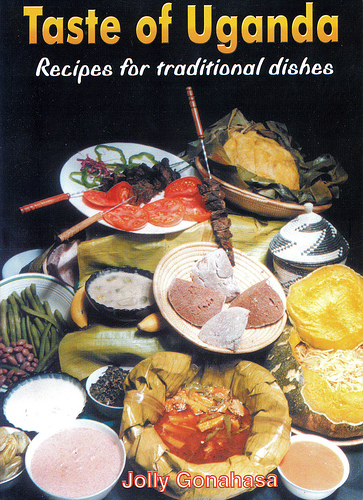
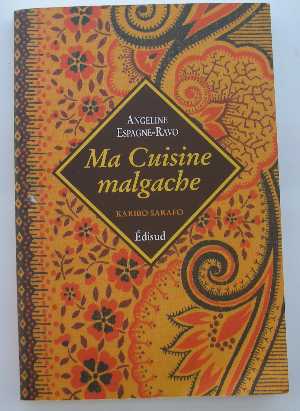
The 2 latest additions to The Africa Cookbook Project include Devra Moehler's contribution of Taste of Uganda: Recipes for traditional dishes by Jolly Gonahasa (Fountain Publishers, 2002, Kampala) and Angeline Espagne-Ravo's Ma Cuisine malgache: Karibo Sakafo (Édisud, France, 1997) donated by TEDFELLOW Andriankoto Ratozamanana. Thank you to both of you. Please keep the books coming. Andirankoto marked several of the recipes in Ma Cuisine malgache: "Pâte à Sambossa," "Achards de Mangues," and the section on "Le Romazava (pot au fe) - (bouillon clair)" with the note "ramazava are our BEST." Espagne-Rovo confirms that "Le romazava est le plat national des Malgaches." There are some delicious-looking recipes there to try out. By the way, please follow Andriankoto's lead, and sign the book with your name (and anything else you'd like to say) and the date you donated it so we can give credit to the contributor. Or, if anyone would like to donate money to allow for the purchase of books to add to the collection, or make suggestions of books to include, please contact me at fran@betumi.com. I'll be developing a "wish list" of books out there that need to be purchased.