Monday, September 24, 2007

African Culinary Entrepreneurs

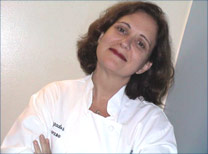
I just discovered the site of Yeti Ezeanii, a West African transplanted to the U.S. who shares the vision to meet the acute need for quality African culinary videos. Her website afrofoodtv.com
includes recipes and demonstrations of North, South, East and West African dishes in what I assume is her pleasant, well-equipped kitchen in Atlanta, Georgia. Her on-camera style is friendly, fun, and relaxed, and she is comfortable and confident as she adapts classic African recipes to Western kitchens. Be patient and give the videos time to download and you're in for a good time.

Just remember if you begin comparing different African videos, the continent is huge, and just as there isn't a single way to prepare chili or spaghetti, there are innumerable variations of all the classic African dishes.

Everywhere I turn, there are enterprising African culinary innovators from Africa like Yeti. I often feature them in this blog (like chemical engineer
Yaw Adusei and his fufu flour or Cameroonian Julie Ndjee and her husband Albert and their "Neilly's Ultimate Seasoning".) There's also Tomilola Awoniyi, a woman I learned about through Bola Olabisi, herself an innovator embodying the whole idea of "betumi power" behind this blog and founder of the Global Women Inventors and Innovators Network as well as the Nigerian Female Inventor and Innovator of the Year Awards). In 2004 Tomilola Awoniyi won the first Nigerian Female Inventor & Innovator of the Year Award for her LIZVIC Special PAP (ogi) a type of nutritious maize breakfast cereal she developed out of necessity.

I met several more culinary innovators in Ghana last June, and I'll feature them in another blog soon. Please let me know about others!




Monday, September 10, 2007

Refogado in Ghana

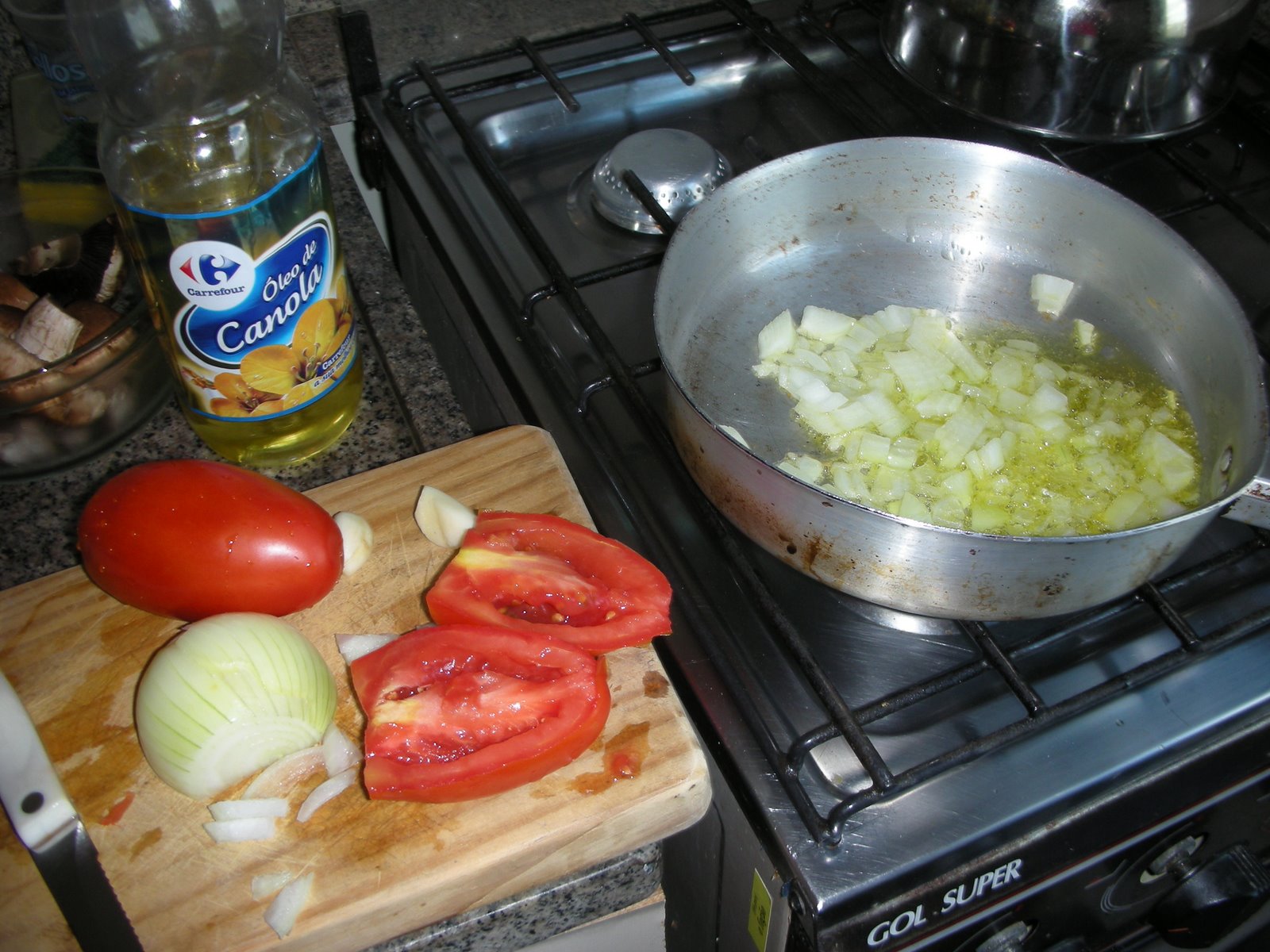
I've learned a great Portuguese culinary word: refogado. The book Barbara Baeta and I are writing on Ghanaian regional cuisine has a section on the ABCs of cooking in Ghana. It includes a discussion of one of the basic building blocks of most Ghanaian stews: a sauce/stew base made from oil, chopped or sliced onions, and tomatoes, as well as other ingredients like garlic or peppers. The "correct" way to prepare the base is to heat the oil, saute the onions first, then stir in the tomatoes, etc. This is what they call "refogado" in Brazil, and is, likewise, a basic technique for beginning many dishes in Brazil. As my husband is fond of saying "travel and see!"

Wednesday, September 05, 2007

Chart of African Carbohydrates/Starches


Here's the chart I mentioned that I put together to try and organize my understanding of some of the most common starches/carbohydrates I've run across. I'm sure there are many omissions and maybe some errors, so please help me to update and expand this listing.

(from "Food and Foodways (see July 18, 2007 posting)," in The Greenwood Encyclopedia of Popular Cutlure, Sub-Saharan Africa Vol. 5, p. 101-2, © Fran Osseo-Asare, 2007)

Food Name

Region

Country

Typical Ingredients

kenkey/dokono

West Africa

Ghana

fermented corn dough steamed in corn husks or banana leaves

banku

“

Ghana

fermented corn dough, stirred and cooked (soft)

koko/akasa

“

Ghana

fermented corn dough porridge (thin)

tuo zaafe

“

Ghana

thick sorghum or millet porridge

ogi

“

Nigeria

fermented porridge from sorghum, millet, and/or maize

gari (farine de manioc)

West/Central Africa

various

dried, grated, fermented cassava meal

fufu (1)

(in Nigeria, also called iyan or pounded yam)

West/Central Africa)

especially

Ghana/Nigeria,

Cameroon

peeled, boiled, pounded stiff but elastic dumpling, generally not chewed (yam, cassava, cocoyam, ripe or green plantain, single or combination)

fufu (2)

Central Africa

especially DRC, CAR, Cameroon

a stiff porridge made from white corn flour, cassava flour, or a combination (similar to ugali, sadza, pap, nsima)

lafun

West Africa

Nigeria

a fibrous, powdery form of fermented cassava similar to, but coarser than, fufu

attiéké

West Africa

Côte D’Ivoire

steamed fermented cassava granules

miondo, (myondo)

bobolo, bâton de manioc

“

Cameroon

(miondo is a Duala word, bobolo is Ewando)

cassava roots soaked and fermented, peeled, mashed, drained, ground, wrapped in banana leaves and boiled or steamed

chickwangue

(chicouangue)

Central

Congo, Gabon

similar to miondo

bidia

“

DRC, CAR

(Tshiluba) See fufu (2)

injera

(enjera)

Eastern Africa

Ethiopia/Eritrea

fermented crepe/pancake commonly made from a type of millet called tef (teff), but also with sorghum or wheat

canjeero

“

Somalia

see injera

obusera

“

Uganda

fermented millet porridge

uji

“

Kenya, Tanzania

Swahili word for porridge, thin to thick, made from maize, millet,and/or sorghum

ugali

“

Various, esp. Kenya, Tanzania

Swahili word for a thick porridge (or dumpling) commonly made from cornmeal, but also made with cassava flour

posho

“

Uganda

see ugali

atapa (atap)

“

Uganda

ground dried sweet potato porridge, with ground millet/cassava and flavorings

pap

Southern Africa

South Africa

Dutch word for porridge made from cornmeal flour or other staple grain

bogobe

“

Botswana

see pap

sadza

“

Zimbabwe

stiff porridge (or dumpling) made from white field corn flour or red millet flour

nsima/nhsima

“

Zambia, Malawi

see pap

xima

“

Mozambique

corn pap (see pap)

amarhewu

“

South Africa

thin porridge made from slightly fermented cornmeal

putu/phutu

“

South Africa

(Zulu) a crumbly version of pap (see pap)

umphokoqo

“

South Africa

(Xhosa) a crumbly version of pap (see pap)

Sunday, September 02, 2007

Mandioca and Cassava: An Afro-Brazilian Link


Did you know that:
1. cassava (or manioc, or mandioca) is originally from Brazil?
2. cassava spread from Brazil to Asia and Africa?
3. today Nigeria is the world's largest producer of the roots?
4. Thailand is the biggest producer and exporter of its starch?

In 2005, I noticed an unusual and intriguing talk on the program for the International Association of Culinary Professionals' annual conference--it was on manioc, not exactly a household word in the IACP. Even though I could not attend the conference that year, I wrote to ask for a copy of the talk from one of the presenters, Margarida Nogueira. Later, I met with her briefly in Rio de Janeiro. Now back in Brazil, I was trying to track down another Brazilian whose name is associated with manioc: Teresa Corção, the founder of the Manioc Project (Projeto Mandioca). It turns out Teresa and Margarida were co-presenters at that 2005 IACP conference. In 2002, Teresa, a chef, restaranteur, culinary historian and educator, founded the manioc institute, and started the manioc project.

To quote Teresa: "The real importance of this product is mostly unknown, although it is very much used and appreciated in our daily meals. In the very first contacts that the discoverer of Brazil – Pedro Alvares Cabral – had with the Indians Tupiniquins, in the south of the state of Bahia, he was introduced to manioc, a native product of those then unexplored lands

To our native Amerindians, manioc was the most important ingredient in the preparation of different meals such as porridges, cakes, breads (pirão, beiju, mingau, paçoca). As the European wheat was not suitable to the climate of the newly discovered lands, the colonizer had to get used to manioc, a root so much appreciated nowadays throughout the world. No other product is as much Brazilian and has such an importance as manioc."

To quote from a blog posting on the Terra Madre site: "With this in mind, and working together with a team of experts Teresa decided to launch her project. Through workshops in public schools, children learn the importance of manioc during informal classes, theater and hands on cooking demonstration, learning how to prepare tapioca and other traditional Brazilian dishes. This way they strengthen their relationship with their Brazilian identity.

Projeto Mandioca has been supported by EMBRAPA - Empresa Brasileira de Pesquisa Agropecuária (Brazilian Agroindustry Research Company). This organization maintains Projeto Mandioca permanently updated in whatever concerns manioc in Brazil and worldwide, while improving its research studies on the subject."

Teresa, Margarida, and I are exploring the possiblility of collaborating on further research and writing on the whole subject. It's an exciting project to me, with possibilties for adaptation in Africa.


Tuesday, August 28, 2007

Brazilian Food and Culture Festival


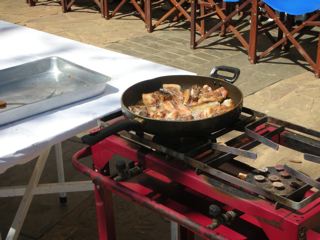
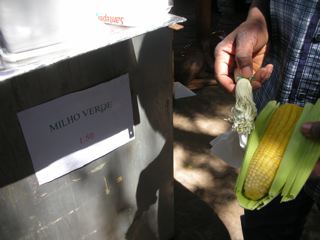
This past weekend was my 35th wedding anniversary, and to celebrate my husband and I took a trip to a small historical colonial town a few hours away from Belo Horizonte called São João del Rei. We then took a short train ride to nearby Tiradentes, where they have a big annual food and culture festival at the end of August. Brazilians know how to celebrate! We had a great time, eating pork, drinking beer while munching cashews and peanuts, sampling food from the many outdoor booths, and generally just immersing ourselves in festive Brazilian culture. The chefs there treated me like a sister, even though I still know only a little Portuguese, and they tended to not speak English.

So now you know why I haven't posted a blog here sooner (I left the computer behind!). I've posted a few photos at my flickr site
. How does all this relate to Africa? I'm learning a lot about links among Brazilian, Portuguese, and African cuisine, from manioc (cassava) to cooking techniques. In the next day or two I'll share some of that info, so check back soon.

On the African cookbook project front, I know I've been sent a Ugandan cookbook, and a Mozambican one is on its way to BETUMI. While I'm in Brazil, a colleague is manning the post office box. I'll update you on that front soon, too.


Wednesday, August 15, 2007

Feijoada and Caipirinha in Brazil


Oi! There's been a little break in postings given my hectic schedule preparing and traveling to Brazil. (Oi, which means "Hi!" in Portuguese also happens to be the name of my cell phone company here in Belo Horizonte.)

I've spent the week savoring the cuisine of Minas Gerais, where we're based. Last Sunday was Brazil's Father's Day, and we were invited to celebrate with the family of Renato and Virginia Ciminelli: parents, brothers, sisters, spouses, and cousins--babies to teenagers. What a joyful, boisterous family (though there was a little tension over 2 opposing soccer teams--people seem to take soccer VERY seriously here). In Belo we've lingered over tiny cups of strong Brazilian coffee or cerveja (beer)--my husband is partial to Skol--while having animated conversations at outdoor tables. They're just coming out of their winter here, but it's shirtsleeve weather and lovely.

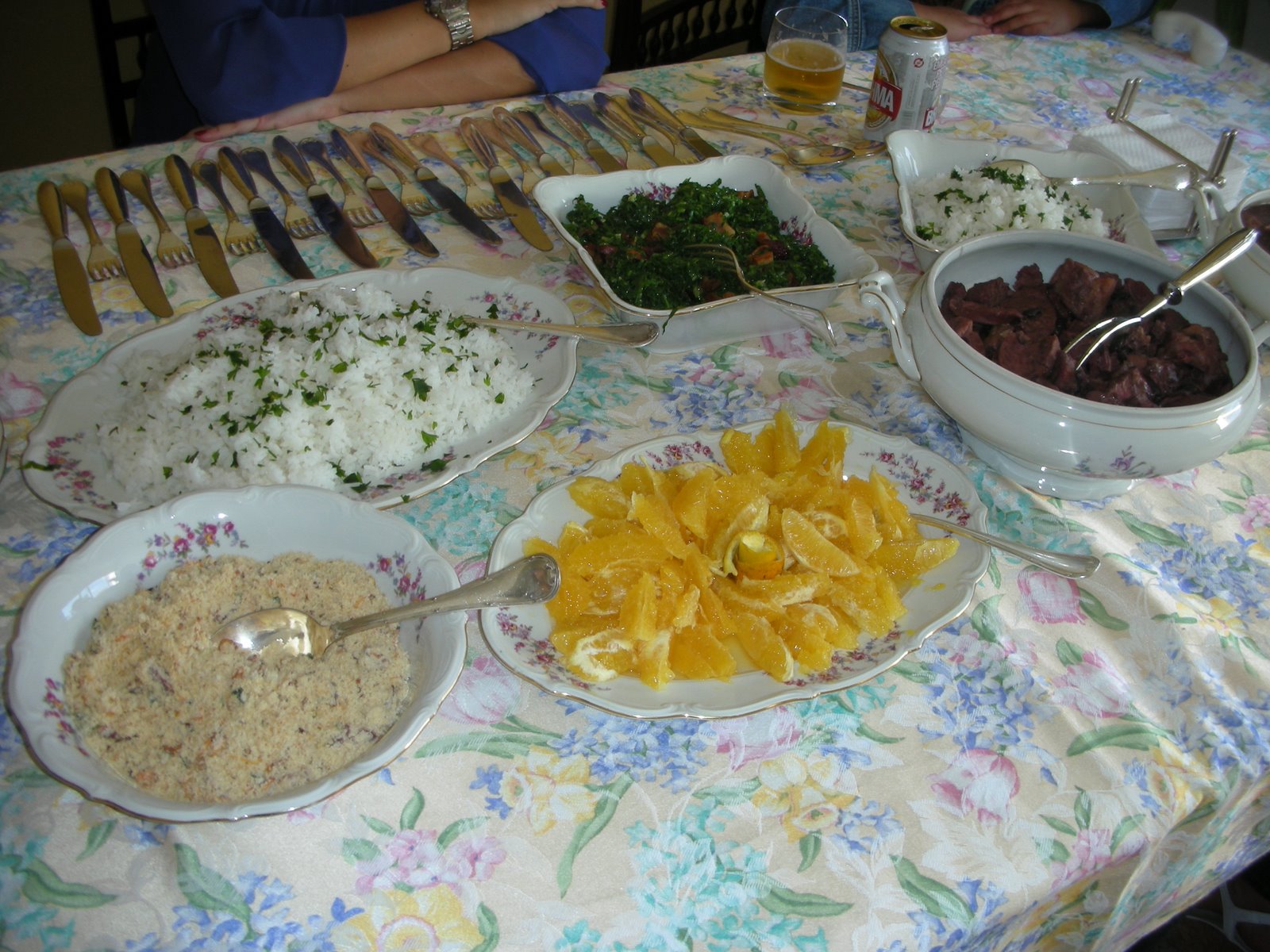
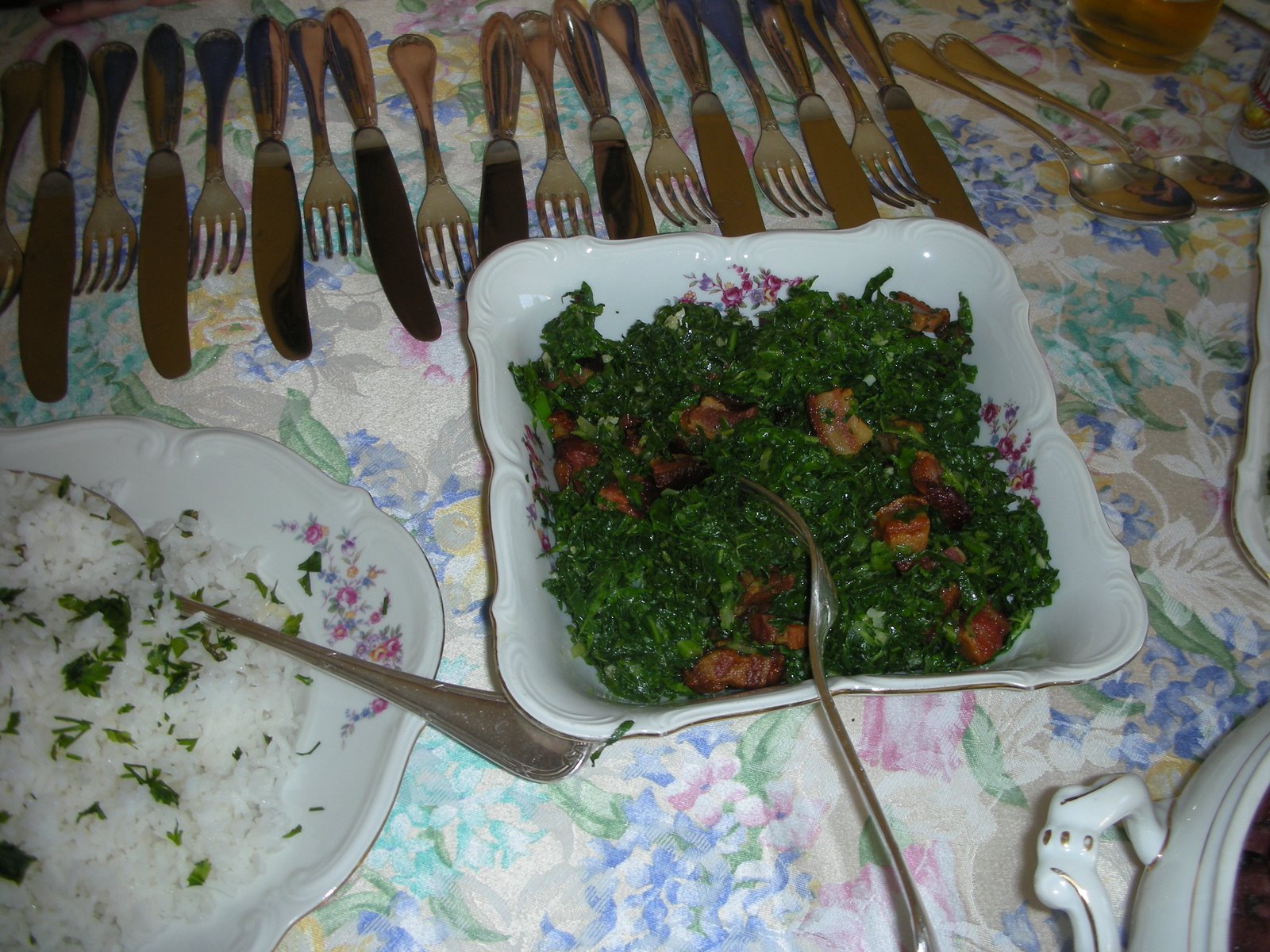
Yesterday at lunch I had an excellent caipirinha. A Brazilian specialty, it's a lime, ice, sugar and cachaça cocktail (cachaça is made from sugar cane, but differs from rum). We've been eating at "kilo" restaurants for lunch, where you fill up your plate buffet style and pay by weight. So far I'm partial to farofa and plantains and collard greens or kale, and a wonderful white fish that might be called badeja, along with feijoada and moqueca (muqueca), a kind of wonderful seafood stew from Bahia.

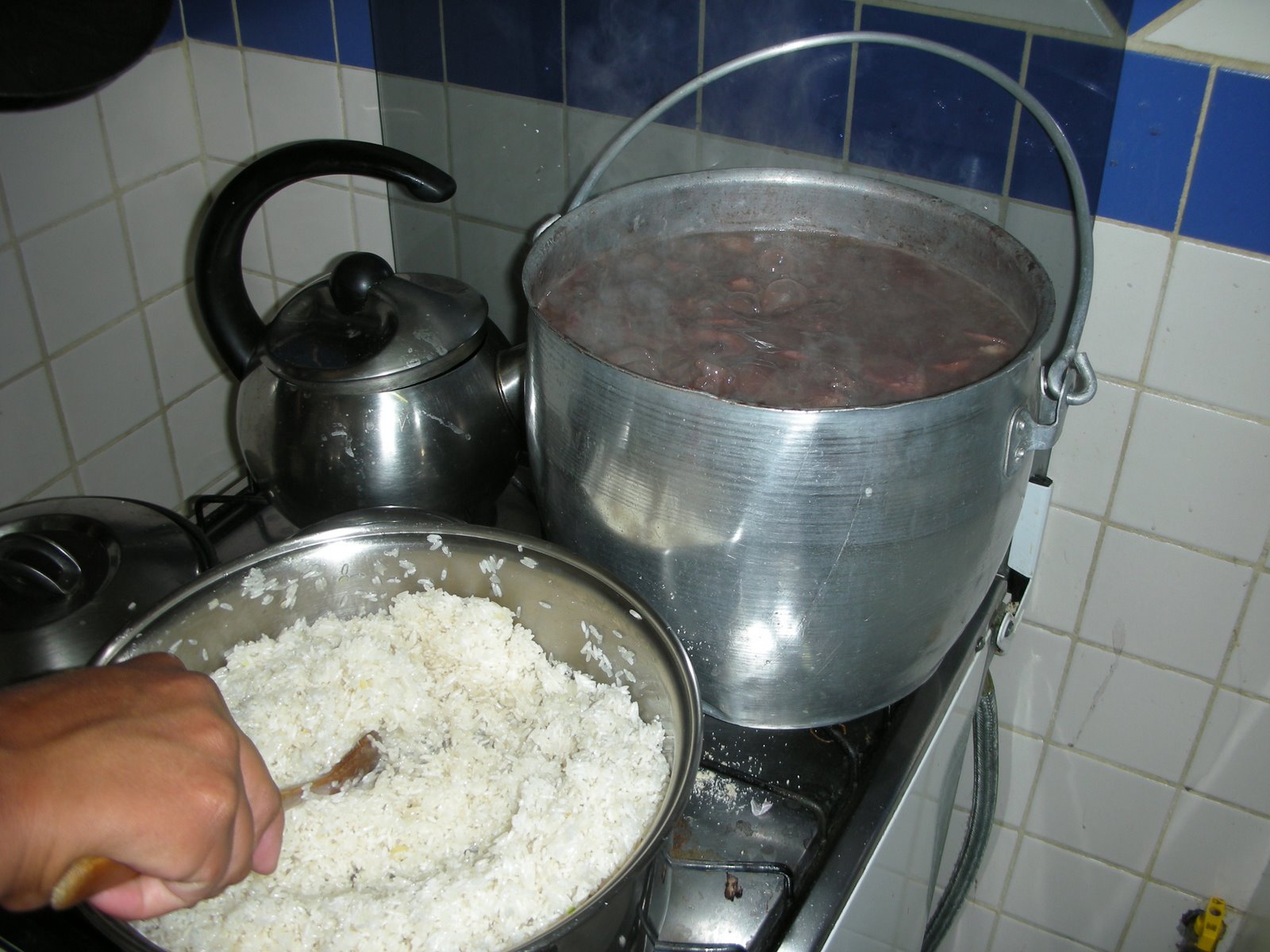
I gather there are lots of family recipes for feijoada, but ours was made from a certain kind of black bean (I'll get the nuances down in the next few months), cooked with pork (ribs, I think), some smoked and dried meat (pork?) and sausage, and I think garlic, but I get the flavoring ingredients for the collard greens, the farofa and the feijoada mixed up: I know there's onion and garlic in some, and oil (probably soy, corn, or canola), and the farofa is much drier and finer texture than West African dishes like gari foto, and had slivers of carrot in it.

At some point I'll write more about the textures of gari (cassava or manioc meal), which ranges from coarse to fine, but I've not seen it as fine as Brazil's farinha de mandioca torrada used to make farofa. I understand Brazilians taught West Africans to make gari: it is said that in Angola the Portuguese forced the Africans on their plantations to cultivate cassava (manioc) and learn to make gari, and further north in Western Africa it was freed slaves returning from Brazil who taught Africans. At least that's what I heard. Feijoada is apparently eaten regularly on different days, depending on the region of Brazil, and is accompanied by white rice, the lightly fried collard greens, the farofa, and orange slices. I'll write more as I learn more! Feijoada definitely has an African feel about it.

Many Brazilians also have a fondness for spicy red pepper condiments, and a little of one of those would be a fine accompaniment, I think.

Thursday, July 26, 2007

Africa Cookbook Project Update 3


I promised to let people know what's happening on the Africa Cookbook Project. First of all, I'm getting ready to move to Brazil in a week for 5 months, followed by 6 months in Ghana, which will slow me down with the database, but the project is moving forward. Devra Moehler has just e-mailed that she's sending a Ugandan cookbook, and Paola Roletta, the author of a Mozambican cookbook published by Europa-America in 2004 (Cozinha tradicional de Mozambique) wrote to let me know of her work. Actually, Europa-America has published cookbooks on cuisines of Angola, Cape Verde, and Morocco as well, all in Portuguese. I'd love to have them in the collection if someone would like to donate copies (remember, there is no budget for this project!) Also, people from around the globe are talking about the project, teaching me about their cuisines, even collecting recipes for me (maybe there's another book in all of this?) Though I'll be away, books can still be sent to the BETUMI mailbox: BETUMI/P. O. Box 222/State College, PA 16804 USA.

I'll soon post information about a few of the culinary entrepreneurs I met on my recent trip to Ghana, including a shito maker, a scientist, and a store owner.

Wednesday, July 18, 2007

Food in Popular Culture in Sub-Saharan Africa

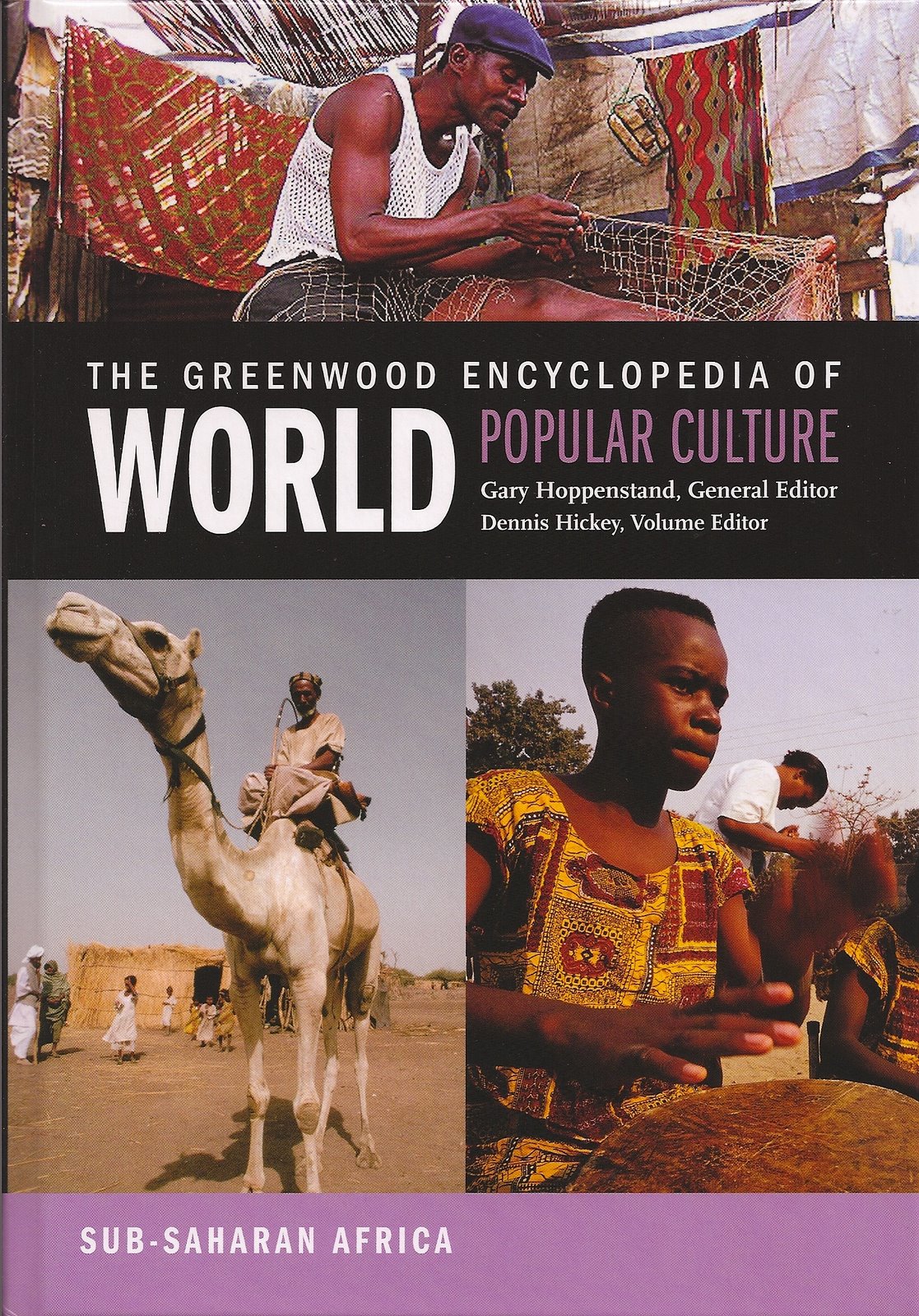
Yesterday I received my copy of the just-published Sub-Saharan Africa volume of The Greenwood Encyclopedia of World Popular Culture, edited by Dennis Hickey, with Gary Hoppenstand the general editor of the series. I wrote the 30-page chapter on Food and Foodways, and am proud of a couple of things in it: a table (pp. 102-3) detailing well over 2 dozen carbohydrate/starch dishes by name, region, country, preparation techniques and ingredients--sadza, fufu, gari, injera, atapa, ugali, etc.--and the inclusion of some classic recipes, like mbanga soup and sukuma wiki. I am pleased they included two of my photos in the book (to the left). Unfortunately, the book is not sold individually, but if you are lucky enough to be near a school or library that buys the 6-book series (about $700 altogether), check it out! North Africa is covered in the volume North Africa and the Middle East.


Wednesday, July 11, 2007

Africa Cookbook Project Update and Auntie Sika


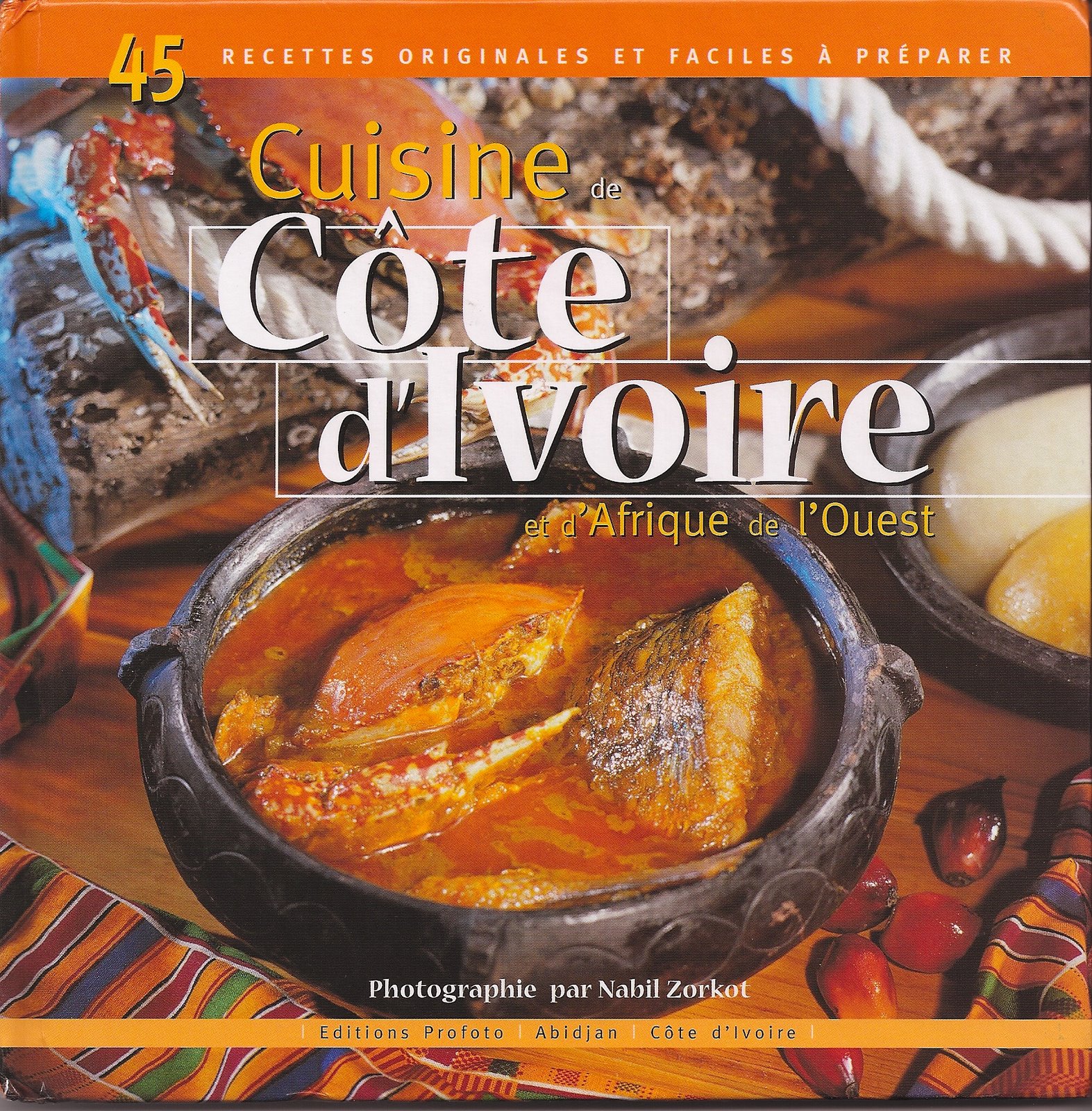
On the left is the latest cookbook to come to the collection (thank you TEDGLOBAL fellow Issa Diabate), and below is the first African cookbook I ever received, in 1971, from my sister-in-law-to-be. I know I'm repeating myself, but thank you to everyone who is helping spread the word. Also, thank you to Tom and Barbara Hale of Penn State University, who have promised to donate from their collection when I return to Pennsylvania. By the way, there's no reason that the culinary heritage should exclude other types of culinary work, from videos to articles.

Secondly, included here is the brief interview with Barbara Baeta that I promised to post. It is preceded by a few minutes of introduction.


Tuesday, July 03, 2007

Lunch for 1,000+ at 70th birthday party

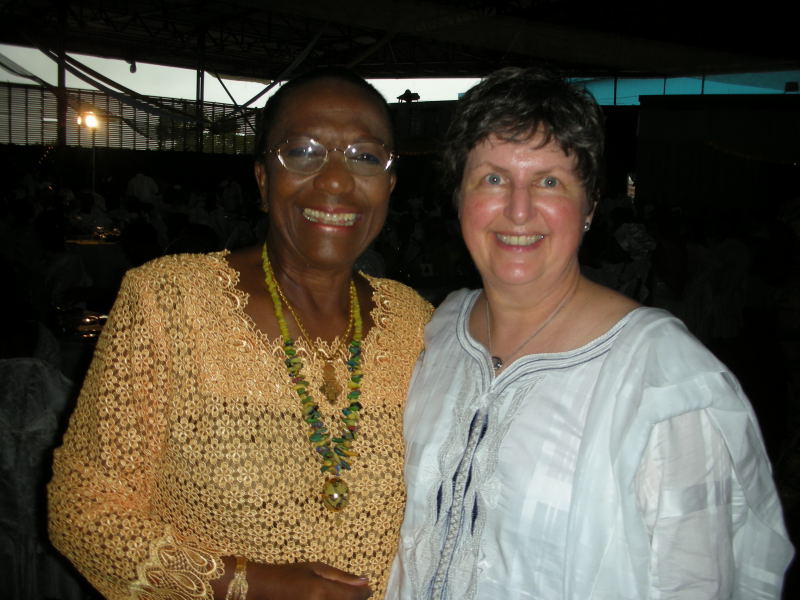
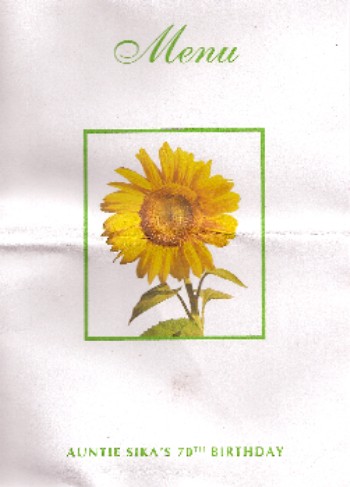
While en route to TED GLOBAL I stopped in Accra briefly for the fabulous 70th birthday celebration for Barbara Baeta (a.k.a. "Auntie Sika"). I've posted a few photos at flickr (betumi account). Suffice it to say here that it was amazing. At the Ridge Church service before the luncheon I was moved to tears as her family from the Volta Region spontaneously erupted into dancing and singing, and finally I felt free enough to join in with the others. She is truly beloved by those who know her. Soon I'll post a video clip I took during an interview a few days later in her home (on my return to the U.S. after TEDGLOBAL) when over some of the special birthday cake she'd saved me she shared a few memories of her 50 years as a professional in the food service industry in Ghana (especially of having coffee with Jimmy Carter and the time Queen Elizabeth II used Barbara's room as a dressing room.) For today I just want to mention the wonderful menu served to over 1,000 invited guests at the Trade Fair Center. There were 8 varieties of beers, from Star to Castle Milk Stout, a wide selection of wines from France, South Africa, Spain and Chile, a wide range of soft drinks from Flair Fruit Punch, Bissap and mineral water to Sprite, Coke, Malta Guinness, and Fanta. The salad bar featured over a dozen types of dishes of largely Western sources, from salami cups, stuffed celery with cheese, salad nicoise, potato salad with smoked chicken, smoked salmon, etc., etc. But the Main Buffet was my favorite: diced fish with prawns in tomato sauce; tilapia with atieke; grilled ginger chicken; lamb fricassee; Togolese meat stew; pink, saffron, vermicelli, braised and wild rice; couscous; gali (gari) foto; kakro and bambara beans; yam croquettes; light okro soup with yakayake; heavy fetrimi, akple and abolo.

My greatest sadness was that I had to grab my food before the serving officially began and gulp it down so that I could catch a flight to Tanzania. To my dismay I missed the luscious dessert table altogether, especially the tiger nut pudding, which is one of my favorites. Oh well, my greatest comfort is that I should be back in Ghana for 6 months beginning in January 2008.

Monday, June 25, 2007

Africa Cookbook Project Launched at TEDGLOBAL


Africa Cookbook Project
Originally uploaded by betumi


At TEDGLOBAL in Arusha, Tanzania in June, 2007, we launched the "Africa Cookbook Project," whose goal is to archive African culinary writing and make it widely available on the continent and beyond. A database is being developed and copies of hundreds of cookbooks are already being catalogued at BETUMI: The African Culinary Network. Google has offered assistance in eventually digitizing some of the information.

The enthusiasm and tangible support both at and after the conference is wonderful. Issa Diabate has already e-mailed that he's sending an Ivorian book, Dominique Bikaba that he's searching for one from DRC, and Jens Martin Skibsted has scanned the covers of several books in his collection. People have promised to send books from Angola, Mozambique, Zambia, etc. I'm thrilled that others recognize the urgent need to protect these books, whether for their value as a record of popular culture, social history, or, my specialty, culinary creativity.

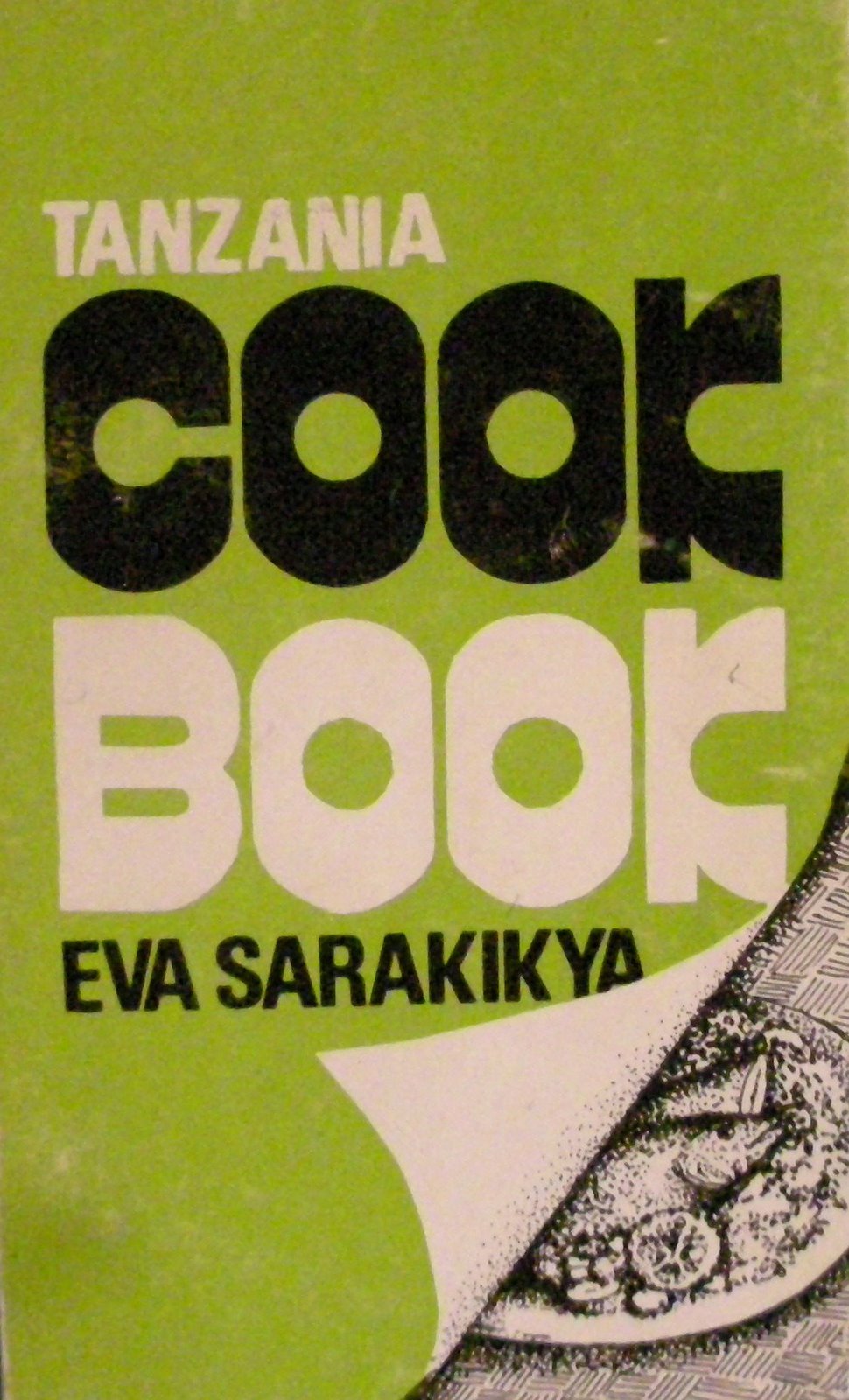
In an all-too-typical experience, I visited the gift shop at Ngurdoto Mountain Lodge and asked if they had any Tanzanian cookbooks. The staff were sure no such books existed, and were excited and surprised when I showed them Sarakikya's book:
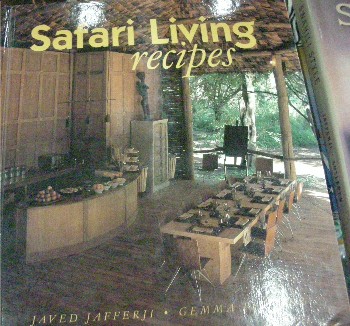
When I stopped in both gift shops at Kilimanjaro airport, they confidently showed me several glossy books published in Zanzibar like Safari Living, which showcased what I call "cuisine for Westerners," and were unable to produce a single "black Africa" cookbook. There's work to be done. Help spread the word, and also help us build up this data base and archive.

Monday, June 18, 2007

Tanzanian Breakfast at TEDGLOBAL


That first morning at TEDGLOBAL I went to breakfast at the lovely Serena Mountain Village resort where I was booked for the 4 days of the conference. Several safari tour groups stayed there during the same time. The breakfast buffet was long and plentiful, filled with fresh tropical fruits, cold cereal and granola, croissants, breads and pastries, oatmeal, and fruit juices. Pots of hot coffee and tea were brought to the tables.

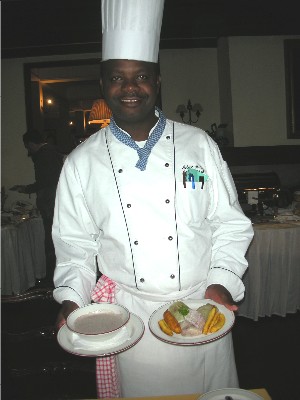
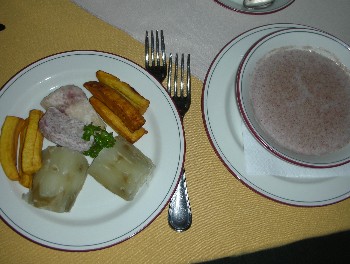
I respectfully requested to speak to the sous chef, Alex Babu. When he came from the kitchen, I explained that this was my first visit to Tanzania, and how could I get a traditional Tanzanian breakfast. He looked puzzled, and asked what I meant. “I want to eat what you eat for breakfast,” I explained. His face brightened and he promised to do so the next morning. That day I was treated to the best breakfast I had at the conference: a mild, creamy sorghum porridge eaten with fresh whole-milk yoghurt and sugar, and in place of toast, freshly cooked root vegetables: ripe plantain spears, chunks of a wonderful white sweet potato, and what we call cocoyam (taro) in Ghana.

I suggested that perhaps they could try serving the porridge sometimes alongside the standard western fare. The following day I noticed sorghum porridge had replaced the oatmeal. It also appeared, alas, that I was the first person to help myself to it. However, later at the conference, an American woman who had overheard my conversation with Alex the day before, came up and thanked me for asking them to serve the porridge, which she had tried and found excellent.

En route to the conference, I spent a few days in Ghana with a Ghanaian friend who promptly offered me corn flakes, bread and tea my first morning at her home. When I asked about koko (millet/corn porridge), and koose (fried cowpea fritters), she promptly honored my request. The fresh millet porridge with a stunning bite of ginger, sugar, cloves and hwentia, mixed with a little evaporated milk, along with the satisfying koose (a.k.a. accra, akara, akla, bean balls, kosai, kose, and koosé) was my favorite breakfast from that trip. The next day I had a slightly fermented corn version that was also delightful. Served alongside the wonderful mangos in season (and I prefer the traditional small juicy yellow ones), I had to stop myself from doing what my family calls "the happy dance."


It still baffles me why Africans so often replace their hearty, tasty, and healthy traditional breakfast meals with “modern, western” choices. And it saddens me to find them catering to tourists with “continental” breakfasts when they have so much more to offer to non-Africans.

I’ll continue making observations from the conference (which, despite the triteness and inadequacy of the words), was truly astounding with its potential to empower people to change lives. I was amazed and overwhelmed to find such support and enthusiasm for my campaign to restore to the continent a proper respect for and appreciation of its culinary heritage and contributions. I owe Emeka Okafor and the sponsors of the TED fellowships a great debt I’ll do my best to repay.

Thursday, May 31, 2007

Nkontomire stew and greetings from Accra


I'm sitting at the busyinternet cafe in Accra, Ghana. I'd hoped to upload some pictures from my camera here, but their wireless service in out of commission (for about a month so far), so my pictures have to remain there for another week or so. I asked John Aryeh, of the staff here to let me put his picture up, since that's the closest I could get to sharing visually the view in Ghana today! Thank you John.

I'm en route to the TEDGLOBAL conference, and will try to keep folks informed of my progress. I just finished a fabulous meal of nkontomire stew with cocoyam and green plantain, and an incomparable fruit salad of sugar loaf pineapple, watermelon, papaya, and mango. I'll show pictures later of some of the treats I've had, from plantain fufu with light soup, banku and okra stew, millet porridge with cloves, sugar, and hwentia (see my blog of May 4). Anyhow, I've only got five minutes left on my account so will upload this now. Talk to you soon.

Thursday, May 24, 2007

More African food videos


Here are links to several more free online videos related to African cuisine (what did we ever do before You Tube?)

Dona D’Cruz interviews Marcus Samuelsson, author of The Soul of a New Cuisine: A Discovery of the Foods and Flavors of Africa, which features some Senegalese food at the end of the interview (e.g., fried ripe plantain, couscous, yassa, and thiebou dienne.)

In a February 19, 2007 blog posting I shared some photos from Penn State University's Touch of Africa dinner and cultural show (more photos are available at Betumi's flickr account). The students at Oklahoma State University did me one better, and videotaped the food preparation action behind the scenes for their 2007 Africa Night.

In the February 13, 2007 blog posting I mentioned two cooking videos by Nigerian Ngozika on BlackTVonline.com. She has another one on preparing jollof rice, fried plantain (dodo), and fish stew. While I find her videos fun to watch, given time constraints she rushes through things. For example, she has already prepared the gravy for the stew and the jollof rice, and even peeled and sliced the plantain ahead of time. Though she mentions ingredients, she does not give quantities or explain preparation techniques enough for newcomers to the cuisine to successfully follow her directions. Still, having said that, I'm very glad she is out there popularizing Nigerian cuisine.

The North African cooking pot with a conical lid is called a tagine, which is also the name of a type of Moroccan stew cooked in it. Traditionally made from clay, modern versions are made with metal bottoms that can be placed directly on a stove top. Tagine: the Movie, illustrates how to use a modern tagine to make a typical Moroccan beef and vegetable stew. As in other YouTube videos, the lack of details frustrates the would-be cook. What WAS in that mysterious broth added to the tagine? Also, did they really eat it without any couscous in sight?

There is an intriguing demonstration of preparing Congolese satori, "a famous dish of the Lokele fishermen of Kisangani," made in the demo from tilapia fillets. Be sure to read the full description of the ingredients before watching the video.

Finally, there are several clips of people eating at African restaurants at the You Tube site. A typical one includes a send-off party for students at
Drelyse African Restaurant in Columbus, Ohio (USA) where the students give a little cultural advice to the Americans.

Thursday, May 17, 2007

Zerza: Eating Moroccan in New York


After celebrating a family graduation at NYU last week, our family and friends trooped over to to Zerza's for a festive dinner. The beautiful word "zerza" is equivalent to the Berber term "teazerai," and describes the brooch or clasp women in the Atlas mountains use to attach their garments. Zerza's logo is the lovely example to the right.

It was my second visit to the Moroccan family-style restaurant. The first time last year was on a weekend and there was a crowd there to watch the "belly" dancers, and maybe to smoke the hookah, or simply to savor a romantic dinner for two. I enjoyed the atmosphere, but the draw for me both times was the food, from my harira soup to their tagines (this time I had the lamb tfaya, but others in our party enjoyed the chicken tagine lemon , the kebabs and the baked red snapper). We started our meal with bourekas, savory pastries filled with spinach, pine nuts, feta cheese and raisins. Several of our group members ended the meal with the delicate rose petal ice cream that delighted me on my first trip. My husband opted for the fig ice cream and espresso, while I settled for a simple pot of Moroccan-style mint tea.

The food was delicious, plentiful, and reasonably priced for our group of 8 (especially because some of our group members selected the more economical fixed price menu.) It's a minor point, but I remembered eating my tagines on top of my couscous and with extra sauce on the side in Marrakesh, which as I remember made the couscous moister and more flavorful. We were in no hurry, which was a good thing, because the personable, attentive staff was in no rush, either.

After dinner charming owner Radouane ElJaouhari (at left) shared a bit of his background. He opened Zerza about 4 years ago, after extensive experience: he was at the Plaza Hotel for almost 7 years, and worked at the Moroccan Village at Disney World Epcot for 18 months. His mother, Hajja Taika Ben Omar, is his secret treasure. The executive chef at Zerza's, she was formerly a caterer in Morocco. Ah, where we would all be without our mothers!
I recommend you check Zerza out if you're in downtown New York City. Their website includes menu information and directions.

Friday, May 04, 2007

Kelewele: My favorite Ghanaian Snack


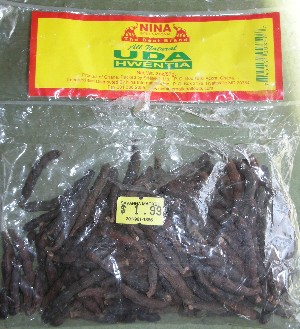
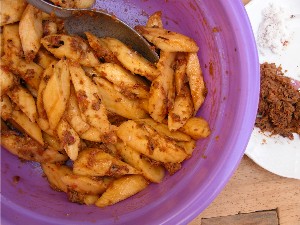
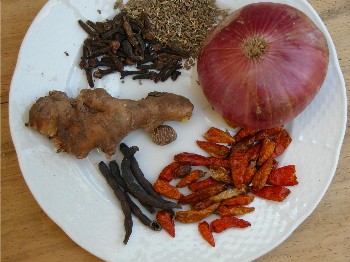
I'm in the midst of packing to spend a year in Brazil and Ghana but just caught sight of a bag of Nina International's "All Natural UDA Hwentia," sitting on my desk. It made me wish for some fresh kelewele, one of my all-time favorite snack foods from Ghana. Western cookbooks generally describe kelewele as something like "spicy fried plantain cubes," but that is like calling a sunset "beautiful." All the recipes I've seen in Western cookbooks are anemic versions of the best kelewele as it's prepared in Ghana. First of all, Western versions only call for salt, ginger, and dried red pepper, but in Ghana in addition to grinding fresh ginger and onion, they also commonly pound and add sekoni (aniseed), hwentia (a kind of long black stick I've yet to name botanically. Can anyone help me out?), and cloves. The plantain should be very ripe and sweet, and nicely coated with the mixture before it is deep-fried. The plantain is generally cut on a diagonal rather than into a straight cube. Kelewele tastes superb accompanied with dry roasted peanuts. The sweet, spicy, and chewy plantain is a perfect counter to the mild crunchy/creamy flavor and texture of the peanuts. Both go well with an ice cold beer or drink like ginger beer or bissap. Nina International distributes many West African foods through its office in Maryland (PO Box 6566, Hyatsville, MD 20789). More information on suppliers is available at African Food Stores
Rest assured, Barbara Baeta and I will include an authentic recipe for gourmet kelewele in our upcoming book.

Monday, April 30, 2007

Koranteng's Toli


Koranteng's eclectic blog is always a stimulating read for anyone interested in things African and beyond--from technology to music to books to politics, and, yes, to food. He recently (Sunday, April 29) posted a mouth-watering, heart- and belly-warming review of a Cameroonian restaurant in Berkeley, A Taste of Africa. His posting reminded me of the wide regional variation among West African recipes with the same generic name, like "jollof rice." For a fascinating discussion about jollof rice, see the Congo Cookbook. I learned to make it in Ghana by first seasoning, then frying the chicken (or beef), and then the onion, tomatoes, and peppers. Over the years I learned to add fresh garlic, ginger, and curry powder, along with fresh or dried shrimp, and other vegetables, like peas and carrots or bell peppers. The final steps included adding tomato paste, and then the salt and rice and cooking it all together in a pot. I've since discovered my jollof is less mushy when I use fresh seeded tomatoes (rather than canned) and finish it up in the oven.

I've always called this classic West African dish reminiscent of Spanish rice a "one-pot," but apparently in Sierra Leone it also has a "two-pot" version where some of the sauce is prepared and served separately from the orange-red rice. Some say the dish originated from the Wolof people of Senegal, some of Gambia. Some say it should be bright red, others call for a toned-down orange. These days everybody seems wild to throw in a few seasoning cubes, but I continue to resist that trend.

Saturday, April 21, 2007

Makola Markets (and more) in Chicago


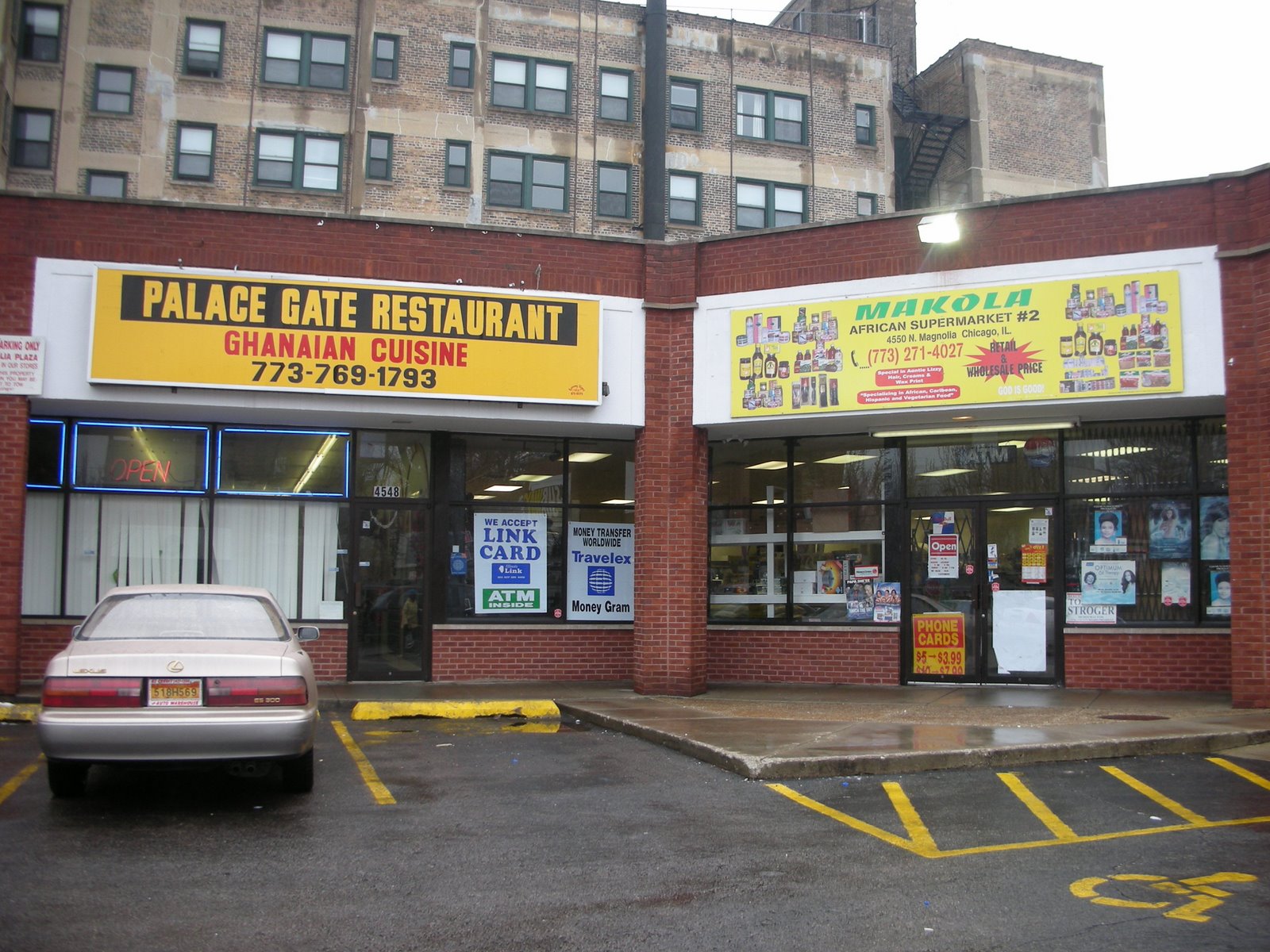
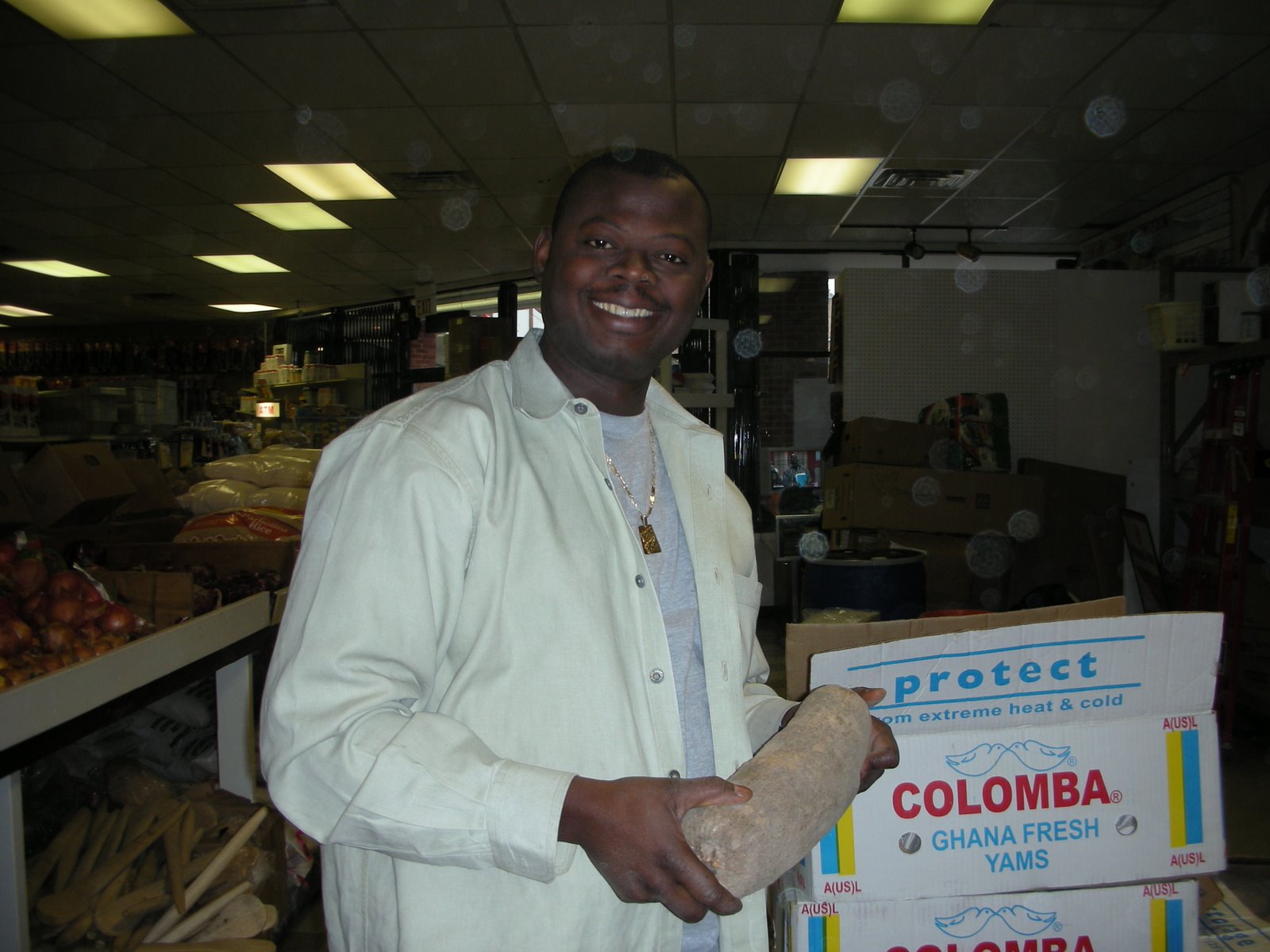
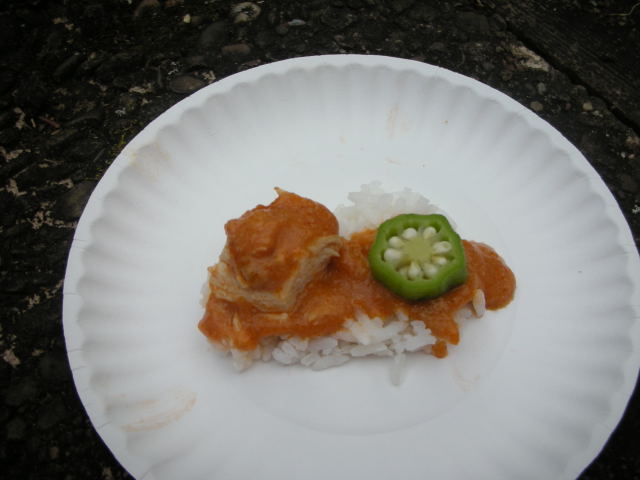
I recently returned from Chicago, where Gloria Mensah and I presented, as promised, an enthusiastically received talk and tasting session (gari foto and chicken groundnut stew with rice, shown below) at the IACP (Intl. Assoc. of Culinary Professionals) meetings. Chicago's large Ghanaian community sponsors an annual cultural festival every year that is said to be the largest of its kind in North America. One of the surprise hits of our talk was our display and passing comments on the spice known as melegueta peppers (Grains of Paradise), which apparently is becoming trendy these days, though Moroccan cooks may know of the seeds as an ingredient in some ras el hanout combinations. (I'll write more about them later.) For now, here are a few photos: the 2 Makola Markets we visited (a few blocks apart) to pick up some true Ghanaian yam, some cassava, cocoyam, sweet potatoes, zomi oil, dried shrimp and various African seasonings (added to some I brought from Ghana, like dried orka and agushi and dawadawa seeds, and a variety of Maggi cubes (shito, dawadawa, shrimp). The proprieter of Chicago's Makola African Markets, which appear to cater especially to Ghanaians and Nigerians, is Nana Adu-Gyamfi, pictured on the right.

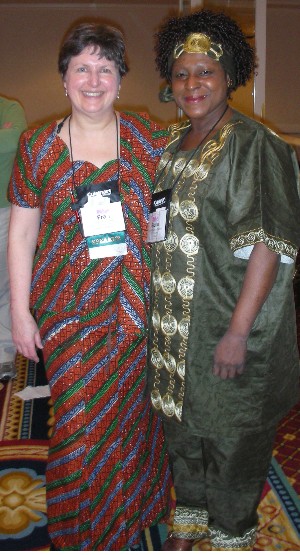
Gloria and fellow IACP attender Gisele Perez enjoying fish Friday night at Yassa, where the food was great, but we suffered from not having a car and ended up paying more for our transportation than dinner. Plus, the crowd there overwhelmed their staff and though service was pleasant it was quite slow. (To be picky, I was disappointed they were out of baobab juice.)

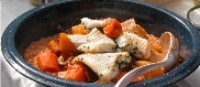
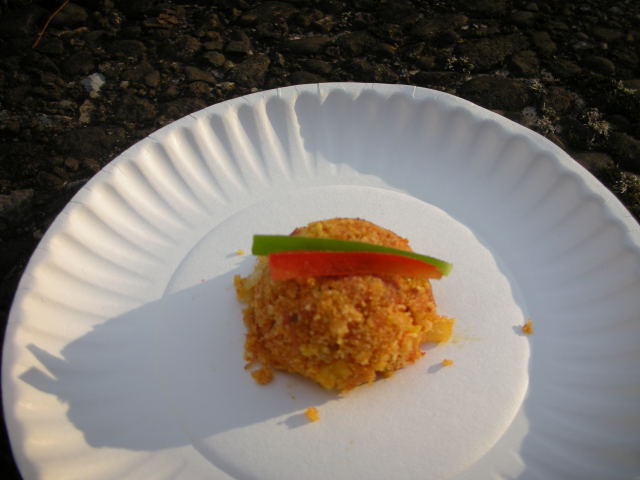
On Saturday Gloria and I went to observe the chefs prepare our recipes for our tasting at the conference hotel. I realized once again that chefs unfamiliar with African ingredients, be it gari or tinned corned beef or palm oil, need firm guidance when confronted with something for which they have no context. They had purchased pink pickled ginger (just in case that's what we meant), minced regular corned beef rather than canned, and gotten regular peanut butter rather than natural style we requested. The simple tastings (garifoto on the left; groundnut stew on the right) are pictured below.

Monday, April 09, 2007

Ghana in Chicago


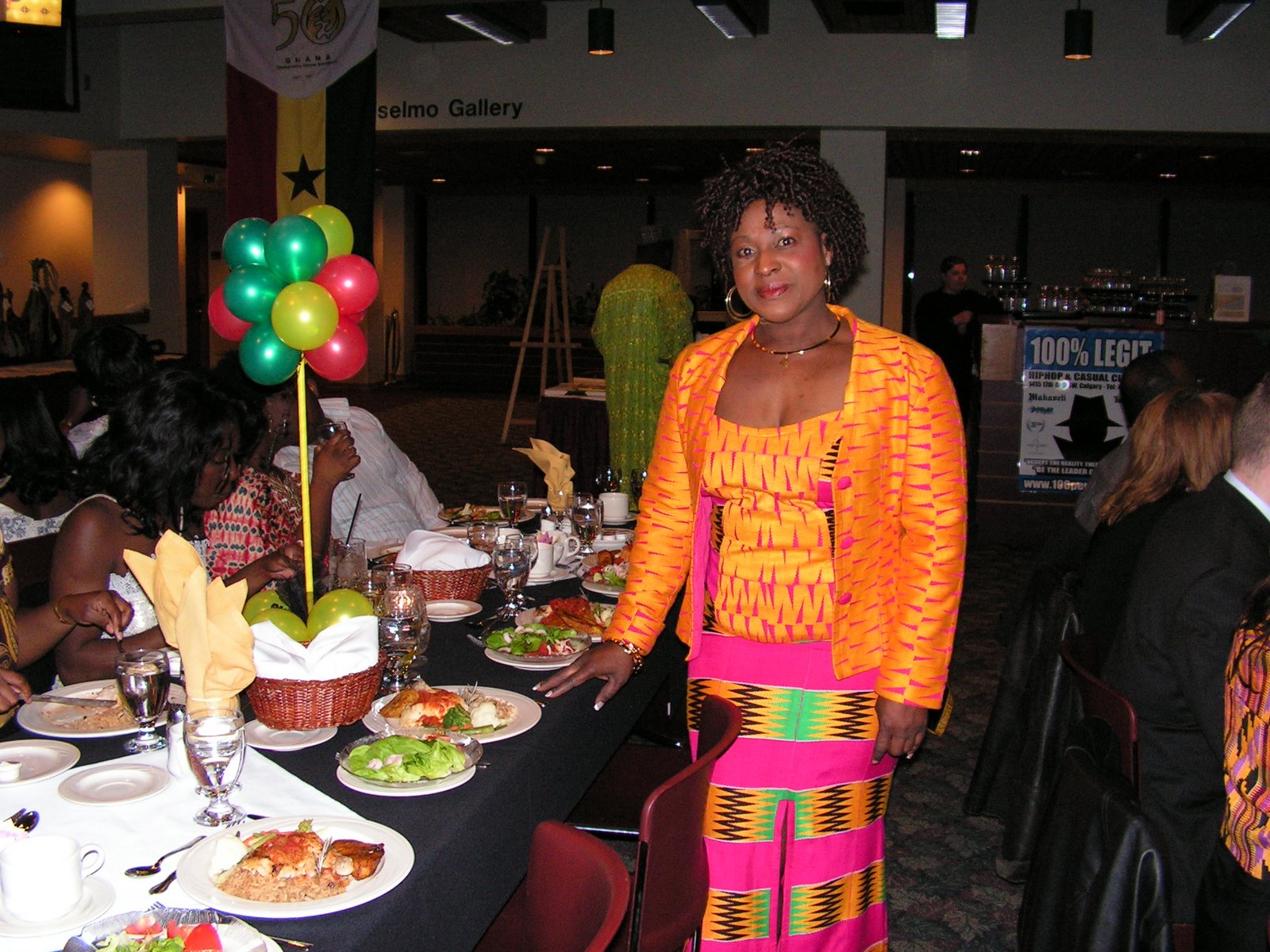
I'm off to Chicago in two days for the International Association of Culinary Professionals' (IACP) annual conference. Gloria Mensah and I will be doing a presentation on Ghana's food and foodways, featuring tastings of gari foto and groundnut stew. Our session is called "The Good Soup Comes from the Good Earth: Cooking of Ghana, Gateway to West Africa." Gloria will join us fresh from the Ghana Jubilee celebration held in Calgary, Canada, where she helped oversee a culinary (and cultural) feast enjoyed by some 600 folks.

There're still a lot of loose ends to tie up, so it'll be a few days before I'm able to blog again. While in Chicago, some of us plan to dine at Madieye and Awa Gueye's newly enlarged Yassa African Restaurant restaurant, and I hope to pick up supplies for our presentation at Chicago's Makola Market. I'll be sure to report on the trip, and will have my trusty digital camera in hand.

Wednesday, April 04, 2007

Recent sources of information about African cuisine


(these links are current as of 4 April 2007):


On the growing interest in African cuisine: "African food is conquering America! More and more of my friends and colleagues are starting to get interested in African cuisine. . ." http://foodcookingrecipes.com/african-food-is-full-of-flavor.html
An article in Cooking Light called "West African Hospitality" and featuring francophone cuisine (recipes from Benin, Senegal, and Cote D'Ivoire) by the well-known culinarian Jessica Harris:
http://www.cookinglight.com/cooking/cs/worldcuisine/package/0,14343,443650,00.html

(Word Press') Sociolingo's Africa has an archive of postings on African cuisine:
http://sociolingo.wordpress.com/tag/culture/african-cuisine/